

 Переглянути в інтер'єрі
 Надіслати
 Поділитися
 Деталі
 Посібник

 Завантажити
 Схожі предмети колекціонування
 Рентгенівське дослідження
 Слайд-шоу
 Статистика переглядів
Dam Square, Amsterdam


 Читати далі
Олійная репродукція ручної роботи
Написана вручну олією на полотні у вашому розмірі та рамі, виготовлена на замовлення нашими художниками. ( Перейти до друку Перейти до цифрових зображень)




P118B ₴10

P118H ₴10

P118W ₴10

P438Z ₴10

P508JH ₴12

P508YH ₴12

P805H ₴10

P805Z ₴10

P919BZ ₴10

P919G ₴10

P919XJ ₴10

P959ZH ₴10

P968JZ ₴12

W106C ₴8

W218G ₴10

W218JH ₴8

W218Y ₴10

W307PJ ₴10

W316G ₴10

W316PJ ₴8

W316Y ₴10

W398PJ ₴8

W4111J ₴10

W500HY ₴15

W500JH ₴15

W692G ₴12

W849H ₴8

W940BG ₴15

W953PJ ₴8




Обирайте з наших стандартних розмірів, що відповідають оригінальним пропорціям твору мистецтва.

Ви можете вказати власні розміри, щоб репродукція ідеально підійшла до конкретної рами або інтер'єру. Якщо вибраний вами розмір не відповідає пропорціям оригіналу, ми або обріжемо полотно, або доповнимо картину додатковими елементами, промальованими вручну. Цифровий макет буде надіслано вам на затвердження перед початком виробництва.
Зверніть увагу, що попередній перегляд на екрані не відображає фактичне обрізання або розширення зображення. Тільки макет точно покаже остаточну композицію.
Хоча ми можемо виготовити виріб у нестандартному розмірі, для збереження оригінальних пропорцій рекомендуємо обирати варіанти зі встановленого списку.
Після оформлення замовлення команда OriginalUniqueArt.com зв'яжеться з клієнтом електронною поштою для отримання інструкцій та надасть попередній макет
Доставка по всьому світу () за 3–4 тижні замість стандартних 5 тижнів. (13 Жовтень). Без жодних компромісів у якості.

Безкоштовна експрес-доставка по всьому світу

Високоякісне лляне полотно

Повне страхове покриття доставки

Гарантія повернення митних зборів

Гарантія точного відтворення кольорів

Політика повернення протягом 100 днів (лише у разі виявлення дефектів)

Гарантія повернення 100% коштів

Знижка на оптові замовлення
 Скляний варіант доступний лише для розмірів до 110 см

Dam Square, Amsterdam
Техніка репродукції
Розмір репродукції
-


Загальна вартість
₴ 13367
Біографія митця
A Pioneer of Urban Landscapes: The Life and Art of Jan van der Heyden
Jan van der Heyden, born in 1637 in the bustling Dutch town of Gorinchem, stands as a remarkably multifaceted figure in the history of art and innovation. More than simply a painter celebrated for his meticulously rendered cityscapes, he was an ingenious engineer whose contributions profoundly impacted firefighting technology and urban planning – a testament to his inventive spirit and dedication to improving daily life. His early years were shaped by his Mennonite upbringing, leading his family to settle in Amsterdam in 1646, a move that would irrevocably influence the trajectory of his artistic development. The formative years spent within the familial workshop, likely guided by his brother Goris – a skilled craftsman specializing in mirrors – instilled in him an appreciation for precision and detail, qualities that would later become hallmarks of Van der Heyden’s paintings. Some scholars suggest a potential apprenticeship with Jacob van der Ulft, a respected glass painter from Gorinchem, further honing his draftsmanship and color application skills—techniques initially employed in creating *verre eglomisé*, decorative paintings on glass – a technique that likely informed the luminous quality of his cityscapes.From Decorative Arts to Architectural Precision
Van der Heyden’s artistic journey gradually shifted towards a specialization that secured his place as one of the most significant architectural painters of the Dutch Golden Age. Unlike many of his contemporaries who primarily focused on portraits or historical scenes, Van der Heyden turned his gaze toward the vibrant and ever-changing streets and stately canals of Amsterdam and beyond. His canvases offer remarkably detailed views not only of his adopted city but also of other thriving urban centers throughout the Netherlands, Flanders, and even Germany. Works such as *View of Oudezijds Voorburgwal with the Oude Kerk in Amsterdam* exemplify this unwavering commitment to realism, capturing the subtle interplay of light on brickwork, the textured surfaces of cobblestone streets, and the lively atmosphere that characterized 17th-century urban life. He wasn’t content merely documenting existing scenes; Van der Heyden also possessed a remarkable imagination, creating “architectural fantasies”—compelling compositions that blended elements from diverse structures—anticipating artistic trends that would blossom in later centuries. These fantastical visions demonstrate both his technical mastery and his playful creativity, revealing an artist who was constantly pushing the boundaries of representation. Beyond these imaginative landscapes, Van der Heyden occasionally ventured into still life painting, as evidenced by *Still-Life with Globe, Books and Chinese Silk*, showcasing his versatility and meticulous attention to detail across a range of subjects.An Engineer’s Vision: Innovation Beyond the Canvas
What truly distinguishes Jan van der Heyden is that he was far more than just an artist; he was a practical inventor and engineer driven by a desire to solve real-world problems, most notably in the realm of firefighting. In 1672, collaborating with his brother Nicolaes – a skilled hydraulic engineer – he devised significant improvements to the fire hose, addressing a critical challenge faced by densely populated urban areas. This wasn’t merely a minor adjustment; it was a groundbreaking advancement in firefighting technology that dramatically increased efficiency and reach. Van der Heyden didn't rest on his laurels. He actively reorganized Amsterdam’s volunteer fire brigade in 1685, implementing more effective strategies and protocols to ensure swift and coordinated responses to emergencies. His dedication culminated in the publication of *Brandspuiten-boek* – widely considered the first comprehensive firefighting manual—a meticulously illustrated guide that served as a vital resource for firefighters throughout the Netherlands and beyond. This work wasn’t simply a technical document; it was a testament to his unwavering commitment to public safety and a demonstration of his innovative spirit. Furthermore, he designed and oversaw the implementation of an ingenious street lighting scheme for Amsterdam, illuminating the city's streets with a brilliant glow that significantly enhanced nighttime visibility and security – a system that remained in operation for over a century.Legacy and Lasting Influence
Jan van der Heyden passed away in 1712, leaving behind a substantial estate encompassing over seventy of his own paintings—a remarkable testament to both his prolific output and the high value placed on his work during his lifetime. His only known pupil was his son, Jan, who continued some aspects of his father’s artistic legacy. Van der Heyden's influence resonated throughout subsequent generations of artists specializing in architectural painting, providing them with valuable insights into 17th-century urban life and architecture—offering a visual record of cities as they existed during that era. His meticulously detailed depictions serve as invaluable historical documents for modern scholars seeking to understand the aesthetics and social dynamics of the period. His innovative approach to townscapes, combined with his practical engineering contributions, cemented his position as a truly unique and multifaceted figure in Dutch history. He wasn’t simply an artist capturing the world around him; he was actively shaping it, improving the lives of those who inhabited it. Van der Heyden's legacy endures not only through his captivating paintings but also through the enduring impact of his inventions on urban safety and infrastructure.Notable Works
Here are some of Jan van der Heyden’s most celebrated works:- View of Oudezijds Voorburgwal with the Oude Kerk in Amsterdam
- Still-Life with Globe, Books and Chinese Silk
- Architectural Fantasies (various compositions)
- Views of Delft
- Westerkerk, Amsterdam
- Huis ten Bosch at The Hague
Further Resources
- Google Arts & Culture: Jan van der Heyden - Google Arts & Culture
- Wikidata: Jan van der Heyden (Q370567)
- Paintings Before 1800: Jan Jansz. van der Heyden

Ян ван дер Хейден
1637 - 1712 , Нідерланди
Довідкова інформація
- Artistic Movement Or Style: Голландський Золотий вік, Бароко
- Artists Or Movements Influenced By This Artist: ['18-й століття Венеціанські художники']
- Artists Who Influenced This Artist: ['Якоб ван дер Ультф']
- Date Of Birth: 1637
- Date Of Death: 1712
- Full Name: Jan van der Heyden
- Nationality: Нідерландець
- Notable Artworks:
- Вид на Оудезейдс Воорбувал
- Пологова сцена з куглою
- Архітектурна фантазія
- Вид на Делфт
- Вестеркерк, Амстердам
- Place Of Birth: Gorinchem, Нідерланди
Схожі статті

Рембрандт ван Рейн: Топ-25 шедеврів для вашого дому | OriginalUniqueArt
Пориньте у світ Рембрандта ван Рейна! 25 культових шедеврів бароко, портретів та біблійних сцен. Купіть високоякісні репродукції картин Рембрандта для вашого дому на OriginalUniqueArt.com – музейне мистецтво онлайн!

Mastering Light & Shadow: A Journey Through the Dutch Golden Age's Luminous Legacy
Embark on a cultural journey through the Dutch Golden Age. Explore the masterful interplay of light and shadow in 17th-century masterpieces, from Rembrandt to Vermeer, and discover how this era of profound realism continues to inspire fine art collectors today.

Golden Light & Dutch Skies: The Timeless Magic of Dutch Golden Age Landscapes
Discover the breathtaking beauty of Dutch Golden Age landscapes. Explore the mastery of light, chiaroscuro, and 17th-century realism through an expert art history lens, celebrating the enduring legacy of the Dutch Masters for discerning collectors and art lovers.

Топ-10 шедеврів Золотої доби нідерландського мистецтва | OriginalUniqueArt.com
Відкрийте для себе 10 шедеврів Золотої доби нідерландського мистецтва! Рембрандт, Вермеєр та інші майстри. Історія створення, унікальні техніки та натхнення для вашого інтер'єру. Репродукції картин високої якості – OriginalUniqueArt.com
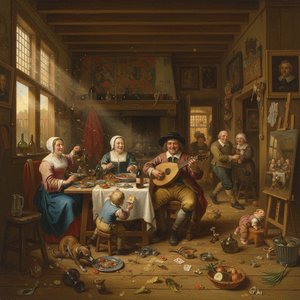
Jan Steen: A Master of Dutch Genre Painting & the Golden Age
Explore the life & art of Jan Steen, a leading Dutch Golden Age painter renowned for his humorous genre scenes & insightful social commentary. Discover his techniques, legacy, and collecting tips.