

 Переглянути в інтер'єрі
 Надіслати
 Поділитися
 Деталі
 Посібник

 Завантажити
 Схожі предмети колекціонування
 Рентгенівське дослідження
 Слайд-шоу
 Статистика переглядів
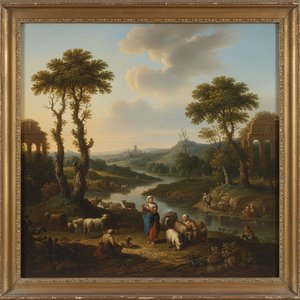
Imaginary Italian Landscape


 Читати далі
Гікле / Художній принт
Музейна якість друку جيкле або на полотні з оперативним виготовленням та різноманітними варіантами фінішної обробки. ( Купити картину ручної роботи Перейти до цифрових зображень)




P118B $10

P118H $10

P118W $10

P438Z $10

P508JH $12

P508YH $12

P805H $10

P805Z $10

P919BZ $10

P919G $10

P919XJ $10

P959ZH $10

P968JZ $12

W106C $8

W218G $10

W218JH $8

W218Y $10

W307PJ $10

W316G $10

W316PJ $8

W316Y $10

W398PJ $8

W4111J $10

W500HY $15

W500JH $15

W692G $12

W849H $8

W940BG $15

W953PJ $8




Обирайте з наших стандартних розмірів, що відповідають оригінальним пропорціям твору мистецтва.

Ви можете вказати власні розміри, щоб репродукція ідеально підійшла до конкретної рами або інтер'єру. Якщо обраний вами розмір не відповідає пропорціям оригіналу, ми або обріжемо полотно, або розширимо зображення за допомогою дзеркального відображення чи суцільної заливки країв. Перед початком виробництва вам буде надіслано цифровий макет для затвердження.
Будь ласка, зверніть увагу, що попередній перегляд на екрані не відображає фактичне обрізання або розширення. Тільки макет точно покаже фінальну композицію.
Хоча можливість замовлення індивідуальних розмірів доступна, ми рекомендуємо обирати формат із попередньо визначеного списку, щоб зберегти оригінальні пропорції.
Доставка по всьому світу () за 2 тижні замість стандартних 4/5 тижнів. (26 Вересень)

Безкоштовна експрес-доставка по всьому світу

Високоякісне лляне полотно

Повне страхове покриття доставки

Гарантія повернення митних зборів

Гарантія точного відтворення кольорів

Політика повернення протягом 100 днів (лише у разі виявлення дефектів)

Гарантія повернення 100% коштів

Знижка на оптові замовлення
 Скляний варіант доступний лише для розмірів до 110 см

Imaginary Italian Landscape
Гікле / Художній принт
Розмір репродукції
-


Загальна вартість
$ 80
Jan Asselijn’s Imaginary Italian Landscape: A Reflection of Faith and Artistic Innovation
The year is 1652. Amsterdam thrives as a center of artistic brilliance, yet Jan Asselijn’s gaze turned south – specifically to Italy – where he embarked on a transformative journey that irrevocably shaped his artistic sensibilities and cemented his place within the pantheon of Dutch Golden Age painters.
Asselijn's work embodies the spirit of the era, capturing not merely visual beauty but also profound emotional resonance. “Imaginary Italian Landscape,” housed in private collections worldwide, exemplifies this characteristic. It’s a scene brimming with life – figures strolling along a waterfront promenade amidst statues and accompanied by dogs, all bathed in the diffused glow of an expansive sky dotted with clouds.
Style and Technique: Embracing Atmospheric Perspective
Unlike the rigid conventions of earlier Baroque landscapes, Asselijn eschewed dramatic chiaroscuro—the stark contrasts between light and dark—favoring instead a technique that prioritizes atmospheric perspective. This masterful approach skillfully renders depth and distance through subtle gradations of color and tonal variation. Notice how blues deepen into indigo as they recede into the background, creating an illusion of vastness and conveying a sense of serenity.
Historical Context: The Huguenot Diaspora and Artistic Renaissance
Asselijn’s artistic development coincided with the turbulent period of Huguenot emigration from France. Forced to flee religious persecution, his family sought refuge in Amsterdam, exposing him to an environment acutely aware of intellectual ferment and artistic revival. This backdrop fueled Asselijn's fascination with Italian landscape painting—a genre that had experienced a resurgence during the Renaissance, championed by artists like Leonardo da Vinci and Raphael.
The influence of these masters is palpable in Asselijn’s composition. The careful placement of statues – symbols of classical ideals – underscores the humanist ethos prevalent at the time. Furthermore, the inclusion of dogs—often interpreted as emblems of loyalty and companionship—adds a layer of narrative complexity to the scene.
Symbolism: Light, Tranquility, and Spiritual Reflection
Beyond its visual splendor, “Imaginary Italian Landscape” speaks volumes about Asselijn’s artistic vision. The dominant use of light – soft, diffused, reminiscent of Florentine skies – symbolizes enlightenment and spiritual contemplation. It invites the viewer to pause and appreciate the beauty of the natural world as a reflection of divine grace.
The tranquil promenade depicted suggests an idealized vision of human existence—a harmonious coexistence with nature underpinned by moral virtue. Asselijn’s ability to convey such profound emotion through meticulous observation and skillful execution distinguishes him as one of the most accomplished landscape painters of his generation.
Біографія митця
A Life Forged in Landscape: The World of Jan Asselijn
Jan Asselin, born around 1610 in Dieppe, France, embarked on an artistic journey marked by religious upheaval and a profound engagement with the burgeoning landscape tradition of the Dutch Golden Age. His family, Huguenots fleeing persecution, relocated to Amsterdam in 1621—a vibrant epicenter of commerce and artistic innovation—where young Jean was immersed in an environment acutely attuned to capturing the grandeur and subtleties of nature. This pivotal move instilled within him a fascination for landscape painting that would define his entire career. Initially apprenticed under Jan Martszen the Younger, Asselijn honed his skills in battle scenes before discovering his true passion: portraying animals with remarkable realism and conveying atmospheric depth—qualities that would become hallmarks of his distinctive style.Early Training & Influences
His formative years were shaped by exposure to the Dutch light and expansive skies—a characteristic he would consistently strive to emulate throughout his artistic life. This influence is particularly evident in his early works, demonstrating a meticulous attention to detail and an understanding of perspective that foreshadowed the stylistic developments of later masters. Notably, Asselijn’s training with Jan Martszen instilled in him a disciplined approach to composition and technique—skills he would carry forward into his exploration of diverse subjects. However, it was a journey to Italy around 1635 that truly catalyzed his artistic vision. Drawn to the humanist ideals and artistic fervor of Rome, Asselijn embraced the *Italianate* style—a genre characterized by sun-drenched vistas, classical ruins, and pastoral scenes imbued with Romantic sensibilities. He joined the ranks of the *Bentvueghels*, a bohemian society of Dutch and Flemish artists who championed direct observation and rejected studio conventions. Within this spirited milieu, Asselijn earned the moniker “Krabbetje” (little crab) due to a congenital deformity affecting his hand—a physical challenge that paradoxically fueled his creativity and prompted him to develop innovative techniques for overcoming limitations. He absorbed the stylistic innovations of artists like Pieter van Laer (Bamboccio), whose depictions of Roman peasant life and landscapes resonated deeply with Asselijn’s evolving aesthetic sensibilities.The Italianate Style & Artistic Innovation
This period witnessed a significant transformation in Asselijn's artistic practice—a decisive shift toward capturing the emotional resonance of natural environments. He meticulously studied the works of artists such as Claude Lorraine and Frederik de Moucheron, incorporating their techniques for rendering atmospheric perspective and conveying mood into his own compositions. His paintings are distinguished by an unparalleled sensitivity to light—particularly its ability to illuminate textures and create dramatic contrasts—a hallmark that distinguishes him from many of his contemporaries. Among his most celebrated achievements is The Threatened Swan (circa 1640s), a monumental canvas depicting a swan fiercely defending its nest against encroaching predators. This work exemplifies Asselijn’s mastery of composition, color palette, and expressive brushwork—elements that contribute to its enduring power as a symbol of Dutch resilience during the Thirty Years' War. Furthermore, his meticulous anatomical studies of animals—particularly birds—demonstrate an unwavering commitment to scientific accuracy combined with artistic artistry.Legacy & Recognition
Asselijn’s influence extended beyond his own prolific output and cemented his place within the canon of Dutch Baroque art. He served as a mentor to Frederik de Moucheron, fostering a collaborative spirit that enriched the artistic landscape of Amsterdam. His works are now housed in prominent museums across Europe—including the Rijksmuseum in Amsterdam—where they continue to inspire admiration for their beauty, technical virtuosity, and profound engagement with the natural world. Jan Asselijn died prematurely in 1652, leaving behind a legacy that transcends mere artistic accomplishment; he embodies the spirit of innovation and perseverance characteristic of the Dutch Golden Age—a testament to his enduring contribution to European art history.
Ян Асселийн
1610 - 1652 , Франція
Довідкова інформація
- Artistic Movement Or Style: Італійський стиль
- Artists Who Influenced This Artist:
- Есайас ван де Вельде
- Бамбокко
- Рембрандт
- Date Of Birth: 1610
- Date Of Death: 1652
- Full Name: Jan Asselin
- Nationality: Нідерланди
- Notable Artworks:
- Загрожений лебедь
- В Італії
- Перебіжка кавалерії
- Place Of Birth: Dieppe, Франція
Схожі статті

Mastering Light & Land: An Art Historian's Guide to the Dutch Golden Age Landscape
Explore the breathtaking mastery of Dutch Golden Age landscapes. From Italianate light to atmospheric realism, discover the techniques of 17th-century masters and learn how to bring these timeless, museum-quality masterpieces into your home through expert oil reproductions.
Nicolaes Berchem: Dutch Golden Age Pastoralism & the Evolution of Landscape Painting
Explore the captivating world of Nicolaes Berchem, a leading Dutch Golden Age painter. Discover his idyllic landscapes, masterful technique & lasting influence on art history. Learn more at OriginalUniqueArt.

Golden Light & Dutch Skies: The Timeless Magic of Dutch Golden Age Landscapes
Discover the breathtaking beauty of Dutch Golden Age landscapes. Explore the mastery of light, chiaroscuro, and 17th-century realism through an expert art history lens, celebrating the enduring legacy of the Dutch Masters for discerning collectors and art lovers.

Golden Light & Dutch Skies: Bringing the Magic of Dutch Golden Age Landscapes into Your Home
Transform your home with the breathtaking light of Dutch Golden Age landscapes. Discover how hand-painted oil reproductions of masterworks like Ruisdael and Vermeer bring timeless elegance, atmosphere, and soulful texture to modern interiors. Elevate your space with museum-quality art.

Топ-10 шедеврів Золотої доби нідерландського мистецтва | OriginalUniqueArt.com
Відкрийте для себе 10 шедеврів Золотої доби нідерландського мистецтва! Рембрандт, Вермеєр та інші майстри. Історія створення, унікальні техніки та натхнення для вашого інтер'єру. Репродукції картин високої якості – OriginalUniqueArt.com
