

 Переглянути в інтер'єрі
 Надіслати
 Поділитися
 Деталі

 Завантажити
 Схожі експонати
 Рентгенівське дослідження
 Слайд-шоу
Self Portrait


 Читати далі
Олійная репродукція ручної роботи
Написана вручну олією на полотні у вашому розмірі та рамі, виготовлена на замовлення нашими художниками. ( Перейти до друку Перейти до зображення)




P118B $10

P118H $10

P118W $10

P438Z $10

P508JH $12

P508YH $12

P805H $10

P805Z $10

P919BZ $10

P919G $10

P919XJ $10

P959ZH $10

P968JZ $12

W106C $8

W218G $10

W218JH $8

W218Y $10

W307PJ $10

W316G $10

W316PJ $8

W316Y $10

W398PJ $8

W4111J $10

W500HY $15

W500JH $15

W692G $12

W849H $8

W940BG $15

W953PJ $8




Обирайте з наших стандартних розмірів, що відповідають оригінальним пропорціям твору мистецтва.

Ви можете вказати власні розміри, щоб репродукція ідеально підійшла до конкретної рами або інтер'єру. Якщо вибраний вами розмір не відповідає пропорціям оригіналу, ми або обріжемо полотно, або доповнимо картину додатковими елементами, промальованими вручну. Цифровий макет буде надіслано вам на затвердження перед початком виробництва.
Зверніть увагу, що попередній перегляд на екрані не відображає фактичне обрізання або розширення зображення. Тільки макет точно покаже остаточну композицію.
Хоча ми можемо виготовити виріб у нестандартному розмірі, для збереження оригінальних пропорцій рекомендуємо обирати варіанти зі встановленого списку.
Після оформлення замовлення команда OriginalUniqueArt.com зв'яжеться з клієнтом електронною поштою для отримання інструкцій та надасть попередній макет
Доставка по всьому світу () за 3–4 тижні замість стандартних 5 тижнів. (11 Серпень). Без жодних компромісів у якості.

Безкоштовна експрес-доставка по всьому світу

Високоякісне лляне полотно

Повне страхове покриття доставки

Гарантія відшкодування митних зборів

Гарантія точного відтворення кольорів

Політика повернення протягом 60 днів (лише у разі виявлення дефектів)

Гарантія повернення 100% коштів

Знижка на оптові замовлення
 Скляний варіант доступний лише для розмірів до 110 см

Self Portrait
Техніка репродукції
Розмір репродукції
-


Загальна вартість
$ 300
Опис твору
A Gaze Into American Realism: Self Portrait by James Carroll Beckwith
To stand before this self-portrait is to encounter not merely paint on canvas, but a carefully curated moment of introspection captured at the turn of the century. James Carroll Beckwith presents himself with an undeniable gravity; his gaze, directed straight out from the frame, seems to pierce through the veil of time and connect directly with the modern viewer. The subject—a man of evident maturity, sporting distinguished gray hair and a neatly trimmed mustache—is rendered with a profound sense of dignity. He is clad in the sober elegance of a dark suit, contrasted sharply by the crisp white of his shirt and the precise knot of his black bow tie. This portrait speaks volumes about the societal expectations and the quiet confidence of the late 19th-century American gentleman.
Mastery of Light and Shadow: Technical Brilliance
Beckwith’s technique here is a masterclass in academic realism, a style that demands meticulous observation and skilled handling of pigment. Notice how the artist utilizes light not just to illuminate, but to sculpt. The interplay between the highlights catching on his forehead and the deep shadows pooling beneath his jawline gives the figure an almost three-dimensional presence. This careful modulation of value—the subtle shifts from near-black to pale gray—is what lends the work its palpable texture, making the fabric of his suit feel weighty and real. The background, deliberately restrained with its dark red wall and the suggestion of a white door handle, serves only to push the focus inexorably back to the sitter’s compelling presence.
The Context of American Ambition
Painted in 1898, this work emerges from a period of immense transformation in America. The nation was solidifying its industrial might, and portraiture often served as both commemoration and declaration of status. Beckwith, whose own journey involved the crucible of tragedy and reinvention—from the devastation of Chicago to the refinement found in Paris—brings that narrative resilience into his art. This self-portrait is therefore more than a likeness; it is an assertion of survival, intellect, and enduring artistic purpose against a backdrop of rapid change.
Emotional Resonance for the Modern Collector
For the contemporary collector or designer seeking to infuse a space with history and depth, this piece offers immediate emotional grounding. The seriousness in Beckwith’s expression invites contemplation; it asks the viewer to consider their own self-portraits—the versions of themselves they wish to project. Reproducing this work allows one to possess a tangible connection to the dedication of the late Victorian artistic spirit. It is an anchor of classicism, perfect for a formal study, a library, or any space that demands an air of cultivated thoughtfulness and enduring style.
Біографія митця
James Carroll Beckwith (1852-1917): A Life Etched in Realism
Born amidst the burgeoning American landscape of Hannibal, Missouri, in 1852, James Carroll Beckwith embarked on a journey that would establish him as a significant figure in late 19th and early 20th-century American art. Though he preferred to be known simply as Carroll Beckwith, his name became synonymous with a meticulous naturalist style, deeply influenced by both the artistic traditions of Europe and the evolving spirit of American realism. His story is one marked by resilience – rising from the ashes of personal tragedy to achieve critical acclaim and lasting recognition. The devastating Great Fire of Chicago in 1871, which consumed not only the city but also his early artistic endeavors, proved a pivotal moment, propelling him eastward toward New York City and ultimately, across the Atlantic to Paris.Parisian Refinement and Artistic Foundations
Beckwith’s time in Paris, spanning from 1873 to 1878, was transformative. He immersed himself in the rigorous training offered by Adolphe Yvon for drawing and Carolus Duran for painting. Duran, a celebrated portraitist of the era, recognized Beckwith's talent and entrusted him with assisting on a mural project for the Palais du Luxembourg in 1877 – a testament to his burgeoning skill. This experience was invaluable, exposing him to large-scale composition and the demands of monumental art. It was also during this period that he forged a close friendship with John Singer Sargent, sharing studio space and artistic philosophies. The Parisian influence instilled within Beckwith a dedication to detailed observation, refined technique, and a sophisticated understanding of color and light – qualities that would define his mature style. He absorbed the prevailing aesthetic currents while maintaining a distinctly American sensibility, setting the stage for his eventual return home. His unwavering commitment to mastering draughtsmanship under Duran’s tutelage ensured he was equipped with the tools necessary to translate observation into compelling visual representations.A Prominent Voice in American Art
Upon returning to the United States in 1878, Beckwith quickly established himself as a leading figure in the American art world. He secured a professorship at the prestigious Art Students League of New York, a position he held intermittently for nearly two decades (1878-1882 & 1886-1887). His teaching profoundly impacted a generation of artists, fostering a commitment to skillful draftsmanship and realistic representation. While his artistic output encompassed landscapes and genre scenes, Beckwith excelled as a portraitist, capturing the likenesses of prominent figures such as William Merritt Chase, Mark Twain, Theodore Roosevelt, and Thomas Allibone Janvier. These portraits weren’t merely representations; they were insightful character studies, revealing the personalities and social standing of his subjects with remarkable sensitivity. He skillfully captured not just physical appearance but also subtle expressions and gestures, conveying a profound understanding of human psychology.Recognition and Legacy
Throughout his career, James Carroll Beckwith garnered significant recognition for his artistic achievements. He received numerous awards, including honorable mentions at the Paris Exposition of 1889, gold medals at both the Atlanta Exposition in 1895 and the Exposition Universelle in Paris in 1899, and another gold medal at the Charleston Exposition in 1902. His paintings, such as “Woman with Guitar,” “Sylvan Toilette,” “A Wistful Look”, "Bassin de Neptune Versailles", “L'Empereur” and “Cathédrale Notre-Dame du Puy (le Puy-en-Velay)", demonstrate his mastery of technique and his ability to evoke atmosphere and emotion. Beckwith’s meticulous attention to detail—particularly in capturing the nuances of light and shadow—became a hallmark of his artistic style, distinguishing him from many contemporaries. His legacy extends beyond his individual artworks; he championed realism as an approach to art, inspiring countless artists to prioritize accuracy and observation. James Carroll Beckwith's contribution to American art lies not only in his beautiful paintings but also in his dedication to artistic excellence and his lasting impact on generations of artists.
Джеймс Карролл Бэквитт
1852 - 1917 , США
Досьє митця
- Artistic Movement Or Style: Нейатуралізм
- Artists Who Influenced This Artist:
- Адolphe Yvon
- Карлос Дюран
- Date Of Birth: 23 вересня 1852 р.
- Date Of Death: 24 жовтня 1917 р.
- Full Name: James Carroll Beckwith
- Nationality: Американський
- Notable Artworks:
- Жінка з гітарою
- Сільське туалетне
- Л' Емперєр
- Н Nautilus
- Кафедра Notre-Dame du Puy
- Place Of Birth: Ганнівіль, США
Схожі статті

Джеймс Ебботт МакНейл Вістлер: 25 шедеврів імпресіонізму для вашого дому | OriginalUniqueArt
Відкрийте 25 шедеврів Джеймса Вістлера – імпресіонізм, портрети та нічні сцени. Історія мистецтва, техніки живопису та натхнення для декору вашого дому від OriginalUniqueArt. Дослідіть колекцію онлайн!

Топ-25 шедеврів Альфреда Джеймса Міннінгса: мистецтво коней та англійської глибинки | OriginalUniqueArt
Відкрийте 25 найкращих картин Альфреда Джеймса Міннінгса! Дослідіть шедеври англійського імпресіонізму, мистецтво коней та пейзажі Англії. Купуйте репродукції високої якості для вашого дому на OriginalUniqueArt.com.

James Carroll Beckwith: Luminism, Spirituality & the American Landscape Tradition
Explore the captivating world of James Carroll Beckwith (1852-1917), a leading figure in American Luminism. Discover his landscapes, portraits & spiritual influences – a deep dive for art enthusiasts and collectors.
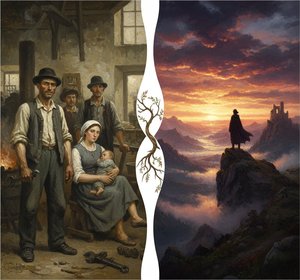
Romantic Realism's Finest: 10 Masterpieces for Your Home | OriginalUniqueArt
Explore 10 defining masterpieces of Romantic Realism! Discover Courbet, Millet & Daumier's powerful paintings—capturing emotion and social realities. Find museum-quality reproductions for your home at OriginalUniqueArt.com.

James Stark: Evoking the Human Condition Through Contemporary Realism
Explore the captivating landscapes of James Stark (1794-1859), a leading Norwich School painter. Discover his Dutch Master influences, critical acclaim, and enduring legacy in contemporary realism. Art collecting insights & investment potential.

