

 Переглянути в інтер'єрі
 Надіслати
 Поділитися
 Деталі
 Посібник

 Завантажити
 Схожі предмети колекціонування
 Рентгенівське дослідження
 Слайд-шоу
 Статистика переглядів
Virtue


 Читати далі
Олійная репродукція ручної роботи
Написана вручну олією на полотні у вашому розмірі та рамі, виготовлена на замовлення нашими художниками. ( Перейти до друку Перейти до цифрових зображень)




P118B ₴10

P118H ₴10

P118W ₴10

P438Z ₴10

P508JH ₴12

P508YH ₴12

P805H ₴10

P805Z ₴10

P919BZ ₴10

P919G ₴10

P919XJ ₴10

P959ZH ₴10

P968JZ ₴12

W106C ₴8

W218G ₴10

W218JH ₴8

W218Y ₴10

W307PJ ₴10

W316G ₴10

W316PJ ₴8

W316Y ₴10

W398PJ ₴8

W4111J ₴10

W500HY ₴15

W500JH ₴15

W692G ₴12

W849H ₴8

W940BG ₴15

W953PJ ₴8




Обирайте з наших стандартних розмірів, що відповідають оригінальним пропорціям твору мистецтва.

Ви можете вказати власні розміри, щоб репродукція ідеально підійшла до конкретної рами або інтер'єру. Якщо вибраний вами розмір не відповідає пропорціям оригіналу, ми або обріжемо полотно, або доповнимо картину додатковими елементами, промальованими вручну. Цифровий макет буде надіслано вам на затвердження перед початком виробництва.
Зверніть увагу, що попередній перегляд на екрані не відображає фактичне обрізання або розширення зображення. Тільки макет точно покаже остаточну композицію.
Хоча ми можемо виготовити виріб у нестандартному розмірі, для збереження оригінальних пропорцій рекомендуємо обирати варіанти зі встановленого списку.
Після оформлення замовлення команда OriginalUniqueArt.com зв'яжеться з клієнтом електронною поштою для отримання інструкцій та надасть попередній макет
Доставка по всьому світу () за 3–4 тижні замість стандартних 5 тижнів. (5 Жовтень). Без жодних компромісів у якості.

Безкоштовна експрес-доставка по всьому світу

Високоякісне лляне полотно

Повне страхове покриття доставки

Гарантія повернення митних зборів

Гарантія точного відтворення кольорів

Політика повернення протягом 100 днів (лише у разі виявлення дефектів)

Гарантія повернення 100% коштів

Знижка на оптові замовлення
 Скляний варіант доступний лише для розмірів до 110 см

Virtue
Техніка репродукції
Розмір репродукції
-


Загальна вартість
₴ 13368
Virtue: A Testament to Renaissance Idealism
Jacopo della Quercia’s “Virtue,” sculpted around 1414, stands as an emblem of the burgeoning humanist spirit that characterized early Renaissance Florence—a moment where classical ideals wrestled with Christian theology to forge a new aesthetic vision. This marble sculpture, housed in Siena Cathedral's Fonte Gaia fountain complex, isn’t merely a depiction of a woman; it’s a carefully crafted embodiment of Temperance, one of the Cardinal Virtues revered throughout Christendom and championed by philosophers like Pico della Mirandola as essential for achieving human flourishing. The sculpture itself is remarkably restrained in its composition. A seated female figure dominates the frame, positioned within an architectural niche that lends depth to the scene. Her gaze directs upwards, conveying a sense of serene contemplation—a deliberate choice reflecting the Renaissance fascination with inner reflection and moral virtue. The drapery clings to her form, rendered with flowing lines that contrast subtly with the angularity of her face and hands, demonstrating Quercia’s mastery of sculptural technique. Circular shapes are present in the folds of fabric, mirroring the harmonious balance sought by artists of the period. The artist skillfully employed subtractive sculpting—removing material from a block of Carrara marble—to reveal the idealized form he envisioned. The surface texture captures the subtle imperfections inherent in natural stone, yet maintains an overall smoothness that underscores the sculpture’s polished appearance. Light emanates from above and slightly to the left, casting shadows that accentuate the three-dimensionality of the figure and niche walls, creating a convincing illusion of space. This masterful use of lighting aligns perfectly with Renaissance artistic conventions, prioritizing realism while elevating the subject matter to spiritual significance. Beyond its technical prowess, “Virtue” resonates deeply with symbolic meaning. The book held by the woman symbolizes knowledge—a cornerstone of humanist thought—and represents divine guidance, mirroring the theological framework underpinning the sculpture’s creation. Her posture exudes dignity and wisdom, reflecting the Renaissance aspiration for moral excellence and intellectual enlightenment. Viewing this artwork evokes feelings of reverence and contemplation—a reminder that beauty can serve as a conduit to profound ethical considerations. The Fonte Gaia fountain complex itself is a testament to Siena's artistic ambition during the Quattrocento. Commissioned by Pope Pius II, it represents an extraordinary undertaking in civic art, aiming to elevate Siena’s prestige and commemorate its patron saint, Saint Catherine of Siena. Jacopo della Quercia’s contribution—along with other prominent sculptors—was intended to inspire piety and reinforce moral values within the city's populace. “Virtue,” therefore, isn’t just a standalone masterpiece; it’s an integral part of a larger artistic project designed to shape the cultural landscape of Renaissance Italy.- Artist: Jacopo della Quercia
- Born Year: 1374
- Death Year: 1438
- Birth City: Monteroni di Lecce
- Birth Country: Italy
- Material: Marble
- Technique: Subtractive Sculpting
- Style: Early Renaissance Sculpture
Запитання та відповіді
Який розмір та орієнтацію рекомендується для друку «Virtue» Якопо Делла Кв'Ерчіа?
Розмір Large, орієнтація Portrait: саме такі параметри друку рекомендовано для «Virtue» Якопо Делла Кв'Ерчіа.
Чи доступна робота "Virtue" у вигляді художнього принта?
Щоб замовити принт «Virtue» Якопо Делла Кв'Ерчіа, просто перейдіть на сторінку ця сторінка: художній принт на бавовняному полотні або архівному канвас-папері.
Яка дата створення «Virtue» Якопо Делла Кв'Ерчіа?
«Virtue» датована 1414 роком. Ця дата дозволяє визначити місце твору в творчому шляху Якопо Делла Кв'Ерчіа та відповідну епоху.
У якому віці Якопо Делла Кв'Ерчіа створив(ла) "Virtue"?
Коли у 1414 році було створено «Virtue», художнику Якопо Делла Кв'Ерчіа (народився/лася у 1374) було 40 років.
Хто є автором твору "Virtue"?
Автором твору «Virtue» є Якопо Делла Кв'Ерчіа. Робота внесена до каталогу під іменем Якопо Делла Кв'Ерчіа.
Чи залишився твір «Virtue» у батьківщині свого автора?
Так — твір зберігається в країні походження митця. Творець народився в Італія; оригінальний твір знаходиться в Італія.
Яку атмосферу принесе «Virtue» у ваш інтер'єр?
«Virtue» Якопо Делла Кв'Ерчіа має Serene атмосферу і чудово підійде для Living Room. Настрій — це те, що цей твір привносить у навколишній простір.
Біографія митця
Jacopo della Quercia: Bridging the Gothic and Embracing Renaissance Vision
Jacopo della Quercia, a name that resonates deeply within the annals of Italian art history, stands as an extraordinary figure – a pivotal bridge connecting the lingering beauty of the Gothic era with the exhilarating dawn of the Renaissance. Born in Monteroni di Lecce around 1374 and tragically passing away in Bologna in 1438, his life unfolded as a rich tapestry woven from commissions, artistic rivalries, and an unwavering fascination with both the enduring wisdom of classical antiquity and the rapidly evolving sensibilities of his time. He wasn’t merely a sculptor; he was an architect of style, a translator between traditions, and ultimately, a harbinger of the revolutionary artistic shifts that would irrevocably define the Renaissance.
His early artistic journey began within the nurturing embrace of his father, Piero d'Angelo – a highly skilled woodcarver and goldsmith. This formative period instilled in Jacopo not just an unparalleled mastery of craftsmanship and the meticulous techniques of his family’s trade, but also a profound appreciation for the power and beauty of enduring traditions. However, his artistic path was profoundly shaped by his exposure to the monumental works adorning the pulpit of Siena Cathedral – specifically, the awe-inspiring sculptures crafted by Nicola Pisano and Arnolfo di Cambio. These encounters ignited within him an intense fascination with narrative sculpture, dynamic composition, and the remarkable expressive potential inherent in the human form – elements that would become instantly recognizable hallmarks of his distinctive artistic style.
The Early Years: Lucca and the Seeds of Innovation
Jacopo’s career truly blossomed in Lucca, a strategically positioned city at the very heart of Italy's artistic crossroads. His relocation to Lucca with his father in 1386, driven by the political instability of the time, proved to be a catalyst for significant artistic development. It was here that he began to establish himself as a sculptor of considerable promise, undertaking projects that showcased both his technical skill and burgeoning creative vision. Among these early works are the poignant “Man of Sorrows” – a deeply moving depiction of Christ’s grief – crafted for the altar of the Sacrament, and a striking relief depicting St. Aniello on a tombstone. These pieces already hinted at Jacopo's ability to imbue stone with profound emotional resonance, a characteristic that would become increasingly prominent in his later creations.
A defining moment arrived in 1401 when Jacopo entered the prestigious competition held in Florence to design the bronze doors for the Baptistery. This contest, attracting some of Italy’s most celebrated artists – including Lorenzo Ghiberti, Donatello, and Filippo Brunelleschi – was a crucible of artistic ambition and rivalry. While he didn't ultimately secure the commission itself, this experience provided Jacopo with invaluable exposure to the highest standards of Florentine artistry and fueled his determination to push the boundaries of his own creative expression. The whereabouts of the designs themselves remain a captivating mystery, adding an intriguing layer to his already fascinating story.
Ferrara and the Influence of Roman Antiquity
Following his time in Lucca, Jacopo’s artistic journey led him eastward to Ferrara in 1403, where he was commissioned to sculpt the marble Virgin and Child for the city's cathedral. This marked a significant shift in his artistic approach – a deliberate embrace of classical ideals and a growing fascination with the legacy of ancient Rome. He immersed himself in the study of Roman sculptures and sarcophagi housed within the city’s renowned cemetery, absorbing their elegance, proportion, and captivating narrative power. These encounters profoundly shaped his artistic vision, leading him to incorporate elements of classical drapery, anatomy, and composition into his own work – subtly yet decisively transforming the Gothic style he had inherited.
The city of Ferrara provided Jacopo with unparalleled access to a remarkable collection of Roman artifacts, sparking within him an enduring appreciation for the beauty and sophistication of antiquity. This immersion in classical art fueled his desire to create works that were not only technically proficient but also imbued with a sense of timeless grace and intellectual depth.
Fonte Gaia: A Masterpiece of Civic Pride and Artistic Innovation
Perhaps Jacopo della Quercia’s most enduring legacy is undoubtedly Fonte Gaia, a monumental fountain commissioned in 1406 by Paolo Guinigi, the ruler of Lucca. This ambitious project represented not only a significant civic investment but also a bold artistic statement – a deliberate rejection of the pagan Venus statue that had previously adorned the square and been blamed for outbreaks of plague. The fountain itself is a marvel of engineering and artistry, constructed from gleaming white marble and adorned with numerous statues and spouts, creating a vibrant spectacle of water and light.
Fonte Gaia stands as a testament to Jacopo’s ability to synthesize diverse influences – Gothic elegance, classical proportion, and the burgeoning spirit of the Renaissance. The inclusion of nude putti flanking the fountain's base—a daring departure from traditional sculptural conventions—clearly signaled his embrace of classical ideals while retaining a distinctly humanistic sensibility. The project, however, was a protracted undertaking, spanning over a decade and reflecting the challenges inherent in managing multiple commissions simultaneously.
Later Works and a Legacy of Transition
Throughout the remainder of his career, Jacopo della Quercia continued to work on a diverse range of projects, including the Trenta Chapel in San Frediano, Lucca, and tomb slabs for Lorenzo Trenta and his wife. His involvement in the design of a hexagonal basin with bronze panels for Siena’s Baptistery, alongside his rival Ghiberti, resulted in the completion of only one relief – “The Annunciation to Zacharias” – due to his simultaneous commitments to other projects. This episode highlights his cautious approach to working with bronze and his preference for the more manageable medium of marble.
Jacopo della Quercia’s life was tragically cut short in 1438, but his artistic legacy endures as a bridge between the Gothic and Renaissance worlds. He wasn't simply a skilled craftsman; he was an innovator, a visionary, and a key figure in shaping the trajectory of Italian art. His work foreshadowed the revolutionary developments championed by Michelangelo, solidifying his place as one of the most important sculptors of the Early Renaissance.

Якопо Делла Кв'Ерчіа
1374 - 1438 , Італія
Довідкова інформація
- Artistic Movement Or Style: Ранній Ренесанс
- Artists Or Movements Influenced By This Artist: ['Мікеланджело']
- Artists Who Influenced This Artist:
- Пісано Нікола
- Арнольфо ді Кампіо
- Date Of Birth: c. 1374
- Date Of Death: 1438
- Full Name: Jacopo di Pietro d’Agnolo di Guarnieri
- Nationality: Італійський
- Notable Artworks:
- Фонте Гая
- Саркофаг Іларії дель Карретто
- Place Of Birth: Siena, Італія
Схожі статті

The Enduring Allure of Marble in Art History: From Classical Sculpture to Modern Abstraction
Explore the captivating history of marble sculpture from ancient Greece to modern art. Discover renowned artists like Canova & Michelangelo, carving techniques, and investment insights at OriginalUniqueArt.

10 Легендарних Бронзових Шедеврів, Які Змінили Мистецтво | OriginalUniqueArt
Відкрийте для себе 10 легендарних бронзових шедеврів, що змінили мистецтво! Історія створення, художні техніки та вплив скульпторів Ренесансу й Античності. Купуйте репродукції картин на OriginalUniqueArt.com – музейна якість для вашого дому.

Timeless Elegance: A Complete Guide to the Sublime Beauty and Artistry of Marble Sculpture
Discover the sublime beauty of marble art through an expert exploration of Renaissance and Neoclassical masterpieces. From the delicate textures of Carpeaux to the grandeur of Sansovino, immerse yourself in a guide to timeless elegance and sculptural perfection.

10 легендарних бронзових скульптур, що змінили мистецтво | OriginalUniqueArt
Відкрийте 10 легендарних бронзових скульптур, що змінили хід мистецтва! Дізнайтесь історії Мікеланджело, Родена та інших геніїв. Репродукції картин преміум-класу для вашого дому – на OriginalUniqueArt.com
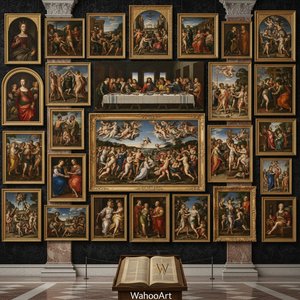
Якопо Тінторетто: 25 шедеврів венесенського майстра | OriginalUniqueArt
Відкрийте 25 захопливих шедеврів Якопо Тінторетто! Венесенський ренесанс, бароко, емоційні композиції та світлотінь. Купуйте високоякісні репродукції картин на OriginalUniqueArt.com – мистецтво для вашого дому.

