

 Переглянути в інтер'єрі
 Надіслати як листівку
 Поділитися
 Деталі витвору
 Посібник

 Завантажити
 Схожі екземпляри
 Рентгенівське дослідження
 Слайд-шоу
 Статистика
Oak


 Розгорнути текст
Гікле / Художній принт
Друк جيкле або на полотні музейної якості з оперативним виготовленням та різноманітними варіантами фінішної обробки. ( Замовити картину ручної роботи Перейти до цифрових зображень)




P118B ₴10

P118H ₴10

P118W ₴10

P438Z ₴10

P508JH ₴12

P508YH ₴12

P805H ₴10

P805Z ₴10

P919BZ ₴10

P919G ₴10

P919XJ ₴10

P959ZH ₴10

P968JZ ₴12

W106C ₴8

W218G ₴10

W218JH ₴8

W218Y ₴10

W307PJ ₴10

W316G ₴10

W316PJ ₴8

W316Y ₴10

W398PJ ₴8

W4111J ₴10

W500HY ₴15

W500JH ₴15

W692G ₴12

W849H ₴8

W940BG ₴15

W953PJ ₴8




Обирайте з наших стандартних розмірів, що відповідають оригінальним пропорціям твору мистецтва.

Введіть необхідну ширину та висоту, щоб принт ідеально підійшов до вашої рами або стіни. Принт можна лише обрізати, але не можна зробити більшим за оригінал, тому при зміні пропорцій частина зображення буде втрачена. Перед друком ми надсилаємо вам цифровий макет для затвердження. Зображення на цій сторінці не відображає реальну обрізку — її можна побачити лише на макеті.
Доставка по всьому світу () за 2 тижні замість стандартних 4/5 тижнів. (26 Жовтень)

Безкоштовна експрес-доставка по всьому світу

Високоякісне лляне полотно

Повне страхове покриття доставки

Гарантія повернення митних зборів

Гарантія точного відтворення кольорів

Політика повернення протягом 100 днів (лише у разі виявлення дефектів)

Гарантія повернення 100% коштів

Пропозиція на оптові замовлення
 Скляний варіант доступний лише для розмірів до 110 см

Oak
Гікле / Художній принт
Розмір репродукції
-


Підсумкова вартість
₴ 3591
A Meditation on Tranquility: Exploring Isaak Levitan’s “Oak”
Isaak Ilyich Levitan's "Oak," painted in 1880, transcends mere depiction; it embodies a profound connection to the Russian soul—a yearning for solace and beauty found within the immutable rhythms of nature. This oil on canvas masterpiece resides at the Tretyakov Gallery in Moscow, cementing its place as a cornerstone of Russian landscape art and attracting visitors eager to immerse themselves in Levitan’s masterful vision.
- Subject Matter: The painting centers around a solitary oak tree dominating a serene meadow. Its sprawling branches reach upwards, conveying resilience and strength against the backdrop of muted greens and browns—a deliberate choice reflecting the artist's preoccupation with themes of solitude and contemplation.
- Style & Technique: Levitan’s style is characterized by Impressionistic tendencies tempered with Symbolist sensibilities. He employs loose brushstrokes to capture fleeting atmospheric conditions, prioritizing tonal harmony over precise detail. The subtle gradations of color create an illusion of depth, drawing the viewer into a contemplative space reminiscent of Russian Romanticism.
- Historical Context: Created during the late 19th century, “Oak” speaks to the anxieties and aspirations of its time—a period marked by rapid industrialization yet deeply rooted in traditions of rural life and spiritual reflection. Levitan’s work aligns with a broader artistic movement seeking to express inner emotions through external landscapes, mirroring the philosophical currents of his era.
Symbolism Within the Frame
Beyond its aesthetic beauty, “Oak” is laden with symbolic significance. The oak tree itself represents endurance, nobility, and connection to ancestral roots—powerful emblems resonating within Russian culture. Its placement in a tranquil meadow symbolizes harmony between humanity and nature, suggesting an ideal state of equilibrium often pursued by artists and intellectuals alike. The solitary figure adds another layer of interpretation, representing introspection and the individual’s quest for spiritual understanding.
The Tretyakov Gallery Legacy
The Tretyakov Gallery's commitment to preserving Levitan’s legacy underscores the painting’s enduring importance. Established in 1856, this institution has become synonymous with Russian art history, showcasing an unparalleled collection spanning centuries of artistic innovation. Visitors can experience firsthand the profound impact of Levitan’s work—a testament to his ability to capture not just what he saw but also what he felt—inspiring generations of artists and admirers.
Reproductions: Bringing Levitan's Vision Home
High-quality reproductions of “Oak” are available on OriginalUniqueArt.com, allowing art enthusiasts to appreciate Levitan’s artistry in their own homes. These meticulously crafted prints capture the painting's luminous palette and textural nuances, ensuring that its evocative atmosphere persists beyond the gallery walls. Explore more about Isaak Levitan and his artistic journey at Wikipedia.
Питання та відповіді
Яка кольорова палітра використана в «Oak» роботи Isaak Ilyich Levitan?
У творі «Oak» роботи Isaak Ilyich Levitan використана Темні відтінки палітра кольорів, що визначає загальний колорит роботи.
Як мені знайти твори мистецтва, схожі на «Oak» роботи Isaak Ilyich Levitan?
Схожі твори мистецтва зібрані на сторінці Схожі твори для роботи «Oak» роботи Isaak Ilyich Levitan.
Яке відчуття передає «Oak» роботи Isaak Ilyich Levitan?
Переданий настрій твору «Oak» роботи Isaak Ilyich Levitan — це Безтурботний, а його емоційна тональність — Меланхолійний.
Біографія митця
A Symphony of the Russian Soul: The Life and Art of Isaak Ilyich Levitan
Isaak Ilyich Levitan, a name that echoes through the halls of Russian art history, was far more than just a painter of landscapes; he was a translator of emotions, a poet of the land. Born in 1860 in Kibarty (present-day Lithuania), a small village steeped in both beauty and hardship, his life unfolded as a poignant melody—a blend of profound loss, unwavering dedication to his craft, and an extraordinary ability to capture the very essence of Russia’s soul within his canvases. His early years were marked by tragedy; the untimely deaths of his mother and father cast a long shadow, instilling in him a sensitivity that would forever infuse his work with a melancholic beauty—a longing for something lost, a quiet contemplation of mortality. This inherent melancholy, coupled with the restrictions faced by Jewish communities within Tsarist Russia, fueled an intense desire to find solace and expression not in grand narratives or political pronouncements, but in the profound stillness and enduring spirit of the Russian wilderness. It was this yearning that led him to the Moscow School of Painting, Sculpture and Architecture in 1873, where he fell under the tutelage of Alexei Savrasov—a master whose influence would shape Levitan’s artistic vision for years to come.The Seeds of a ‘Mood Landscape’
Levitan quickly distinguished himself as an artist capable of conveying profound emotion through landscape. He wasn't interested in meticulously recreating the appearance of nature for its own sake; rather, he sought to capture *mood*—a feeling, an atmosphere that resonated deep within the viewer’s soul. This approach earned him the title of pioneer of the “mood landscape,” a genre that moved beyond simple representation and ventured into the realm of spiritual connection between humanity and the natural world. His palette was often subdued, favoring earthy tones and subtle gradations of light rather than vibrant, theatrical displays. He possessed an extraordinary ability to manipulate light and shadow, creating atmospheric effects that evoked feelings of tranquility, solitude, or even a quiet, poignant despair. Works like *Autumn Day. Sokolniki* (1879), painted when he was just nineteen years old, already demonstrated this remarkable talent—a delicate balance between observation and emotional interpretation. The painting’s muted colors and subtle rendering of light create an atmosphere of wistful nostalgia, suggesting the fleeting nature of beauty and the inevitability of change. Later masterpieces such as *The Vladimirka Road* (1892) and *Eternal Rest* (1894), prominently displayed in the Tretyakov Gallery, further solidified his reputation as a master of emotional landscape painting—works that invite contemplation and evoke a deep sense of connection to the Russian countryside.Influences and Artistic Kinships
While deeply indebted to Savrasov’s influence – particularly his emphasis on capturing atmospheric effects and conveying a sense of lyricism – Levitan was also receptive to other artistic currents. He benefited from the guidance of Vasily Perov, known for his social realism, and Vasily Polenov, who explored themes of Russian folklore and spirituality. Crucially, he developed a close friendship with Nikolai Chekhov—the brother of the renowned playwright Anton Chekhov—a relationship that profoundly influenced his life and work. This circle fostered an environment of creative exchange and mutual support, encouraging Levitan to explore new techniques and perspectives. Though he briefly experimented with Impressionistic techniques in his later years, particularly during his travels through France and Italy, he never fully embraced the movement, maintaining a uniquely Russian sensibility in his art—a deep connection to the land and its people. His designs for scenery for Savva Mamontov’s private Russian Opera demonstrate his versatility and willingness to explore different artistic mediums, showcasing his ability to translate emotional concepts into visual form.Major Achievements and Artistic Development
Levitan's career was marked by a steady progression of skill and maturity, culminating in several significant achievements. His early works, such as *A View of the Simonov Monastery* (1879), garnered critical acclaim and established his reputation within the Moscow art scene. The acquisition of *Autumn Day. Sokolniki* by Pavel Tretyakov in 1880 provided him with much-needed financial stability and recognition. His travels throughout Russia, particularly to the Volga region and Plyos, broadened his artistic horizons and exposed him to a wider range of landscapes—from vast plains to serene riverbanks. During this period, he produced some of his most iconic works, including *The Vladimirka Road*, *Eternal Rest*, and *Silent Cloister*, each imbued with a profound sense of melancholy and spiritual depth. In 1897, Levitan was elected to the Imperial Academy of Arts—a testament to his growing stature within the Russian art world—and subsequently became head of the landscape studio at his alma mater in 1898, dedicating himself to nurturing the next generation of Russian landscape painters.Legacy and Enduring Resonance
Isaak Levitan’s untimely death in 1900 at the age of forty-nine cut short a brilliant career, but his legacy endures as one of Russia's most beloved and influential landscape artists. His paintings continue to captivate audiences with their evocative beauty, emotional depth, and profound connection to the Russian soul. He not only documented the landscapes of Russia but also captured their spirit—their quiet dignity, their enduring resilience, and their inherent melancholy. His work remains a powerful reminder of the transformative power of art and its ability to connect us to something larger than ourselves. In 1941, his remains were moved to Novodevichy Cemetery in Moscow, where they rest beside Anton Chekhov—a poignant symbol of two artistic kindred spirits who shared a deep appreciation for the beauty and mystery of Russia. Levitan’s paintings are more than just representations of landscapes; they are windows into the heart of Russia itself.
Isaak Ilyich Levitan
1860 - 1900 , Україна
Короткі факти
- Artistic Movement Or Style: Модний ландшафт
- Artists Or Movements Influenced By This Artist: ['Російські ландшафтники']
- Artists Who Influenced This Artist:
- Алексій Савасов
- Василь Перов
- Василь Поляков
- Date Of Birth: 30 серпня 1860
- Date Of Death: 22 липня 1900
- Full Name: Ісаак Ілліч Левітан
- Nationality: Росіянин
- Notable Artworks:
- Осінь. Сокольники
- Володимирська дорога
- Вічна спокій
- Весняний полон
- Буря над річкою
- Place Of Birth: Кібарти, Литва
Пов'язані статті

Evocations of Place: A Historical Journey Through Landscape Art
Explore the rich history of landscape art with OriginalUniqueArt. Discover renowned artists, movements like Impressionism & Romanticism, and expert guidance for collecting timeless pieces. Find your perfect serene escape today!
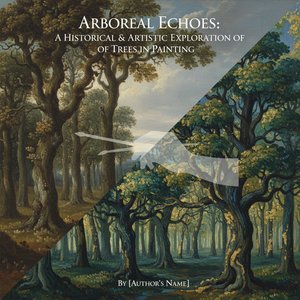
Arboreal Echoes: A Historical & Artistic Exploration of Trees in Painting
Explore the rich history of trees in painting! Discover symbolism, Romantic masterpieces by Caspar David Friedrich & beyond. A curated journey for art enthusiasts.

Топ-25 шедеврів Джона Констебла: пейзажі Англії для вашого дому | OriginalUniqueArt
Відкрийте для себе 25 найкращих шедеврів Джона Констебла! Англійські пейзажі, романтизм та емоційне світло в живописі. Репродукції картин високої якості для вашого дому від OriginalUniqueArt.com. Дослідіть повну колекцію онлайн!

Топ-10 шедеврів романтичного пейзажу: мистецтво, що захоплює дух | OriginalUniqueArt
Відкрийте для себе 10 шедеврів романтичного пейзажу! Каспар Давид Фрідріх, Тернер та інші майстри. Історія мистецтва, емоційні кольори природи та ідеї декору з OriginalUniqueArt.com. Дослідіть колекцію онлайн!

Arboreal Echoes: A Historical & Artistic Exploration of Trees in Painting
Explore the rich history of trees in painting! Discover symbolism, Romantic masterpieces by Caspar David Friedrich & beyond. A curated journey for art enthusiasts.