

 Переглянути в інтер'єрі
 Надіслати
 Поділитися
 Деталі
 Посібник

 Завантажити
 Схожі предмети колекціонування
 Рентгенівське дослідження
 Слайд-шоу
 Статистика переглядів
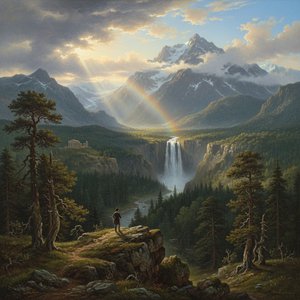
Fear in The Woods


 Читати далі
Олійная репродукція ручної роботи
Написана вручну олією на полотні у вашому розмірі та рамі, виготовлена на замовлення нашими художниками. ( Перейти до друку Перейти до цифрових зображень)




P118B $10

P118H $10

P118W $10

P438Z $10

P508JH $12

P508YH $12

P805H $10

P805Z $10

P919BZ $10

P919G $10

P919XJ $10

P959ZH $10

P968JZ $12

W106C $8

W218G $10

W218JH $8

W218Y $10

W307PJ $10

W316G $10

W316PJ $8

W316Y $10

W398PJ $8

W4111J $10

W500HY $15

W500JH $15

W692G $12

W849H $8

W940BG $15

W953PJ $8




Обирайте з наших стандартних розмірів, що відповідають оригінальним пропорціям твору мистецтва.

Ви можете вказати власні розміри, щоб репродукція ідеально підійшла до конкретної рами або інтер'єру. Якщо вибраний вами розмір не відповідає пропорціям оригіналу, ми або обріжемо полотно, або доповнимо картину додатковими елементами, промальованими вручну. Цифровий макет буде надіслано вам на затвердження перед початком виробництва.
Зверніть увагу, що попередній перегляд на екрані не відображає фактичне обрізання або розширення зображення. Тільки макет точно покаже остаточну композицію.
Хоча ми можемо виготовити виріб у нестандартному розмірі, для збереження оригінальних пропорцій рекомендуємо обирати варіанти зі встановленого списку.
Після оформлення замовлення команда OriginalUniqueArt.com зв'яжеться з клієнтом електронною поштою для отримання інструкцій та надасть попередній макет
Доставка по всьому світу () за 3–4 тижні замість стандартних 5 тижнів. (25 Вересень). Без жодних компромісів у якості.

Безкоштовна експрес-доставка по всьому світу

Високоякісне лляне полотно

Повне страхове покриття доставки

Гарантія повернення митних зборів

Гарантія точного відтворення кольорів

Політика повернення протягом 100 днів (лише у разі виявлення дефектів)

Гарантія повернення 100% коштів

Знижка на оптові замовлення
 Скляний варіант доступний лише для розмірів до 110 см

Fear in The Woods
Техніка репродукції
Розмір репродукції
-


Загальна вартість
$ 300
Біографія митця
The Visionary of the Subconscious: The Life and Legacy of Hugo Simberg
In the quiet, mist-shrouded landscapes of late 19th-century Finland, a unique artistic voice emerged that would forever alter the nation's cultural landscape. Hugo Gerhard Simberg (1873–1917) was not merely a painter; he was a weaver of dreams, a chronicler of the unseen, and a master of the Symbolist movement. Born in Hämeenlinna to Colonel Nicolai Simberg and Ebba Matilda Simberg, his early life was steeped in an environment that nurtured both discipline and imagination. While his father’s military background provided a structured foundation, it was the influence of his aunt Alexandra—an amateur painter who taught him to read—that likely planted the first seeds of his artistic vocation. His journey into the depths of the human psyche began far from the battlefield, moving instead toward the ethereal realms of folklore and myth.
Simberg’s formal education was a tapestry of diverse influences and rigorous training. He refined his craft at the Drawing School of the Finnish Art Society between 1893 and 1895, studying under luminaries such as Helene Schjerfbeck and Elin Danielson-Gambogi. However, it was his profound connection to the legendary Akseli Gallén-Kallela that truly sculpted his stylistic identity. Under Gallén-Kallela’s mentorship, Simberg developed a deep reverence for the expressive power of the Finnish wilderness and its darker, more enigmatic qualities. This period of study instilled in him an ability to blend the tangible textures of nature with the intangible weight of psychological complexity, creating a style that felt both grounded in the earth and adrift in the heavens.
A Tapestry of Myth, Macabre, and Melancholy
To encounter a Simberg canvas is to step into a world where the boundaries between reality and nightmare are beautifully blurred. As a central figure of Finnish Symbolism, his work eschewed the literalism of realism in favor of exploring themes of death, the supernatural, and the human condition. His paintings often feature enigmatic figures—hobgoblins, wounded angels, and mysterious travelers—that inhabit landscapes filled with both dread and serenity. In masterpieces such as The Garden of Death and The Wounded Angel, Simberg achieved a rare feat: he made the macabre feel profoundly tender. He did not approach death as a terrifying end, but rather as a quiet, inevitable part of a larger, mystical cycle.
His technical prowess allowed him to navigate various mediums, from haunting watercolors to commanding oil paintings. His ability to manipulate light and shadow created an atmosphere of "macabre serenity," where even the most unsettling subjects were rendered with a delicate, dreamlike grace. This duality is perhaps best seen in works like King Hobgoblin Sleeping, where the use of symbolic animals and mystical shadows invites the viewer into a state of contemplative wonder. Through his participation in the Finnish Artists’ Autumn Exhibitions from 1898 onwards, he brought these private visions to the public eye, captivating critics and audiences alike with his ability to capture the "unseen" elements of existence.
Historical Significance and Eternal Resonance
The legacy of Hugo Simberg extends far beyond the borders of Finland. His travels through London and Paris exposed him to the broader European avant-garde, allowing him to integrate international stylistic innovations into his uniquely Finnish perspective. This synthesis of local folklore and cosmopolitan Symbolism ensured that his work resonated on a much larger stage. One of his most significant architectural contributions was his commission to decorate St John’s Church in Tampere between 1904 and 1906, a feat that demonstrated his capacity to translate his intimate, psychological explorations into grand, communal spaces.
Though his life was tragically short, ending at the age of forty-four, Simberg left behind an indelible mark on the history of art. He remains a pivotal figure whose work continues to haunt and inspire contemporary viewers. His significance lies in his courage to confront the darker aspects of the human soul with beauty rather than fear. Today, his works serve as vital windows into the late 19th-century psyche, reminding us that within the shadows of our fears, there exists a profound and poetic truth about what it means to be alive.

Hugo Simberg
1873 - 1917 , Finland
Довідкова інформація
- Artistic Movement Or Style: Symbolism
- Artists Or Movements Influenced By This Artist: ['Romanticism']
- Artists Who Influenced This Artist: ['Akseli Gallén-Kallela']
- Date Of Birth: June 24, 1873
- Date Of Death: July 12, 1917
- Full Name: Hugo Gerhard Simberg
- Nationality: Finnish
- Notable Artworks:
- The Garden of Death
- The Wounded Angel
- Place Of Birth: Hämeenlinna, Finland
Схожі статті

Топ-25 шедеврів Джона Констебла: пейзажі Англії для вашого дому | OriginalUniqueArt
Відкрийте для себе 25 найкращих шедеврів Джона Констебла! Англійські пейзажі, романтизм та емоційне світло в живописі. Репродукції картин високої якості для вашого дому від OriginalUniqueArt.com. Дослідіть повну колекцію онлайн!

Evocations of Place: A Historical Journey Through Landscape Art
Explore the rich history of landscape art with OriginalUniqueArt. Discover renowned artists, movements like Impressionism & Romanticism, and expert guidance for collecting timeless pieces. Find your perfect serene escape today!
Evoking Nature's Sublime: A Comprehensive Exploration of 19th-Century Landscape Painting
Explore the captivating world of 19th-century landscape painting! Discover renowned artists like Friedrich & Monet, key movements, and find the perfect artwork to bring nature's serenity into your home. Expert insights at OriginalUniqueArt.

Топ-10 шедеврів романтичного пейзажу: мистецтво, що захоплює дух | OriginalUniqueArt
Відкрийте для себе 10 шедеврів романтичного пейзажу! Каспар Давид Фрідріх, Тернер та інші майстри. Історія мистецтва, емоційні кольори природи та ідеї декору з OriginalUniqueArt.com. Дослідіть колекцію онлайн!

Evocations of Place: A Historical Journey Through Landscape Art
Explore the rich history of landscape art with OriginalUniqueArt. Discover renowned artists, movements like Impressionism & tonalism, and expert guidance for collecting timeless pieces. Find your perfect serene escape today!