

 Переглянути в інтер'єрі
 Надіслати як листівку
 Поділитися
 Деталі витвору
 Посібник

 Завантажити
 Схожі екземпляри
 Рентгенівське дослідження
 Слайд-шоу
 Статистика
UNE GALERIE DE MUSEE


 Розгорнути текст
Гікле / Художній принт
Друк جيкле або на полотні музейної якості з оперативним виготовленням та різноманітними варіантами фінішної обробки. ( Замовити картину ручної роботи Перейти до цифрових зображень)




P118B ₴10

P118H ₴10

P118W ₴10

P438Z ₴10

P508JH ₴12

P508YH ₴12

P805H ₴10

P805Z ₴10

P919BZ ₴10

P919G ₴10

P919XJ ₴10

P959ZH ₴10

P968JZ ₴12

W106C ₴8

W218G ₴10

W218JH ₴8

W218Y ₴10

W307PJ ₴10

W316G ₴10

W316PJ ₴8

W316Y ₴10

W398PJ ₴8

W4111J ₴10

W500HY ₴15

W500JH ₴15

W692G ₴12

W849H ₴8

W940BG ₴15

W953PJ ₴8




Обирайте з наших стандартних розмірів, що відповідають оригінальним пропорціям твору мистецтва.

Введіть необхідну ширину та висоту, щоб принт ідеально підійшов до вашої рами або стіни. Принт можна лише обрізати, але не можна зробити більшим за оригінал, тому при зміні пропорцій частина зображення буде втрачена. Перед друком ми надсилаємо вам цифровий макет для затвердження. Зображення на цій сторінці не відображає реальну обрізку — її можна побачити лише на макеті.
Доставка по всьому світу () за 2 тижні замість стандартних 4/5 тижнів. (26 Жовтень)

Безкоштовна експрес-доставка по всьому світу

Високоякісне лляне полотно

Повне страхове покриття доставки

Гарантія повернення митних зборів

Гарантія точного відтворення кольорів

Політика повернення протягом 100 днів (лише у разі виявлення дефектів)

Гарантія повернення 100% коштів

Пропозиція на оптові замовлення
 Скляний варіант доступний лише для розмірів до 110 см

UNE GALERIE DE MUSEE
Гікле / Художній принт
Розмір репродукції
-


Підсумкова вартість
₴ 3591
A Vision of Artistic Legacy: Stepping into Hubert Robert’s Grandeur
To encounter Hubert Robert’s “Une Galerie de Musée” is to step through a portal into the very soul of late eighteenth-century intellectual life. Painted around 1798, this monumental oil on canvas does far more than merely document an interior; it invites the viewer into a profound dialogue between the past and the present. The scene unfolds within a vast, majestic museum gallery, where the air seems thick with the quiet reverence of history. Bathed in the soft, diffused glow of natural light streaming from above, the space is populated by artists caught in moments of deep contemplation, their brushes and sketches attempting to capture the eternal essence of classical forms. It is an immersive experience that captures the heart of Romantic antiquarianism, where the grandeur of antiquity meets the burgeoning curiosity of a new era.
The composition is a masterclass in architectural illusion and spatial depth. Robert employs a rigorous linear perspective, utilizing tall, commanding columns and sweeping arched windows to guide the eye toward a distant, mysterious vanishing point. This sense of infinite space is further enriched by the rhythmic arrangement of hanging paintings and the sturdy presence of sculptures that anchor the foreground. The interplay of lines—the strong verticals of the architecture contrasted with the dynamic diagonals of tilted easels and framed works—creates a visual energy that prevents the monumental setting from feeling static. For the collector or designer, this piece offers a sense of structural stability and sophisticated complexity, making it an ideal centerpiece for spaces that demand both presence and narrative depth.
The Poetry of Decay and the Mastery of Light
Robert’s technical prowess is most evident in his ability to render texture and atmosphere through a meticulously controlled palette. The color scheme is a sophisticated arrangement of muted, earthy tones—beige, warm browns, slate greys, and ethereal pale blues—which together evoke the melancholic beauty of weathered stone and aged marble. Subtle highlights of ochre and terracotta breathe life into the architectural details, suggesting the warmth of sunlight hitting ancient surfaces. Through the delicate use of glazing techniques, Robert achieves a luminous quality, allowing light to appear as if it is truly vibrating within the room. The juxtaposition of smooth, polished sculptures against the rugged, textured walls creates a tactile realism that draws the viewer closer to the canvas.
< Symbolism and Emotional ResonanceBeyond its technical brilliance, “Une Galerie de Musée” serves as a powerful symbol of the human endeavor to preserve and revive classical ideals. The presence of artists actively sketching within the gallery is not merely decorative; it represents the continuity of culture and the tireless pursuit of knowledge. There is a poignant tension within the work—a celebration of artistic achievement set against a backdrop that hints at the inevitable passage of time and the beauty found in ruin. This duality evokes a sense of contemplative elegance and nostalgic longing, making the artwork deeply moving for those who find inspiration in the layers of history. For an interior setting, such a piece provides more than just decoration; it offers a window into a world of scholarly passion and timeless aesthetic grace.
Питання та відповіді
Як я можу придбати цифровий файл «UNE GALERIE DE MUSEE» роботи Гюберт Роберт?
Щоб отримати цифровий файл твору «UNE GALERIE DE MUSEE» роботи Гюберт Роберт, замовте завантаження цифрового зображення високої роздільної здатності на його сторінці Цифрове зображення високої якості.
Для якої нагоди «UNE GALERIE DE MUSEE» роботи Гюберт Роберт рекомендується як подарунок?
«UNE GALERIE DE MUSEE» роботи Гюберт Роберт рекомендується як подарунок для Corporate Gift. Як презент можна обрати репродукцію цього витвору мистецтва.
Скільки людей переглядають "UNE GALERIE DE MUSEE"?
Сторінка Статистика переглядів для роботи «UNE GALERIE DE MUSEE» роботи Гюберт Роберт містить статистику публічних переглядів: кількість щомісячних відвідувань цього твору, порівняння з найбільш популярними роботами митця та географію відвідувачів.
Біографія митця
Hubert Robert: A Painter of Ruins and Visions
Hubert Robert, a name inextricably linked to the evocative beauty of decaying grandeur, stands as a singular figure in 18th-century French art. Born in Paris in 1733, his life unfolded against a backdrop of dramatic artistic shifts – from the opulent excesses of the Rococo to the burgeoning ideals of Neoclassicism – and ultimately, through the tumultuous upheaval of the French Revolution. Robert wasn’t merely an observer of ruins; he was a visionary interpreter, skillfully blending meticulous observation with boundless imagination to conjure scenes that resonated with both a poignant nostalgia for the past and a tantalizing anticipation of the future. His artistic journey began within the structured confines of formal training, initially under the tutelage of sculptor Michel-Ange Slodtz, who recognized Robert’s innate talent but wisely steered him towards painting, sensing his true calling lay in capturing the ephemeral dance of light, atmosphere, and the subtle poetry of form.Roman Reveries: Shaping an Artistic Identity
The defining moment in Robert's artistic development arrived with his extended sojourn to Rome between 1754 and 1765. This period wasn’t simply a vacation; it was a profound immersion into a world saturated with history, architectural magnificence, and the ghosts of antiquity. Accompanying Étienne-François de Choiseul, Robert found himself enveloped in the heart of the Roman Empire's legacy – its crumbling temples, majestic arches, and overgrown gardens became his constant studio. He didn’t merely replicate what he saw; rather, he meticulously studied, reimagined, and imbued these ancient spaces with a distinctly melancholic beauty. His early works, often categorized as *capricci*, reflected this approach—fantastical compositions that juxtaposed classical ruins with contemporary life, creating an intriguing dialogue between past and present. A pivotal influence during this time was Giovanni Paolo Panini, whose mastery of landscape and architectural detail profoundly shaped Robert’s technique. However, Robert quickly transcended mere imitation, developing a unique style characterized by extraordinary precision, atmospheric perspective, and a remarkable sensitivity to the interplay of light and shadow. He wasn't simply painting ruins; he was capturing time itself, distilling the essence of transience and the enduring power of memory into his canvases. His extensive sketchbook collection from this period offers invaluable insights into his artistic process – detailed studies of Roman landmarks like the Villa d’Este and Caprarola, revealing a keen eye for architectural nuance and landscape composition.Parisian Acclaim and Royal Patronage
Robert's triumphant return to Paris in 1765 marked a significant elevation in his career. He swiftly gained recognition within the artistic circles of the city, securing admission to the Académie Royale de Peinture et de Sculpture with “The Port of Rome, Ornamented with Different Monuments of Architecture, Ancient and Modern.” This success was followed by a series of exhibitions at the Salon, where his evocative depictions of ruins and picturesque landscapes captivated audiences. The critic Denis Diderot famously lauded Robert’s ability to transport viewers to another time and place, recognizing the profound emotional resonance of his work. This widespread acclaim led to prestigious commissions – including decorative projects for grand residences and appointments as “Designer of the King's Gardens” and later, “Keeper of the King’s Pictures.” He became a highly sought-after artist, not only for his easel paintings but also for his innovative designs for gardens and palatial interiors. Robert’s work resonated deeply with the prevailing taste for *capriccio* painting – a genre that appealed to collectors fascinated by history, archaeology, and the romantic allure of the picturesque – yet he infused it with a distinctive sensibility, elevating it beyond mere decorative art.Revolution, Resilience, and Lasting Legacy
The French Revolution presented an unprecedented challenge for Robert, forcing him to navigate a period of immense political instability and social upheaval. While many artists struggled to adapt to these turbulent times, Robert demonstrated remarkable resilience, continuing to paint prolifically despite the dangers and uncertainties surrounding him. He even endured imprisonment during the Reign of Terror – a harrowing experience that undoubtedly informed his later works exploring themes of confinement and vulnerability. Following the Revolution, Robert was appointed curator of the newly established Muséum Central des Arts—the future Musée du Louvre—a testament to his expertise and dedication to preserving France’s artistic heritage. He played a crucial role in organizing and cataloging the museum's vast collection, ensuring that its treasures were safeguarded for generations to come. Hubert Robert died in Paris in 1808, leaving behind an extraordinary body of work – over 300 paintings, drawings, and engravings – that continues to captivate viewers with its blend of historical accuracy, imaginative vision, and profound emotional depth. His legacy extends beyond his technical mastery; he pioneered a genre of painting that celebrated both the beauty of decay and the enduring power of human creativity, solidifying his place as a pivotal figure bridging the Rococo and Neoclassicism periods, and anticipating aspects of Romanticism with his fascination for history and imagination.- Key Influences: Giovanni Paolo Panini, Piranesi, the architectural landscape of Rome.
- Major Themes: Ruins, landscapes, *capriccio* paintings, historical memory, the passage of time.
- Artistic Style: Meticulous detail, atmospheric perspective, evocative lighting, blending observation with imagination.
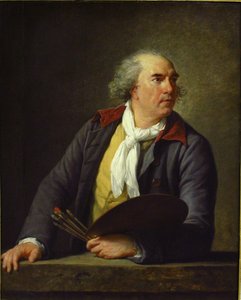
Гюберт Роберт
1733 - 1808 , Франція
Короткі факти
- Artistic Movement Or Style: Романтизм, Неокласицизм
- Artists Or Movements Influenced By This Artist: ['Романтизм']
- Artists Who Influenced This Artist:
- Джованні Паніні
- П'єре-Огюст Рено
- Date Of Birth: 22 травня 1733
- Date Of Death: 15 квітня 1808
- Full Name: Hubert Robert
- Nationality: Француз
- Notable Artworks:
- Порт Риму
- Політ Галатеї
- Place Of Birth: Париж, Франція
Пов'язані статті

Mastering the Classics: The 25 Greatest Paintings by Nicolas Poussin
Journey through the grandeur of French Baroque with our curated list of the top 25 Nicolas Poussin masterpieces. Explore the stories behind these timeless classical paintings and find museum-quality art reproductions for your decor. Discover all masterpieces on OriginalUniqueArt.com.

Mastering the Classics: The Top 25 Essential Works by Nicolas Poussin
Immerse yourself in the grandeur of French Baroque with our curated guide to the top 25 Nicolas Poussin masterpieces. Explore the stories behind these timeless classical paintings and find museum-quality art reproductions for your decor. Discover all masterpieces on OriginalUniqueArt.com.
Гармонія Контрастів: Інтеграція Сучасної Абстрактної Живопису в Класичні Інтер'єри для Вічної Елегантності
Відкрийте гармонію контрастів! Експертні поради від OriginalUniqueArt щодо інтеграції сучасного абстрактного живопису в класичні інтер'єри. Підберіть ідеальне мистецтво для вашого дому – ексклюзивні репродукції та картини на замовлення з доставкою по Україні.

25 Must-See Masterpieces at the National Gallery, London
Embark on a journey through history with the 25 most iconic masterpieces at London's National Gallery. From Renaissance legends to Impressionist light, explore the stories behind these timeless works and find museum-quality art inspiration. Discover all masterpieces on OriginalUniqueArt.com.

Hubert Robert: Picturing Ruins, Preserving Memory – A Study of Romantic Antiquarianism & Artistic Innovation
Explore the captivating world of Hubert Robert, master of Romantic landscape painting & 'capriccio' ruins. Discover his historical context, artistic innovations, and collecting insights with OriginalUniqueArt.


