Romanticism · 1790
Painters (Гюбер Робер, 1790)
Гюбер Робер (1733–1808) створив Painters. Дата створення — 1790. Він належить до напряму Romanticism. Виконано в Acrylic On Canvas. Екземпляр зберігається в Державний музей-заповідник «Ермітаж» у Санкт-Петербург, Росія. Розмір: 24 × 32 cm
- 1790
- Acrylic On Canvas
- 24 × 32 cm
- Державний музей-заповідник «Ермітаж», Санкт-Петербург

 Переглянути в інтер'єрі

 Картина олією ручної роботи
 Надіслати як листівку
 Поділитися
 Інформаційна картка


 Завантажити
 Схожі екземпляри
 Рентгенівське дослідження
 Слайд-шоу
 Питання та відповіді

 Статистика
Painters коротко
- Назва
- Painters
- Художник
- Гюбер Робер (1733–1808)
- Рік народження митця
- Париж, Франція
- Дата
- 1790
- Матеріал
- Acrylic On Canvas
- Розміри
- 24 × 32 cm
- Де подивитися
- Державний музей-заповідник «Ермітаж», Санкт-Петербург, Росія
- Рух
- Romanticism
- Сюжет
- landscapes, ruins, figures, daytime, field, workers
Що зображено на Painters?
Hubert Robert’s “Painters”: A Vision of Ruin and Remembrance
Hubert Robert's "Painters," painted in 1790, isn’t merely a depiction of laborers at work; it’s a carefully constructed meditation on labor, time, and the enduring power of memory. The scene unfolds within a rugged, almost theatrical landscape – a dramatic vista dominated by a towering rock formation, its weathered surface hinting at centuries of exposure to the elements. Two figures, rendered with a subtle realism that belies Robert's penchant for romanticized ruins, are engaged in the arduous task of carving stone. One, positioned atop the rock, directs the work with a commanding presence, while the other, lower down, meticulously shapes the material beneath him. The composition isn’t about capturing a specific moment; it’s about evoking a feeling – a sense of timelessness and the relentless passage of time, beautifully intertwined with the human effort to impose order upon nature.
Robert's style is distinctly rooted in the Neoclassical tradition, yet infused with the burgeoning Romantic sensibility that was beginning to challenge its rigid formality. He masterfully employs atmospheric perspective – the subtle blurring and darkening of distant elements – to create a profound sense of depth and space. The light, diffused and golden, washes over the scene, casting long shadows and highlighting the textures of the rock and the figures’ clothing. Notice how Robert utilizes loose brushstrokes, particularly in the depiction of the landscape, creating an impressionistic effect that anticipates later developments in art history. This deliberate softness contrasts with the sharper detail given to the men themselves, suggesting a focus on their individual struggles within the grand scheme of nature.
The Context of Labor and Ruin
To fully appreciate “Painters,” it’s crucial to understand Robert's artistic interests – particularly his fascination with ruins. Following the upheavals of the French Revolution, a renewed interest in antiquity and the past emerged, fueled by archaeological discoveries and a desire to reconnect with a perceived lost sense of order and stability. Robert, like many artists of his time, found inspiration in the decaying grandeur of Roman temples and medieval castles, transforming these remnants into evocative landscapes – ‘capriccios’ as he called them. These weren't simply artistic exercises; they were explorations of memory, loss, and the cyclical nature of history. The very act of painting ruins became a way to preserve a fading past, imbuing it with new life and meaning.
The figures depicted in “Painters” represent a specific segment of 18th-century French society – laborers engaged in essential but often overlooked work. Robert’s choice to portray them within such a dramatic landscape elevates their status, suggesting that even the most humble tasks are worthy of artistic attention. The scene subtly critiques the social hierarchies of the time, presenting these men not as mere workers, but as active participants in shaping the world around them. The rock formation itself can be interpreted as a symbol of enduring strength and resilience – a testament to the power of human labor against the forces of nature.
Symbolism and Emotional Resonance
Beyond its straightforward depiction of work, “Painters” is rich in symbolic meaning. The towering rock formation, with its weathered surface, represents the weight of history and the passage of time. The figures’ focused expressions convey a sense of dedication and perseverance, but also hint at the physical strain of their labor. Robert's use of color – predominantly earthy tones punctuated by flashes of gold – evokes feelings of warmth, nostalgia, and perhaps even melancholy. The overall effect is one of quiet contemplation, inviting the viewer to reflect on the relationship between humanity and nature, work and memory.
The inclusion of animals—a horse and a dog—adds another layer of complexity to the scene. Animals have long been associated with labor and service in art, symbolizing loyalty, strength, and connection to the natural world. Their presence reinforces the theme of human interaction with the environment, suggesting a harmonious coexistence – albeit one marked by hard work and enduring effort. “Painters” is not simply a landscape; it’s a carefully orchestrated tableau that speaks volumes about the values and anxieties of its time.
A Timeless Masterpiece: Reproduction Considerations
Reproductions of Hubert Robert's “Painters” offer a remarkable opportunity to bring this evocative artwork into your home or office. The meticulous detail captured by Robert’s brushstrokes, combined with his masterful use of light and shadow, translates beautifully to high-quality reproductions. When selecting a reproduction, pay close attention to the texture and color accuracy – features that are crucial for capturing the painting's atmospheric depth and emotional resonance. OriginalUniqueArt offers meticulously crafted hand-painted reproductions that faithfully recreate Robert’s original vision, ensuring that you experience the full impact of this timeless masterpiece.
У якому музеї зберігається Painters?
Державний музей-заповідник «Ермітаж»
Санкт-Петербург, Росія
Витоки та історія Державного музею-заповідника «Ермітаж» Історія Державного музею-заповідника «Ермітаж» бере свій початок у 1764 році. Її фундамент був закладений завдяки придбанню колекції з 225 полотен у берлінського купця Йоганна Ернста Готцовського. Саме Катерина Велика дала поштовх створенню цієї колекції, заклавши основу для появи музею в Санкт-Петербурзі, Росія.


Зображення високої роздільної здатності Painters

Суспільне надбання: художник помер у 1808 році.
Інші розміри, кадри та цитування →Гюбер Робер, Painters (1790), Державний музей-заповідник «Ермітаж». Суспільне надбання
Відповіді на запитання про Painters
Де можна побачити оригінал «Painters» роботи Гюбер Робер?
«Painters» роботи Гюбер Робер експонується в Державний музей-заповідник «Ермітаж», Санкт-Петербург, Росія. У описі музею йдеться про оригінальний твір, а не про репродукції.
У якому році було створено «Painters» роботи Гюбер Робер?
«Painters» датована 1790 роком. Ця дата дозволяє визначити місце твору в творчому шляху Гюбер Робер та відповідну епоху.
Яка техніка була використана для створення «Painters» роботи Гюбер Робер?
Для створення «Painters» Гюбер Робер використав(ла) техніку Acrylic On Canvas. Саме ця техніка визначає матеріальну природу оригінального твору.
Які розміри оригіналу "Painters"?
«Painters» має розмір 24 x 32 cm в оригіналі. Оригінальні розміри є корисним орієнтиром під час вибору розміру репродукції.
Які сюжети зображені у «Painters» роботи Гюбер Робер?
«Painters» роботи Гюбер Робер зображує: landscapes, ruins, figures, daytime, field, workers, composition, xviii century.
Чи не захищений твір "Painters" авторським правом?
«Painters» роботи Гюбер Робер перебуває у є суспільним надбанням — термін дії авторського права закінчився. Цей статус визначає правила відтворення зображення твору.
Хто є автором твору "Painters"?
«Painters» приписують Гюбер Робер.
До якого художнього напряму належить «Painters» роботи Гюбер Робер?
«Painters» — це твір у стилі Romanticism. Назва течії вказує на художню традицію, до якої належить цей твір.
Який етап творчого розвитку Гюбер Робер представляє твір "Painters"?
«Painters» належить до Mature Period творчого шляху Гюбер Робер. Ця класифікація пов’язує твір із етапом становлення митця.
Про художника Гюбер Робер
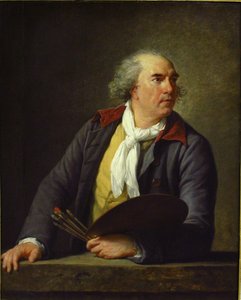
1733–1808, Франція
Гюбер Робер
Early Life, Family and Artistic Training Born in Paris in 1733, Hubert Robert entered a world where his family's social standing was tied to the service of others. His father, Nicolas Robert, held a position within the household of a prominent figure, a connection that would eventually facilitate the young man's movement through the upper echelons of French society. This early stability provided the foundation for a formal education, which he pursued through the structured environment of the Collège de Navarre. By 1751, he had completed his studies under the Jesuits, gaining a disciplined intellectual background before turning his attention to the visual arts.
Також за участю Гюбер Робер
 The Pont du Gard1787
 The Finding of the Laocoön1773
 Le port de Ripetta
 PROJET D'AMENAGEMENT DE LA GRANDE GALERIE DU LOUVRE

Есе до твору Painters
 Топ-10 шедеврів імпресіонізму: картини, що змінили світ мистецтва | OriginalUniqueArtВідкрийте для себе 10 шедеврів імпресіонізму від Моне, Ренуара та Дега! Дізнайтесь історію створення культових картин, техніки та вплив на …
 Hubert Robert: Picturing Ruins, Preserving Memory – A Study of Romantic Antiquarianism & Artistic InnovationExplore the captivating world of Hubert Robert, master of Romantic landscape painting & 'capriccio' ruins. Discover his historical context,…
 Emotion vs. Observation: A Guide to Romanticism and RealismMaster the differences between Romanticism and Realism through expert analysis. Discover the art of emotion versus observation now.