
 Переглянути в інтер'єрі
 Надіслати як листівку
 Поділитися
 Деталі витвору
 Посібник

 Завантажити
 Схожі екземпляри
 Рентгенівське дослідження
 Слайд-шоу
 Питання та відповіді
 Статистика
Alexandre le Grand devant le tombeau d'Achille


 Розгорнути текст
Отримайте файл, готовий до друку, якість якого значно перевищує якість веб-попереднього перегляду. Кожне цифрове зображення, яке ми продаємо, створене на основі високої роздільної здатності з нашої бази даних — зазвичай від 5 000 до 15 000 пікселів по ширині — тому ви можете впевнено друкувати у великому форматі, робити щільну обрізку або відтворювати найдрібніші деталі.
Жоден файл не залишається в нашій студії без уваги. Експерт із цифрової обробки звіряє кольори з оригінальною картиною та за потреби коригує їх, після чого покращує чіткість і деталізацію за допомогою професійних інструментів ретушування — завжди зберігаючи вірність мазкам пензля та стилю художника. Результатом є зображення, яке виглядає як справжня картина, а не як відскановане фото з накладеними фільтрами.
Ви затверджуєте результат перед завершенням замовлення: протягом 72 годин наш експерт надішле зображення електронною поштою для вашого перегляду. Не задоволені результатом? Ви можете попросити про внесення змін чи виправлень або отримати відшкодування, якщо якість не відповідає вашим очікуванням.
Саме на таку якість покладаються видавництва, дизайн-студії, галереї та друкарні.
Цифрове зображення
Завантажте файл високої роздільної здатності для особистого використання, друку та творчих проєктів. ( Перейти до друку Замовити картину ручної роботи)
Переваги кожного замовлення цифрових зображень
Експертна цифрова доставка з гарантією якості
Обираючи OriginalUniqueArt.com, ви отримуєте не просто зображення — ви отримуєте професійно вдосконалений цифровий витвір мистецтва, створений з надзвичайною точністю та підкріплений гарантією задоволення. Ось усе, що автоматично додається до вашого замовлення:

Швидка доставка на email
Ваш цифровий файл із зображенням високої роздільної здатності буде надісланий вам електронною поштою протягом 72 годин після оформлення замовлення — він буде готовий до негайного використання.

Цифровий файл із покращенням ШІ
Ваш витвір мистецтва професійно оптимізовано за допомогою передових інструментів штучного інтелекту та ручної корекції, що забезпечує максимальну деталізацію, чіткість і точність передачі кольорів.

Безкоштовне повторне завантаження назавжди
Випадково видалили або втратили файл? Не хвилюйтеся — ми надішлемо його вам повторно в будь-який час безкоштовно.

Без митних зборів — завжди
Насолоджуйтесь вашим витвором мистецтва миттєво без жодних мит, зборів або плати за доставку — цифрові завантаження завжди не оподатковуються.

Гарантія точності кольорів
Ми гарантуємо максимально точне відтворення оригінальних кольорів на вашому цифровому зображенні завдяки використанню професійних інструментів та систем управління кольором.

100-денна гарантія задоволення
Якщо ви не задоволені придбаним цифровим зображенням, ми внесемо правки або повернемо 100% вартості протягом 100 днів — без зайвих запитань.

Гарантія повернення 100% коштів
Незадоволені покупкою? Отримайте повне повернення коштів протягом 100 днів після отримання цифрового файлу — без зайвих запитань.

Знижки на оптові замовлення
Купуйте 3 зображення — заощаджуйте 10% — Купуйте 5 — заощаджуйте 15% — Купуйте 10+ — заощаджуйте 20%. Чудово підходить для творчих проєктів, галерей та агентств.
A Dramatic Encounter: Hubert Robert’s Meditation on Power and Decay
Hubert Robert’s “Alexandre le Grand devant le tombeau d’Achille” (c. 1754-1757) is not merely a depiction of a historical scene; it's a carefully constructed tableau brimming with symbolic weight, rendered in the evocative style characteristic of the late 18th century. The painting transports us to a ruined Roman landscape – a deliberate choice by Robert that immediately establishes a dialogue between grandeur and transience. Here, Alexander the Great stands before what is clearly identified as Achilles’ tomb, not in triumphant victory, but in a posture of contemplative solemnity. This isn't the heroic Alexander of classical sculpture; he appears almost weary, his gaze fixed on the fragmented remains of the past, suggesting a profound awareness of mortality and the fleeting nature of even the most formidable power.
Robert masterfully employs a flattened perspective, prioritizing atmosphere and emotional resonance over strict adherence to linear realism. The composition is deliberately complex, layering figures – soldiers, onlookers, and Alexander himself – within a carefully orchestrated architectural setting. The strong vertical lines of the columns contrast sharply with the horizontal fragmentation of the fallen structures, creating a visual tension that mirrors the painting’s thematic concerns. Notice how Robert uses diffused lighting, reminiscent of an overcast day, to soften the edges and imbue the scene with a melancholic quality. The earthy color palette – dominated by ochres, browns, and muted blues – further reinforces this sense of age and decay, while subtle touches of red in the drapery draw the eye and add a touch of dramatic intensity.
Neoclassical Roots, Romantic Longing
While firmly rooted in the Neoclassical tradition—a style emphasizing clarity, order, and rational composition—Robert’s work also reveals a strong influence from the burgeoning Romantic movement. The ruins themselves are not simply historical artifacts; they represent a powerful symbol of time's relentless passage and the inevitable decline of all things. The scene evokes a sense of nostalgia for a lost golden age, a yearning for beauty amidst decay – a hallmark of Romanticism’s fascination with emotion and the sublime. Robert wasn’t just documenting ruins; he was crafting visions, blending observation with imagination to create scenes that resonated with both a longing for the past and an anticipation of the future.
The choice of Achilles' tomb is particularly significant. Achilles, the epitome of heroic strength and martial prowess, represents an ideal of masculine virtue—a concept increasingly challenged by the Enlightenment’s emphasis on reason and individual liberty. Alexander, standing before his demise, implicitly acknowledges this shift in values. The juxtaposition of the powerful conqueror with the fallen hero suggests a subtle critique of unchecked ambition and the ultimate futility of earthly glory. Robert's skill lies not just in depicting the scene accurately but in imbuing it with layers of meaning that invite contemplation.
Technique and Materials: A Layered Masterpiece
“Alexandre le Grand devant le tombeau d’Achille” is a testament to Robert's meticulous technique. Likely executed in oil on canvas, the painting demonstrates a sophisticated understanding of color blending and layering—a hallmark of the Rococo and Neoclassical periods. The visible brushstrokes contribute to the sense of texture and immediacy, while subtle glazing techniques create depth and luminosity. The rough, aged surfaces of the ruins are contrasted with smoother areas of skin tones, further emphasizing the painting’s thematic concerns about time and decay. Robert's use of pigments mixed with oil—a standard practice at the time—allowed him to achieve a remarkable range of tonal values and subtle color variations.
The painting’s composition suggests a deliberate effort to capture not just a visual likeness but also an emotional atmosphere. Robert’s careful attention to detail, combined with his masterful use of light and shadow, creates a scene that is both visually stunning and profoundly moving. It's a work that invites the viewer to contemplate the enduring legacy of heroes, the inevitability of decay, and the complex relationship between power and mortality.
Питання та відповіді
Як кольори «Alexandre le Grand devant le tombeau d'Achille» роботи Гюберт Роберт передають емоційний настрій твору?
У творі "Alexandre le Grand devant le tombeau d'Achille" кольори Earthy створюють Melancholic настрій.
До якого художнього напряму та якої епохи належить «Alexandre le Grand devant le tombeau d'Achille» роботи Гюберт Роберт?
«Alexandre le Grand devant le tombeau d'Achille» роботи Гюберт Роберт належить до течії Neoclassical Romanticism, що була створена в епоху — Ранньомодерна епоха свого автора.
Як поєднуються контраст і гармонія у творі "Alexandre le Grand devant le tombeau d'Achille"?
Колірний аналіз «Alexandre le Grand devant le tombeau d'Achille» роботи Гюберт Роберт підкреслює Balanced контраст та Strong Color Unity гармонію.
Біографія митця
Hubert Robert: A Painter of Ruins and Visions
Hubert Robert, a name inextricably linked to the evocative beauty of decaying grandeur, stands as a singular figure in 18th-century French art. Born in Paris in 1733, his life unfolded against a backdrop of dramatic artistic shifts – from the opulent excesses of the Rococo to the burgeoning ideals of Neoclassicism – and ultimately, through the tumultuous upheaval of the French Revolution. Robert wasn’t merely an observer of ruins; he was a visionary interpreter, skillfully blending meticulous observation with boundless imagination to conjure scenes that resonated with both a poignant nostalgia for the past and a tantalizing anticipation of the future. His artistic journey began within the structured confines of formal training, initially under the tutelage of sculptor Michel-Ange Slodtz, who recognized Robert’s innate talent but wisely steered him towards painting, sensing his true calling lay in capturing the ephemeral dance of light, atmosphere, and the subtle poetry of form.Roman Reveries: Shaping an Artistic Identity
The defining moment in Robert's artistic development arrived with his extended sojourn to Rome between 1754 and 1765. This period wasn’t simply a vacation; it was a profound immersion into a world saturated with history, architectural magnificence, and the ghosts of antiquity. Accompanying Étienne-François de Choiseul, Robert found himself enveloped in the heart of the Roman Empire's legacy – its crumbling temples, majestic arches, and overgrown gardens became his constant studio. He didn’t merely replicate what he saw; rather, he meticulously studied, reimagined, and imbued these ancient spaces with a distinctly melancholic beauty. His early works, often categorized as *capricci*, reflected this approach—fantastical compositions that juxtaposed classical ruins with contemporary life, creating an intriguing dialogue between past and present. A pivotal influence during this time was Giovanni Paolo Panini, whose mastery of landscape and architectural detail profoundly shaped Robert’s technique. However, Robert quickly transcended mere imitation, developing a unique style characterized by extraordinary precision, atmospheric perspective, and a remarkable sensitivity to the interplay of light and shadow. He wasn't simply painting ruins; he was capturing time itself, distilling the essence of transience and the enduring power of memory into his canvases. His extensive sketchbook collection from this period offers invaluable insights into his artistic process – detailed studies of Roman landmarks like the Villa d’Este and Caprarola, revealing a keen eye for architectural nuance and landscape composition.Parisian Acclaim and Royal Patronage
Robert's triumphant return to Paris in 1765 marked a significant elevation in his career. He swiftly gained recognition within the artistic circles of the city, securing admission to the Académie Royale de Peinture et de Sculpture with “The Port of Rome, Ornamented with Different Monuments of Architecture, Ancient and Modern.” This success was followed by a series of exhibitions at the Salon, where his evocative depictions of ruins and picturesque landscapes captivated audiences. The critic Denis Diderot famously lauded Robert’s ability to transport viewers to another time and place, recognizing the profound emotional resonance of his work. This widespread acclaim led to prestigious commissions – including decorative projects for grand residences and appointments as “Designer of the King's Gardens” and later, “Keeper of the King’s Pictures.” He became a highly sought-after artist, not only for his easel paintings but also for his innovative designs for gardens and palatial interiors. Robert’s work resonated deeply with the prevailing taste for *capriccio* painting – a genre that appealed to collectors fascinated by history, archaeology, and the romantic allure of the picturesque – yet he infused it with a distinctive sensibility, elevating it beyond mere decorative art.Revolution, Resilience, and Lasting Legacy
The French Revolution presented an unprecedented challenge for Robert, forcing him to navigate a period of immense political instability and social upheaval. While many artists struggled to adapt to these turbulent times, Robert demonstrated remarkable resilience, continuing to paint prolifically despite the dangers and uncertainties surrounding him. He even endured imprisonment during the Reign of Terror – a harrowing experience that undoubtedly informed his later works exploring themes of confinement and vulnerability. Following the Revolution, Robert was appointed curator of the newly established Muséum Central des Arts—the future Musée du Louvre—a testament to his expertise and dedication to preserving France’s artistic heritage. He played a crucial role in organizing and cataloging the museum's vast collection, ensuring that its treasures were safeguarded for generations to come. Hubert Robert died in Paris in 1808, leaving behind an extraordinary body of work – over 300 paintings, drawings, and engravings – that continues to captivate viewers with its blend of historical accuracy, imaginative vision, and profound emotional depth. His legacy extends beyond his technical mastery; he pioneered a genre of painting that celebrated both the beauty of decay and the enduring power of human creativity, solidifying his place as a pivotal figure bridging the Rococo and Neoclassicism periods, and anticipating aspects of Romanticism with his fascination for history and imagination.- Key Influences: Giovanni Paolo Panini, Piranesi, the architectural landscape of Rome.
- Major Themes: Ruins, landscapes, *capriccio* paintings, historical memory, the passage of time.
- Artistic Style: Meticulous detail, atmospheric perspective, evocative lighting, blending observation with imagination.
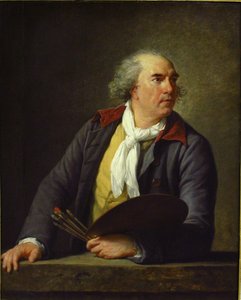
Гюберт Роберт
1733 - 1808 , Франція
Короткі факти
- Artistic Movement Or Style: Романтизм, Неокласицизм
- Artists Or Movements Influenced By This Artist: ['Романтизм']
- Artists Who Influenced This Artist:
- Джованні Паніні
- П'єре-Огюст Рено
- Date Of Birth: 22 травня 1733
- Date Of Death: 15 квітня 1808
- Full Name: Hubert Robert
- Nationality: Француз
- Notable Artworks:
- Порт Риму
- Політ Галатеї
- Place Of Birth: Париж, Франція