Переглянути в інтер'єрі
 Надіслати
 Поділитися
 Деталі
 Посібник

 Завантажити
 Схожі предмети колекціонування
 Рентгенівське дослідження
 Слайд-шоу
 Статистика переглядів
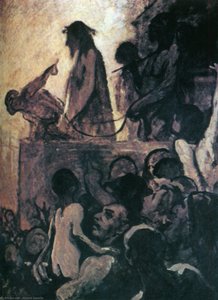
Scene from a Comedy
 Олія на полотні
- Настінне мистецтво
- Satirical Realism
 1858
1858 33.0 x 25.0 cm
 Музей д’Орсе
 Читати далі
Гікле / Художній принт
Музейна якість друку جيкле або на полотні з оперативним виготовленням та різноманітними варіантами фінішної обробки. ( Купити картину ручної роботи Перейти до цифрових зображень)




P118B ₴10

P118H ₴10

P118W ₴10

P438Z ₴10

P508JH ₴12

P508YH ₴12

P805H ₴10

P805Z ₴10

P919BZ ₴10

P919G ₴10

P919XJ ₴10

P959ZH ₴10

P968JZ ₴12

W106C ₴8

W218G ₴10

W218JH ₴8

W218Y ₴10

W307PJ ₴10

W316G ₴10

W316PJ ₴8

W316Y ₴10

W398PJ ₴8

W4111J ₴10

W500HY ₴15

W500JH ₴15

W692G ₴12

W849H ₴8

W940BG ₴15

W953PJ ₴8




Обирайте з наших стандартних розмірів, що відповідають оригінальним пропорціям твору мистецтва.

Введіть необхідну ширину та висоту, щоб принт ідеально підійшов до вашої рами або стіни. Принт можна лише обрізати, але не можна зробити більшим за оригінал, тому при зміні пропорцій частина зображення буде втрачена. Перед друком ми надсилаємо вам цифровий макет для затвердження. Зображення на цій сторінці не відображає реальну обрізку — її можна побачити лише на макеті.
Доставка по всьому світу () за 2 тижні замість стандартних 4/5 тижнів. (22 Жовтень)

Безкоштовна експрес-доставка по всьому світу

Високоякісне лляне полотно

Повне страхове покриття доставки

Гарантія повернення митних зборів

Гарантія точного відтворення кольорів

Політика повернення протягом 100 днів (лише у разі виявлення дефектів)

Гарантія повернення 100% коштів

Знижка на оптові замовлення
 Скляний варіант доступний лише для розмірів до 110 см

Scene from a Comedy
Гікле / Художній принт
Розмір репродукції
-


Загальна вартість
₴ 3585
A Moment Frozen in Satire: Honoré Daumier’s “Scene from a Comedy”
Honoré Daumier's "Scene from a Comedy," painted in 1858, isn’t merely a depiction of two figures; it’s a meticulously crafted snapshot of Parisian society and the biting social commentary that defined the artist’s career. Housed within the walls of the Musée d’Orsay, this oil on canvas offers a rare glimpse into Daumier's world – a world brimming with observation, critique, and an undeniable sense of humor laced with profound sadness. Measuring just 33 x 25 cm, its intimate scale belies the expansive social commentary it contains, inviting viewers to step closer and contemplate the subtle power dynamics at play.
The painting immediately draws the eye to the stark contrast between the two men. On the left stands an older gentleman, rendered in dark tones of coat and shirt, his face a study in sternness – a palpable embodiment of authority or perhaps simply ingrained habit. His posture is rigid, suggesting a lifetime spent upholding established norms. Juxtaposed against him is a younger figure, dressed more casually, tilted back with a relaxed amusement that hints at a different perspective, a willingness to question or even mock the older man’s demeanor. This immediate visual dichotomy establishes the core of Daumier's work: a deliberate exploration of conflicting viewpoints and the inherent tensions within social structures.
Realism and the Language of Gesture
Daumier’s mastery lies not just in capturing faces, but in conveying emotion through gesture and body language. The realism of his approach is evident in the meticulous detail with which he renders the textures of fabric, the subtle lines etched on the older man's face, and the slight tilt of the younger figure’s head. The dark background, punctuated by hints of blue and gray, serves to amplify these details, creating a sense of depth and drawing the viewer’s attention directly to the figures. This strategic use of light and shadow is characteristic of Daumier's style – a deliberate choice to highlight the emotional core of his subjects.
Furthermore, note the lack of elaborate setting or narrative context. Daumier strips away extraneous details, focusing instead on the immediate interaction between these two individuals. This minimalist approach forces the viewer to actively engage with the painting, interpreting the unspoken tensions and considering the broader social implications of their encounter. It’s a testament to Daumier's skill that such profound commentary can be conveyed through such simple means.
A Window into 19th-Century France
"Scene from a Comedy" is deeply rooted in its historical context. Created during the mid-19th century, it reflects the social and political upheavals of France at that time – a period marked by rapid industrialization, growing class divisions, and increasing calls for reform. Daumier’s work served as a powerful critique of these changes, exposing the hypocrisy and injustices inherent in the established order. His frequent use of caricature and satire allowed him to reach a wide audience, challenging conventional wisdom and sparking debate about the direction of French society.
As explored in articles like “Honoré Daumier: Social Commentary & Artistic Innovation in 19th-Century France,” Daumier’s art wasn't simply humorous; it was a direct engagement with pressing social issues. His work, alongside pieces like "Ratapoil (rear view)" and "The Defender," became a voice for the marginalized and a challenge to the status quo. He used his artistic platform to expose corruption, criticize political figures, and advocate for greater social equality – a remarkably courageous stance for an artist of his time.
Collecting a Masterpiece: Reproduction and Legacy
OriginalUniqueArt offers meticulously crafted hand-painted reproductions of “Scene from a Comedy,” allowing art lovers to experience Daumier’s genius in stunning detail. Each reproduction is created by skilled artisans who painstakingly recreate the artist's techniques, capturing the nuances of his style and ensuring an authentic representation of this iconic work. Whether displayed in a private collection or incorporated into a larger interior design scheme, a OriginalUniqueArt reproduction provides a beautiful and meaningful connection to one of art history’s most insightful social commentators.
To delve further into Daumier's life and work, we encourage you to explore the resources available on our website and through external links such as Wikipedia. Discover the rich tapestry of his artistic vision and appreciate the enduring legacy of a man who used art as a weapon against injustice – a legacy that continues to resonate with audiences today.
Запитання та відповіді
Як кольори у творі "Scene from a Comedy" взаємодіють між собою?
Колірна гармонія твору "Scene from a Comedy" визначена як Збалансована гармонія.
Яка орієнтація має «Scene from a Comedy» Оноре Дюмаєр?
«Scene from a Comedy» Оноре Дюмаєр має формат Портретна орієнтація. Формат описує пропорції композиції.
Який рекомендований розмір та орієнтація для друку твору "Scene from a Comedy"?
Для репродукції «Scene from a Comedy» Оноре Дюмаєр рекомендується розмір Середній розмір з орієнтацією Портретна орієнтація.
Біографія митця
A Life Etched in Satire: The World of Honoré Daumier
Honoré-Victorin Daumier, a name synonymous with biting satire and unflinching social commentary, was born in Marseille in 1808. His early life, shaped by his father’s aspirations as a poet – a dream tragically cut short – and the subsequent relocation to Paris in 1814, immersed him in a city already pulsating with artistic fervor. Initially destined for a career in law, Daumier's true calling emerged not from legal texts but from charcoal and stone, a passion ignited by his apprenticeship under Alexandre Lenoir, a student of Jacques-Louis David. This formative period instilled within him both the classical foundations of technique and an appreciation for the dramatic chiaroscuro favored by Rubens – elements that would later coalesce into his uniquely powerful style. However, Daumier’s art wasn't merely about mastering brushstrokes; it was fundamentally rooted in a profound empathy for the marginalized and a burning desire to expose the hypocrisy he witnessed within French society.The Sharpened Pen: Caricature and Social Commentary
Daumier’s career truly blossomed following the tumultuous events of 1830, the July Revolution that irrevocably altered the course of France. This seismic shift provided fertile ground for his burgeoning satirical talent, and he quickly established himself as a master lithographer. Initially working anonymously for publications like *Le Charivari*, founded by Charles Philipon, Daumier’s genius rapidly gained recognition. It was within these pages that his caricatures transcended mere humor; they became searing indictments of the bourgeoisie, the legal system, and the political establishment. His unflinching depictions of King Louis-Philippe, for instance, earned him a six-month imprisonment in 1832 – an experience that, rather than silencing him, fueled his commitment to challenging authority through art. His lithographs became visual manifestos, capturing the spirit of dissent and offering a critical perspective on the societal injustices prevalent at the time. The sheer volume of his output during this period is staggering—thousands of images documenting daily life, political machinations, and the struggles of ordinary people. These weren’t simply drawings; they were potent weapons in the fight for social awareness.Beyond Caricature: Painting and Sculptural Visions
While Daumier's legacy is most firmly established through his lithographs, to limit him solely to caricature would be a profound oversight. He was also a dedicated painter and sculptor, though recognition for these works came later in his life. His paintings, often depicting scenes of everyday Parisian existence – the cramped third-class carriages, the weary laundresses, the pompous lawyers – are imbued with an extraordinary sense of realism and empathy. He eschewed idealized representations, instead presenting a starkly honest portrayal of hardship and struggle. Daumier’s technique was characterized by loose brushwork and dramatic lighting, anticipating some of the techniques later embraced by the Impressionists. His sculptural work, largely created in clay – many pieces remaining unbaked during his lifetime – reveals a similar commitment to capturing the human form with remarkable sensitivity and psychological depth. These sculptures, rediscovered after his death, stand as testament to his extraordinary modeling skills and his ability to convey complex emotions through physical gesture.A Lasting Legacy: Influence and Historical Significance
Honoré Daumier’s impact on art history is undeniable. He bridged the gap between Romanticism and Realism, laying the groundwork for future generations of artists who sought to depict the world with unflinching honesty. His unwavering social commentary profoundly influenced figures like Gustave Courbet and Édouard Manet, while his innovative use of lithography revolutionized printmaking itself. Daumier’s work continues to resonate powerfully today, serving as a potent reminder of the enduring power of art to challenge authority, expose injustice, and bear witness to the human condition. The Musée d'Orsay in Paris houses an extensive collection of his paintings and sculptures, offering visitors a valuable opportunity to immerse themselves in the world he so vividly portrayed. Furthermore, his lithographs remain widely accessible through collections such as those found on OriginalUniqueArt, ensuring that his satirical genius continues to provoke thought and inspire dialogue across generations. Daumier wasn’t merely an artist; he was a chronicler of his time – a visual poet who used his talent to give voice to the voiceless and hold power accountable. His legacy endures as a testament to the enduring relevance of art as a force for social change.Daumier's Artistic Techniques & Influences
- Lithography: Daumier’s mastery of lithography was central to his artistic practice. He skillfully utilized this printing technique to create intricate and powerful images, often working directly on the stone with a sharp pencil.
- Realism & Observation: His work is deeply rooted in meticulous observation of everyday life – from the bustling streets of Paris to the faces of ordinary people. This realism was not merely descriptive; it aimed to reveal underlying social and political truths.
- Influence of Rubens & Lenoir: Daumier’s early training under Alexandre Lenoir, a student of Jacques-Louis David, exposed him to classical techniques and the dramatic chiaroscuro favored by Peter Paul Rubens. These influences shaped his understanding of composition, light, and shadow.
- Satirical Style: Daumier's caricatures are characterized by their sharp wit, biting satire, and often grotesque depictions of figures in positions of power. He used exaggeration and distortion to expose hypocrisy and challenge societal norms.
Key Works
- Rue Transnonain (1836): Perhaps his most famous work, this lithograph depicts the brutal suppression of a Parisian street protest by government troops. It’s a powerful indictment of state violence and social injustice.
- Les Gens de Justice (1832): A satirical depiction of French judges, highlighting their corruption and indifference to the plight of ordinary citizens.
- Ecce Homo (1839): Daumier’s interpretation of the biblical story of Jesus Christ, presented as a self-portrait reflecting on his own life and struggles.
Daumier's Place in Art History
- Bridge between Romanticism & Realism: Daumier’s work represents a crucial transition between the emotional intensity of Romanticism and the objective observation of Realism.
- Influence on Later Artists: His unflinching social commentary and innovative use of printmaking profoundly influenced artists such as Gustave Courbet, Édouard Manet, and later, Impressionists like Degas and Toulouse-Lautrec.
- Social Documentary: Daumier’s work can be considered a form of early social documentary, providing valuable insights into the lives and conditions of ordinary people in 19th-century France.

Оноре Дюмаєр
1808 - 1879 , Франція
Довідкова інформація
- Artistic Movement Or Style: Реалізм, Сатира
- Artists Or Movements Influenced By This Artist:
- Імпресіонізм
- Сучасне мистецтво
- Artists Who Influenced This Artist:
- Alexandre Lenoir
- Jacques-Louis David
- Date Of Birth: 26 лютого 1808
- Date Of Death: 10 лютого 1879
- Full Name: Honoré-Victorin Daumier
- Nationality: Француз
- Notable Artworks:
- Rue Transnonain
- Les gens de justice
- Ecce Homo
- Place Of Birth: Марсель, Франція
Схожі статті
The Poetic Truth of Observation: Exploring 19th-Century Realism in Painting
Explore the captivating world of 19th-century Realism! Discover key artists like Courbet & Millet, masterpieces, and the powerful social commentary behind this influential art movement. Expert insights at OriginalUniqueArt.
Reflecting Society's Shadows: Social Commentary in Art Through the Ages
Explore the powerful history of social commentary in art! Discover key artists like Hogarth & Daumier, movements from Realism to American Social Realism, and how art reflects—and challenges—society. Expert insights at OriginalUniqueArt.

Echoes of Society: Exploring Social Realism's Enduring Legacy in Art
Explore the powerful world of Social Realism art! Discover key artists, masterpieces & its profound social commentary. Expert insights into this influential movement's history and enduring legacy.
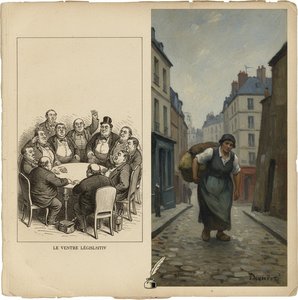
Honoré Daumier: Social Commentary & Artistic Innovation in 19th-Century France
Explore the life & work of Honoré Daumier, a master of 19th-century French realism and satire. Discover his powerful lithographs, paintings, and sculptures critiquing society – and his lasting influence on modern art.

Romantic Realism's Finest: 10 Masterpieces for Your Home | OriginalUniqueArt
Explore 10 defining masterpieces of Romantic Realism! Discover Courbet, Millet & Daumier's powerful paintings—capturing emotion and social realities. Find museum-quality reproductions for your home at OriginalUniqueArt.com.