Переглянути в інтер'єрі
 Надіслати
 Поділитися
 Деталі
 Посібник

 Завантажити
 Схожі предмети колекціонування
 Рентгенівське дослідження
 Слайд-шоу
 Статистика переглядів
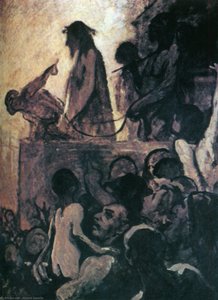
Comedy scene (scene from Molière)


 Читати далі
Гікле / Художній принт
Музейна якість друку جيкле або на полотні з оперативним виготовленням та різноманітними варіантами фінішної обробки. ( Купити картину ручної роботи Перейти до цифрових зображень)




P118B ₴10

P118H ₴10

P118W ₴10

P438Z ₴10

P508JH ₴12

P508YH ₴12

P805H ₴10

P805Z ₴10

P919BZ ₴10

P919G ₴10

P919XJ ₴10

P959ZH ₴10

P968JZ ₴12

W106C ₴8

W218G ₴10

W218JH ₴8

W218Y ₴10

W307PJ ₴10

W316G ₴10

W316PJ ₴8

W316Y ₴10

W398PJ ₴8

W4111J ₴10

W500HY ₴15

W500JH ₴15

W692G ₴12

W849H ₴8

W940BG ₴15

W953PJ ₴8




Обирайте з наших стандартних розмірів, що відповідають оригінальним пропорціям твору мистецтва.

Введіть необхідну ширину та висоту, щоб принт ідеально підійшов до вашої рами або стіни. Принт можна лише обрізати, але не можна зробити більшим за оригінал, тому при зміні пропорцій частина зображення буде втрачена. Перед друком ми надсилаємо вам цифровий макет для затвердження. Зображення на цій сторінці не відображає реальну обрізку — її можна побачити лише на макеті.
Доставка по всьому світу () за 2 тижні замість стандартних 4/5 тижнів. (23 Жовтень)

Безкоштовна експрес-доставка по всьому світу

Високоякісне лляне полотно

Повне страхове покриття доставки

Гарантія повернення митних зборів

Гарантія точного відтворення кольорів

Політика повернення протягом 100 днів (лише у разі виявлення дефектів)

Гарантія повернення 100% коштів

Знижка на оптові замовлення
 Скляний варіант доступний лише для розмірів до 110 см

Comedy scene (scene from Molière)
Гікле / Художній принт
Розмір репродукції
-


Загальна вартість
₴ 3596
A Moment of Contention: Honoré Daumier’s “Comedy Scene (Scene from Molière)”
Honoré Daumier's 1862 painting, "Comedy Scene (Scene from Molière)," isn’t merely a depiction of a theatrical moment; it’s a vibrant snapshot of Parisian society grappling with wit, social commentary, and the very nature of performance. The work, rendered in stark black and white – a signature technique for Daumier – immediately draws the viewer into a scene brimming with unspoken tension and subtle gestures. Two men dominate the foreground: one, animatedly gesturing upwards, seemingly addressing an unseen audience; the other, slumped downwards, his gaze fixed on his companion, perhaps lost in thought or responding to the first man’s pronouncements.
Beyond these central figures lies a carefully constructed backdrop of three additional individuals, subtly positioned in the background. Their presence isn't one of active participation but rather serves as a quiet reminder of the broader social context surrounding this private exchange. They are not integrated into the immediate drama, yet their inclusion suggests that this scene unfolds within a larger, more complex world – a world ripe for observation and critique, precisely what Daumier excelled at capturing.
The Artist’s Vision: Realism and Social Satire
Daumier was a pivotal figure in the development of French realism, but his work transcends simple representation. He wasn't interested in idealized beauty or romanticized narratives; instead, he sought to expose the uncomfortable truths of everyday life – particularly the hypocrisy and social inequalities prevalent in 19th-century France. His art became a powerful tool for social commentary, often targeting the aristocracy, the clergy, and the legal system. “Comedy Scene” is no exception, offering a glimpse into a private conversation that hints at underlying tensions and judgments.
The painting’s monochrome palette – predominantly shades of gray and white – contributes significantly to its dramatic effect. This deliberate choice eliminates distractions, forcing the viewer to focus on the figures' expressions and body language. Daumier masterfully employs chiaroscuro—the contrast between light and dark—to sculpt the forms and heighten the sense of drama. The sharp delineation of shadows emphasizes the characters’ postures and gestures, conveying a palpable atmosphere of anticipation and potential conflict.
A Stage Within a Stage: Molière and Parisian Society
The painting's title explicitly references Molière, the renowned French playwright whose comedies satirized societal norms. Daumier wasn’t simply illustrating a scene from one of Molière’s plays; he was capturing the *spirit* of theatrical performance itself – the interplay between performer and audience, the delivery of witty dialogue, and the subtle judgments exchanged during a dramatic moment. The implied setting is likely a Parisian theater, though Daumier deliberately avoids providing specific details, allowing the viewer to project their own interpretations onto the scene.
Furthermore, the painting reflects the vibrant intellectual and artistic life of 19th-century Paris. The Comédie-Française, France’s national theatre, was a central hub for social and political discourse. Daumier's work engages with this dynamic environment, offering a critical perspective on the role of theater in shaping public opinion and exposing societal flaws.
Symbolism and Emotional Resonance
The posture of the two men is particularly revealing. The man gesturing upwards embodies assertiveness and perhaps even arrogance, projecting his thoughts or opinions to an unseen audience. His elevated position suggests a desire for recognition or validation. Conversely, the slumped figure conveys a sense of resignation, doubt, or perhaps quiet disapproval. His downward gaze hints at a critical assessment of the first man’s pronouncements – a subtle challenge to his authority or perspective.
“Comedy Scene” is not a straightforward narrative; it's an invitation to observe and interpret. It evokes a sense of unease, prompting viewers to consider the complexities of human interaction and the often-hidden judgments that shape our perceptions. Daumier’s masterful use of composition, light, and gesture creates a timeless image that continues to resonate with audiences today, reminding us of the enduring power of satire and the importance of critical engagement with the world around us.
Запитання та відповіді
«Comedy scene (scene from Molière)» Оноре Дюмаєр — це портретна, пейзажна чи квадратна композиція?
«Comedy scene (scene from Molière)» Оноре Дюмаєр має формат Portrait. Формат описує пропорції композиції.
Яке відчуття передає «Comedy scene (scene from Molière)» Оноре Дюмаєр?
Переданий настрій твору «Comedy scene (scene from Molière)» Оноре Дюмаєр — це Dramatic, а його емоційна тональність — Melancholic.
Де я можу завантажити «Comedy scene (scene from Molière)» Оноре Дюмаєр?
Зображення твору «Comedy scene (scene from Molière)» Оноре Дюмаєр можна завантажити на сторінці Завантажити: завантаження цифрового зображення високої роздільної здатності.
Біографія митця
A Life Etched in Satire: The World of Honoré Daumier
Honoré-Victorin Daumier, a name synonymous with biting satire and unflinching social commentary, was born in Marseille in 1808. His early life, shaped by his father’s aspirations as a poet – a dream tragically cut short – and the subsequent relocation to Paris in 1814, immersed him in a city already pulsating with artistic fervor. Initially destined for a career in law, Daumier's true calling emerged not from legal texts but from charcoal and stone, a passion ignited by his apprenticeship under Alexandre Lenoir, a student of Jacques-Louis David. This formative period instilled within him both the classical foundations of technique and an appreciation for the dramatic chiaroscuro favored by Rubens – elements that would later coalesce into his uniquely powerful style. However, Daumier’s art wasn't merely about mastering brushstrokes; it was fundamentally rooted in a profound empathy for the marginalized and a burning desire to expose the hypocrisy he witnessed within French society.The Sharpened Pen: Caricature and Social Commentary
Daumier’s career truly blossomed following the tumultuous events of 1830, the July Revolution that irrevocably altered the course of France. This seismic shift provided fertile ground for his burgeoning satirical talent, and he quickly established himself as a master lithographer. Initially working anonymously for publications like *Le Charivari*, founded by Charles Philipon, Daumier’s genius rapidly gained recognition. It was within these pages that his caricatures transcended mere humor; they became searing indictments of the bourgeoisie, the legal system, and the political establishment. His unflinching depictions of King Louis-Philippe, for instance, earned him a six-month imprisonment in 1832 – an experience that, rather than silencing him, fueled his commitment to challenging authority through art. His lithographs became visual manifestos, capturing the spirit of dissent and offering a critical perspective on the societal injustices prevalent at the time. The sheer volume of his output during this period is staggering—thousands of images documenting daily life, political machinations, and the struggles of ordinary people. These weren’t simply drawings; they were potent weapons in the fight for social awareness.Beyond Caricature: Painting and Sculptural Visions
While Daumier's legacy is most firmly established through his lithographs, to limit him solely to caricature would be a profound oversight. He was also a dedicated painter and sculptor, though recognition for these works came later in his life. His paintings, often depicting scenes of everyday Parisian existence – the cramped third-class carriages, the weary laundresses, the pompous lawyers – are imbued with an extraordinary sense of realism and empathy. He eschewed idealized representations, instead presenting a starkly honest portrayal of hardship and struggle. Daumier’s technique was characterized by loose brushwork and dramatic lighting, anticipating some of the techniques later embraced by the Impressionists. His sculptural work, largely created in clay – many pieces remaining unbaked during his lifetime – reveals a similar commitment to capturing the human form with remarkable sensitivity and psychological depth. These sculptures, rediscovered after his death, stand as testament to his extraordinary modeling skills and his ability to convey complex emotions through physical gesture.A Lasting Legacy: Influence and Historical Significance
Honoré Daumier’s impact on art history is undeniable. He bridged the gap between Romanticism and Realism, laying the groundwork for future generations of artists who sought to depict the world with unflinching honesty. His unwavering social commentary profoundly influenced figures like Gustave Courbet and Édouard Manet, while his innovative use of lithography revolutionized printmaking itself. Daumier’s work continues to resonate powerfully today, serving as a potent reminder of the enduring power of art to challenge authority, expose injustice, and bear witness to the human condition. The Musée d'Orsay in Paris houses an extensive collection of his paintings and sculptures, offering visitors a valuable opportunity to immerse themselves in the world he so vividly portrayed. Furthermore, his lithographs remain widely accessible through collections such as those found on OriginalUniqueArt, ensuring that his satirical genius continues to provoke thought and inspire dialogue across generations. Daumier wasn’t merely an artist; he was a chronicler of his time – a visual poet who used his talent to give voice to the voiceless and hold power accountable. His legacy endures as a testament to the enduring relevance of art as a force for social change.Daumier's Artistic Techniques & Influences
- Lithography: Daumier’s mastery of lithography was central to his artistic practice. He skillfully utilized this printing technique to create intricate and powerful images, often working directly on the stone with a sharp pencil.
- Realism & Observation: His work is deeply rooted in meticulous observation of everyday life – from the bustling streets of Paris to the faces of ordinary people. This realism was not merely descriptive; it aimed to reveal underlying social and political truths.
- Influence of Rubens & Lenoir: Daumier’s early training under Alexandre Lenoir, a student of Jacques-Louis David, exposed him to classical techniques and the dramatic chiaroscuro favored by Peter Paul Rubens. These influences shaped his understanding of composition, light, and shadow.
- Satirical Style: Daumier's caricatures are characterized by their sharp wit, biting satire, and often grotesque depictions of figures in positions of power. He used exaggeration and distortion to expose hypocrisy and challenge societal norms.
Key Works
- Rue Transnonain (1836): Perhaps his most famous work, this lithograph depicts the brutal suppression of a Parisian street protest by government troops. It’s a powerful indictment of state violence and social injustice.
- Les Gens de Justice (1832): A satirical depiction of French judges, highlighting their corruption and indifference to the plight of ordinary citizens.
- Ecce Homo (1839): Daumier’s interpretation of the biblical story of Jesus Christ, presented as a self-portrait reflecting on his own life and struggles.
Daumier's Place in Art History
- Bridge between Romanticism & Realism: Daumier’s work represents a crucial transition between the emotional intensity of Romanticism and the objective observation of Realism.
- Influence on Later Artists: His unflinching social commentary and innovative use of printmaking profoundly influenced artists such as Gustave Courbet, Édouard Manet, and later, Impressionists like Degas and Toulouse-Lautrec.
- Social Documentary: Daumier’s work can be considered a form of early social documentary, providing valuable insights into the lives and conditions of ordinary people in 19th-century France.

Оноре Дюмаєр
1808 - 1879 , Франція
Довідкова інформація
- Artistic Movement Or Style: Реалізм, Сатира
- Artists Or Movements Influenced By This Artist:
- Імпресіонізм
- Сучасне мистецтво
- Artists Who Influenced This Artist:
- Alexandre Lenoir
- Jacques-Louis David
- Date Of Birth: 26 лютого 1808
- Date Of Death: 10 лютого 1879
- Full Name: Honoré-Victorin Daumier
- Nationality: Француз
- Notable Artworks:
- Rue Transnonain
- Les gens de justice
- Ecce Homo
- Place Of Birth: Марсель, Франція
Схожі статті

Топ-10 шедеврів у білих тонах: мистецтво світла та простору від OriginalUniqueArt
Відкрийте для себе 10 легендарних картин, де білий колір стає головним героєм! Історія Моне, Ван Гога та інших майстрів. Купіть репродукції шедеврів імпресіонізму на OriginalUniqueArt.com – мистецтво для вашого дому.

Monochrome Visions: Exploring the Aesthetic & Historical Significance of Black & White Photography
Explore the rich history & artistic power of black and white photography. From early techniques to iconic masters like Ansel Adams, discover why monochrome continues to captivate art lovers today. Expert insights for collectors.

Топ-10 шедеврів живопису в чорних тонах: історія, мистецтво та декор від OriginalUniqueArt
Відкрийте для себе 10 найвідоміших картин у чорних тонах! Історія, техніка та емоції від OriginalUniqueArt. Романтизм, готика, експресіонізм – шедеври живопису онлайн. Купіть репродукцію мрії на OriginalUniqueArt.com!
Shadow & Soul: Why Black & White Photography Remains the Ultimate Power Move in Modern Art
Discover why black & white photography remains a powerful force in contemporary art. Explore the impact of light, shadow, and texture through a visual journey of monochrome mastery and learn how to elevate your space with timeless grayscale aesthetics.

Monochrome Edge: The Ultimate Design Flex—Level Up Your Space with Bold Black & White Art
Master the monochrome aesthetic with high-impact Black & White art from OriginalUniqueArt.com. From custom hand-painted oils to iconic pop culture remixes, discover the ultimate design flex for your urban space. Elevate your decor with bold, premium, and timeless monochrome masterpieces.