() ·

A painting made for you, by hand

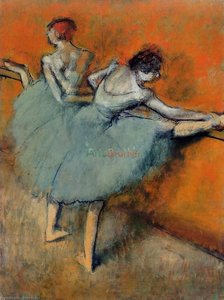
Dancer Tilting

Олійная репродукція ручної роботи

Написана вручну олією на полотні у вашому розмірі та рамі, виготовлена на замовлення нашими художниками. ( Перейти до друку Перейти до цифрових зображень)

Опис експоната

Captured in ethereal pastel hues by Edgar Degas during Impressionism’s golden age, Dancer Tilting portrays a ballerina's graceful leap—a testament to his masterful realism and enduring fascination with movement. Explore this captivating masterpiece and bring artistic beauty into your home.

Біографія митця

Едгар Дєґас – революційний французький художник, відомий своїми захопливими танцівницями, паризькими сценами та новаторськими техніками – справжній майстер сучасної мистецтва.

from ·

Chapter 1

How large should it be?

Slide to change the size; the picture on the left shows the frame at its real width. The proportions of the original are kept.

Стандартний розмір
індивідуальний розмір
CM
INCH

Обирайте з наших стандартних розмірів, що відповідають оригінальним пропорціям твору мистецтва.

ширина
висота

Введіть необхідну ширину та висоту, щоб картина підійшла до вашої рами або стіни. Оскільки це ручний розпис, для зміни пропорцій художник може дописати трохи більше по краях або дещо обрізати композицію — вибір за вами. Перед початком роботи ми надішлемо вам цифровий макет для затвердження. Зображення, показане на цій сторінці, не є реальним результатом — лише макет відображає майбутній вигляд.

Chapter 2

How should it arrive?

Choose the edges of the stretched canvas

Choose your frame

Corner sample of the WhiteWrap canvas edge finish, stretched on масив дерева bars
White ₴1
Corner sample of the BlurSideWrap canvas edge finish, stretched on масив дерева bars
Blurside ₴1
Corner sample of the ExtendedWrap canvas edge finish, stretched on масив дерева bars
Extended ₴1
Corner sample of the P118B picture frame: формований полістирол, 5 cm wide and 3 cm thick
P118B ₴10
Corner sample of the P118H picture frame: формований полістирол, 5 cm wide and 3 cm thick
P118H ₴10
Corner sample of the P118W picture frame: формований полістирол, 5 cm wide and 3 cm thick
P118W ₴10
Corner sample of the P438Z picture frame: формований полістирол, 5.5 cm wide and 3.5 cm thick
P438Z ₴10
Corner sample of the P508JH picture frame: формований полістирол, 7 cm wide and 3.5 cm thick
P508JH ₴12
Corner sample of the P508YH picture frame: формований полістирол, 7 cm wide and 3.5 cm thick
P508YH ₴12
Corner sample of the P805H picture frame: формований полістирол, 5 cm wide and 3.5 cm thick
P805H ₴10
Corner sample of the P805Z picture frame: формований полістирол, 5 cm wide and 3.5 cm thick
P805Z ₴10
Corner sample of the P919BZ picture frame: формований полістирол, 7 cm wide and 3.5 cm thick
P919BZ ₴10
Corner sample of the P919G picture frame: формований полістирол, 7 cm wide and 3.5 cm thick
P919G ₴10
Corner sample of the P919XJ picture frame: формований полістирол, 7 cm wide and 3.5 cm thick
P919XJ ₴10
Corner sample of the P959ZH picture frame: формований полістирол, 5 cm wide and 3 cm thick
P959ZH ₴10
Corner sample of the P968JZ picture frame: формований полістирол, 6 cm wide and 4 cm thick
P968JZ ₴12
Corner sample of the W106C picture frame: масив дерева, 5 cm wide and 3 cm thick
W106C ₴8
Corner sample of the W218G picture frame: масив дерева, 5 cm wide and 3 cm thick
W218G ₴10
Corner sample of the W218JH picture frame: масив дерева, 5 cm wide and 3 cm thick
W218JH ₴8
Corner sample of the W218Y picture frame: масив дерева, 5 cm wide and 3 cm thick
W218Y ₴10
Corner sample of the W307PJ picture frame: масив дерева, 6 cm wide and 3 cm thick
W307PJ ₴10
Corner sample of the W316G picture frame: масив дерева, 6 cm wide and 3 cm thick
W316G ₴10
Corner sample of the W316PJ picture frame: масив дерева, 6 cm wide and 3 cm thick
W316PJ ₴8
Corner sample of the W316Y picture frame: масив дерева, 6 cm wide and 3 cm thick
W316Y ₴10
Corner sample of the W398PJ picture frame: масив дерева, 5 cm wide and 3 cm thick
W398PJ ₴8
Corner sample of the W4111J picture frame: масив дерева, 6.5 cm wide and 3.5 cm thick
W4111J ₴10
Corner sample of the W500HY picture frame: масив дерева, 7 cm wide and 5 cm thick
W500HY ₴15
Corner sample of the W500JH picture frame: масив дерева, 7 cm wide and 5 cm thick
W500JH ₴15
Corner sample of the W692G picture frame: масив дерева, 8 cm wide and 4 cm thick
W692G ₴12
Corner sample of the W849H picture frame: масив дерева, 5 cm wide and 3 cm thick
W849H ₴8
Corner sample of the W940BG picture frame: масив дерева, 7.5 cm wide and 4.5 cm thick
W940BG ₴15
Corner sample of the W953PJ picture frame: масив дерева, 6 cm wide and 3.5 cm thick
W953PJ ₴8
Corner sample of the H24-GOLD picture frame: різьблене дерево з левкасом, 10 cm wide and 6 cm thick
H24-GOLD ₴30
Corner sample of the H24-SILVER picture frame: різьблене дерево з левкасом, 10 cm wide and 6 cm thick
H24-SILVER ₴30
Corner sample of the H36-GOLD picture frame: різьблене дерево з левкасом, 15 cm wide and 6.5 cm thick
H36-GOLD ₴45
Corner sample of the H36-SILVER picture frame: різьблене дерево з левкасом, 15 cm wide and 6.5 cm thick
H36-SILVER ₴45

Moulding: . Overall size with the frame: .

Chapter 3

Who paints it, and should anything change?

Examples of what can be changed: Replace face with customer photo; Add pet (e.g., replace cat with dog); Include hidden message in background; Change background landscape or elements.
After order, OriginalUniqueArt.com team will email client for instructions and provide a mockup preview

Доставка по всьому світу () за 3–4 тижні замість стандартних 5 тижнів. (31 Жовтень). Без жодних компромісів у якості.

Chapter 4

The finishing touches

A nameplate, as in a museum?

Деталі гравірування на бронзовій табличці

This elegant plaque features the artist's name and the title of the artwork, finely engraved for a timeless presentation.

It is made from bronze with a refined, elegant finish. The text is precisely laser-engraved for a sharp and permanent result. Measuring 9x2 cm, the plaque is compact yet easy to read. It's built to be durable and scratch-resistant, offering a professional, museum-quality look. Mounting is simple thanks to the included adhesive backing.

Деталі прозорої акрилової таблички

The plaque includes essential engraved details such as the artist's name, the title of the artwork, the date it was created, the type of media used-like oil on canvas or watercolor-a brief description of the piece, and a QR code that links to the complete artwork information.

It is crafted from clear acrylic, offering a sleek, modern appearance. The text is UV-engraved in black to ensure strong visual contrast. With a size of 10x15 cm, it ensures optimal readability. It comes equipped with two metal hooks for secure wall mounting. The plaque is designed to be weather-resistant, making it suitable for various environments, and it includes interactive features that work seamlessly with smartphone scanning.

Деталі чорної акрилової таблички

This elegant plaque includes engraved information such as the artist's name, the title of the artwork, the date it was created, the type of media used (like oil on canvas or watercolor), a short description of the artwork, and a QR code for quick access to more information.

The plaque itself is made from refined black acrylic with a premium finish. The text is laser-engraved in white for high contrast and readability. Its size is 10x15 cm, designed to be easy to read. It comes with two metal hooks for professional mounting. The design is sleek and fits any interior style. It is also weather-resistant and durable, with built-in digital integration for mobile compatibility.

A protective varnish?

When do you need it?

Chapter 5

Your painting, as you ordered it

Dancer Tilting

Матеріал репродукції

Розмір репродукції

-

Видатний майстер-художник

Більше деталізації, витонченості та додаткового часу на створення твору

-

Рама для репродукції

-

-

Для творів мистецтва або репродукцій, розмір яких перевищує 105 см (приблизно 41 дюйм) з будь-якого боку, рама доставляється у вигляді розібраного комплекту. Такий метод гарантує безпечну доставку та запобігає пошкодженням під час транспортування.

Потребує професійного збирання — це не продукт для самостійного виготовлення (DIY).
Комплект має бути зібраний, а полотно натягнуте досвідченим майстром багетних робіт із використанням клейового дерева (не входить у комплект), щипців для натягування полотна та затискачів, щоб підрамник залишався рівним під час висихання клею. Неправильне збирання або нерівномірне натягування полотна може призвести до незворотного пошкодження твору мистецтва, що не підпадає під дію нашої гарантії.

  • У комплект входять усі бруски з цільного дерева, точно вирізані за розміром.

  • Збирається за допомогою гвинтів, що входять до комплекту, а також клейового розчину для кутових з'єднань, який не входить до комплекту і має бути підготовлений вашим майстром.

  • Потрібні професійні інструменти, які не входять до комплекту: щипці для натягування полотна (натягувач) та затискачі, щоб утримувати рейки рівно під час висихання клею.

Важливо:
Для з'єднання кутів потрібен клей для дерева, перекладини необхідно затиснути струбцинами до повного висихання клею, а для натягування полотна на зібрану раму знадобляться щипці для натягування полотна. Жоден із цих інструментів не входить до комплекту. Будь ласка, проконсультуйтеся з досвідченим майстром багетного оформлення перед замовленням рами такого розміру.

Етикетка експоната

-

-

Захисний лак

Глянцевий лак (підсилює яскравість кольорів, захищає від світла та вологи)

-

Персоналізувати мій витвір

Приклади можливих змін: заміна обличчя на фото клієнта; додавання домашньої тварини (наприклад, заміна кота на собаку); додавання прихованого повідомлення на фоні; зміна пейзажу або елементів фону.

-

Прискорено

Доставка по всьому світу () за 3–4 тижні замість стандартних 5 тижнів. (31 Жовтень). Без компромісів у якості.

-

Експрес-доставка

Доставка по всьому світу () протягом 5 тижнів. (7 Листопад).

Включено в ціну

Підсумкова вартість

₴ 13486

Загальна вартість ₴ 13486

Скляний варіант доступний лише для розмірів до 110 см

Included with every order

  • Безкоштовна експрес-доставка по всьому світу
  • Високоякісне лляне полотно
  • Повне страхове покриття доставки
  • Гарантія повернення митних зборів
  • Гарантія точного відтворення кольорів
  • Політика повернення протягом 100 днів (лише у разі виявлення дефектів)
  • Гарантія повернення 100% коштів
  • Пропозиція на оптові замовлення

A Moment Frozen in Motion: Edgar Degas’s Dancer Tilting

The pastel drawing “Dancer Tilting,” created by Edgar Degas in 1883, stands as a quintessential embodiment of Impressionist artistry—yet simultaneously defies easy categorization. More than just a depiction of ballet; it's an exploration of fleeting beauty and the artist’s unwavering dedication to capturing the essence of movement itself. Located in private collections worldwide, this piece continues to fascinate viewers with its subtle nuances and masterful execution.

Subject Matter and Composition

At first glance, “Dancer Tilting” presents a deceptively simple scene: a young woman poised mid-leap, her arms outstretched as if reaching for the heavens. Degas’s focus isn't on grand theatrical gestures but rather on capturing the precise instant of exertion—the subtle tilt of her torso, the delicate curve of her leg muscles straining against gravity. Two additional figures inhabit the background – a pianist and another dancer – subtly reinforcing the ballet studio setting and adding depth to the composition. These elements aren’t merely decorative; they contribute to the overall narrative, hinting at the disciplined environment from which this dancer emerges.

Technique: Pastel's Delicate Embrace

Degas’s choice of pastel medium is crucial to understanding the artwork’s aesthetic impact. Unlike oil paints, pastels offer unparalleled luminosity and vibrancy, allowing for incredibly nuanced tonal gradations. Degas skillfully blended shades of yellow, ochre, and gray to recreate the dancer’s dress and skin tone with remarkable accuracy. The artist's technique prioritizes layering thin washes of pastel pigment onto paper, building up texture and capturing the ephemeral quality of light—a hallmark of Impressionism. This method lends itself beautifully to portraying movement, as subtle shifts in color and tone convey a sense of dynamism that would be impossible to achieve with oil paint alone.

Historical Context: Challenging Artistic Conventions

Degas’s artistic journey was marked by a constant negotiation between realism and Impressionism. While he admired the grandeur of classical sculpture and painting, he rejected the rigid formalism of academic art, preferring instead to observe life directly—often documenting scenes from Parisian ballet studios. This fascination with dance stemmed not only from aesthetic appreciation but also from an interest in portraying the everyday lives of performers. “Dancer Tilting” reflects this broader artistic impulse: a desire to depict reality as it unfolds, capturing fleeting moments of beauty and emotion without resorting to idealized representations. The painting emerged during a period of significant artistic experimentation, where artists were actively questioning established conventions and embracing new approaches to visual expression.

Symbolism and Emotional Resonance

Beyond its technical brilliance, “Dancer Tilting” possesses a profound symbolic resonance. The dancer embodies grace, strength, and aspiration—qualities that transcend the specific context of ballet and speak to universal themes of human endeavor. The pianist’s presence underscores the importance of discipline and focus in achieving artistic excellence. More broadly, Degas's work invites contemplation on the passage of time and the beauty found within transient moments. It captures not just a physical posture but also an inner state—a yearning for movement, balance, and harmony.

Conclusion: An Enduring Legacy

“Dancer Tilting” remains a testament to Edgar Degas’s artistic vision and his unwavering commitment to capturing the spirit of Impressionism. Its delicate pastel hues, masterful technique, and evocative composition continue to inspire artists and collectors alike. Reproductions offer an opportunity to experience this iconic artwork firsthand, bringing its beauty and emotional depth into any interior space—a celebration of art's ability to transcend time and connect us to moments of profound grace.

Питання та відповіді

Чи є «Dancer Tilting» роботи Hilaire-Germain-Edgar Degas відомим витвором мистецтва?

Рівень популярності, зафіксований для «Dancer Tilting» роботи Hilaire-Germain-Edgar Degas, становить Визнаний.

До якого етапу кар'єри Hilaire-Germain-Edgar Degas належить твір "Dancer Tilting" (1883)?

«Dancer Tilting», створена у 1883, належить до Mature Impressionism творчості Hilaire-Germain-Edgar Degas.

Скільки людей переглядають "Dancer Tilting"?

Для «Dancer Tilting» існує сторінка Статистика переглядів, на якій відображено щомісячну кількість переглядів цього твору та інших робіт митця з розподілом за країнами та мовами.

More about this painting

Переглянути в інтер'єрі Перегляд в AR Перейти до друку Перейти до цифрових зображень Надіслати як листівку
Деталі витвору Посібник Додати до улюблених Завантажити Схожі екземпляри Рентгенівське дослідження Слайд-шоу Q&A Статистика

In numbers

  • 1883the year it was painted
  • 29frames to choose from
  • standard sizes, in its own proportions
  • 5weeks to paint and deliver it
Hilaire-Germain-Edgar Degas

Hilaire-Germain-Edgar Degas

1834 - 1917, Франція

Quick facts about Hilaire-Germain-Edgar Degas

  • Artistic Movement Or Style: імпресіонізм, реалізм
  • Artists Or Movements Influenced By This Artist:
    • Пікассо
    • Матісс
  • Artists Who Influenced This Artist:
    • Інгрес
    • Курубе
    • Піссарро
  • Date Of Birth: 1834
  • Date Of Death: 1917
  • Full Name: Hilaire-Germain-Edgar De Gas
  • Nationality: Француз
  • Notable Artworks:
    • Танцістки за лавками
    • Медсестра
    • Дігас та Еварісте де Валаренс
  • Place Of Birth: Париж, Франція

Біографія митця

A Life Immersed in Movement

Edgar Degas, born Hilaire-Germain-Edgar De Gas in Paris on July 19, 1834, remains one of the most intriguing and complex figures in art history. Often grouped with the Impressionists – alongside Monet, Renoir, and others who revolutionized painting in the late 19th century – Degas fiercely resisted this label, identifying instead as a realist. This commitment stemmed from his unwavering dedication to observing the world around him with meticulous detail and portraying it with an honesty that challenged conventional artistic norms. His early life was comfortably bourgeois; his father, Auguste, was a banker, and his mother, Celestine, hailed from a Creole family in New Orleans – a heritage that subtly informed his unique perspective. This background afforded him access to education and artistic training, though he often felt constrained by the rigid structures of academic art. Initially enrolled at the Lycée Louis-le-Grand, Degas’s true education began when he started spending hours copying works within the hallowed halls of the Louvre, honing his skills and igniting a lifelong passion for classical art. However, Degas's path wasn’t one of simple adherence to tradition; it was marked by constant questioning and a relentless reevaluation of artistic conventions. He possessed an independent spirit – a rebellious streak – that would define his entire career and ultimately shape the distinctive character of his work.

Beyond Impressionism: A Unique Artistic Vision

While contemporaries like Monet chased the fleeting effects of light outdoors, capturing the ephemeral beauty of landscapes, Degas largely worked within the confines of his studio. He meticulously constructed scenes from observation and memory, creating a world that felt both familiar and subtly altered. His subject matter was decidedly modern – a deliberate departure from the historical or mythological themes favored by many academic painters. Instead, he found inspiration in the everyday lives of Parisians: laundresses hauling their heavy loads, cabaret singers captivating audiences with their performances, milliners crafting elaborate hats, and, most famously, dancers—particularly those performing at the Paris Opera Ballet. It is this fascination with ballet that profoundly shaped much of his oeuvre. Degas didn’t simply paint beautiful ballerinas; he captured the grueling reality of their profession – the endless rehearsals, the physical strain, the fleeting moments of grace amidst a world of relentless hard work and demanding expectations. His compositions are often unconventional, cropping figures in unexpected ways—sometimes isolating them within tightly framed spaces, or presenting them at unusual angles—and utilizing asymmetrical arrangements that create a sense of dynamism and immediacy. He was a master of capturing movement, not through blurred lines or hazy effects, but through precise observation, careful rendering of form, and an understanding of the underlying structure of the human body in motion. Works like *Dancer, A Group of Dancers*, *Women Combing Their Hair*, and *The Dance Class* are prime examples of this dedication to portraying the human figure in motion and revealing the complexities of modern life. He wasn’t interested in superficial beauty; he sought to expose the truth beneath the surface – the sweat, the strain, the vulnerability—of his subjects.

Influences and Artistic Development

Degas's artistic journey was a rich tapestry woven from diverse influences. His early training emphasized classical principles, particularly the work of Jean-Auguste-Dominique Ingres, whose emphasis on draftsmanship, precise line, and idealized forms left an indelible mark on his style. However, Degas also admired the Realists – artists like Gustave Courbet who challenged academic conventions and championed the depiction of contemporary life with unflinching honesty. A pivotal moment in his development came through his association with Camille Pissarro, a leading Impressionist who encouraged him to experiment with new techniques and broadened his artistic horizons. He was deeply captivated by Japanese prints—Ukiyo-e – which exerted a powerful influence on his compositions, particularly his use of asymmetrical arrangements, flattened perspectives, and bold patterns. The dynamic energy and unconventional cropping of these prints resonated profoundly with Degas’s own desire to break free from traditional artistic constraints. He also embraced photography as a tool for studying movement and capturing fleeting moments in time – often using photographs as reference material for his paintings. This willingness to incorporate diverse influences into his work—classical training, Realist principles, Japanese aesthetics, and photographic techniques—is what ultimately defines Degas’s unique style and contributes to the enduring power of his art.

Major Achievements and Legacy

Edgar Degas died in Paris on September 27, 1917, leaving behind a remarkably extensive body of work that continues to captivate and inspire audiences worldwide. His innovative approach to composition, his masterful draftsmanship, and his unflinching portrayal of modern life have had a profound impact on the course of art history. He wasn’t simply a painter of dancers or racehorses; he was a keen observer of human nature, a master of form and movement, and a true innovator who redefined the possibilities of art. His influence can be seen in the work of future generations of artists – from Pablo Picasso to Henri Matisse – demonstrating his lasting legacy as one of the most significant figures of the late 19th and early 20th centuries. Museums across Europe—including the Musée d'Orsay and the Musée de l’Orangerie in Paris—house significant collections of his paintings, pastels, sculptures, and prints, ensuring that his artistic vision will continue to be appreciated for years to come. Degas’s work stands as a testament to the power of observation, experimentation, and a refusal to conform to established conventions.
  • Masterful Draftsmanship: His exceptional skill in drawing was unparalleled.
  • Modern Subject Matter: He brought contemporary Parisian life into his art.
  • Influence on Modern Art: His work paved the way for future generations of artists.