

 Переглянути в інтер'єрі
 Надіслати
 Поділитися
 Деталі
 Посібник

 Завантажити
 Схожі предмети колекціонування
 Рентгенівське дослідження
 Слайд-шоу
 Статистика переглядів
Venus and Adonis
 Олія на полотні
- Настінне мистецтво
- Baroque
 1614
1614- — Ранній модерн
 141.0 x 191.0 cm
 Альте Пінакотека
 Читати далі
Гікле / Художній принт
Музейна якість друку جيкле або на полотні з оперативним виготовленням та різноманітними варіантами фінішної обробки. ( Купити картину ручної роботи Перейти до цифрових зображень)




P118B ₴10

P118H ₴10

P118W ₴10

P438Z ₴10

P508JH ₴12

P508YH ₴12

P805H ₴10

P805Z ₴10

P919BZ ₴10

P919G ₴10

P919XJ ₴10

P959ZH ₴10

P968JZ ₴12

W106C ₴8

W218G ₴10

W218JH ₴8

W218Y ₴10

W307PJ ₴10

W316G ₴10

W316PJ ₴8

W316Y ₴10

W398PJ ₴8

W4111J ₴10

W500HY ₴15

W500JH ₴15

W692G ₴12

W849H ₴8

W940BG ₴15

W953PJ ₴8




Обирайте з наших стандартних розмірів, що відповідають оригінальним пропорціям твору мистецтва.

Введіть необхідну ширину та висоту, щоб принт ідеально підійшов до вашої рами або стіни. Принт можна лише обрізати, але не можна зробити більшим за оригінал, тому при зміні пропорцій частина зображення буде втрачена. Перед друком ми надсилаємо вам цифровий макет для затвердження. Зображення на цій сторінці не відображає реальну обрізку — її можна побачити лише на макеті.
Доставка по всьому світу () за 2 тижні замість стандартних 4/5 тижнів. (23 Жовтень)

Безкоштовна експрес-доставка по всьому світу

Високоякісне лляне полотно

Повне страхове покриття доставки

Гарантія повернення митних зборів

Гарантія точного відтворення кольорів

Політика повернення протягом 100 днів (лише у разі виявлення дефектів)

Гарантія повернення 100% коштів

Знижка на оптові замовлення
 Скляний варіант доступний лише для розмірів до 110 см

Venus and Adonis
Гікле / Художній принт
Розмір репродукції
-


Загальна вартість
₴ 3596
A Mythological Embrace in Baroque Splendor
To stand before Hendrick Goltzius's "Venus and Adonis" is to step directly into the vibrant, emotionally charged atmosphere of the early Baroque period. Completed in 1614, this oil on canvas masterpiece transcends a mere depiction; it is a narrative captured in pigment—a moment of profound intimacy set against the backdrop of classical mythology. The scene unfolds with breathtaking drama, drawing the viewer into the tender yet potent interaction between Venus, Adonis, and Cupid. Goltzius, known for his sophisticated technique and exuberant compositions, masterfully orchestrates every element, ensuring that the eye travels naturally from one figure to the next, absorbing the weight of their unspoken emotions.
Composition and Symbolic Richness
The composition itself is a triumph of Baroque arrangement. Venus, seated regally upon a bed strewn with blossoms, anchors the scene. Her blue gown, accented with shimmering gold trimmings, speaks of her divine status, while the mirror she delicately holds serves not only as an object but as a profound symbol—a reflection of self-love and eternal beauty. Beside her rests Adonis, clad in rich red, his posture suggesting both repose and readiness, emphasized by the spear he carries. Completing this trinity is Cupid, positioned subtly behind Venus, his winged form and poised bow adding a dynamic layer of divine intervention. The landscape that frames them—a tapestry of distant trees and mountains—grounds this ethereal encounter in a tangible, natural world.
Mastery of Technique and Color
Goltzius’s handling of oil paint is nothing short of remarkable. One can almost feel the texture beneath the varnish. The interplay between the deep blues of Venus's drapery, the passionate reds adorning Adonis, and the varied greens of the background creates a chromatic harmony that vibrates with life. His ability to render both the soft folds of luxurious fabric and the sharp gleam of metal—like the spear or the mirror’s surface—speaks to an unparalleled technical virtuosity. This meticulous detail invites close contemplation, rewarding the viewer who pauses to examine the brushwork.
Echoes for the Modern Collector
For those seeking to infuse a space with the grandeur and narrative depth of the Old Masters, this work offers immense inspiration. The emotional resonance—the blend of sensual beauty, tragic potential, and divine affection—is timeless. Owning a high-quality reproduction allows one to bring home not just a painting, but a piece of art historical dialogue. Whether adorning a grand salon or serving as a focal point in a sophisticated interior design scheme, the drama inherent in "Venus and Adonis" by Hendrick Goltzius promises an immediate elevation of ambiance, connecting the modern viewer to the passionate artistic spirit of the 17th century.
Запитання та відповіді
Чи можу я замовити олійну репродукцію «Venus and Adonis»?
Написані вручну копії «Venus and Adonis» Гендрік Голтзіус можна придбати на цей вебсайт: репродукція олією ручного розпису на лляному полотні, замовивши їх на сторінці Репродукція ручного письма.
Чи є слайд-шоу для «Venus and Adonis» Гендрік Голтзіус?
Слайд-шоу до твору «Venus and Adonis» можна переглянути на сторінці Слайд-шоу цього витвору.
Який настрій передає «Venus and Adonis» Гендрік Голтзіус у межах Baroque?
«Venus and Adonis» передає Драматичний емоційний тон у межах стилю Baroque.
Біографія митця
Early Life and Artistic Foundations
Hendrik Goltzius, a name synonymous with the vibrant dynamism of Northern Mannerism in Dutch art, emerged from humble beginnings in Braunschweig, Germany, in 1558. His early years were steeped in artistic tradition; his family’s lineage included painters who had graced the halls of Venlo, and his father, Jan Goltz II, was a respected glass painter in Duisburg. This familial connection to visual arts provided a fertile ground for young Hendrik's burgeoning talent. He received his initial training in painting on glass – a craft demanding meticulous detail and an understanding of color – before transitioning to the more technically challenging world of engraving under the tutelage of Dirck Volckertszoon Coornhert, a prominent printmaker residing in Cleves. This early apprenticeship laid the groundwork for Goltzius’s distinctive style, imbuing him with a foundational knowledge of composition and technique that would later blossom into masterpieces. The move to Haarlem in 1577 marked a pivotal moment, establishing his base within the thriving artistic community of the Dutch Republic and setting the stage for his prolific career.The Rise of a Master Engraver
Goltzius’s ascent as a leading engraver was not merely a matter of technical skill; it was fueled by an innate understanding of visual storytelling and a willingness to push the boundaries of printmaking. He quickly established himself as a sought-after artist, commanding commissions from royalty across Europe – including the influential Holy Roman Emperor Rudolf II in Prague. This patronage afforded him access to unparalleled resources and opportunities for artistic exploration. Crucially, Goltzius’s unique physical characteristic—a malformed right hand resulting from a childhood fire—proved to be an unexpected advantage. The limited dexterity of this hand forced him to develop a distinctive, powerful swing when wielding the burin, a tool central to engraving. This unconventional technique resulted in lines that possessed a remarkable energy and dynamism, instantly recognizable as Goltzius’s signature style. His early works often involved meticulously reproducing prints by masters like Dürer and Leyden, demonstrating his dedication to mastering established techniques before venturing into original designs.A Pioneer of Technique: The "Swelling Line"
Goltzius didn't simply replicate existing styles; he fundamentally altered the possibilities of engraving. He is widely credited with pioneering the “swelling line” technique – a masterful manipulation of the burin to create varying line weights, effectively simulating tonal shading without resorting to cross-hatching. This innovation allowed him to achieve a remarkable sense of depth and volume within his prints, rivaling the effects of oil paint. Furthermore, he embraced the "dot and lozenge" technique, strategically placing dots within lozenge-shaped spaces created by cross-hatching. These carefully positioned dots further refined tonal values, adding an extraordinary level of subtlety and nuance to his engravings. This combination of techniques distinguished Goltzius’s work from that of his contemporaries, establishing him as a true innovator in the field.Themes and Influences: Spranger and Beyond
Goltzius's artistic journey was profoundly shaped by the influence of Bartholomaeus Spranger, a prominent Mannerist painter working in Rome. During the 1580s, Goltzius collaborated closely with Spranger, meticulously reproducing his dramatic compositions – particularly *The Wedding of Cupid and Psyche* – for a Dutch audience. This association exposed Goltzius to Spranger’s characteristic style: exaggerated figures, dynamic poses, and an emphasis on theatricality. However, Goltzius didn't merely imitate Spranger; he adapted these influences to his own artistic vision, incorporating them into his original designs. His series depicting the story of Lucretia, for example, showcased a masterful command of composition and dramatic narrative – hallmarks of both Spranger’s style and Goltzius’s unique approach. Beyond Spranger, Goltzius drew inspiration from classical antiquity, evident in his engravings of Roman heroes and mythological scenes.Legacy and Enduring Influence
Hendrik Goltzius's impact on the history of art is undeniable. His engravings, characterized by their technical brilliance, dramatic flair, and innovative techniques, exerted a profound influence on subsequent generations of printmakers. Museums across Europe – including the Rijksmuseum in Amsterdam, the Metropolitan Museum of Art in New York, and the British Museum in London – house significant collections of his work, testament to his enduring popularity and artistic merit. Goltzius’s legacy extends beyond individual prints; he helped to popularize Mannerist art within the Netherlands, introducing its dynamic style and sophisticated techniques to a wider audience. His contributions continue to be studied and celebrated by art historians and enthusiasts alike, solidifying his position as one of the most important figures in the history of printmaking.
Гендрік Голтзіус
1558 - 1617 , Німеччина
Довідкова інформація
- Artistic Movement Or Style: Пн. маньєризм, бароко гравюри
- Artists Or Movements Influenced By This Artist: ['Жак Беланже']
- Artists Who Influenced This Artist: ['Дірк Волкертсзоон Корнерт']
- Date Of Birth: Янв/Фев 1558
- Date Of Death: 1 янв 1617
- Full Name: Hendrik Goltzius
- Nationality: Нідерландець
- Notable Artworks:
- Юпітер
- Мінерва
- Пророк Варух
- Place Of Birth: Брауншвейг, Італія
Схожі статті

The Dramatic Flourish: Exploring the Baroque Movement's Enduring Legacy in Art History
Explore the dramatic world of Baroque art! Discover iconic artists like Caravaggio & Rubens, defining techniques, and its lasting impact on art history. Expert insights for collectors & enthusiasts at OriginalUniqueArt.

Hendrick Goltzius: Master Engraver & the Flourishing of Dutch Mannerism
Explore the life & art of Hendrick Goltzius, a master engraver of Dutch Mannerism. Discover his innovative techniques, iconic engravings like 'Jahel', and lasting influence on Baroque art. Learn about collecting Goltzius today.
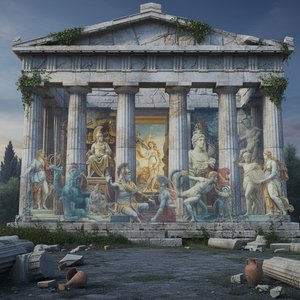
Echoes of Olympus: Mythological Narratives in Western Art Through the Ages
Explore the captivating history of mythological narratives in Western art! From ancient Greece to modern masterpieces, discover iconic artworks & symbolism. Expert analysis and high-quality reproductions at OriginalUniqueArt.

Топ-10 шедеврів бароко: картини, що змінили мистецтво | OriginalUniqueArt.com
Відкрийте для себе 10 шедеврів бароко від Караваджо, Рембрандта та Рубенса! Історія мистецтва, техніки живопису та натхнення для вашого інтер'єру. Репродукції картин високої якості – OriginalUniqueArt.com

Барокова драма: мистецтво, що привносить велич у дім
Відкрийте для себе велич бароко! Дізнайтесь про історію стилю, особливості українського бароко та як створити розкішний інтер'єр. Ексклюзивні репродукції картин від .

