

 Переглянути в інтер'єрі
 Надіслати
 Поділитися
 Деталі
 Посібник

 Завантажити
 Схожі предмети колекціонування
 Рентгенівське дослідження
 Слайд-шоу
 Статистика переглядів
Untitled (D2WW32)
 Oil On Canvas
- WallArt
- Abstract Expressionism
 1953
1953 198.0 x 86.0 cm
 Музей Метрополітен
 Читати далі
Олійная репродукція ручної роботи
Написана вручну олією на полотні у вашому розмірі та рамі, виготовлена на замовлення нашими художниками. ( Перейти до друку Перейти до цифрових зображень)




P118B $10

P118H $10

P118W $10

P438Z $10

P508JH $12

P508YH $12

P805H $10

P805Z $10

P919BZ $10

P919G $10

P919XJ $10

P959ZH $10

P968JZ $12

W106C $8

W218G $10

W218JH $8

W218Y $10

W307PJ $10

W316G $10

W316PJ $8

W316Y $10

W398PJ $8

W4111J $10

W500HY $15

W500JH $15

W692G $12

W849H $8

W940BG $15

W953PJ $8




Обирайте з наших стандартних розмірів, що відповідають оригінальним пропорціям твору мистецтва.

Ви можете вказати власні розміри, щоб репродукція ідеально підійшла до конкретної рами або інтер'єру. Якщо вибраний вами розмір не відповідає пропорціям оригіналу, ми або обріжемо полотно, або доповнимо картину додатковими елементами, промальованими вручну. Цифровий макет буде надіслано вам на затвердження перед початком виробництва.
Зверніть увагу, що попередній перегляд на екрані не відображає фактичне обрізання або розширення зображення. Тільки макет точно покаже остаточну композицію.
Хоча ми можемо виготовити виріб у нестандартному розмірі, для збереження оригінальних пропорцій рекомендуємо обирати варіанти зі встановленого списку.
Після оформлення замовлення команда OriginalUniqueArt.com зв'яжеться з клієнтом електронною поштою для отримання інструкцій та надасть попередній макет
Доставка по всьому світу () за 3–4 тижні замість стандартних 5 тижнів. (26 Вересень). Без жодних компромісів у якості.

Безкоштовна експрес-доставка по всьому світу

Високоякісне лляне полотно

Повне страхове покриття доставки

Гарантія повернення митних зборів

Гарантія точного відтворення кольорів

Політика повернення протягом 100 днів (лише у разі виявлення дефектів)

Гарантія повернення 100% коштів

Знижка на оптові замовлення
 Скляний варіант доступний лише для розмірів до 110 см

Untitled (D2WW32)
Техніка репродукції
Розмір репродукції
-


Загальна вартість
$ 300
A Glimpse into the Soul: Hedda Sterne's Abstract Interior
Hedda Sterne’s 1953 painting, “Untitled (D2WW32),” isn’t merely a depiction of a room; it’s an immersion. It’s a carefully constructed echo of memory and emotion, rendered in the rich, earthy palette of a bygone era. The canvas breathes with a quiet intensity, inviting the viewer to lose themselves within its layered complexity. This work, born from the heart of the New York School of painters, stands as a testament to Sterne's unique ability to translate the intangible—the feeling of a space, the weight of history—into visual form.
The composition immediately commands attention with its towering verticality – columns and arches dominate the scene, suggesting a grand hall or perhaps even a cathedral. Yet, this sense of monumental scale is subtly undermined by the artist’s deliberate distortion of perspective. Lines converge and recede in unexpected ways, creating an atmosphere of both stability and disorientation. It's as if we are navigating a space that exists simultaneously within our conscious and subconscious realms. The interplay between these strong vertical elements and the more fluid, curvilinear shapes – arches, rounded forms – generates a dynamic tension, preventing the image from feeling static or predictable.
The Language of Texture: Technique and Materiality
Sterne’s technique is strikingly tactile. Thick impasto—a generous application of paint built up in visible layers—dominates the surface, creating a palpable sense of texture. Each brushstroke feels deliberate, imbued with energy and movement. The artist doesn't shy away from revealing her process; rather, she embraces it as an integral part of the artwork’s expressive power. Close examination reveals subtle shifts in color and tone within these textured areas, hinting at hidden depths and complexities.
The choice of materials—primarily oil paints on canvas—contributes significantly to the work's overall effect. The rich, warm tones – golds, browns, beiges, and greys – evoke a sense of history and tradition, while also suggesting a certain melancholy or introspection. The use of muted colors allows for an extraordinary depth of shadow and light, creating a dramatic interplay between illumination and darkness that draws the eye deeper into the composition.
Echoes of Surrealism and Memory
Sterne’s work is deeply rooted in the principles of Surrealism, particularly her exploration of automatism—a technique that encourages spontaneous creation without conscious control. This manifests itself in the painting's dreamlike quality, its unsettling juxtapositions, and its refusal to offer a straightforward representation of reality. The architecture depicted isn’t a specific location but rather a composite of memories, experiences, and emotions – a landscape of the mind.
Born Hedwig Lindenberg in Bucharest, Romania, Sterne's life was marked by displacement and transformation. Her journey from Europe to New York, fueled by the upheaval of World War II, profoundly shaped her artistic vision. “Untitled (D2WW32)” can be interpreted as a reflection on this experience—a meditation on loss, memory, and the search for stability in an uncertain world. The painting’s evocative atmosphere invites us to contemplate our own personal histories and the ways in which they shape our perceptions of space and time.
A Timeless Resonance: Symbolism and Emotional Impact
Beyond its formal qualities, “Untitled (D2WW32)” possesses a profound emotional resonance. The painting’s sense of scale and mystery evokes feelings of awe, contemplation, and perhaps even a touch of unease. It's a work that rewards repeated viewing, revealing new layers of meaning with each encounter.
The painting’s enduring appeal lies in its ability to tap into universal themes—memory, loss, identity, and the search for connection. It serves as a powerful reminder of the transformative power of art and its capacity to illuminate the complexities of the human experience. Whether viewed as a historical artifact or a contemporary masterpiece, “Untitled (D2WW32)” continues to captivate and inspire viewers with its haunting beauty and profound emotional depth.
Біографія митця
Hedda Sterne (1910-2011) – A Life Bridging Worlds: The Artistic Journey of Hedda Sterne
Hedda Sterne, born Hedwig Lindenberg in Bucharest, Romania, in 1910, was an artist whose life and work embodied a fascinating intersection of cultures, movements, and personal philosophies. Her journey from the vibrant avant-garde scene of pre-war Europe to the heart of the New York School is a testament to her resilience, intellectual curiosity, and unwavering dedication to artistic exploration. Growing up in a household that valued both music and languages – her brother became a renowned conductor – Sterne received a broad education that fostered an appreciation for nuance and expression. This early exposure, coupled with a burgeoning interest in art history and German philosophical texts, laid the groundwork for a deeply thoughtful and conceptually driven practice. Initially encouraged towards a musical path, she skillfully navigated familial expectations to pursue her true calling: painting. Her formal training began in 1918 under the tutelage of Frederic Storck, a sculptor who had taught her instructor Max Hermann Maxy, setting her on a course that would see her engage with some of the most pivotal artistic currents of the twentieth century.Early Influences and Artistic Formation
Hedwig Lindenberg’s formative years were steeped in intellectual stimulation. Her family instilled in her a love for learning and encouraged exploration beyond conventional boundaries. Notably, her brother's career as a conductor exposed her to musical sophistication—a sensibility that would later permeate her artistic vision. Simultaneously, Sterne devoured German philosophical texts, grappling with existential questions and embracing the modernist preoccupation with subjectivity. This intellectual grounding profoundly shaped her approach to artmaking, informing her understanding of form, color, and symbolism. Encouraged by Storck’s guidance, Sterne honed her sculptural skills alongside Max Hermann Maxy, gaining invaluable experience in manipulating materials and achieving expressive effects—skills that would prove crucial in her subsequent artistic endeavors. Her initial inclination toward music ultimately yielded to the irresistible allure of painting, marking a pivotal moment in her personal trajectory.Surrealism and European Avant-Garde
The artistic landscape of Bucharest in the 1920s pulsed with revolutionary energy, attracting artists who dared to challenge established conventions. Sterne became captivated by Surrealism—a movement she described as “something I grew up with”—influenced by figures like Marcel Janco and Victor Brauner. Dada’s rebellious spirit resonated deeply within her artistic sensibilities, fostering a desire to disrupt traditional hierarchies and explore the subconscious realm. Frequent travels to Vienna provided opportunities to immerse herself in ceramic artistry and engage with European Modernism's latest innovations—particularly Léger’s geometric abstraction and Lhote’s exploration of architectural forms. These experiences weren’t merely technical exercises; they were transformative encounters that broadened Sterne’s artistic horizons and instilled a profound appreciation for diverse aesthetic approaches. Her fascination with Surrealist principles like automatism—a technique she would later champion in her collages—demonstrated her commitment to liberating creativity from rational constraints.From Bucharest to New York: Embracing American Modernism
The looming shadow of war forced Sterne’s family to relocate to the United States in 1939, marking a dramatic shift in her life and artistic circumstances. She reunited with Fritz Stern (later Frederick Stafford), establishing a studio on East 50th Street and forging connections with fellow expatriates—including Peggy Guggenheim and Max Ernst—who shared her passion for avant-garde experimentation. These relationships proved invaluable, introducing Sterne to influential artists from across Europe and fostering collaborative dialogues that enriched her artistic vision. Her friendship with André Breton solidified her allegiance to Surrealism’s core tenets—challenging perception and embracing irrationality as pathways to creative insight. Sterne actively participated in the First Papers of Surrealism exhibition at Whitelaw Reid Mansion, New York (October 14 - November 7), curated by Marcel Duchamp and André Breton as a benefit for the Coordinating Council of French Relief Societies—a testament to her unwavering commitment to artistic activism and intellectual engagement. During this period, Sterne began exploring new techniques and mediums, embracing industrial materials like aerosol spray paint to capture the dynamism of urban life and experimenting with collage to create layered compositions that conveyed complex emotional states.Legacy and Artistic Significance
Hedda Sterne’s enduring legacy rests on her pioneering role in shaping American Abstract Expressionism—a movement she embraced wholeheartedly during her time in New York. Her participation in “The Irascibles”—a group of artists who defied institutional norms and championed artistic freedom—represented a courageous assertion of individuality against prevailing societal pressures. Sterne's distinctive visual diary—characterized by abstracted landscapes, architectural motifs, and enigmatic figures—continues to inspire artists and scholars alike. Her unwavering dedication to conceptual exploration and her masterful manipulation of form and color cemented her place as one of the most important voices in twentieth-century art—an artist who fearlessly navigated a world undergoing profound transformation, transforming personal experience into enduring visual poetry. She remains an exemplar of artistic integrity and intellectual curiosity, demonstrating that true creativity thrives on questioning assumptions and embracing unconventional perspectives.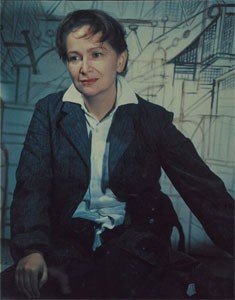
Геда Стерн
1910 - 2011 , Румунія
Довідкова інформація
- Artistic Movement Or Style: Абстрактний експресіонізм та сюрреалізм
- Artists Or Movements Influenced By This Artist: ['Нова школа Нью-Йорка']
- Artists Who Influenced This Artist:
- Марсель Жанко
- Виктор Браунер
- Фернан Леже
- Андре Бретон
- Date Of Birth: 4 серпня 1910
- Date Of Death: 2011
- Full Name: Hedda Sterne
- Nationality: Румунсько-американська
- Notable Artworks:
- Тондо
- Третья Авеню ЭЛ
- Place Of Birth: Бухарест, Румунія
Схожі статті

Топ-10 шедеврів абстрактного експресіонізму: мистецтво, яке змінила епоху | OriginalUniqueArt.com
Відкрийте для себе 10 шедеврів абстрактного експресіонізму! Дізнайтесь історію Поллока, Ротко та інших геніїв. Репродукції картин преміум-якості для вашого дому від OriginalUniqueArt.com. Дослідіть колекцію онлайн!

Топ-25 шедеврів Василя Кандинського: подорож у світ абстрактного мистецтва | OriginalUniqueArt.com
Відкрийте для себе 25 найвідоміших шедеврів Василя Кандинського! Пориньте у світ абстрактного мистецтва, експресіонізму та кольорових композицій. Репродукції картин Кандинського преміум-якості на OriginalUniqueArt.com – для вашого інтер'єру з душею. Дослідіть повну колекцію онлайн!

Expressionist Abstraction: A Procurement Guide to Bold Colors and Emotional Impact for Modern Hotel Interiors
Elevate hospitality spaces with Expressionist Abstraction. A professional procurement guide for hotel designers on sourcing bold, large-scale abstract oil paintings to create impactful, high-end modern interiors through reliable bulk-order art solutions.

Unlocking Contemporary Abstraction: A Designer's Guide to Curating Emotion and Color for Modern Interiors
Master the art of decorating with contemporary abstraction. Our expert guide for designers explores how to use color, geometry, and emotion to transform modern interiors into soulful, curated spaces through professional art selection and placement strategies.
Гармонія Контрастів: Інтеграція Сучасної Абстрактної Живопису в Класичні Інтер'єри для Вічної Елегантності
Відкрийте гармонію контрастів! Експертні поради від OriginalUniqueArt щодо інтеграції сучасного абстрактного живопису в класичні інтер'єри. Підберіть ідеальне мистецтво для вашого дому – ексклюзивні репродукції та картини на замовлення з доставкою по Україні.