

 Переглянути в інтер'єрі
 Надіслати
 Поділитися
 Деталі
 Посібник

 Завантажити
 Схожі предмети колекціонування
 Рентгенівське дослідження
 Слайд-шоу
 Статистика переглядів
New York


 Читати далі
Придбайте цифрову копію високої роздільної здатності з покращеною якістю, що значно перевершує онлайн-перегляд.
Кожен файл ретельно підготовлений нашими фахівцями за допомогою сучасних інструментів та професійної ручної ретуші. Ми гарантуємо виняткову чіткість, точну передачу кольору та високу деталізацію кожного зображення.
Фінальний файл надсилається електронною поштою протягом 72 годин і оптимізований для негайного використання у професійних виданнях та друкованих матеріалах. Таку якість обирають провідні дизайнерські студії, видавництва та галереї.
Цифрове зображення
Завантажте файл високої роздільної здатності для особистого використання, друку та творчих проєктів. ( Перейти до друку Купити картину ручної роботи)
Що входить у кожне замовлення цифрових зображень
Експертна цифрова доставка з гарантією якості
Обираючи OriginalUniqueArt.com, ви отримуєте не просто зображення — ви отримуєте професійно вдосконалений цифровий витвір мистецтва, створений з надзвичайною точністю та підкріплений гарантією задоволення. Ось усе, що автоматично додається до вашого замовлення:

Швидка доставка на email
Ваш цифровий файл із зображенням високої роздільної здатності буде надісланий вам електронною поштою протягом 72 годин після оформлення замовлення — він буде готовий до негайного використання.

Цифровий файл із покращенням ШІ
Ваш витвір мистецтва професійно оптимізовано за допомогою передових інструментів штучного інтелекту та ручної корекції, що забезпечує максимальну деталізацію, чіткість і точність передачі кольорів.

Безкоштовне повторне завантаження назавжди
Випадково видалили або втратили файл? Не хвилюйтеся — ми надішлемо його вам повторно в будь-який час безкоштовно.

Без митних зборів — завжди
Насолоджуйтесь вашим витвором мистецтва миттєво без жодних мит, зборів або плати за доставку — цифрові завантаження завжди не оподатковуються.

Гарантія точності кольорів
Ми гарантуємо максимально точне відтворення оригінальних кольорів на вашому цифровому зображенні завдяки використанню професійних інструментів та систем управління кольором.

100-денна гарантія задоволення клієнта
Якщо ви не задоволені придбаним цифровим зображенням, ми внесемо правки або повернемо 100% вартості протягом 100 днів — без зайвих запитань.

Гарантія повернення 100% коштів
Незадоволені покупкою? Отримайте повне повернення коштів протягом 100 днів після отримання цифрового файлу — без зайвих запитань.

Знижки на оптові замовлення
Купуйте 3 зображення — заощаджуйте 10% — Купуйте 5 — заощаджуйте 15% — Купуйте 10+ — заощаджуйте 20%. Чудово підходить для творчих проєктів, галерей та агентств.
A Window Into the Soul of Abstract Expressionism
In the heart of the mid-century artistic explosion, Hedda Sterne’s “New York,” completed in 1956, emerges as a profound meditation on perception and the urban experience. Rather than offering a literal postcard of the Manhattan skyline, Sterne invites us to peer through a fractured lens, where the city is not merely seen but felt. The artwork focuses on a window frame, meticulously rendered with geometric lines and intersecting diagonals that act as a conduit for the dynamism of postwar life. It is a work that captures the very essence of Abstract Expressionism, moving beyond mere representation to explore the interplay between light, shadow, and the structural complexity of the modern world.
The technique employed in this masterpiece is a masterful blend of Impressionistic sensitivity and the bold formalism characteristic of the New York School. Utilizing oil on canvas, Sterne creates a heavily worked surface where visible brushstrokes contribute to a rich, tactile texture. This deliberate layering allows for a fascinating duality; parts of the composition suggest a smooth, glass-like clarity, while other areas evoke a rugged, weathered roughness. Through this textured approach, the artist engages the viewer's senses, making the act of looking a physical experience. The muted color palette—dominated by sophisticated shades of grey, yellow, and black—enhances the atmospheric depth, casting long, natural shadows that dance across the architectural elements.
Symbolism and the Fragmented Reality
Beyond its structural beauty, “New York” is steeped in deep symbolic resonance. The fractured reflections caught within the window glass serve as a powerful metaphor for the subjective nature of reality. Much like the Surrealist ideas that influenced Sterne, these distortions suggest that our view of the world is often fragmented and filtered through our own perceptions. The geometric lines of the window frame provide a sense of order amidst this visual chaos, symbolizing the human attempt to find structure within the overwhelming energy of the urban landscape. It is a poignant reflection of the cultural anxieties of 1956, capturing a moment of transformation and reconstruction in the wake of global upheaval.
For the discerning collector or interior designer, this painting offers more than just aesthetic appeal; it provides an emotional anchor. The composition’s flattened perspective and close-up view create an intimate atmosphere of quiet contemplation. Whether placed in a contemporary gallery setting or as a focal point in a sophisticated modern living space, the artwork brings a sense of intellectual depth and historical gravity. It is a piece that rewards prolonged study, offering new layers of meaning with every glance, making it an incomparable acquisition for those who seek to surround themselves with art that speaks to the complexity of the human spirit.
Запитання та відповіді
Який етап творчого розвитку Геда Стерн представляє твір "New York"?
У межах творчого шляху Геда Стерн твір "New York" належить до періоду Mature Period. Ця фаза дозволяє порівняти його з іншими роботами митця.
Для чого рекомендується використовувати репродукцію «New York» Геда Стерн?
Рекомендоване використання відбитка «New York» — це Reflective.
Чи є у «New York» можливість попереднього перегляду в доповненій реальності?
Для твору "New York" доступна функція попереднього перегляду в доповненій реальності: на сторінці AR-перегляд ви можете побачити його у власному інтер'єрі за допомогою сумісного пристрою.
Біографія митця
Hedda Sterne (1910-2011) – A Life Bridging Worlds: The Artistic Journey of Hedda Sterne
Hedda Sterne, born Hedwig Lindenberg in Bucharest, Romania, in 1910, was an artist whose life and work embodied a fascinating intersection of cultures, movements, and personal philosophies. Her journey from the vibrant avant-garde scene of pre-war Europe to the heart of the New York School is a testament to her resilience, intellectual curiosity, and unwavering dedication to artistic exploration. Growing up in a household that valued both music and languages – her brother became a renowned conductor – Sterne received a broad education that fostered an appreciation for nuance and expression. This early exposure, coupled with a burgeoning interest in art history and German philosophical texts, laid the groundwork for a deeply thoughtful and conceptually driven practice. Initially encouraged towards a musical path, she skillfully navigated familial expectations to pursue her true calling: painting. Her formal training began in 1918 under the tutelage of Frederic Storck, a sculptor who had taught her instructor Max Hermann Maxy, setting her on a course that would see her engage with some of the most pivotal artistic currents of the twentieth century.Early Influences and Artistic Formation
Hedwig Lindenberg’s formative years were steeped in intellectual stimulation. Her family instilled in her a love for learning and encouraged exploration beyond conventional boundaries. Notably, her brother's career as a conductor exposed her to musical sophistication—a sensibility that would later permeate her artistic vision. Simultaneously, Sterne devoured German philosophical texts, grappling with existential questions and embracing the modernist preoccupation with subjectivity. This intellectual grounding profoundly shaped her approach to artmaking, informing her understanding of form, color, and symbolism. Encouraged by Storck’s guidance, Sterne honed her sculptural skills alongside Max Hermann Maxy, gaining invaluable experience in manipulating materials and achieving expressive effects—skills that would prove crucial in her subsequent artistic endeavors. Her initial inclination toward music ultimately yielded to the irresistible allure of painting, marking a pivotal moment in her personal trajectory.Surrealism and European Avant-Garde
The artistic landscape of Bucharest in the 1920s pulsed with revolutionary energy, attracting artists who dared to challenge established conventions. Sterne became captivated by Surrealism—a movement she described as “something I grew up with”—influenced by figures like Marcel Janco and Victor Brauner. Dada’s rebellious spirit resonated deeply within her artistic sensibilities, fostering a desire to disrupt traditional hierarchies and explore the subconscious realm. Frequent travels to Vienna provided opportunities to immerse herself in ceramic artistry and engage with European Modernism's latest innovations—particularly Léger’s geometric abstraction and Lhote’s exploration of architectural forms. These experiences weren’t merely technical exercises; they were transformative encounters that broadened Sterne’s artistic horizons and instilled a profound appreciation for diverse aesthetic approaches. Her fascination with Surrealist principles like automatism—a technique she would later champion in her collages—demonstrated her commitment to liberating creativity from rational constraints.From Bucharest to New York: Embracing American Modernism
The looming shadow of war forced Sterne’s family to relocate to the United States in 1939, marking a dramatic shift in her life and artistic circumstances. She reunited with Fritz Stern (later Frederick Stafford), establishing a studio on East 50th Street and forging connections with fellow expatriates—including Peggy Guggenheim and Max Ernst—who shared her passion for avant-garde experimentation. These relationships proved invaluable, introducing Sterne to influential artists from across Europe and fostering collaborative dialogues that enriched her artistic vision. Her friendship with André Breton solidified her allegiance to Surrealism’s core tenets—challenging perception and embracing irrationality as pathways to creative insight. Sterne actively participated in the First Papers of Surrealism exhibition at Whitelaw Reid Mansion, New York (October 14 - November 7), curated by Marcel Duchamp and André Breton as a benefit for the Coordinating Council of French Relief Societies—a testament to her unwavering commitment to artistic activism and intellectual engagement. During this period, Sterne began exploring new techniques and mediums, embracing industrial materials like aerosol spray paint to capture the dynamism of urban life and experimenting with collage to create layered compositions that conveyed complex emotional states.Legacy and Artistic Significance
Hedda Sterne’s enduring legacy rests on her pioneering role in shaping American Abstract Expressionism—a movement she embraced wholeheartedly during her time in New York. Her participation in “The Irascibles”—a group of artists who defied institutional norms and championed artistic freedom—represented a courageous assertion of individuality against prevailing societal pressures. Sterne's distinctive visual diary—characterized by abstracted landscapes, architectural motifs, and enigmatic figures—continues to inspire artists and scholars alike. Her unwavering dedication to conceptual exploration and her masterful manipulation of form and color cemented her place as one of the most important voices in twentieth-century art—an artist who fearlessly navigated a world undergoing profound transformation, transforming personal experience into enduring visual poetry. She remains an exemplar of artistic integrity and intellectual curiosity, demonstrating that true creativity thrives on questioning assumptions and embracing unconventional perspectives.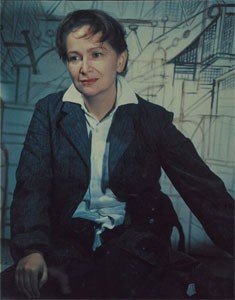
Геда Стерн
1910 - 2011 , Румунія
Коротко про автора
- Artistic Movement Or Style: Абстрактний експресіонізм та сюрреалізм
- Artists Or Movements Influenced By This Artist: ['Нова школа Нью-Йорка']
- Artists Who Influenced This Artist:
- Марсель Жанко
- Виктор Браунер
- Фернан Леже
- Андре Бретон
- Date Of Birth: 4 серпня 1910
- Date Of Death: 2011
- Full Name: Hedda Sterne
- Nationality: Румунсько-американська
- Notable Artworks:
- Тондо
- Третья Авеню ЭЛ
- Place Of Birth: Бухарест, Румунія