
 Переглянути в інтер'єрі
 Надіслати як листівку
 Поділитися
 Деталі витвору
 Посібник

 Завантажити
 Схожі екземпляри
 Рентгенівське дослідження
 Слайд-шоу
 Питання та відповіді
 Статистика
Christus before Pilate (detail)


 Розгорнути текст
Гікле / Художній принт
Друк جيкле або на полотні музейної якості з оперативним виготовленням та різноманітними варіантами фінішної обробки. ( Замовити картину ручної роботи Перейти до цифрових зображень)




P118B ₴10

P118H ₴10

P118W ₴10

P438Z ₴10

P508JH ₴12

P508YH ₴12

P805H ₴10

P805Z ₴10

P919BZ ₴10

P919G ₴10

P919XJ ₴10

P959ZH ₴10

P968JZ ₴12

W106C ₴8

W218G ₴10

W218JH ₴8

W218Y ₴10

W307PJ ₴10

W316G ₴10

W316PJ ₴8

W316Y ₴10

W398PJ ₴8

W4111J ₴10

W500HY ₴15

W500JH ₴15

W692G ₴12

W849H ₴8

W940BG ₴15

W953PJ ₴8




Обирайте з наших стандартних розмірів, що відповідають оригінальним пропорціям твору мистецтва.

Введіть необхідну ширину та висоту, щоб принт ідеально підійшов до вашої рами або стіни. Принт можна лише обрізати, але не можна зробити більшим за оригінал, тому при зміні пропорцій частина зображення буде втрачена. Перед друком ми надсилаємо вам цифровий макет для затвердження. Зображення на цій сторінці не відображає реальну обрізку — її можна побачити лише на макеті.
Доставка по всьому світу () за 2 тижні замість стандартних 4/5 тижнів. (6 Листопад)

Безкоштовна експрес-доставка по всьому світу

Високоякісне лляне полотно

Повне страхове покриття доставки

Гарантія повернення митних зборів

Гарантія точного відтворення кольорів

Політика повернення протягом 100 днів (лише у разі виявлення дефектів)

Гарантія повернення 100% коштів

Пропозиція на оптові замовлення
 Скляний варіант доступний лише для розмірів до 110 см

Christus before Pilate (detail)
Гікле / Художній принт
Розмір репродукції
-


Підсумкова вартість
₴ 3638
A Divine Encounter in the Northern Renaissance
In the quiet intensity of Hans Multscher’s 1437 masterpiece, Christus before Pilate (detail), we are invited to witness one of the most profound confrontations in human history. This exquisite detail from the Wurzach Altar does not merely depict a biblical event; it captures the very breath held between two worlds: the eternal and the temporal. As Jesus Christ stands before the Roman governor, the canvas vibrates with the tension of a trial that would alter the course of civilization. Multscher, a pioneer of German realism, moves beyond the flat, symbolic gestures of the Gothic era to present a scene where every furrowed brow and heavy fold of fabric tells a story of spiritual weight and earthly consequence.
The artistry of this piece lies in its breathtaking commitment to Northern Renaissance Realism. Utilizing the delicate medium of oil paint on fir wood, Multscher achieved a level of textural nuance that was revolutionary for his time. One can almost feel the heavy, tactile quality of the garments worn by the gathered crowd—the rougher textures of commoners contrasted against the more refined attire of those in positions of authority. This meticulous attention to detail serves a higher purpose than mere decoration; it grounds the divine narrative in a palpable, physical reality, making the miraculous feel disturbingly present and human.
Symbolism and the Language of Light
Every element within this composition is imbued with deep theological significance, designed to guide the viewer toward spiritual contemplation. The central figure of Christ is marked by a subtle yet unmistakable halo, a luminous emblem of his divine nature that pierces through the surrounding earthly chaos. Around him, the faces of the onlookers form a mosaic of human emotion—fear, doubt, skepticism, and apprehension. These expressions serve as a mirror for the viewer's own soul, reflecting the universal struggle to recognize truth amidst the noise of worldly judgment.
The interplay of light and shadow, or chiaroscuro, plays a vital role in directing the narrative flow. Light falls upon Christ with a clarity that suggests an inner radiance, while the deeper shadows enveloping the periphery represent the uncertainty and moral ambiguity of Pilate’s court. For the collector or the interior designer, this painting offers more than just visual beauty; it provides a focal point of profound intellectual and emotional depth. It is a piece that commands attention, inviting long periods of study and reflection, making it an ideal centerpiece for spaces dedicated to thought, heritage, and the appreciation of fine classical art.
A Legacy of Faith and Humanism
To look upon this work is to step into the cultural heart of 15th-century Ulm. Created during a period of intense religious fervor and the burgeoning movement of Northern Humanism, Multscher’s work embodies the era's desire to find the sacred within the natural world. His travels through France and the Netherlands clearly left an indelible mark on his technique, allowing him to bring a sophisticated, international realism to the German landscape. This painting is not just a relic of the past; it is a living testament to the moment when art began to look more closely at the human condition.
Whether displayed in a private gallery or as a sophisticated element of a curated interior, a high-quality reproduction of this detail allows the timeless drama of Multscher’s vision to inhabit modern spaces. It brings with it an atmosphere of historical gravity and artistic excellence, offering anyone who appreciates the masters a window into a period where every brushstroke was an act of devotion.
Питання та відповіді
Як побудована колірна композиція «Christus before Pilate (detail)» роботи Ганс Фредрік Гуде?
Колірна композиція «Christus before Pilate (detail)» роботи Ганс Фредрік Гуде поєднує в собі Statement контраст із Softly Mixed Palette гармонією.
Яку атмосферу передає "Christus before Pilate (detail)"?
«Christus before Pilate (detail)» має Dramatic атмосферу.
Що зображено на творі "Christus before Pilate (detail)"?
«Christus before Pilate (detail)» роботи Ганс Фредрік Гуде зображує: religious art, medieval painting, christian iconography, pilate trial, crucifixion scene, renaissance style, german sculpture.
Біографія митця
A Pioneer of German Realism: The Life and Art of Hans Multscher
Hans Multscher, a name often overshadowed by the towering figures of his contemporaries, nevertheless stands as a pivotal figure bridging the stylistic transition from late Gothic to early Renaissance in Germany. Born around 1400 in the small Bavarian town of Reichenhofen – now part of Leutkirch im Allgäu – Multscher’s life was one of constant movement and intellectual curiosity. He wasn't merely a craftsman; he was an explorer, driven by a desire to absorb the artistic innovations blossoming across Europe. His journey took him beyond the familiar landscapes of his homeland, exposing him to the burgeoning realism and meticulous detail characteristic of Early Netherlandish painting – a style that would profoundly shape his unique aesthetic vision. This fascination with Northern European art, particularly its emphasis on naturalism and emotional depth, became the cornerstone of his artistic development.- Early Influences: Multscher’s formative years were spent in Reichenhofen, a region steeped in Gothic tradition. However, even at a young age, he demonstrated an aptitude for observation and a desire to move beyond the stylized conventions of the era.
- Travels and Learning: Driven by his artistic ambition, Multscher embarked on extensive travels throughout Germany, France, and the Netherlands. These journeys were not merely vacations; they were deliberate quests for knowledge, allowing him to witness firsthand the groundbreaking techniques and innovative approaches being developed by leading artists of the time.
- Ulm: A Turning Point: In 1427, Multscher established himself as a free citizen of Ulm – a thriving commercial hub on the Danube River. This move marked a significant turning point in his career, providing him with access to new markets, patrons, and artistic opportunities.
The Workshop and Artistic Development
Multscher’s workshop was far more than just a production facility; it served as a vibrant incubator of artistic experimentation. Records indicate that he oversaw a substantial team – sometimes numbering as many as sixteen assistants – fostering an environment where traditional Gothic forms were gradually infused with the naturalism he had absorbed during his travels. This blending of influences is particularly evident in his sculptural work, which moved away from the elongated figures and stylized drapery typical of the late Gothic period towards more anatomically accurate representations and a greater sense of emotional depth. The faces of his saints are no longer idealized; they possess a palpable humanity, reflecting a deeper understanding of human psychology. His paintings, though fewer in number than his sculptures, demonstrate an equally compelling shift. The *Wurzacher Altar*, begun in 1437, stands as a testament to this evolving style. This ambitious project – originally intended for the church of St. James in Wurzach – showcases Multscher’s mastery of oil painting – a relatively new medium at the time – and his ability to render textures, light, and shadow with remarkable precision. The altar's panels depict scenes from the life of Christ and the Virgin Mary, each imbued with a sense of palpable humanity that set it apart from earlier devotional art. It’s important to note that Multscher wasn’t solely focused on religious subjects; his commissions also included secular works, such as the group of emperors adorning the eastern window of Ulm's city hall, demonstrating his versatility and appeal to a broad clientele. The workshop was not just about creating objects; it was about disseminating ideas, refining techniques, and shaping the artistic landscape of Swabia.Key Works and Lasting Legacy
Beyond the *Wurzacher Altar*, several other works cemented Multscher’s reputation as one of Germany’s most important artists. The sculpture of *Holy Mary Magdalen*, now housed in Frankfurt's Liebieghaus, is a particularly poignant example of his ability to convey profound emotion through sculpted form. Her sorrowful expression and the delicate rendering of her hair and clothing reveal a deep understanding of human psychology. Another notable work is the *Man of Sorrows* – copies of which can be found at Ulm Minster – a powerful depiction of Christ’s suffering that reflects the devotional fervor of the era. These pieces, along with his contributions to the Ulm city hall, demonstrate Multscher's skill in both sculpture and painting, as well as his ability to adapt his style to different contexts and patrons. Multscher’s influence extended far beyond his own lifetime; the workshop he established continued to thrive after his death in 1467, disseminating his artistic principles throughout Swabia and beyond. He wasn't simply a master craftsman; he was a teacher, an innovator, and a catalyst for change – a figure who helped usher in a new era of artistic realism in Germany.A Bridge Between Eras
Hans Multscher’s significance lies not only in the beauty and technical skill of his art but also in his role as a bridge between two distinct periods. He was among the first German artists to fully embrace the realism and naturalism that were transforming art in northern Europe, paving the way for subsequent generations of Renaissance masters. His work represents a crucial moment in the development of German art, marking a departure from the stylized conventions of the Gothic period towards a more humanistic and observational approach. While he didn’t entirely abandon traditional forms – elements of Gothic ornamentation can still be detected in his work – he skillfully integrated them with new techniques and aesthetic sensibilities, creating a unique artistic language that resonated deeply with his contemporaries and continues to captivate audiences today. He stands as a testament to the power of artistic exchange and the enduring legacy of those who dare to challenge convention.Exploring Multscher’s World Today
Fortunately, numerous examples of Hans Multscher's artistry survive, allowing us to appreciate his genius firsthand. The Gemäldegalerie Alte Meister in Dresden houses an impressive collection of European paintings from the 15th to 18th centuries, offering a broader context for understanding Multscher’s place within art history. For those interested in exploring high-quality reproductions of his work, platforms like OriginalUniqueArt and OriginalUniqueArt offer meticulously hand-painted copies that capture the nuances of his original masterpieces. Furthermore, resources such as Wikipedia and the Web Gallery of Art provide valuable biographical information and detailed analyses of his artistic style. By engaging with these resources, we can continue to celebrate the life and legacy of Hans Multscher – a true pioneer of German realism whose art continues to inspire and move us centuries later.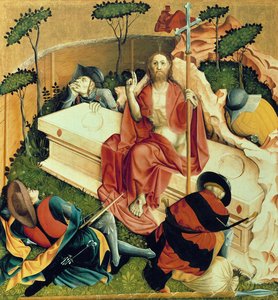
Ганс Фредрік Гуде
1400 - 1467 , Німеччина
Короткі факти
- Artistic Movement Or Style: Пізній готизм/Ренесанс
- Artists Or Movements Influenced By This Artist: ['Ренесанс']
- Artists Who Influenced This Artist:
- Скандинавські стилі
- Нідерландські стилі
- Date Of Birth: c. 1400
- Date Of Death: 1467
- Full Name: Hans Multscher
- Nationality: Німецький
- Notable Artworks:
- Марія Магдалина
- Чоловік смутку
- Група імператорів
- Вуццакерський алтарь
- Place Of Birth: Reichenbach, Німеччина
Пов'язані статті

Oil on Canvas: A Historical & Technical Exploration of a Timeless Artistic Medium
Explore the rich history & enduring techniques of oil painting on canvas. Discover the science behind its longevity, conservation practices, and contemporary relevance. Expert insights for art enthusiasts.

The Enduring Power of Painting: A Historical & Contemporary Exploration of Form and Emotion
Explore the rich history & enduring techniques of oil painting with OriginalUniqueArt. Discover masterpieces, learn about art collecting, and find authentic handmade reproductions crafted by skilled artists.
The Northern Awakening: Artistic Innovation & Cultural Transformation in the German Renaissance
Explore the artistic innovation of the German Renaissance! Discover Dürer, the Danube School & Reformation art. Learn about techniques, materials & lasting influence. Find museum-quality reproductions at OriginalUniqueArt.
The Northern Renaissance: A Masterclass in Hyper-Realism, Oil Innovation, and Symbolic Depth
Explore the profound mastery of Northern Renaissance art. Discover the technical brilliance of Flemish oil painting, the intricate symbolism of Bosch and Bruegel, and the revolutionary realism that redefined European art history through an expert historical lens.

The Enduring Legacy of Oil on Canvas: Technique, History & Aesthetic Impact
Explore the rich history & techniques of oil painting – from Renaissance masters to Impressionism. Discover pigments, layering methods, and why this timeless medium endures. Expert insights for artists & art enthusiasts.
