
 Переглянути в інтер'єрі
 Надіслати як листівку
 Поділитися
 Деталі витвору
 Посібник

 Завантажити
 Схожі екземпляри
 Рентгенівське дослідження
 Слайд-шоу
 Статистика
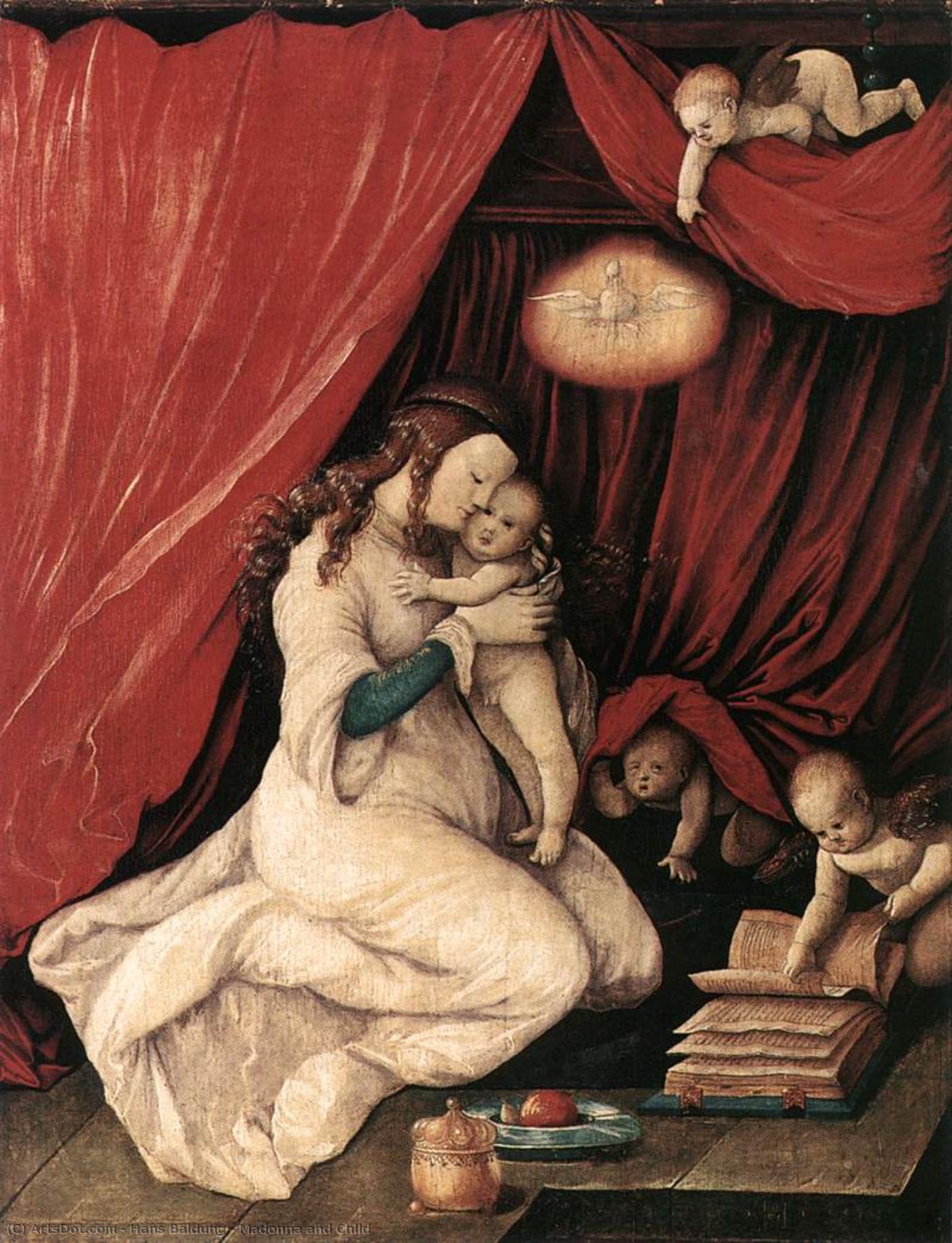
Madonna and Child
 Oil On Panel
- WallArt
- Northern Renaissance
 1516
1516- Renaissance
 37.0 x 48.0 cm
 Germanisches Nationalmuseum
 Розгорнути текст
Get a print-ready file that goes far beyond the web preview. Every digital image we sell comes from a high-resolution master in our stock database — usually 5,000 to 15,000 pixels wide — so you can print large, crop tightly, or reproduce fine detail with confidence.
No file leaves our studio untouched. A digital expert checks the colors against the original painting and corrects them if needed, then improves clarity and detail with professional retouching tools — always staying faithful to the artist's brushwork and style. The result is an image that looks like the painting, not like a filtered scan.
You approve before you're done: our expert sends the image by e-mail within 72 hours for your review. Not satisfied? Ask for improvements or corrections, or request a refund if the quality falls short.
This is the quality relied on by publishers, design studios, galleries and print shops.
Цифрове зображення
Завантажте файл високої роздільної здатності для особистого використання, друку та творчих проєктів. ( Перейти до друку Замовити картину ручної роботи)
Переваги кожного замовлення цифрових зображень
Експертна цифрова доставка з гарантією якості
Обираючи OriginalUniqueArt.com, ви отримуєте не просто зображення — ви отримуєте професійно вдосконалений цифровий витвір мистецтва, створений з надзвичайною точністю та підкріплений гарантією задоволення. Ось усе, що автоматично додається до вашого замовлення:

Швидка доставка на email
Ваш цифровий файл із зображенням високої роздільної здатності буде надісланий вам електронною поштою протягом 72 годин після оформлення замовлення — він буде готовий до негайного використання.

Цифровий файл із покращенням ШІ
Ваш витвір мистецтва професійно оптимізовано за допомогою передових інструментів штучного інтелекту та ручної корекції, що забезпечує максимальну деталізацію, чіткість і точність передачі кольорів.

Безкоштовне повторне завантаження назавжди
Випадково видалили або втратили файл? Не хвилюйтеся — ми надішлемо його вам повторно в будь-який час безкоштовно.

Без митних зборів — завжди
Насолоджуйтесь вашим витвором мистецтва миттєво без жодних мит, зборів або плати за доставку — цифрові завантаження завжди не оподатковуються.

Гарантія точності кольорів
Ми гарантуємо максимально точне відтворення оригінальних кольорів на вашому цифровому зображенні завдяки використанню професійних інструментів та систем управління кольором.

100-денна гарантія задоволення
Якщо ви не задоволені придбаним цифровим зображенням, ми внесемо правки або повернемо 100% вартості протягом 100 днів — без зайвих запитань.

Гарантія повернення 100% коштів
Незадоволені покупкою? Отримайте повне повернення коштів протягом 100 днів після отримання цифрового файлу — без зайвих запитань.

Знижки на оптові замовлення
Купуйте 3 зображення — заощаджуйте 10% — Купуйте 5 — заощаджуйте 15% — Купуйте 10+ — заощаджуйте 20%. Чудово підходить для творчих проєктів, галерей та агентств.
A Tender Encounter in the Heart of Bavaria
In the quiet, luminous depths of Hans Baldung Grien’s 1516 masterpiece, Madonna and Child, we encounter more than a mere religious icon; we enter a profound meditation on the sanctity of life and the vulnerability of love. Set against the backdrop of the burgeoning High Renaissance in Bavaria, this painting serves as a breathtaking bridge between the structured traditions of the Northern German Gothic and the expressive, psychological complexities of the emerging Mannerist movement. The scene is one of intimate devotion, where the Virgin Mary cradles her infant son with a tenderness that feels startlingly human. Unlike the distant, idealized figures often found in contemporary Italian works, Baldung presents a Mary whose presence is palpable, her maternal instinct rendered with an emotional resonance that transcends the boundaries of time and medium.
The composition draws the viewer into a nurturing sanctuary, where the central figures are surrounded by a soft, atmospheric warmth. As one gazes upon the painting, the eye is led through a delicate arrangement of figures—other children linger near the mother, their presence adding layers of familial depth to the divine narrative. Small, symbolic details are woven into the fabric of the scene, such as the subtle placement of an apple or a book, which serve as quiet reminders of the theological weight carried by the Christ child. These elements do not merely decorate; they anchor the spiritual significance of the moment, inviting collectors and enthusiasts to contemplate the intersection of the earthly and the divine.
Mastery of Light and Texture
Technically, Baldung’s work is a triumph of oil on panel, showcasing a level of meticulous craftsmanship that remains awe-inspiring centuries later. The artist utilized sophisticated layering and glazing techniques to achieve a remarkable luminosity, allowing light to seem as though it is emanating from within the skin of the holy figures themselves. This brilliance is particularly evident in the rendering of Mary’s drapery, where intricate folds and deep shadows create a sense of weight, movement, and tactile richness. The use of chiaroscuro—the dramatic interplay between light and shadow—is employed not just for structural depth, but to heighten the emotional impact of the scene, casting a soft glow upon the serene expression of the infant Jesus.
For the discerning interior designer or art lover, this painting offers an unparalleled sense of prestige and soulful elegance. The way Baldung manipulates texture—from the softness of a child's cheek to the heavy, woven quality of liturgical cloth—provides a visual feast that commands attention in any curated space. A high-quality reproduction of this work brings with it a sense of historical gravity and an atmosphere of peace, making it an ideal centerpiece for those seeking to infuse their surroundings with classical beauty and intellectual depth.
A Legacy of Expression and Emotion
To understand this painting is to understand the unique spirit of Hans Baldung Grien, an artist who dared to move beyond the polished perfection of his peers to embrace a more expressive, sometimes unsettling, psychological truth. His ability to blend the meticulous detail of the Northern tradition with the dramatic tension of Mannerism creates a work that is both comforting and deeply moving. The Madonna and Child stands as a testament to a period of immense cultural transformation, capturing the very essence of humanist thought through the lens of maternal grace.
Whether viewed as a historical artifact or a stunning piece of decorative art, the painting continues to resonate with its ability to evoke empathy. It invites the viewer to pause, to breathe, and to reconnect with the universal themes of protection, faith, and the enduring bond between parent and child. Owning a reproduction of such a significant work is not merely an acquisition of decor; it is an invitation to live alongside a masterpiece that celebrates the most profound aspects of the human experience.
Питання та відповіді
Наскільки насиченими є кольори у творі "Madonna and Child"?
Насиченість кольору у творі "Madonna and Child" становить Balanced Soft, а його інтенсивність — Balanced.
Кольори у творі "Madonna and Child" виглядають насиченими чи ніжними?
«Madonna and Child» роботи Ганс Балдунг Грієн вирізняється Balanced насиченістю кольорів.
Який колір домінує в композиції «Madonna and Child» роботи Ганс Балдунг Грієн?
Найбільш виразним кольором у творі «Madonna and Child» є Phthalo Green (#1d1713). Домінантний колір допомагає підібрати витвір мистецтва до інтер'єру.
Біографія митця
A Swabian Enigma: The Life and Early Influences of Hans Baldung Grien
Hans Baldung Grien, a name forever intertwined with mystery and artistic brilliance, emerged from the rolling hills of Bavaria around 1485 in the Free Imperial City of Schwäbisch Gmünd. Unlike many artists of his time who followed established family crafts, Baldung’s path was unexpectedly unconventional – he was the first male in generations not destined for university studies. His father, Johann Baldung, a respected jurist serving the Bishopric of Strasbourg, envisioned a similar future for his son, but young Hans chose to pursue the brush and burin, embarking on an artistic journey that would distinguish him as one of the most distinctive and enigmatic figures of the German Renaissance. This decision wasn’t a rejection of his upbringing, but rather a redirection of intellectual curiosity – a characteristic that profoundly shaped his entire oeuvre. His early training commenced around 1500 in the Upper Rhineland with an artist from Strasbourg, laying the groundwork for his technical skills before he sought out more prominent masters to hone his craft. This initial period instilled within him a foundation of draftsmanship and composition, preparing him for the rigorous artistic environment that awaited him in Nuremberg.Under Dürer’s Wing and Forging an Individual Style
The pivotal moment in Baldung's development arrived in 1503 when he became a workshop apprentice to Albrecht Dürer in Nuremberg. This period proved profoundly formative, exposing him to the meticulous detail, intellectual rigor, and innovative printmaking techniques that defined Dürer’s style. The two artists developed a close relationship; Baldung even managed Dürer's workshop during his master’s sojourn to Venice. However, while deeply influenced by Dürer—evident in early works showcasing precise draftsmanship and Northern realism—Baldung quickly began to forge his own artistic identity. He absorbed the lessons of the Renaissance masters but infused them with a uniquely German sensibility, characterized by expressive color, imaginative compositions, and an increasingly unsettling psychological depth. This divergence from Dürer’s more classical approach would become a hallmark of Baldung's mature style. His time in Venice, overseeing Dürer’s affairs, also exposed him to the burgeoning Italian Renaissance art scene, broadening his artistic horizons and subtly influencing his palette and compositional choices. He returned from Italy with a heightened sense of color and a willingness to experiment with spatial arrangements that set him apart from his contemporaries.A Master of Many Mediums: Themes and Techniques
Hans Baldung Grien was an artist of remarkable versatility, proficient in painting, printmaking—particularly woodcuts and engravings—drawing, tapestry design, and even stained glass work. His paintings often feature small-scale works brimming with puzzling allegories and mythological narratives, rendered with a vibrant palette and a distinctive sense of spatial ambiguity. He excelled at portraiture, capturing the likenesses of his patrons with both realism and psychological insight. However, it is perhaps for his woodcuts that Baldung is most widely recognized today. These prints are characterized by their dramatic compositions, intricate detail, and often macabre subject matter. A recurring theme throughout his work is a fascination with witchcraft, death, and the supernatural—a reflection of the anxieties and beliefs prevalent in 16th-century Germany. His depictions of witches are particularly striking, portraying them not as stereotypical hags but as complex, even alluring figures, embodying both fear and fascination. *The Bewitched Groom*, for example, is a chillingly evocative work that encapsulates this preoccupation with the darker side of human experience. Baldung’s technique in woodcut was masterful; he exploited the medium's capacity for stark contrasts and intricate detail to create images that were both visually arresting and psychologically unsettling.Reformation Currents and Lasting Legacy
Baldung’s career unfolded during a period of immense religious and political upheaval, marked by the rise of the Protestant Reformation. While not overtly aligned with any particular faction, his work often reflects the changing spiritual landscape of Germany. His monumental high altar for the city of Münster, completed in 1531, is a testament to this engagement, showcasing support for the reformation movement through its iconography and stylistic choices. In 1545, Baldung died in Strasbourg, leaving behind a body of work that continues to captivate and intrigue viewers today. His influence can be seen in the works of later German artists, and his unique blend of Renaissance technique, Northern expressionism, and allegorical complexity secures his place as a significant figure in art history. He remains an artist whose work invites contemplation, challenging us to confront the darker aspects of human nature and the mysteries of the unseen world. His exploration of themes like witchcraft and mortality continues to resonate with contemporary audiences, making him a timeless and compelling figure in the pantheon of Renaissance masters.Museums and Collections
Baldung’s works can be found in prominent museums across Europe and North America:- Gemäldegalerie Alte Meister, Dresden, Germany: This renowned museum houses a significant collection of European paintings from the 15th to the 18th centuries, providing valuable context for understanding Baldung’s artistic milieu.
- National Gallery of Art, Washington D.C.: The NGA holds several important woodcuts and drawings by Baldung, offering insights into his printmaking techniques and artistic process.
- The J. Paul Getty Museum, Los Angeles: Features works that showcase the breadth of Baldung’s talent.
- Kunstmuseum Basel, Switzerland: A museum with a rich collection spanning various periods, offering a broader understanding of Renaissance art in Europe.

Ганс Балдунг Грієн
1485 - 1545 , Німеччина
Короткі факти
- Artistic Movement Or Style: Ренесанс, Манеризм
- Artists Or Movements Influenced By This Artist: ['Пізні німецькі художники']
- Artists Who Influenced This Artist: ['Альбрехт Дюрер']
- Date Of Birth: c. 1485
- Date Of Death: 1545
- Full Name: Hans Baldung Grien
- Nationality: Німецький
- Notable Artworks:
- Одрушений наречений
- Аллегорія смерті та краси
- Place Of Birth: Schwäbisch Gmünd, Німеччина