
() ·
Картина, створена вручну спеціально для вас
Олійная репродукція ручної роботи
Написана вручну олією на полотні у вашому розмірі та рамі, виготовлена на замовлення нашими художниками. ( Перейти до друку Перейти до цифрових зображень)
Біографія митця
Giuseppe Pellizza da Volpedo (1868-1907) was a pivotal Italian Divisionist painter known for his socially conscious realism & iconic work, 'The Fourth Estate.' Explore his neo-impressionist style and lasting impact on progressive art.
 Розгорнути текст
від ·
Розділ 1
Якого розміру вона має бути?
Гортайте, щоб змінити розмір; на зображенні ліворуч показано рамку її справжньої ширини. Пропорції оригіналу збережено.
Обирайте з наших стандартних розмірів, що відповідають оригінальним пропорціям твору мистецтва.

Введіть необхідну ширину та висоту, щоб картина підійшла до вашої рами або стіни. Оскільки це ручний розпис, для зміни пропорцій художник може дописати трохи більше по краях або дещо обрізати композицію — вибір за вами. Перед початком роботи ми надішлемо вам цифровий макет для затвердження. Зображення, показане на цій сторінці, не є реальним результатом — лише макет відображає майбутній вигляд.
Розділ 2
Яким має бути спосіб доставки?
Оберіть тип країв натяжного полотна
Оберіть свою раму

Білий край ₴1

Розмитий край ₴1

З розширенням ₴1

P118B ₴10

P118H ₴10

P118W ₴10

P438Z ₴10

P508JH ₴12

P508YH ₴12

P805H ₴10

P805Z ₴10

P919BZ ₴10

P919G ₴10

P919XJ ₴10

P959ZH ₴10

P968JZ ₴12

W106C ₴8

W218G ₴10

W218JH ₴8

W218Y ₴10

W307PJ ₴10

W316G ₴10

W316PJ ₴8

W316Y ₴10

W398PJ ₴8

W4111J ₴10

W500HY ₴15

W500JH ₴15

W692G ₴12

W849H ₴8

W940BG ₴15

W953PJ ₴8

H24-GOLD ₴30

H24-SILVER ₴30

H36-GOLD ₴45

H36-SILVER ₴45
У рамі
Багет: . Загальний розмір із рамою: .
Розділ 3
Хто це малює, і чи має щось змінитися?
Після оформлення замовлення команда OriginalUniqueArt.com надішле клієнту електронний лист із запитом інструкцій та надасть попередній макет для перегляду
Доставка по всьому світу () за 3–4 тижні замість стандартних 5 тижнів. (9 Листопад). Без жодних компромісів у якості.
Розділ 4
Останні штрихи
Табличка, як у музеї?
Деталі гравірування на бронзовій табличці
This elegant plaque features the artist's name and the title of the artwork, finely engraved for a timeless presentation.
It is made from bronze with a refined, elegant finish. The text is precisely laser-engraved for a sharp and permanent result. Measuring 9x2 cm, the plaque is compact yet easy to read. It's built to be durable and scratch-resistant, offering a professional, museum-quality look. Mounting is simple thanks to the included adhesive backing.
Деталі прозорої акрилової таблички
The plaque includes essential engraved details such as the artist's name, the title of the artwork, the date it was created, the type of media used-like oil on canvas or watercolor-a brief description of the piece, and a QR code that links to the complete artwork information.
It is crafted from clear acrylic, offering a sleek, modern appearance. The text is UV-engraved in black to ensure strong visual contrast. With a size of 10x15 cm, it ensures optimal readability. It comes equipped with two metal hooks for secure wall mounting. The plaque is designed to be weather-resistant, making it suitable for various environments, and it includes interactive features that work seamlessly with smartphone scanning.
Деталі чорної акрилової таблички
This elegant plaque includes engraved information such as the artist's name, the title of the artwork, the date it was created, the type of media used (like oil on canvas or watercolor), a short description of the artwork, and a QR code for quick access to more information.
The plaque itself is made from refined black acrylic with a premium finish. The text is laser-engraved in white for high contrast and readability. Its size is 10x15 cm, designed to be easy to read. It comes with two metal hooks for professional mounting. The design is sleek and fits any interior style. It is also weather-resistant and durable, with built-in digital integration for mobile compatibility.
Захисний лак?
Коли вам це потрібно?
Розділ 5
Ваша картина, згідно із вашим замовленням

Field in Bloom
Матеріал репродукції
Розмір репродукції
-

Видатний майстер-художник
Більше деталізації, витонченості та додаткового часу на створення твору
-

Рама для репродукції
-
-
Для творів мистецтва або репродукцій, розмір яких перевищує 105 см (приблизно 41 дюйм) з будь-якого боку, рама доставляється у вигляді розібраного комплекту. Такий метод гарантує безпечну доставку та запобігає пошкодженням під час транспортування.
Потребує професійного збирання — це не продукт для самостійного виготовлення (DIY).
Комплект має бути зібраний, а полотно натягнуте досвідченим майстром багетних робіт із використанням клейового дерева (не входить у комплект), щипців для натягування полотна та затискачів, щоб підрамник залишався рівним під час висихання клею. Неправильне збирання або нерівномірне натягування полотна може призвести до незворотного пошкодження твору мистецтва, що не підпадає під дію нашої гарантії.
 Для творів мистецтва або репродукцій, розмір яких перевищує 105 см (приблизно 41 дюйм) з будь-якого боку, рама доставляється у вигляді розібраного комплекту. Такий метод гарантує безпечну доставку та запобігає пошкодженням під час транспортування.
У комплект входять усі бруски з цільного дерева, точно вирізані за розміром.
Збирається за допомогою гвинтів, що входять до комплекту, а також клейового розчину для кутових з'єднань, який не входить до комплекту і має бути підготовлений вашим майстром.
Потрібні професійні інструменти, які не входять до комплекту: щипці для натягування полотна (натягувач) та затискачі, щоб утримувати рейки рівно під час висихання клею.
Важливо:
Для з'єднання кутів потрібен клей для дерева, перекладини необхідно затиснути струбцинами до повного висихання клею, а для натягування полотна на зібрану раму знадобляться щипці для натягування полотна. Жоден із цих інструментів не входить до комплекту. Будь ласка, проконсультуйтеся з досвідченим майстром багетного оформлення перед замовленням рами такого розміру.

Етикетка експоната
-
-

Захисний лак
Глянцевий лак (підсилює яскравість кольорів, захищає від світла та вологи)
-

Персоналізувати мій витвір
Приклади можливих змін: заміна обличчя на фото клієнта; додавання домашньої тварини (наприклад, заміна кота на собаку); додавання прихованого повідомлення на фоні; зміна пейзажу або елементів фону.
-

Прискорено
Доставка по всьому світу () за 3–4 тижні замість стандартних 5 тижнів. (9 Листопад). Без компромісів у якості.
-
Експрес-доставка
Доставка по всьому світу () протягом 5 тижнів. (16 Листопад).
Включено в ціну
Підсумкова вартість
₴ 13469
Скляний варіант доступний лише для розмірів до 110 см
До кожного замовлення додається
- Безкоштовна експрес-доставка по всьому світу
- Високоякісне лляне полотно
- Повне страхове покриття доставки
- Гарантія повернення митних зборів
- Гарантія точного відтворення кольорів
- Політика повернення протягом 100 днів (лише у разі виявлення дефектів)
- Гарантія повернення 100% коштів
- Пропозиція на оптові замовлення


 Переглянути в інтер'єрі
 Надіслати як листівку
 Поділитися
 Деталі витвору
 Посібник

 Завантажити
 Схожі екземпляри
 Рентгенівське дослідження
 Слайд-шоу
 Питання та відповіді
 Статистика
У цифрах
- 29доступні варіанти обрамлення
- стандартні розміри, у власних пропорціях
- 5тижнів на написання та доставку
Про оригінал

Giuseppe Pellizza da Volpedo
1868 - 1907
Короткі факти про Giuseppe Pellizza da Volpedo
- Artistic Movement Or Style: Divisionism
- Artists Who Influenced This Artist: ['Pio Sanquirico']
- Date Of Birth: 1868
- Date Of Death: 1907
- Full Name: Giuseppe Pellizza da Volpedo
- Nationality: Italian
- Notable Artworks:
- The Fourth Estate
- Portrait of a Man
- The Statue of Villa Borghese
- Love of Life
- Place Of Birth: Volpedo, Piedmont
Біографія митця
The Luminous Vision of Giuseppe Pellizza da Volpedo
Giuseppe Pellizza da Volpedo stands as a singular figure in the tapestry of Italian art history, a painter who masterfully fused technical innovation with a profound sense of social consciousness. Born in 1868 in the small village of Volpedo, within the Piedmont region, his journey from a wealthy peasant family to the forefront of the Divisionist movement is a testament to his dedication to both aesthetic excellence and progressive ideals. His life, though tragically cut short by suicide at the age of 39, left behind an oeuvre that continues to resonate with its uncompromising realism and symbolic depth, capturing the very heartbeat of a changing era.
The foundations of Pellizza’s artistry were laid under the guidance of Pio Sanquirico, a mentor who instilled in him a rigorous commitment to observing the natural world. This early training emphasized meticulous rendering and an acute sensitivity to light, principles that would later evolve into his signature style. Unlike many of his contemporaries who sought the grandeur of mythic narratives, Pellizza found profound beauty in the mundane. He turned his gaze toward the everyday lives of the working class, finding dignity in rural landscapes and the quiet rhythms of labor. This focus on the tangible reality of human existence was deeply informed by the burgeoning influences of Impressionism and Neo-Impressionism, yet he infused these movements with a uniquely Italian soul and a political urgency.
The Science of Light and the Divisionist Revolution
Pellizza’s most significant contribution to the art world was his sophisticated embrace of Divisionism. Inspired by the pioneering methods of Georges Seurat and Paul Signac, Pellizza moved away from the traditional blending of pigments on a palette. Instead, he adopted a revolutionary technique of juxtaposing small dots or strokes of pure, unmixed color directly onto the canvas. This method relied on the science of optical mixing, where the viewer's eye performs the work of blending the colors at a distance. The result was an ethereal luminosity, an almost vibrating quality of light that captured the subtleties of atmosphere and sun-drenched landscapes with unprecedented precision.
This technique was far more than a mere stylistic choice; for Pellizza, it was a philosophical stance. Through the meticulous application of color, he sought to achieve a clarity of vision that mirrored his desire for social truth. In works such as Washing in the Sun, one can witness this mastery, where the warmth of the light and the texture of drying laundry are rendered with a brilliance that feels both physically present and spiritually uplifting. His ability to manipulate light allowed him to transform simple scenes of domesticity into monumental studies of existence, where every stroke of pigment contributed to a larger, more luminous whole.
Social Consciousness and a Lasting Legacy
Beyond the technical brilliance of his brushwork, Pellizza da Volpedo is remembered as an artist of deep political and social conviction. His work often served as a visual manifesto for the progressive ideals of his time, most notably in his iconic masterpiece, The Fourth Estate (Il Quarto Stato). This painting, which depicts a resolute group of workers advancing forward, became a powerful symbol of the rising consciousness of the proletariat. Through his art, Pellizza elevated the struggles and triumphs of the common people to the level of high art, demanding that the viewer acknowledge the strength and agency of the working class.
The historical significance of Pellizza’s work lies in this rare intersection of scientific technique and social realism. He did not merely document the world; he interpreted it through a lens of hope and structural change. His influence extended far beyond the canvas, as his works were frequently reproduced in socialist magazines, reaching a wide audience and cementing his role as a voice for the marginalized. Today, we remember Giuseppe Pellizza da Volpedo not just as a master of light and color, but as a visionary who used the very particles of paint to illuminate the path toward social justice and human dignity.
Пов'язані статті

The Precision of Perception: Scientific Illustration as Art & Epistemology
Explore the fascinating history of scientific illustration – where art meets accuracy. Discover key artists like Karl Blossfeldt & Maud H. Purdy, and delve into its profound epistemological roots. OriginalUniqueArt offers museum-quality reproductions.
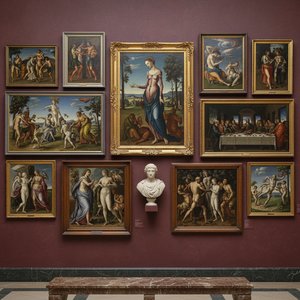
Топ-10 шедеврів маньєризму: історія та значення в мистецтві для вашого інтер'єру
Відкрийте для себе 10 шедеврів маньєризму – елегантного стилю Ренесансу! Історія Понтормо, Бронзіно та інших майстрів. Репродукції картин високої якості для вашого інтер'єру на OriginalUniqueArt.com

Karl Blossfeldt's 'Urformen der Kunst': Pioneering Botanical Photomicrography & Aesthetic Form
Explore Karl Blossfeldt's groundbreaking *Urformen der Kunst* & pioneering botanical photography. Discover the aesthetic power of nature, New Objectivity influences, and his lasting impact on modern art. Learn about collecting key works.

Masterpieces of Light: The Top 25 Artworks by Duccio di Buoninsegna
Journey through the divine elegance of Duccio di Buoninsegna. Explore 25 iconic Sienese masterpieces, from the Maestà to the Rucellai Madonna. Find inspiration for museum-quality art reproductions and timeless decor. Discover all masterpieces on OriginalUniqueArt.com.