
 Переглянути в інтер'єрі
 Надіслати як листівку
 Поділитися
 Деталі витвору
 Посібник

 Завантажити
 Схожі екземпляри
 Рентгенівське дослідження
 Слайд-шоу
 Питання та відповіді
 Статистика
Virgin with the Child

- 105.0 x 77.0 cm


 Розгорнути текст
Гікле / Художній принт
Друк جيкле або на полотні музейної якості з оперативним виготовленням та різноманітними варіантами фінішної обробки. ( Замовити картину ручної роботи Перейти до цифрових зображень)




P118B ₴10

P118H ₴10

P118W ₴10

P438Z ₴10

P508JH ₴12

P508YH ₴12

P805H ₴10

P805Z ₴10

P919BZ ₴10

P919G ₴10

P919XJ ₴10

P959ZH ₴10

P968JZ ₴12

W106C ₴8

W218G ₴10

W218JH ₴8

W218Y ₴10

W307PJ ₴10

W316G ₴10

W316PJ ₴8

W316Y ₴10

W398PJ ₴8

W4111J ₴10

W500HY ₴15

W500JH ₴15

W692G ₴12

W849H ₴8

W940BG ₴15

W953PJ ₴8




Обирайте з наших стандартних розмірів, що відповідають оригінальним пропорціям твору мистецтва.

Введіть необхідну ширину та висоту, щоб принт ідеально підійшов до вашої рами або стіни. Принт можна лише обрізати, але не можна зробити більшим за оригінал, тому при зміні пропорцій частина зображення буде втрачена. Перед друком ми надсилаємо вам цифровий макет для затвердження. Зображення на цій сторінці не відображає реальну обрізку — її можна побачити лише на макеті.
Доставка по всьому світу () за 2 тижні замість стандартних 4/5 тижнів. (5 Листопад)

Безкоштовна експрес-доставка по всьому світу

Високоякісне лляне полотно

Повне страхове покриття доставки

Гарантія повернення митних зборів

Гарантія точного відтворення кольорів

Політика повернення протягом 100 днів (лише у разі виявлення дефектів)

Гарантія повернення 100% коштів

Пропозиція на оптові замовлення
 Скляний варіант доступний лише для розмірів до 110 см

Virgin with the Child
Гікле / Художній принт
Розмір репродукції
-


Підсумкова вартість
₴ 3638
A Divine Encounter: Giulio Romano’s ‘Virgin with the Child’
Giulio Romano's “Virgin with the Child,” painted in Rome around 1520, is more than just a depiction of Mary and infant Jesus; it’s a profound exploration of faith, power, and the nascent complexities of Mannerism. Emerging from the shadow of Raphael’s High Renaissance legacy, Romano boldly pushed beyond idealized beauty, embracing a style characterized by dramatic contrasts, unsettling perspectives, and an intense psychological depth – hallmarks that would define the era of Mannerism. This particular work, housed within a 105 x 77 cm canvas, offers a captivating glimpse into this pivotal moment in art history, showcasing Romano’s evolving artistic voice and his masterful command of color, form, and narrative.
The painting immediately draws the eye to the central figures. Mary, rendered with a subtle yet commanding presence, is not presented as a serene Madonna but rather as a woman imbued with authority and a quiet strength. Her blue dress, rich in texture and subtly shimmering, contrasts dramatically with the gold of her crown – a visual declaration of her divine status while simultaneously hinting at worldly power. The infant Jesus, equally captivating, wears his own miniature crown, mirroring his mother’s adornment and suggesting an immediate equality within their sacred bond. The composition is carefully orchestrated; the figures are not simply placed within a space but actively engaged in a dynamic interaction, creating a sense of movement and narrative tension.
Mannerist Innovation: Style and Technique
Romano’s style in “Virgin with the Child” is distinctly Mannerist. He departs from the balanced compositions and harmonious colors of Raphael, favoring instead elongated figures, distorted perspectives, and an almost theatrical use of light and shadow. Notice how the background recedes sharply, creating a sense of spatial ambiguity – a technique known as *sprezzatura*, intended to evoke a feeling of surprise and disorientation. The artist employs a sophisticated layering of pigments, utilizing glazes and scumbles to build up texture and create a luminous quality that is both ethereal and intensely realistic. The use of gold leaf, particularly in the crown and details of the clothing, adds to the painting’s opulence and reinforces its symbolic weight.
Technically, Romano demonstrates a remarkable understanding of anatomy and drapery – skills honed during his apprenticeship with Raphael. However, he deliberately manipulates these elements to achieve a desired expressive effect. The folds of Mary's dress are not simply decorative; they seem to flow and ripple with an inner energy, mirroring the emotional intensity of the scene. Similarly, the infant Jesus’s pose is subtly unsettling, hinting at a vulnerability beneath his angelic appearance.
Historical Context: Rome in Transition
The creation of “Virgin with the Child” coincides with a period of immense upheaval and transformation in Rome. The Sack of 1527 had shattered the city's artistic and political stability, scattering its artists and patrons. Raphael’s untimely death further compounded this crisis, leaving a void that Romano was uniquely positioned to fill. He inherited not only the responsibility for completing unfinished commissions but also the daunting task of redefining the visual language of High Renaissance art. This painting can be viewed as a deliberate assertion of Romano's artistic independence – a bold departure from his master’s style while retaining a deep respect for his legacy.
The presence of the two secondary figures in the background adds another layer of complexity to the scene. Their identities remain ambiguous, perhaps representing the theological or political forces that shaped Mary’s life and role within the Christian narrative. The small object on the ground – resembling a book or scroll – could symbolize divine revelation or the transmission of sacred knowledge. These subtle details invite viewers to engage in a deeper interpretation of the work, moving beyond a simple representation of a religious subject.
Symbolism and Emotional Resonance
Beyond its technical brilliance, “Virgin with the Child” is rich in symbolic meaning. The crown worn by both Mary and Jesus represents their divine authority and connection to God. The blue color associated with Mary often symbolizes purity, loyalty, and truth – qualities essential to her role as the Mother of God. The painting’s overall effect is one of profound emotional resonance. It evokes a sense of reverence, mystery, and perhaps even a touch of melancholy—a recognition of both the beauty and the challenges inherent in faith. This reproduction captures that same evocative power, offering a stunning addition to any art collection or interior space.
Питання та відповіді
Що зображено на творі «Virgin with the Child» роботи Джуліо Романо і який у нього настрій?
«Virgin with the Child» роботи Джуліо Романо поєднує в собі virgin mary, child jesus, renaissance, halo, crown, religious, composition, romano із Elegant атмосферою.
Наскільки насиченими є кольори у творі "Virgin with the Child"?
Кольори твору «Virgin with the Child» роботи Джуліо Романо вирізняються Muted насиченістю та Monochromatic інтенсивністю.
До якого етапу кар'єри Джуліо Романо належить «Virgin with the Child», враховуючи дату її створення?
Зважаючи на дату створення — 1520, твір "Virgin with the Child" належить до Mature Period творчості Джуліо Романо.
Біографія митця
A Roman Beginning and Apprenticeship Under a Master
Giulio Romano, born Giulio Pippi around 1499 in Rome, emerged during a period of intense artistic transformation. Details surrounding his early life remain somewhat shrouded in mystery, yet it’s known he swiftly entered the orbit of Raphael – arguably the most celebrated painter of the High Renaissance. This apprenticeship proved profoundly formative, not only shaping his technical skills but also laying the foundation for his future stylistic explorations. He wasn't merely a studio assistant; Giulio rapidly evolved into an indispensable collaborator, contributing significantly to monumental projects like the decoration of the Vatican Stanze – those magnificent rooms commissioned by Popes Julius II and Leo X. His hand is readily identifiable in *The Fire in the Borgo*, where he assisted Raphael in depicting a dramatic scene of miraculous intervention—a testament to his burgeoning talent and growing influence. This early involvement within such a prestigious artistic environment undoubtedly instilled within him a sense of ambition and confidence that would characterize much of his later career.The Birth of Mannerism: A Departure from Classical Harmony
While deeply rooted in the Renaissance tradition, Giulio Romano’s artistic trajectory soon diverged from the prevailing emphasis on classical balance and harmony. He became a pivotal figure in the development of Mannerism – a style distinguished by its deliberate artificiality, heightened elegance, and often unsettling distortions of form. He was profoundly influenced by Michelangelo's powerful figures and dynamic compositions—the raw energy and emotional intensity of his work resonated deeply within Romano’s artistic sensibilities. Furthermore, he absorbed broader currents of experimentation circulating throughout the art world of the time. This wasn’t a rejection of Renaissance ideals so much as a deliberate exploration of their limits, pushing beyond the constraints of naturalism to create works that were more expressive and intellectually stimulating. He increasingly modified Raphael's plans, injecting a new sensibility into Roman art—a statement of Mannerism on a grand scale. His drawings, in particular, exhibit a remarkable freedom of line and a penchant for dramatic foreshortening, hinting at the complex spatial relationships he would later master in his frescoes.Mantua’s Master: Palazzo Te and Architectural Innovation
In 1524, Giulio accepted an invitation from Federico Gonzaga, Duke of Mantua, to become court painter and architect—a move that fundamentally altered the course of his career. This provided him with unprecedented creative freedom and access to substantial resources, effectively transforming him into the principal artistic force within the duchy. He oversaw not only paintings and frescoes but also ambitious architectural projects, intricate garden designs, and even theatrical productions – a truly comprehensive role reflecting his multifaceted genius. His most celebrated achievement during this period is undoubtedly Palazzo Te, an extraordinary suburban villa that stands as a dazzling testament to his innovative vision. The palace’s interiors are adorned with illusionistic frescoes of breathtaking complexity and psychological depth—a masterful display of technique and imagination. *The Sala dei Giganti* (Hall of the Giants), for example, depicts a chaotic battle between gods and giants, engulfing the viewer in a swirling vortex of figures and architectural fragments—creating an immersive experience that is both awe-inspiring and unsettling. Beyond Palazzo Te, Giulio undertook significant renovations to Mantua’s ducal palace and cathedral, leaving an indelible mark on the city's urban landscape.Legacy and Lasting Influence
Giulio Romano died in Mantua in 1546, leaving behind a legacy that extended far beyond Italy’s borders. His drawings were highly prized by collectors throughout Europe, and engravings based on his work—particularly those by Marcantonio Raimondi – played a crucial role in disseminating Italian artistic styles. He was so renowned after his death that he is the only “modern” artist mentioned by William Shakespeare in *Henry VIII*—a remarkable testament to his widespread fame. His influence can be seen in the works of numerous subsequent artists, who adopted his dynamic compositions, elongated figures, and expressive use of color. While Mannerism eventually gave way to other stylistic movements, Giulio Romano’s contributions remain essential to understanding the evolution of Western art. He represents a pivotal moment—a transition from the harmonious ideals of the High Renaissance to the more complex and emotionally charged aesthetic of the late 16th century. His work continues to captivate and challenge viewers today, reminding us of the power of art to both reflect and shape our understanding of the world.
Джуліо Романо
1499 - 1546 , Італія
Короткі факти
- Artistic Movement Or Style: Манеризм
- Artists Or Movements Influenced By This Artist: ['Манеристичні художники']
- Artists Who Influenced This Artist:
- Рафаель
- Мікеланджело
- Date Of Birth: c. 1499
- Date Of Death: 1546
- Full Name: Giulio Romano
- Nationality: Італійський
- Notable Artworks:
- Файре в Борго
- Палаццо Те
- Вілла Мадама
- Place Of Birth: Рим, Італія
Пов'язані статті

Divine Grace: An Art Historian's Journey Through Iconic Masterpieces of the Virgin Mary
Explore the profound beauty of Marian iconography through an art historian's lens. Discover iconic masterpieces by Raphael and Renaissance masters, celebrating the divine grace and timeless elegance of the Virgin Mary in classical fine art.

Italian Renaissance Art: A Procurement Guide to Timeless Masterpieces for High-End Hotel Interiors
A professional procurement guide for hotel designers seeking Italian Renaissance masterpieces. Discover how to utilize chiaroscuro, custom oil reproductions, and large-scale murals to elevate hospitality interiors with timeless, high-impact classical art.

Топ-25 шедеврів Фра Анджеліко: італійське Відродження для вашого дому | OriginalUniqueArt
Відкрийте для себе 25 шедеврів Фра Анджеліко – італійського майстра Відродження! Дізнайтесь історію кожної фрески та картини, їхній духовний зміст та техніку виконання. Репродукції картин високої якості для вашого дому на OriginalUniqueArt.com.
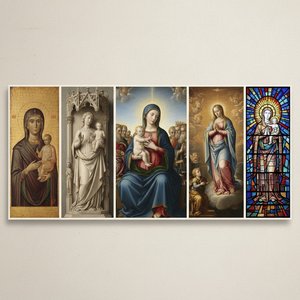
Divine Grace: A Journey Through the Most Iconic Depictions of the Virgin Mary in Art History
Embark on a profound journey through art history with our exploration of the most iconic depictions of the Virgin Mary. Discover the divine grace, symbolism, and masterful techniques found in Renaissance masterpieces and sacred iconography.
Giulio Romano: A Master of Mannerism & the Palazzo Te Legacy
Explore the revolutionary art of Giulio Romano, master of Mannerism & architect of Palazzo Te. Discover his influence, investment potential, and stunning frescoes – a guide for discerning collectors.
