Переглянути в інтер'єрі
 Надіслати як листівку
 Поділитися
 Деталі витвору
 Посібник

 Завантажити
 Схожі екземпляри
 Рентгенівське дослідження
 Слайд-шоу
 Статистика
Pesaro Altarpiece (predella)
 Олія на полотні
- Настінне мистецтво
- Early Renaissance
 1471
1471 40.0 x 36.0 cm
 Musei Civici
 Розгорнути текст
Гікле / Художній принт
Друк جيкле або на полотні музейної якості з оперативним виготовленням та різноманітними варіантами фінішної обробки. ( Замовити картину ручної роботи Перейти до цифрових зображень)




P118B ₴10

P118H ₴10

P118W ₴10

P438Z ₴10

P508JH ₴12

P508YH ₴12

P805H ₴10

P805Z ₴10

P919BZ ₴10

P919G ₴10

P919XJ ₴10

P959ZH ₴10

P968JZ ₴12

W106C ₴8

W218G ₴10

W218JH ₴8

W218Y ₴10

W307PJ ₴10

W316G ₴10

W316PJ ₴8

W316Y ₴10

W398PJ ₴8

W4111J ₴10

W500HY ₴15

W500JH ₴15

W692G ₴12

W849H ₴8

W940BG ₴15

W953PJ ₴8




Обирайте з наших стандартних розмірів, що відповідають оригінальним пропорціям твору мистецтва.

Введіть необхідну ширину та висоту, щоб принт ідеально підійшов до вашої рами або стіни. Принт можна лише обрізати, але не можна зробити більшим за оригінал, тому при зміні пропорцій частина зображення буде втрачена. Перед друком ми надсилаємо вам цифровий макет для затвердження. Зображення на цій сторінці не відображає реальну обрізку — її можна побачити лише на макеті.
Доставка по всьому світу () за 2 тижні замість стандартних 4/5 тижнів. (26 Жовтень)

Безкоштовна експрес-доставка по всьому світу

Високоякісне лляне полотно

Повне страхове покриття доставки

Гарантія повернення митних зборів

Гарантія точного відтворення кольорів

Політика повернення протягом 100 днів (лише у разі виявлення дефектів)

Гарантія повернення 100% коштів

Пропозиція на оптові замовлення
 Скляний варіант доступний лише для розмірів до 110 см

Pesaro Altarpiece (predella)
Гікле / Художній принт
Розмір репродукції
-


Підсумкова вартість
₴ 3591
Giovanni Bellini’s Pesaro Altarpiece: A Symphony of Faith and Renaissance Innovation
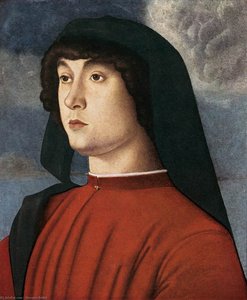
The Pesaro Altarpiece (predella), completed in 1471 by Giovanni Bellini, stands as a cornerstone of Venetian Early Renaissance art—a testament to the burgeoning humanist spirit and masterful artistic execution that defined the era. Housed at the Musei Civici in Pesaro, Italy, this oil painting measuring 40 x 36 cm transcends mere depiction; it embodies a profound meditation on Christian devotion and represents Bellini’s groundbreaking approach to pigment and composition.Composition and Figures: A Central Narrative
At its core lies a commanding figure dressed in Roman attire—a deliberate allusion to classical ideals of virtue and authority—standing upon a pedestal or base. This central figure, adorned in crimson robes accented with gold embroidery, holds aloft a shield bearing the emblem of Pesaro’s Franciscan Order, immediately establishing a visual hierarchy that directs the viewer's gaze. Alongside him are several supporting figures: saints venerated within Pesaro’s ecclesiastical community—Saint Terence, Saint Francis Xavier and Saint Augustine—each rendered with meticulous detail and imbued with palpable emotion. Their postures convey reverence and contemplation, mirroring the spiritual fervor of the time. The inclusion of a chariot in the background symbolizes pilgrimage and divine grace, furthering the altarpiece's narrative dimension.Technique: Pioneering Oil Paint and Smalt
Bellini’s genius resided not merely in his anatomical accuracy but also in his innovative use of pigment—specifically, the incorporation of smalt, a brilliant cobalt blue produced from crushed glass. This technique, relatively novel for Venetian painting at the time, distinguishes itself from its predecessors and elevates the altarpiece's luminosity to an unprecedented level. Bellini’s masterful blending of colors achieves remarkable depth and realism, capturing subtle nuances of light and shadow that would become hallmarks of Renaissance art. The artist skillfully employs glazing techniques—applying thin layers of translucent pigment over previous coats—to build up tonal variations and create a shimmering surface texture.Historical Context: Patronage and Franciscan Devotion
Commissioned by the influential Pesaro family, staunch supporters of the Franciscan Order, the altarpiece reflects the profound religious piety characteristic of Venetian society during Bellini’s lifetime. The patronage itself underscores the importance of faith within the cultural landscape—a theme powerfully conveyed through the depiction of saints and the chariot motif. Furthermore, the altarpiece's creation coincided with a period of artistic experimentation and intellectual ferment, mirroring broader trends in Europe as humanist thought challenged medieval dogma. Its presence at San Francesco church served as a tangible expression of devotion and solidified Bellini’s legacy as one of the foremost artists of his generation.Symbolism: Echoes of Classical Virtue and Divine Grace
The Pesaro Altarpiece is replete with symbolic imagery—the Roman attire representing moral excellence, the shield emblazoned with the Franciscan emblem signifying religious affiliation, and the chariot symbolizing spiritual journey. These elements converge to communicate a complex theological message about salvation and divine grace. Bellini’s meticulous attention to detail ensures that every aspect of the composition contributes to this overarching narrative, inviting contemplation and fostering an appreciation for the artistic mastery of the Renaissance period.Conclusion: A Timeless Masterpiece
Giovanni Bellini's Pesaro Altarpiece remains a captivating exemplar of Early Renaissance artistry—a harmonious blend of humanist ideals and technical innovation. Its luminous palette, masterful composition, and profound symbolic depth continue to inspire admiration and resonate with viewers today. To experience the beauty and intellectual richness of this iconic artwork firsthand, consider acquiring a high-quality reproduction from OriginalUniqueArt – where you can bring a piece of Venetian history into your home.Питання та відповіді
Яка техніка виконання та розміри твору «Pesaro Altarpiece (predella)» роботи Джіввані Белліні?
Оригінальна робота «Pesaro Altarpiece (predella)» роботи Джіввані Белліні — це Олія на полотні розміром 40 x 36 cm. Техніка та розмір описують оригінальний об'єкт.
Який етап творчого розвитку Джіввані Белліні представляє твір "Pesaro Altarpiece (predella)"?
«Pesaro Altarpiece (predella)» належить до Mature Period творчого шляху Джіввані Белліні. Ця класифікація пов’язує твір із етапом становлення митця.
Який колір найбільш помітний у творі "Pesaro Altarpiece (predella)"?
Найбільш виразним кольором у творі «Pesaro Altarpiece (predella)» є Рожево-коричневий (#c19b79). Домінантний колір допомагає підібрати витвір мистецтва до інтер'єру.
Біографія митця
A Venetian Master: The Life and Legacy of Giovanni Bellini
Giovanni Bellini, a name synonymous with the blossoming Renaissance in Venice, stands as a pivotal figure bridging the gap between the traditions of Byzantine art and the innovative spirit that would define the 16th century. Born around 1430 – though some sources suggest 1433 – into a family deeply entrenched in the artistic world, Bellini’s journey was one of continuous evolution, marked by a profound sensitivity to color, light, and the burgeoning humanism of his era. The precise nature of his familial relationships has been debated; for years Jacopo Bellini was considered his father, but modern scholarship increasingly points towards Jacopo being Giovanni's elder half-brother, with Gentile Bellini as his nephew rather than sibling. Regardless of these intricacies, young Giovanni grew up immersed in a workshop brimming with creativity and technical expertise, absorbing the foundations of painting from an early age. His initial training likely involved the traditional tempera techniques favored at the time, but it was his innate talent for observation and emotional expression that would set him apart.Early Influences and Artistic Development
The artistic landscape of 15th-century Venice was a unique blend of influences. The city’s position as a major trading hub exposed its artists to diverse styles and ideas, while the Byzantine heritage continued to exert a strong pull. Bellini's early works reflect this duality. Initially, his style bore the mark of his father and brother, Gentile, with compositions often characterized by meticulous detail and a somewhat restrained emotional palette. However, even in these early pieces, hints of his future brilliance began to emerge – a delicate handling of light, a growing interest in naturalistic settings, and an ability to imbue religious figures with a palpable sense of human pathos. The influence of Andrea Mantegna, his brother-in-law, is also readily apparent during this period, particularly in the clarity of line and sculptural forms. Bellini’s early commissions often involved collaborative projects, such as his contributions to the Scuola di San Marco alongside Gentile and other prominent Venetian artists. These large-scale works provided invaluable experience and allowed him to hone his skills while working alongside some of the most talented painters of the day.Revolutionizing Venetian Painting: Color, Light, and Oil
Bellini’s true revolution lay in his embrace of oil paint. While not the inventor of the technique, he was among the first Venetian artists to fully exploit its potential. Unlike tempera, which dried quickly and demanded a precise, linear approach, oil paint allowed for greater blending, richer colors, and subtle gradations of tone. This newfound freedom enabled Bellini to create paintings with an unprecedented depth and luminosity. His use of color became increasingly sophisticated, moving away from the bright, often harsh hues of earlier Venetian painting towards a more nuanced and harmonious palette. He masterfully captured the effects of light and atmosphere, imbuing his landscapes with a sense of serenity and realism that was groundbreaking for its time. This mastery of oil paint not only transformed his own work but also laid the foundation for the distinctive style that would come to define the Venetian school – a style celebrated for its sensuousness, coloristic richness, and atmospheric perspective. His paintings began to radiate an inner glow, reflecting a spiritual depth that resonated with viewers.Mature Works and Lasting Influence
As Bellini matured, his artistic vision continued to evolve. His altarpieces, such as those created for the churches of San Zaccaria and Santa Corona, demonstrate his ability to create complex compositions filled with symbolic meaning and emotional resonance. The *Transfiguration*, now housed in the Capodimonte Museum in Naples, exemplifies his mature style – a serene spirit combined with ripened artistic powers. He also served as conservator of the paintings in Doge’s Palace, further solidifying his reputation as Venice's leading artist. His influence extended far beyond his own lifetime. He became a mentor to a generation of younger painters, including Giorgione and Titian, who would carry on his legacy and push the boundaries of Venetian art even further. These pupils absorbed Bellini’s techniques and aesthetic principles, adapting them to their own individual styles and contributing to the golden age of Venetian painting. Bellini's impact can be seen in the works of countless artists who followed, solidifying his place as a true master of the Renaissance. He died in Venice in 1516, leaving behind a body of work that continues to inspire awe and admiration centuries later.A Legacy Enduring Through Time
Giovanni Bellini’s significance extends beyond his technical innovations and artistic achievements. He captured the spirit of a changing world – a world grappling with new ideas about humanity, spirituality, and the relationship between art and nature. His paintings are not merely representations of religious scenes; they are profound meditations on faith, beauty, and the human condition. His ability to imbue his figures with dignity and grace, combined with his masterful use of color and light, created a visual language that resonated deeply with his contemporaries and continues to captivate audiences today. *Bellini’s legacy is not simply one of artistic brilliance; it is a testament to the power of art to transcend time and connect us to the enduring values of human experience.* From the serene beauty of his Madonnas to the dramatic intensity of his religious scenes, Bellini's work remains a cornerstone of Western art history.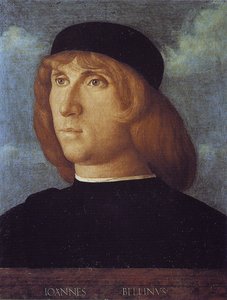
Джіввані Белліні
1433 - 1516 , Італія
Короткі факти
- Artistic Movement Or Style: Рінесанс, Венеціанська школа
- Artists Or Movements Influenced By This Artist:
- Джорджоне
- Тіціан
- Artists Who Influenced This Artist:
- Джакопо Белліні
- Дженте Белліні
- Андреа Мантegna
- Date Of Birth: c. 1430
- Date Of Death: 1516
- Full Name: Giovanni Bellini
- Nationality: Італійський
- Notable Artworks:
- Святий Єрмоген у пустині
- Трансфігурація
- Свята коронація Діви Марії
- Place Of Birth: Венеція, Італія
Пов'язані статті
Titian: Innovation, Technique & the Venetian Renaissance Portrait Tradition
Explore the revolutionary techniques & enduring legacy of Titian, the master of Venetian Renaissance portraiture. Discover insights for collectors & appreciate his impact on art history.

Venetian Renaissance: The Mastery of Color, Light, and the Art of Colorito
Explore the luminous mastery of the Venetian Renaissance. Discover how masters like Titian and Giorgione revolutionized art through colorito, light, and atmosphere. An expert guide to the golden age of Italian painting for collectors and enthusiasts.

The Golden Light of Innovation: Exploring the Venetian Renaissance Art Movement (1430–1580)
Explore the Golden Age of Venetian art (1430–1580). Discover Giorgione, Titian & Tintoretto's techniques, the 'colorito' revolution, and lasting influence. Expert insights for collectors & enthusiasts.

Giovanni Antonio Canal (Canaletto): A Venetian Master of Light, Space & Societal Observation
Explore the life & art of Giovanni Antonio Canal (Canaletto), a Venetian master renowned for his breathtaking cityscapes. Discover his techniques, legacy, and captivating depictions of 18th-century Venice & London.

Якопо Тінторетто: 25 шедеврів венесенського майстра | OriginalUniqueArt
Відкрийте 25 захопливих шедеврів Якопо Тінторетто! Венесенський ренесанс, бароко, емоційні композиції та світлотінь. Купуйте високоякісні репродукції картин на OriginalUniqueArt.com – мистецтво для вашого дому.