
 Переглянути в інтер'єрі
 Надіслати як листівку
 Поділитися
 Деталі витвору
 Посібник

 Завантажити
 Схожі екземпляри
 Рентгенівське дослідження
 Слайд-шоу
 Питання та відповіді
 Статистика
Dead Christ Supported by Two Angels

- 83.0 x 68.0 cm


 Розгорнути текст
Отримайте файл, готовий до друку, якість якого значно перевищує якість веб-попереднього перегляду. Кожне цифрове зображення, яке ми продаємо, створене на основі високої роздільної здатності з нашої бази даних — зазвичай від 5 000 до 15 000 пікселів по ширині — тому ви можете впевнено друкувати у великому форматі, робити щільну обрізку або відтворювати найдрібніші деталі.
Жоден файл не залишається в нашій студії без уваги. Експерт із цифрової обробки звіряє кольори з оригінальною картиною та за потреби коригує їх, після чого покращує чіткість і деталізацію за допомогою професійних інструментів ретушування — завжди зберігаючи вірність мазкам пензля та стилю художника. Результатом є зображення, яке виглядає як справжня картина, а не як відскановане фото з накладеними фільтрами.
Ви затверджуєте результат перед завершенням замовлення: протягом 72 годин наш експерт надішле зображення електронною поштою для вашого перегляду. Не задоволені результатом? Ви можете попросити про внесення змін чи виправлень або отримати відшкодування, якщо якість не відповідає вашим очікуванням.
Саме на таку якість покладаються видавництва, дизайн-студії, галереї та друкарні.
Цифрове зображення
Завантажте файл високої роздільної здатності для особистого використання, друку та творчих проєктів. ( Перейти до друку Замовити картину ручної роботи)
Переваги кожного замовлення цифрових зображень
Експертна цифрова доставка з гарантією якості
Обираючи OriginalUniqueArt.com, ви отримуєте не просто зображення — ви отримуєте професійно вдосконалений цифровий витвір мистецтва, створений з надзвичайною точністю та підкріплений гарантією задоволення. Ось усе, що автоматично додається до вашого замовлення:

Швидка доставка на email
Ваш цифровий файл із зображенням високої роздільної здатності буде надісланий вам електронною поштою протягом 72 годин після оформлення замовлення — він буде готовий до негайного використання.

Цифровий файл із покращенням ШІ
Ваш витвір мистецтва професійно оптимізовано за допомогою передових інструментів штучного інтелекту та ручної корекції, що забезпечує максимальну деталізацію, чіткість і точність передачі кольорів.

Безкоштовне повторне завантаження назавжди
Випадково видалили або втратили файл? Не хвилюйтеся — ми надішлемо його вам повторно в будь-який час безкоштовно.

Без митних зборів — завжди
Насолоджуйтесь вашим витвором мистецтва миттєво без жодних мит, зборів або плати за доставку — цифрові завантаження завжди не оподатковуються.

Гарантія точності кольорів
Ми гарантуємо максимально точне відтворення оригінальних кольорів на вашому цифровому зображенні завдяки використанню професійних інструментів та систем управління кольором.

100-денна гарантія задоволення
Якщо ви не задоволені придбаним цифровим зображенням, ми внесемо правки або повернемо 100% вартості протягом 100 днів — без зайвих запитань.

Гарантія повернення 100% коштів
Незадоволені покупкою? Отримайте повне повернення коштів протягом 100 днів після отримання цифрового файлу — без зайвих запитань.

Знижки на оптові замовлення
Купуйте 3 зображення — заощаджуйте 10% — Купуйте 5 — заощаджуйте 15% — Купуйте 10+ — заощаджуйте 20%. Чудово підходить для творчих проєктів, галерей та агентств.
A Moment of Profound Sorrow and Divine Comfort
Giovanni Bellini’s “Dead Christ Supported by Two Angels,” painted around 1480, is more than just a religious depiction; it's a poignant meditation on loss, faith, and the enduring power of compassion. This tempera-on-wood panel, now residing in the Gemäldegalerie in Berlin, offers a deeply moving glimpse into the burgeoning humanism of the Venetian Renaissance while retaining echoes of its Byzantine roots. The scene is starkly simple yet profoundly resonant: Christ lies supine on the ground, his limbs outstretched in a gesture both vulnerable and accepting, supported by two serene angels who cradle his head with gentle hands.
Bellini’s genius lies not merely in his technical skill – though that is undeniably masterful – but in his ability to imbue this familiar subject matter with an unprecedented emotional depth. The muted palette of blues, browns, and ochres creates a sense of somber stillness, drawing the viewer into the scene's quiet grief. Notice how Bellini masterfully employs light; it’s diffused and soft, bathing the Christ’s body in a gentle glow that suggests both mortality and an ethereal presence. The angels, rendered with a delicate grace, are not merely passive supporters but active participants in a shared sorrow – their faces convey empathy and a profound sense of responsibility for the fallen King.
The Venetian Renaissance and Bellini's Innovation
Giovanni Bellini stands as a pivotal figure bridging the gap between the rigid formality of Byzantine art and the burgeoning naturalism of the Italian Renaissance. Born in Venice around 1430, he inherited a rich artistic legacy from his father, Jacopo Bellini, a pioneer in the use of oil paint. However, Bellini quickly surpassed his predecessor, developing a unique style characterized by luminous colors, atmospheric perspective, and a heightened sensitivity to human emotion. Unlike many of his contemporaries who embraced the bold innovations of artists like Donatello, Bellini’s approach was more measured, building upon established traditions while subtly introducing new elements.
The influence of Andrea Mantegna is particularly evident in this work. Both artists shared a fascination with classical sculpture and a desire to convey emotion through simplified forms and dramatic lighting. The composition itself – the Christ's elongated body, the angels’ supportive gestures – echoes Donatello’s depictions of the Dead Christ, demonstrating Bellini’s deep understanding of his predecessors’ techniques. Yet, Bellini transcends mere imitation; he infuses the scene with a distinctly Venetian sensibility, prioritizing color and atmosphere over rigid anatomical detail.
Symbolism and Spiritual Resonance
The image is rich in symbolic meaning. The pose of Christ – arms outstretched, body limp – immediately evokes the traditional iconography of death and resurrection. However, Bellini’s depiction goes beyond a simple representation of mortality. The angels' presence signifies divine comfort and support, highlighting the promise of salvation offered through faith. The placement of the third figure in the upper left corner remains somewhat enigmatic, possibly representing an observer or perhaps a symbolic element related to the broader narrative of Christ’s sacrifice.
Furthermore, Bellini's use of tempera on wood – a technique that allowed for slow-drying colors and subtle gradations of tone – contributes significantly to the painting’s ethereal quality. The smooth surfaces and luminous hues create an illusion of depth and volume, drawing the viewer into the scene’s intimate space. The work speaks powerfully to themes of grief, hope, and the enduring nature of faith—elements that continue to resonate with audiences centuries after its creation.
A Timeless Masterpiece – Available as a High-Quality Reproduction
OriginalUniqueArt offers meticulously crafted reproductions of Giovanni Bellini’s “Dead Christ Supported by Two Angels,” allowing you to bring this iconic masterpiece into your home or office. Our hand-painted reproductions capture the essence of Bellini's artistry, faithfully recreating his luminous colors, delicate details, and profound emotional impact. Choose from a range of sizes and framing options to perfectly complement your space. Experience the beauty and spiritual depth of this Venetian treasure – a timeless testament to the power of art.
Питання та відповіді
Яка техніка виконання у «Dead Christ Supported by Two Angels» роботи Джіввані Белліні?
Для створення «Dead Christ Supported by Two Angels» Джіввані Белліні використав(ла) техніку Acrylic On Canvas. Саме ця техніка визначає матеріальну природу оригінального твору.
Яка яскравість твору «Dead Christ Supported by Two Angels» роботи Джіввані Белліні?
«Dead Christ Supported by Two Angels» роботи Джіввані Белліні має рівень яскравості Soft Shadow. Яскравість описує, скільки світла відбивають кольори.
Як можна використати «Dead Christ Supported by Two Angels» роботи Джіввані Белліні в інтер'єрі дому?
«Dead Christ Supported by Two Angels» роботи Джіввані Белліні рекомендується для Statement, ідеально — у Living Room. Поєднання способу використання та простору допоможе визначити, де саме пасуватиме репродукція.
Біографія митця
A Venetian Master: The Life and Legacy of Giovanni Bellini
Giovanni Bellini, a name synonymous with the blossoming Renaissance in Venice, stands as a pivotal figure bridging the gap between the traditions of Byzantine art and the innovative spirit that would define the 16th century. Born around 1430 – though some sources suggest 1433 – into a family deeply entrenched in the artistic world, Bellini’s journey was one of continuous evolution, marked by a profound sensitivity to color, light, and the burgeoning humanism of his era. The precise nature of his familial relationships has been debated; for years Jacopo Bellini was considered his father, but modern scholarship increasingly points towards Jacopo being Giovanni's elder half-brother, with Gentile Bellini as his nephew rather than sibling. Regardless of these intricacies, young Giovanni grew up immersed in a workshop brimming with creativity and technical expertise, absorbing the foundations of painting from an early age. His initial training likely involved the traditional tempera techniques favored at the time, but it was his innate talent for observation and emotional expression that would set him apart.Early Influences and Artistic Development
The artistic landscape of 15th-century Venice was a unique blend of influences. The city’s position as a major trading hub exposed its artists to diverse styles and ideas, while the Byzantine heritage continued to exert a strong pull. Bellini's early works reflect this duality. Initially, his style bore the mark of his father and brother, Gentile, with compositions often characterized by meticulous detail and a somewhat restrained emotional palette. However, even in these early pieces, hints of his future brilliance began to emerge – a delicate handling of light, a growing interest in naturalistic settings, and an ability to imbue religious figures with a palpable sense of human pathos. The influence of Andrea Mantegna, his brother-in-law, is also readily apparent during this period, particularly in the clarity of line and sculptural forms. Bellini’s early commissions often involved collaborative projects, such as his contributions to the Scuola di San Marco alongside Gentile and other prominent Venetian artists. These large-scale works provided invaluable experience and allowed him to hone his skills while working alongside some of the most talented painters of the day.Revolutionizing Venetian Painting: Color, Light, and Oil
Bellini’s true revolution lay in his embrace of oil paint. While not the inventor of the technique, he was among the first Venetian artists to fully exploit its potential. Unlike tempera, which dried quickly and demanded a precise, linear approach, oil paint allowed for greater blending, richer colors, and subtle gradations of tone. This newfound freedom enabled Bellini to create paintings with an unprecedented depth and luminosity. His use of color became increasingly sophisticated, moving away from the bright, often harsh hues of earlier Venetian painting towards a more nuanced and harmonious palette. He masterfully captured the effects of light and atmosphere, imbuing his landscapes with a sense of serenity and realism that was groundbreaking for its time. This mastery of oil paint not only transformed his own work but also laid the foundation for the distinctive style that would come to define the Venetian school – a style celebrated for its sensuousness, coloristic richness, and atmospheric perspective. His paintings began to radiate an inner glow, reflecting a spiritual depth that resonated with viewers.Mature Works and Lasting Influence
As Bellini matured, his artistic vision continued to evolve. His altarpieces, such as those created for the churches of San Zaccaria and Santa Corona, demonstrate his ability to create complex compositions filled with symbolic meaning and emotional resonance. The *Transfiguration*, now housed in the Capodimonte Museum in Naples, exemplifies his mature style – a serene spirit combined with ripened artistic powers. He also served as conservator of the paintings in Doge’s Palace, further solidifying his reputation as Venice's leading artist. His influence extended far beyond his own lifetime. He became a mentor to a generation of younger painters, including Giorgione and Titian, who would carry on his legacy and push the boundaries of Venetian art even further. These pupils absorbed Bellini’s techniques and aesthetic principles, adapting them to their own individual styles and contributing to the golden age of Venetian painting. Bellini's impact can be seen in the works of countless artists who followed, solidifying his place as a true master of the Renaissance. He died in Venice in 1516, leaving behind a body of work that continues to inspire awe and admiration centuries later.A Legacy Enduring Through Time
Giovanni Bellini’s significance extends beyond his technical innovations and artistic achievements. He captured the spirit of a changing world – a world grappling with new ideas about humanity, spirituality, and the relationship between art and nature. His paintings are not merely representations of religious scenes; they are profound meditations on faith, beauty, and the human condition. His ability to imbue his figures with dignity and grace, combined with his masterful use of color and light, created a visual language that resonated deeply with his contemporaries and continues to captivate audiences today. *Bellini’s legacy is not simply one of artistic brilliance; it is a testament to the power of art to transcend time and connect us to the enduring values of human experience.* From the serene beauty of his Madonnas to the dramatic intensity of his religious scenes, Bellini's work remains a cornerstone of Western art history.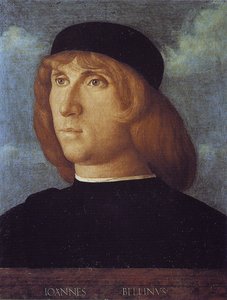
Джіввані Белліні
1433 - 1516 , Італія
Короткі факти
- Artistic Movement Or Style: Рінесанс, Венеціанська школа
- Artists Or Movements Influenced By This Artist:
- Джорджоне
- Тіціан
- Artists Who Influenced This Artist:
- Джакопо Белліні
- Дженте Белліні
- Андреа Мантegna
- Date Of Birth: c. 1430
- Date Of Death: 1516
- Full Name: Giovanni Bellini
- Nationality: Італійський
- Notable Artworks:
- Святий Єрмоген у пустині
- Трансфігурація
- Свята коронація Діви Марії
- Place Of Birth: Венеція, Італія