

 Переглянути в інтер'єрі
 Надіслати як листівку
 Поділитися
 Детальніше

 Завантажити
 Схожі експонати
 Рентгенівське дослідження
 Слайд-шоу
Piazza San Marco
 Oil On Canvas
- WallArt
- Baroque
 1730
1730 68.0 x 112.0 cm
 Музей Метрополітен
 Читати далі
Придбайте цифрову копію високої роздільної здатності з покращеною якістю, що значно перевершує онлайн-перегляд.
Кожен файл ретельно підготовлений нашими фахівцями за допомогою сучасних інструментів та професійної ручної ретуші. Ми гарантуємо виняткову чіткість, точну передачу кольору та високу деталізацію кожного зображення.
Фінальний файл надсилається електронною поштою протягом 72 годин і оптимізований для негайного використання у професійних виданнях та друкованих матеріалах. Таку якість обирають провідні дизайнерські студії, видавництва та галереї.
Цифрове зображення
Завантажте файл високої роздільної здатності для особистого використання, друку та творчих проєктів. ( Замовити принт Замовити репродукцію ручної роботи)
Переваги кожного замовлення цифрових зображень
Експертна цифрова доставка з гарантією якості
Обираючи OriginalUniqueArt.com, ви отримуєте не просто зображення — ви отримуєте професійно вдосконалений цифровий витвір мистецтва, створений з надзвичайною точністю та підкріплений гарантією задоволення. Ось усе, що автоматично додається до вашого замовлення:

Швидка доставка на email
Ваш цифровий файл із зображенням високої роздільної здатності буде надісланий вам електронною поштою протягом 72 годин після оформлення замовлення — він буде готовий до негайного використання.

Цифровий файл із покращенням ШІ
Ваш витвір мистецтва професійно оптимізовано за допомогою передових інструментів штучного інтелекту та ручної корекції, що забезпечує максимальну деталізацію, чіткість і точність передачі кольорів.

Безкоштовне повторне завантаження назавжди
Випадково видалили або втратили файл? Не хвилюйтеся — ми надішлемо його вам повторно в будь-який час безкоштовно.

Без митних зборів — ніколи
Насолоджуйтесь вашим витвором мистецтва миттєво без жодних мит, зборів або плати за доставку — цифрові завантаження завжди не оподатковуються.

Гарантія точності кольорів
Ми гарантуємо максимально точне відтворення оригінальних кольорів на вашому цифровому зображенні завдяки використанню професійних інструментів та систем управління кольором.

Гарантія задоволення протягом 60 днів
Якщо ви не задоволені придбаним цифровим зображенням, ми відкоригуємо його або повернемо 100% вартості протягом 60 днів — без жодних запитань.

Гарантія повернення 100% коштів
Не задоволені покупкою? Отримайте повне повернення коштів протягом 60 днів після отримання цифрового файлу — без жодних запитань.

Знижки на оптові замовлення
Купуйте 3 зображення — заощаджуйте 10% — Купуйте 5 — заощаджуйте 15% — Купуйте 10+ — заощаджуйте 20%. Чудово підходить для творчих проєктів, галерей та агентств.
Опис колекційного об'єкта
Piazza San Marco: A Venetian Masterpiece
The Piazza San Marco in Venice stands as an enduring testament to artistic vision and cultural grandeur—a fact eloquently captured by Giovanni Antonio Canaletto’s monumental oil painting, completed in 1730. More than just a depiction of a public space, this artwork embodies the spirit of Baroque realism, skillfully blending meticulous observation with idealized beauty to transport viewers back to the vibrant heart of Renaissance Venice.- Subject Matter: Canaletto’s canvas pulsates with life—a panorama of St Mark's Square teeming with citizens, merchants, and clergy. Dominating the scene are the iconic St Mark’s Basilica and the Campanile, rendered in breathtaking detail against a backdrop of azure sky and shimmering water reflecting the midday sun.
- Style & Technique: Canaletto adhered to the Baroque tradition's commitment to realism while subtly elevating its aesthetic qualities. Employing linear perspective—a technique pioneered by Filippo Brunelleschi—he draws the eye inward, creating a profound sense of depth and spatial illusion. The artist’s masterful brushwork contributes to textured surfaces that convey both solidity and luminosity.
- Historical Context: Created during Canaletto's prolific period in England, this painting reflects the fascination with Venetian culture prevalent among European elites. It served as a visual chronicle of Venice’s position as a leading commercial power and artistic center—a legacy that continues to inspire admiration today.
Color Palette & Composition
The artist's color palette is deliberately restrained, prioritizing muted earth tones—ochres, browns, and creams—to establish a harmonious tonal foundation. However, splashes of gold adorn the Basilica’s dome, symbolizing divine splendor and reinforcing its spiritual significance. Furthermore, subtle variations in hue capture the atmospheric effects of an overcast day, enhancing the painting's emotional resonance. The symmetrical composition underscores the Piazza’s formal elegance and reinforces its role as a locus of civic pride.Symbolism & Artistic Innovation
Beyond its visual splendor, Canaletto’s work carries symbolic weight—representing Venice’s wealth, power, and cultural heritage. Notably, his pioneering use of atmospheric perspective anticipates Impressionist principles, demonstrating an uncanny ability to convey mood and emotion through nuanced tonal gradations. The artist's meticulous attention to detail—capturing the textures of fabrics, architectural ornamentation, and human faces—elevates Canaletto’s oeuvre beyond mere topographical representation.Emotional Impact & Legacy
Viewing Canaletto’s Piazza San Marco is akin to stepping back in time—experiencing a moment frozen in Venetian history. The painting's luminous quality evokes feelings of serenity and grandeur, transporting the viewer into the bustling heart of one of Europe’s most celebrated cities. Canaletto’s enduring influence on subsequent generations of artists testifies to his mastery of technique and his profound understanding of how art can communicate emotion—a legacy that continues to captivate audiences worldwide.Біографія митця
Early Life and Artistic Beginnings
Giovanni Antonio Canal, universally known as Canaletto, was born on October 18, 1697, in the heart of Venice – a city that would forever be the subject of his artistic obsession. His early life unfolded within a family deeply rooted in the world of visual arts; his father, Bernardo Canal, was a respected scene painter for theatrical productions, imbuing young Giovanni with an initial understanding of composition and perspective. Artemisia Barbieri, his mother, further nurtured his creative spirit. Canaletto’s artistic journey began not with grand ambitions, but with the practicalities of assisting his father in crafting backdrops for Venetian stages – a formative experience that instilled within him a keen eye for detail and an appreciation for capturing fleeting moments of everyday life.
Crucially, Canaletto's training extended beyond simply replicating theatrical settings. He honed his skills by working alongside his brother, also a painter, absorbing techniques and developing a foundational understanding of color, light, and shadow. This early apprenticeship laid the groundwork for his later success as a topographical artist – an artist dedicated to meticulously documenting the city he loved.
The Roman Years: Seeds of a New Style
In 1718, Canaletto embarked on a pivotal journey to Rome, a move that profoundly shaped his artistic development. He sought opportunities within the bustling world of Roman theatre scenery, working for renowned composers like Alessandro Scarlatti and Giovanni Porto. This period proved transformative; he was exposed to the vibrant energy of the city, its grand architecture, and the diverse cast of characters that populated its streets. It was here that Canaletto began to develop his signature style – a precise, almost photographic realism combined with an elegant sense of composition.
The influence of Giovanni Paolo Pannini, a celebrated Roman vedutista (a painter specializing in cityscapes), is particularly evident in Canaletto’s early work. Pannini's meticulous attention to detail and his ability to capture the essence of urban life served as a model for Canaletto, inspiring him to translate the dynamism of Rome onto canvas.
Venetian Mastery: Capturing the Spirit of the City
Upon returning to Venice in 1725, Canaletto quickly established himself as one of the city’s most sought-after artists. He shifted his focus from theatrical scenery to painting *vedute* – detailed depictions of Venetian buildings, canals, and public spaces. These weren't merely accurate records; they were carefully constructed compositions designed to evoke a sense of atmosphere and charm. Canaletto’s approach was revolutionary for its time, moving beyond simple documentation to create visually compelling narratives.
His most celebrated works from this period include “The Stonemason’s Yard” (circa 1725), a masterpiece that showcases his early skill in capturing the textures of stone and the bustle of daily life. Other notable paintings, such as "Regatta on the Grand Canal" and "Eton College," demonstrate his ability to depict public ceremonies and grand architectural settings with equal artistry.
Collaboration and Influence: Bellotto and Beyond
Canaletto’s artistic career was inextricably linked to that of his nephew, Bernardo Bellotto. Bellotto became a talented artist in his own right, inheriting Canaletto's style and techniques. The two collaborated extensively on numerous projects, often working together to create large-scale *vedute* of Venice – a testament to their shared vision and artistic partnership.
Furthermore, Canaletto’s influence extended far beyond his immediate circle. His meticulous preparatory drawings, often incorporating the use of a camera obscura (a device that projects an image of the outside world onto a surface), became a model for other artists seeking to achieve greater accuracy and detail in their landscapes. His work profoundly impacted 18th-century art, shaping the development of *vedute* painting across Europe.
A Journey to England: New Perspectives
In 1746, Canaletto embarked on a significant chapter of his career – a journey to England. Invited by the wealthy merchant and connoisseur Joseph “Consul” Smith, he spent nearly two decades documenting London and other English sites. This period marked a shift in his artistic focus, as he began to paint imaginary landscapes alongside his realistic depictions of urban scenes.
Canaletto’s paintings of England, including views of Warwick Castle and Alnwick Castle, were immensely popular with the British public, thanks to Smith's astute business acumen. His work was widely reproduced in prints, making it accessible to a broader audience and solidifying his reputation as one of Europe’s leading artists.
Legacy and Enduring Significance
Canaletto’s legacy is profound and enduring. His meticulously rendered *vedute* offer invaluable insights into the daily life, architecture, and atmosphere of Venice and other European cities during the 18th century. His work can be found in prestigious museums around the world, including the National Gallery in London, where it continues to captivate viewers with its beauty and detail.
Canaletto’s innovative use of perspective, his meticulous preparatory drawings, and his ability to capture both the accuracy and the spirit of a place have cemented his position as one of the most important artists of the Baroque period. His art remains a testament to the power of observation, skill, and artistic vision.
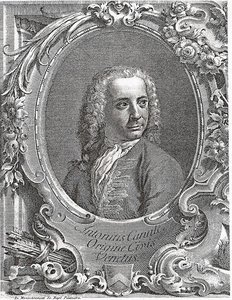
Каналетто
1697 - 1768 , Італія
Основна інформація
- Artistic Movement Or Style: Ведюти Венеції
- Artists Or Movements Influenced By This Artist: ['Бенкардо Канал']
- Artists Who Influenced This Artist: ['Джованні Паоло Паньні']
- Date Of Birth: 18 жовтня 1697
- Date Of Death: 19 квітня 1768
- Full Name: Giovanni Antonio Canal
- Nationality: Італійський
- Notable Artworks:
- Саломасанівська майстерня
- Регата на каналі Сан-Марко
- Етонський коледж
- Place Of Birth: Венеція, Італія

