

 Переглянути в інтер'єрі
 Надіслати
 Поділитися
 Деталі
 Guide
Guide

 Завантажити
 Схожі предмети колекціонування
 Рентгенівське дослідження
 Слайд-шоу
 Статистика переглядів
Camera obscura


 Читати далі
Олійная репродукція ручної роботи
Написана вручну олією на полотні у вашому розмірі та рамі, виготовлена на замовлення нашими художниками. ( Перейти до друку Перейти до цифрових зображень)




P118B $10

P118H $10

P118W $10

P438Z $10

P508JH $12

P508YH $12

P805H $10

P805Z $10

P919BZ $10

P919G $10

P919XJ $10

P959ZH $10

P968JZ $12

W106C $8

W218G $10

W218JH $8

W218Y $10

W307PJ $10

W316G $10

W316PJ $8

W316Y $10

W398PJ $8

W4111J $10

W500HY $15

W500JH $15

W692G $12

W849H $8

W940BG $15

W953PJ $8




Обирайте з наших стандартних розмірів, що відповідають оригінальним пропорціям твору мистецтва.

Ви можете вказати власні розміри, щоб репродукція ідеально підійшла до конкретної рами або інтер'єру. Якщо вибраний вами розмір не відповідає пропорціям оригіналу, ми або обріжемо полотно, або доповнимо картину додатковими елементами, промальованими вручну. Цифровий макет буде надіслано вам на затвердження перед початком виробництва.
Зверніть увагу, що попередній перегляд на екрані не відображає фактичне обрізання або розширення зображення. Тільки макет точно покаже остаточну композицію.
Хоча ми можемо виготовити виріб у нестандартному розмірі, для збереження оригінальних пропорцій рекомендуємо обирати варіанти зі встановленого списку.
Після оформлення замовлення команда OriginalUniqueArt.com зв'яжеться з клієнтом електронною поштою для отримання інструкцій та надасть попередній макет
Доставка по всьому світу () за 3–4 тижні замість стандартних 5 тижнів. (20 Вересень). Без жодних компромісів у якості.

Безкоштовна експрес-доставка по всьому світу

Високоякісне лляне полотно

Повне страхове покриття доставки

Гарантія повернення митних зборів

Гарантія точного відтворення кольорів

Політика повернення протягом 100 днів (лише у разі виявлення дефектів)

Гарантія повернення 100% коштів

Знижка на оптові замовлення
 Скляний варіант доступний лише для розмірів до 110 см

Camera obscura
Техніка репродукції
Розмір репродукції
-


Загальна вартість
$ 300
A Sculptural Echo of Light and Vision
Canaletto’s “Camera Obscura,” a meticulously crafted wooden device dating back to around 1700, isn't merely a reproduction; it’s a tangible embodiment of the revolutionary vision that shaped his artistic practice. This intimate sculpture, presented against a stark black backdrop, immediately draws the eye, inviting us into a world where light and shadow dance in harmonious collaboration. The piece speaks volumes about Canaletto’s innovative approach to capturing reality – an approach deeply rooted in observation and a fascination with the mechanics of vision itself. The geometric precision of the boxy structure, constructed from carefully joined wooden panels, suggests both the artist's meticulousness and a profound understanding of spatial relationships. It’s not simply a representation of a camera obscura; it *is* the camera obscura, distilled into its essential form.
- Material & Construction: The use of wood – likely stained or varnished to preserve its beauty – speaks to Canaletto's appreciation for tactile quality and enduring craftsmanship. The intricate joinery hints at a deliberate process, reflecting the artist’s careful attention to detail.
- Form & Composition: The vertical orientation emphasizes the height and solidity of the device, creating a sense of direct engagement with the viewer. Lines dominate – sharp, clean lines defining the boxy structure, contrasting with the subtle texture of the wood grain.
- Symbolic Weight: The camera obscura itself represents a pivotal moment in art history—a precursor to photography and a testament to Canaletto’s pioneering spirit. It embodies the pursuit of accurate representation, challenging traditional methods and opening new avenues for artistic expression.
Unlocking the Secrets of Early Photography
Canaletto's fascination with the camera obscura wasn't simply an aesthetic curiosity; it was a deeply practical investigation into how light and shadow create images. The inscription on the device – “A Camera Obscura” – provides a crucial clue, revealing that this object belonged to the Venetian master himself. This discovery dramatically shifts our understanding of Canaletto’s process: he didn't just paint what he saw; he actively *observed* how light transformed his surroundings into visual forms. Research suggests that Canaletto utilized the camera obscura as a tool for sketching, meticulously documenting architectural details and urban landscapes with unprecedented accuracy. The device allowed him to capture perspective and spatial relationships with remarkable precision – a skill that profoundly influenced his later paintings.
Historical Context:The invention of the camera obscura in the 16th century marked a watershed moment in art history. Initially used as a scientific instrument for astronomical observation, it quickly gained popularity among artists seeking to improve their draftsmanship and understand perspective. Canaletto’s embrace of this technology demonstrates his commitment to innovation and his desire to push the boundaries of artistic representation.
A Window into Venice: The Artist's Process
The “Camera Obscura” offers a rare glimpse into Canaletto’s working methods. It’s believed that he used this device not just for sketching, but also as a means of studying light and shadow—analyzing how they interacted with buildings and streets to create the illusion of depth and volume. The resulting drawings were then translated into his celebrated paintings, imbuing them with an extraordinary sense of realism and atmospheric detail. The meticulousness evident in the camera obscura’s construction mirrors the painstaking care Canaletto invested in every brushstroke of his finished works. It's a testament to his dedication to capturing not just appearances, but also the very essence of Venice.
Recreating a Masterpiece: A Reproduction for Today
Reproducing Canaletto’s “Camera Obscura” is more than simply creating a copy; it’s about preserving a vital piece of art history and celebrating the ingenuity of one of Venice's greatest artists. The resulting reproduction captures not only the physical form of the device but also its symbolic significance—a reminder of the enduring power of observation, innovation, and the pursuit of accurate representation. This meticulously crafted replica serves as a tangible link to the 18th century, inviting viewers to contemplate the origins of photography and appreciate Canaletto’s pioneering legacy.
Біографія митця
Early Life and Artistic Beginnings
Giovanni Antonio Canal, universally known as Canaletto, was born on October 18, 1697, in the heart of Venice – a city that would forever be the subject of his artistic obsession. His early life unfolded within a family deeply rooted in the world of visual arts; his father, Bernardo Canal, was a respected scene painter for theatrical productions, imbuing young Giovanni with an initial understanding of composition and perspective. Artemisia Barbieri, his mother, further nurtured his creative spirit. Canaletto’s artistic journey began not with grand ambitions, but with the practicalities of assisting his father in crafting backdrops for Venetian stages – a formative experience that instilled within him a keen eye for detail and an appreciation for capturing fleeting moments of everyday life.
Crucially, Canaletto's training extended beyond simply replicating theatrical settings. He honed his skills by working alongside his brother, also a painter, absorbing techniques and developing a foundational understanding of color, light, and shadow. This early apprenticeship laid the groundwork for his later success as a topographical artist – an artist dedicated to meticulously documenting the city he loved.
The Roman Years: Seeds of a New Style
In 1718, Canaletto embarked on a pivotal journey to Rome, a move that profoundly shaped his artistic development. He sought opportunities within the bustling world of Roman theatre scenery, working for renowned composers like Alessandro Scarlatti and Giovanni Porto. This period proved transformative; he was exposed to the vibrant energy of the city, its grand architecture, and the diverse cast of characters that populated its streets. It was here that Canaletto began to develop his signature style – a precise, almost photographic realism combined with an elegant sense of composition.
The influence of Giovanni Paolo Pannini, a celebrated Roman vedutista (a painter specializing in cityscapes), is particularly evident in Canaletto’s early work. Pannini's meticulous attention to detail and his ability to capture the essence of urban life served as a model for Canaletto, inspiring him to translate the dynamism of Rome onto canvas.
Venetian Mastery: Capturing the Spirit of the City
Upon returning to Venice in 1725, Canaletto quickly established himself as one of the city’s most sought-after artists. He shifted his focus from theatrical scenery to painting *vedute* – detailed depictions of Venetian buildings, canals, and public spaces. These weren't merely accurate records; they were carefully constructed compositions designed to evoke a sense of atmosphere and charm. Canaletto’s approach was revolutionary for its time, moving beyond simple documentation to create visually compelling narratives.
His most celebrated works from this period include “The Stonemason’s Yard” (circa 1725), a masterpiece that showcases his early skill in capturing the textures of stone and the bustle of daily life. Other notable paintings, such as "Regatta on the Grand Canal" and "Eton College," demonstrate his ability to depict public ceremonies and grand architectural settings with equal artistry.
Collaboration and Influence: Bellotto and Beyond
Canaletto’s artistic career was inextricably linked to that of his nephew, Bernardo Bellotto. Bellotto became a talented artist in his own right, inheriting Canaletto's style and techniques. The two collaborated extensively on numerous projects, often working together to create large-scale *vedute* of Venice – a testament to their shared vision and artistic partnership.
Furthermore, Canaletto’s influence extended far beyond his immediate circle. His meticulous preparatory drawings, often incorporating the use of a camera obscura (a device that projects an image of the outside world onto a surface), became a model for other artists seeking to achieve greater accuracy and detail in their landscapes. His work profoundly impacted 18th-century art, shaping the development of *vedute* painting across Europe.
A Journey to England: New Perspectives
In 1746, Canaletto embarked on a significant chapter of his career – a journey to England. Invited by the wealthy merchant and connoisseur Joseph “Consul” Smith, he spent nearly two decades documenting London and other English sites. This period marked a shift in his artistic focus, as he began to paint imaginary landscapes alongside his realistic depictions of urban scenes.
Canaletto’s paintings of England, including views of Warwick Castle and Alnwick Castle, were immensely popular with the British public, thanks to Smith's astute business acumen. His work was widely reproduced in prints, making it accessible to a broader audience and solidifying his reputation as one of Europe’s leading artists.
Legacy and Enduring Significance
Canaletto’s legacy is profound and enduring. His meticulously rendered *vedute* offer invaluable insights into the daily life, architecture, and atmosphere of Venice and other European cities during the 18th century. His work can be found in prestigious museums around the world, including the National Gallery in London, where it continues to captivate viewers with its beauty and detail.
Canaletto’s innovative use of perspective, his meticulous preparatory drawings, and his ability to capture both the accuracy and the spirit of a place have cemented his position as one of the most important artists of the Baroque period. His art remains a testament to the power of observation, skill, and artistic vision.
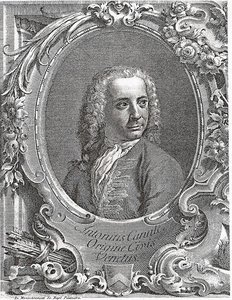
Каналетто
1697 - 1768 , Італія
Довідкова інформація
- Artistic Movement Or Style: Ведюти Венеції
- Artists Or Movements Influenced By This Artist: ['Бенкардо Канал']
- Artists Who Influenced This Artist: ['Джованні Паоло Паньні']
- Date Of Birth: 18 жовтня 1697
- Date Of Death: 19 квітня 1768
- Full Name: Giovanni Antonio Canal
- Nationality: Італійський
- Notable Artworks:
- Саломасанівська майстерня
- Регата на каналі Сан-Марко
- Етонський коледж
- Place Of Birth: Венеція, Італія
Схожі статті

Топ-25 шедеврів Джона Констебла: пейзажі Англії для вашого дому | OriginalUniqueArt
Відкрийте для себе 25 найкращих шедеврів Джона Констебла! Англійські пейзажі, романтизм та емоційне світло в живописі. Репродукції картин високої якості для вашого дому від OriginalUniqueArt.com. Дослідіть повну колекцію онлайн!

Evocations of Place: A Historical Journey Through Landscape Art
Explore the rich history of landscape art with OriginalUniqueArt. Discover renowned artists, movements like Impressionism & Romanticism, and expert guidance for collecting timeless pieces. Find your perfect serene escape today!

Giovanni Antonio Canal (Canaletto): A Venetian Master of Light, Space & Societal Observation
Explore the life & art of Giovanni Antonio Canal (Canaletto), a Venetian master renowned for his breathtaking cityscapes. Discover his techniques, legacy, and captivating depictions of 18th-century Venice & London.

Michelangelo Morlaiter: Venetian Landscapes & the Pursuit of Atmospheric Realism
Explore the captivating landscapes of Michelangelo Morlaiter, a key figure in 18th-century Venetian painting. Discover his mastery of atmospheric perspective and lasting influence on Italian art history. Learn more at OriginalUniqueArt.

Топ-10 шедеврів романтичного пейзажу: мистецтво, що захоплює дух | OriginalUniqueArt
Відкрийте для себе 10 шедеврів романтичного пейзажу! Каспар Давид Фрідріх, Тернер та інші майстри. Історія мистецтва, емоційні кольори природи та ідеї декору з OriginalUniqueArt.com. Дослідіть колекцію онлайн!


