

 Переглянути в інтер'єрі
 Надіслати як листівку
 Поділитися
 Деталі витвору
 Посібник

 Завантажити
 Схожі екземпляри
 Рентгенівське дослідження
 Слайд-шоу
 Статистика
Camera obscura
 Acrylic
- WallArt
- Impressionism
 1700
1700 22.0 x 38.0 cm
 Музео Коррер
 Розгорнути текст
Гікле / Художній принт
Друк جيкле або на полотні музейної якості з оперативним виготовленням та різноманітними варіантами фінішної обробки. ( Замовити картину ручної роботи Перейти до цифрових зображень)




P118B ₴10

P118H ₴10

P118W ₴10

P438Z ₴10

P508JH ₴12

P508YH ₴12

P805H ₴10

P805Z ₴10

P919BZ ₴10

P919G ₴10

P919XJ ₴10

P959ZH ₴10

P968JZ ₴12

W106C ₴8

W218G ₴10

W218JH ₴8

W218Y ₴10

W307PJ ₴10

W316G ₴10

W316PJ ₴8

W316Y ₴10

W398PJ ₴8

W4111J ₴10

W500HY ₴15

W500JH ₴15

W692G ₴12

W849H ₴8

W940BG ₴15

W953PJ ₴8




Обирайте з наших стандартних розмірів, що відповідають оригінальним пропорціям твору мистецтва.

Введіть необхідну ширину та висоту, щоб принт ідеально підійшов до вашої рами або стіни. Принт можна лише обрізати, але не можна зробити більшим за оригінал, тому при зміні пропорцій частина зображення буде втрачена. Перед друком ми надсилаємо вам цифровий макет для затвердження. Зображення на цій сторінці не відображає реальну обрізку — її можна побачити лише на макеті.
Доставка по всьому світу () за 2 тижні замість стандартних 4/5 тижнів. (27 Жовтень)

Безкоштовна експрес-доставка по всьому світу

Високоякісне лляне полотно

Повне страхове покриття доставки

Гарантія повернення митних зборів

Гарантія точного відтворення кольорів

Політика повернення протягом 100 днів (лише у разі виявлення дефектів)

Гарантія повернення 100% коштів

Пропозиція на оптові замовлення
 Скляний варіант доступний лише для розмірів до 110 см

Camera obscura
Гікле / Художній принт
Розмір репродукції
-


Підсумкова вартість
₴ 3588
Canaletto’s Camera Obscura: A Window Into Venetian Vision
The artist Giovanni Antonio Canaletto, commonly known as Canaletto (1697 – 1768), stands as one of the most celebrated figures in eighteenth-century Venetian painting. His meticulous depictions of Venice—the canals shimmering under sunlight, the palaces adorned with opulent decoration—captivate viewers even today. But beyond their aesthetic beauty lies a fascinating secret: Canaletto’s unparalleled accuracy stems from a technique that predates photography – the camera obscura. This ingenious device, essentially a darkened room equipped with a pinhole aperture and a mirror, allowed him to capture the essence of his surroundings with remarkable precision, shaping not only his artistic output but also influencing the broader understanding of perspective and visual representation.- The Device Itself: Canaletto’s camera obscura wasn't merely a tool; it was a conceptual breakthrough. Constructed from wood and glass, it functioned by projecting an inverted image of the outside world onto a surface within—typically tracing paper or canvas—positioned opposite to the pinhole. This method ensured that the artist could faithfully reproduce architectural details and atmospheric effects without resorting to laborious sketching techniques.
- A Reflection of Scientific Curiosity: Canaletto’s embrace of the camera obscura reflects the burgeoning scientific interest in optics during his lifetime. Astronomers and mathematicians alike were experimenting with similar instruments, attempting to unravel the mysteries of light and vision. Canaletto's use of this technique wasn't simply artistic expediency; it represented a conscious engagement with contemporary intellectual debates about how we perceive reality.
- Venetian Landscape Painting: The camera obscura profoundly impacted Canaletto’s style. By allowing him to observe the scene from multiple viewpoints simultaneously, he achieved a level of realism previously unattainable. His paintings—particularly those capturing the grandeur of St Mark's Square and the Doge’s Palace—are characterized by subtle gradations of color, masterful shading, and an astonishingly accurate depiction of architectural proportions.
- Symbolism Beyond Technique: Canaletto’s camera obscura technique wasn’t just about achieving visual accuracy; it also conveyed a deeper symbolic message. The darkened room represented introspection and contemplation—a deliberate distancing from the immediate sensory experience to gain access to a more profound understanding of the world around him. This approach mirrored the philosophical currents of the Enlightenment, emphasizing reason and observation as pathways to knowledge.
- Legacy in Photography: Canaletto’s pioneering use of the camera obscura foreshadowed the invention of photography centuries later. By demonstrating that it was possible to capture an image without direct contact with the subject matter—a feat previously considered impossible—he fundamentally altered our conception of artistic representation and paved the way for a new era of visual art.
Notable Works Featuring Camera Obscura Technique
Canaletto’s mastery of perspective is evident in several iconic paintings, including “The Stonemason’s Yard” (c. 1725), where he meticulously rendered the textures and colors of the building materials with astonishing detail. Similarly, his depiction of St Mark's Square—particularly the Doge’s Palace—captures the shimmering light reflecting off the facades and windows, achieved through careful observation and skillful blending of pigments. These paintings stand as testament to Canaletto’s unwavering commitment to capturing the beauty and complexity of Venice with unparalleled accuracy – a feat made possible by his ingenious use of the camera obscura.Exploring Canaletto's Influence on Later Artists
Canaletto’s innovative approach to landscape painting resonated deeply with artists who followed him, notably Francesco Guardi and Michele Marieschi. These painters adopted similar techniques—primarily employing atmospheric perspective and meticulous detail—to convey the grandeur of Venetian vistas. Canaletto’s legacy extends beyond his own artistic achievements; he established a precedent for realistic representation that continues to inspire artists today, demonstrating that observation and careful technique can unlock profound insights into capturing the essence of visual experience.Reproductions & Inspiration
High-quality reproductions of Canaletto's paintings offer an exceptional opportunity to appreciate his artistic genius and immerse oneself in the atmosphere of eighteenth-century Venice. Consider framing a print alongside a photograph taken from one of Canaletto’s original viewpoints—a powerful gesture that honors both the artist’s pioneering technique and the enduring beauty of Venetian landscapes. Let Canaletto's Camera Obscura serve as a reminder that true artistic vision requires not only skill but also an unwavering dedication to observing and interpreting the world around us.Питання та відповіді
Для якої кімнати рекомендується «Camera obscura» роботи Каналетто?
Рекомендованим простором для «Camera obscura» роботи Каналетто є Living Room. Звісно, цю пропозицію можна адаптувати під ваш інтер'єр.
Наскільки виражений контраст у «Camera obscura» роботи Каналетто?
У творі «Camera obscura» роботи Каналетто спостерігається Statement контраст між світлими та темними ділянками.
Наскільки насиченою є палітра твору "Camera obscura"?
Насиченість твору «Camera obscura» роботи Каналетто становить Muted.
Біографія митця
Early Life and Artistic Beginnings
Giovanni Antonio Canal, universally known as Canaletto, was born on October 18, 1697, in the heart of Venice – a city that would forever be the subject of his artistic obsession. His early life unfolded within a family deeply rooted in the world of visual arts; his father, Bernardo Canal, was a respected scene painter for theatrical productions, imbuing young Giovanni with an initial understanding of composition and perspective. Artemisia Barbieri, his mother, further nurtured his creative spirit. Canaletto’s artistic journey began not with grand ambitions, but with the practicalities of assisting his father in crafting backdrops for Venetian stages – a formative experience that instilled within him a keen eye for detail and an appreciation for capturing fleeting moments of everyday life.
Crucially, Canaletto's training extended beyond simply replicating theatrical settings. He honed his skills by working alongside his brother, also a painter, absorbing techniques and developing a foundational understanding of color, light, and shadow. This early apprenticeship laid the groundwork for his later success as a topographical artist – an artist dedicated to meticulously documenting the city he loved.
The Roman Years: Seeds of a New Style
In 1718, Canaletto embarked on a pivotal journey to Rome, a move that profoundly shaped his artistic development. He sought opportunities within the bustling world of Roman theatre scenery, working for renowned composers like Alessandro Scarlatti and Giovanni Porto. This period proved transformative; he was exposed to the vibrant energy of the city, its grand architecture, and the diverse cast of characters that populated its streets. It was here that Canaletto began to develop his signature style – a precise, almost photographic realism combined with an elegant sense of composition.
The influence of Giovanni Paolo Pannini, a celebrated Roman vedutista (a painter specializing in cityscapes), is particularly evident in Canaletto’s early work. Pannini's meticulous attention to detail and his ability to capture the essence of urban life served as a model for Canaletto, inspiring him to translate the dynamism of Rome onto canvas.
Venetian Mastery: Capturing the Spirit of the City
Upon returning to Venice in 1725, Canaletto quickly established himself as one of the city’s most sought-after artists. He shifted his focus from theatrical scenery to painting *vedute* – detailed depictions of Venetian buildings, canals, and public spaces. These weren't merely accurate records; they were carefully constructed compositions designed to evoke a sense of atmosphere and charm. Canaletto’s approach was revolutionary for its time, moving beyond simple documentation to create visually compelling narratives.
His most celebrated works from this period include “The Stonemason’s Yard” (circa 1725), a masterpiece that showcases his early skill in capturing the textures of stone and the bustle of daily life. Other notable paintings, such as "Regatta on the Grand Canal" and "Eton College," demonstrate his ability to depict public ceremonies and grand architectural settings with equal artistry.
Collaboration and Influence: Bellotto and Beyond
Canaletto’s artistic career was inextricably linked to that of his nephew, Bernardo Bellotto. Bellotto became a talented artist in his own right, inheriting Canaletto's style and techniques. The two collaborated extensively on numerous projects, often working together to create large-scale *vedute* of Venice – a testament to their shared vision and artistic partnership.
Furthermore, Canaletto’s influence extended far beyond his immediate circle. His meticulous preparatory drawings, often incorporating the use of a camera obscura (a device that projects an image of the outside world onto a surface), became a model for other artists seeking to achieve greater accuracy and detail in their landscapes. His work profoundly impacted 18th-century art, shaping the development of *vedute* painting across Europe.
A Journey to England: New Perspectives
In 1746, Canaletto embarked on a significant chapter of his career – a journey to England. Invited by the wealthy merchant and connoisseur Joseph “Consul” Smith, he spent nearly two decades documenting London and other English sites. This period marked a shift in his artistic focus, as he began to paint imaginary landscapes alongside his realistic depictions of urban scenes.
Canaletto’s paintings of England, including views of Warwick Castle and Alnwick Castle, were immensely popular with the British public, thanks to Smith's astute business acumen. His work was widely reproduced in prints, making it accessible to a broader audience and solidifying his reputation as one of Europe’s leading artists.
Legacy and Enduring Significance
Canaletto’s legacy is profound and enduring. His meticulously rendered *vedute* offer invaluable insights into the daily life, architecture, and atmosphere of Venice and other European cities during the 18th century. His work can be found in prestigious museums around the world, including the National Gallery in London, where it continues to captivate viewers with its beauty and detail.
Canaletto’s innovative use of perspective, his meticulous preparatory drawings, and his ability to capture both the accuracy and the spirit of a place have cemented his position as one of the most important artists of the Baroque period. His art remains a testament to the power of observation, skill, and artistic vision.
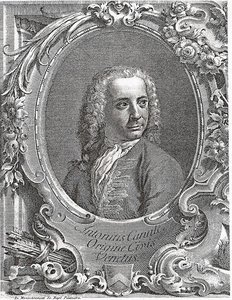
Каналетто
1697 - 1768 , Італія
Короткі факти
- Artistic Movement Or Style: Ведюти Венеції
- Artists Or Movements Influenced By This Artist: ['Бенкардо Канал']
- Artists Who Influenced This Artist: ['Джованні Паоло Паньні']
- Date Of Birth: 18 жовтня 1697
- Date Of Death: 19 квітня 1768
- Full Name: Giovanni Antonio Canal
- Nationality: Італійський
- Notable Artworks:
- Саломасанівська майстерня
- Регата на каналі Сан-Марко
- Етонський коледж
- Place Of Birth: Венеція, Італія
Пов'язані статті

The Enduring Legacy of Oil on Canvas: Technique, History & Aesthetic Impact
Explore the rich history & techniques of oil painting – from Renaissance masters to Impressionism. Discover pigments, layering methods, and why this timeless medium endures. Expert insights for artists & art enthusiasts.

Giovanni Antonio Canal (Canaletto): A Venetian Master of Light, Space & Societal Observation
Explore the life & art of Giovanni Antonio Canal (Canaletto), a Venetian master renowned for his breathtaking cityscapes. Discover his techniques, legacy, and captivating depictions of 18th-century Venice & London.

The Dramatic Flourish: Exploring the Baroque Movement's Enduring Legacy in Art History
Explore the dramatic world of Baroque art! Discover iconic artists like Caravaggio & Rubens, defining techniques, and its lasting impact on art history. Expert insights for collectors & enthusiasts at OriginalUniqueArt.

The Enduring Power of Painting: A Historical & Contemporary Exploration of Form and Emotion
Explore the rich history & enduring techniques of oil painting with OriginalUniqueArt. Discover masterpieces, learn about art collecting, and find authentic handmade reproductions crafted by skilled artists.

Барокова драма: мистецтво, що привносить велич у дім
Відкрийте для себе велич бароко! Дізнайтесь про історію стилю, особливості українського бароко та як створити розкішний інтер'єр. Ексклюзивні репродукції картин від .


