Baroque Landscape
Landscape (Гілліс Ван Конінцлоо)
Гілліс Ван Конінцлоо (1544–1607) створив Landscape. Він належить до напряму Baroque Landscape. Виконано в Oil On Copper. Екземпляр зберігається в Музей Прадо у Мадрид, Іспанія. Розмір: 24 × 19 cm
- Oil On Copper
- 24 × 19 cm
- Музей Прадо, Мадрид

 Переглянути в інтер'єрі

 Картина олією ручної роботи
 Надіслати як листівку
 Поділитися
 Інформаційна картка


 Завантажити
 Схожі екземпляри
 Рентгенівське дослідження
 Слайд-шоу
 Питання та відповіді

 Статистика
Landscape коротко
- Назва
- Landscape
- Художник
- Гілліс Ван Конінцлоо (1544–1607)
- Рік народження митця
- Антверпен, Бельгія
- Матеріал
- Oil On Copper
- Розміри
- 24 × 19 cm
- Де подивитися
- Музей Прадо, Мадрид, Іспанія
- Сюжет
- landscape, flemish style, baroque art, forest scene, castle architecture, atmospheric perspective
Що зображено на Landscape?
A Flemish Master’s Woodland Reverie: Gillis van Coninxloo's “Landscape”
Gillis van Coninxloo’s “Landscape,” a captivating oil on copper panel, transports the viewer to a realm of serene contemplation within a meticulously rendered Flemish forest. Painted around 1598, this work stands as a pivotal example of the artist’s mastery in capturing the atmospheric depth and intricate detail characteristic of the early 16th-century Golden Age. More than just a depiction of nature, it's an invitation to lose oneself within a carefully constructed world of light, shadow, and subtle symbolism – a testament to van Coninxloo’s profound understanding of both landscape painting and the human experience.
The scene unfolds before us with remarkable realism. A dense thicket of trees dominates the foreground, their leaves rendered with an almost obsessive attention to detail; each vein, each curl of bark, is painstakingly observed and faithfully reproduced. These trees aren’t merely static elements; they create a palpable sense of depth, drawing the eye into the heart of the forest. Beyond them, a modest collection of buildings – likely farmhouses or small dwellings – nestles amongst the foliage, suggesting a quiet rural existence. The architecture is understated yet solid, reflecting a pragmatic approach to building within this natural setting. In the distance, a formidable castle rises above the horizon, its imposing silhouette anchoring the composition and hinting at notions of power, protection, and perhaps even isolation.
The Alchemy of Light and Shadow: Technique and Style
Van Coninxloo’s technical skill is immediately apparent in his masterful use of oil on copper. This medium allowed for a remarkable level of detail and luminosity – the surface retains a subtle sheen that enhances the richness of the colors and creates an almost three-dimensional effect. The artist employs a technique known as “chiaroscuro,” skillfully manipulating light and shadow to sculpt the forms and create a dramatic sense of depth. Notice how the sunlight filters through the trees, dappling the ground in pools of brightness while simultaneously casting deep shadows beneath the foliage. This interplay of light and dark isn’t merely decorative; it imbues the scene with a palpable atmosphere – a feeling of both tranquility and mystery.
Stylistically, “Landscape” aligns itself with the Flemish tradition of landscape painting, yet van Coninxloo departs from some of the more rigid conventions of the time. While influenced by the Northern Mannerist style—characterized by its emphasis on detail and symbolic imagery—he introduces a greater sense of naturalism and emotional resonance. The composition is carefully balanced, creating a harmonious whole that invites contemplation. The muted color palette – dominated by greens, browns, and grays – contributes to the overall feeling of serenity and timelessness.
A Window into 16th-Century Life and Belief
To fully appreciate “Landscape,” it’s important to consider its historical context. Painted during a period of religious upheaval and political instability in the Netherlands, this work reflects both the anxieties and the enduring values of the era. The castle, for instance, can be interpreted as a symbol of authority – whether representing secular power or divine protection. The humble dwellings nestled within the forest suggest a connection to the land and a reverence for rural life. Furthermore, the dense woodland itself has long been associated with themes of solitude, introspection, and the spiritual realm.
Interestingly, this painting was originally housed in the Museo del Prado in Madrid, Spain, a testament to its enduring appeal across national boundaries. The artist’s biography reveals a fascinating journey – from Antwerp to Germany and eventually Amsterdam—reflecting the shifting political landscape of the time. His work served as a bridge between artistic styles, incorporating elements of Mannerism while embracing the burgeoning realism of the Dutch Golden Age.
A Timeless Masterpiece: Reproduction and Inspiration
Reproductions of “Landscape” capture only a fraction of its original impact. The subtle nuances of light, texture, and atmosphere are difficult to replicate fully, but OriginalUniqueArt’s hand-painted reproductions strive to honor the artist's vision with remarkable fidelity. This piece offers an exceptional opportunity for interior designers seeking to evoke a sense of tranquility and connection to nature – imagine it adorning a study or a living room, providing a focal point that invites contemplation. Collectors will find “Landscape” to be a valuable addition to any art collection, representing a significant moment in the history of Flemish landscape painting.
For further exploration, we encourage you to visit the linked resources:
У якому музеї зберігається Landscape?
Музей Прадо
Мадрид, Іспанія
Історія Музею Прадо Витоки Музею Прадо нерозривно пов'язані з Королівською колекцією Іспанії, історія якої бере свій початок ще у XVIII столітті. Те, що починалося як амбітне бачення створення кабінету природничих наук за правління Фердинанда VII, з часом перетворилося на справжнє святилище живопису та скульптури. Ця трансформація перетворила науковий проєкт на сокровищницю найважливіших скарбів іспанської корони.


Зображення високої роздільної здатності Landscape
Суспільне надбання: художник помер у 1607 році.
Гілліс Ван Конінцлоо, Landscape, Музей Прадо. Суспільне надбання
Відповіді на запитання про Landscape
Де сьогодні можна побачити «Landscape» роботи Гілліс Ван Конінцлоо?
Оригінал «Landscape» роботи Гілліс Ван Конінцлоо зберігається в Музей Прадо, Мадрид, Іспанія. Репродукція дозволяє прикрасити цим твором ваш дім.
Яка техніка була використана для створення «Landscape» роботи Гілліс Ван Конінцлоо?
Техніка виконання «Landscape» роботи Гілліс Ван Конінцлоо — Oil On Copper. Репродукції мають на меті відтворити вигляд цієї техніки.
Які розміри оригіналу "Landscape"?
Розміри оригіналу «Landscape» роботи Гілліс Ван Конінцлоо становлять 24 x 19 cm. Репродукції можна замовити в інших розмірах із збереженням тих самих пропорцій.
Що зображено на творі «Landscape» роботи Гілліс Ван Конінцлоо?
«Landscape» роботи Гілліс Ван Конінцлоо зображує: landscape, flemish style, baroque art, forest scene, castle architecture, atmospheric perspective, detailed rendering.
Чи не захищений твір "Landscape" авторським правом?
Статус авторського права для «Landscape» роботи Гілліс Ван Конінцлоо: цей твір є є суспільним надбанням — термін дії авторського права закінчився. Це визначає, чи можна вільно створювати репродукції зображення.
Хто є автором "Landscape"?
«Landscape» приписують Гілліс Ван Конінцлоо.
До якого художнього напряму належить «Landscape» роботи Гілліс Ван Конінцлоо?
«Landscape» — це твір у стилі Baroque Landscape. Назва течії вказує на художню традицію, до якої належить цей твір.
До якого періоду творчості Гілліс Ван Конінцлоо належить твір "Landscape"?
«Landscape» належить до Late Baroque Гілліс Ван Конінцлоо.
Чи є твір «Landscape» авторства Гілліс Ван Конінцлоо суспільним надбанням, і чому?
«Landscape» за авторством Гілліс Ван Конінцлоо перебуває у є суспільним надбанням — термін дії авторського права закінчився. Термін дії авторського права розраховується з року смерті митця; Гілліс Ван Конінцлоо помер(ла) у 1607.
Про художника Гілліс Ван Конінцлоо
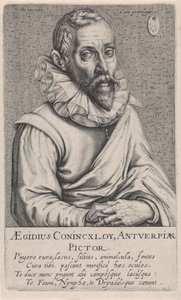
1544–1607, Бельгія
Гілліс Ван Конінцлоо
Майстер зелененого царства Гілліс Ван Конінцлоо є ключовою постаттю в еволюції північного пейзажного мистецтва, виступаючи життєво важливим сполучною ланкою між складними маньєристськими традиціями та розквітом атмосферної глибини раннього бароко. Народившись в Антверпені, Бельгія, він був глибоко пов'язаний із багатим мистецьким лігцем Низьких Країн. Будучи сином художника, він виховувався у світі, де майстерність та спостереження за природою мали першочергове значення. Його раннє навчання під керівництвом таких майстрів, як Пітер Кокеке ван Аельст-молодший та Ленаерт Крес, заклало міцний фундамент, проте саме робота в майстерні Гілліса Мостарта дозволила його таланту по-справжньому розквітнути, давши можливість брати участь у професійних роботах і водночас відточувати власне унікальне бачення.
Також за участю Гілліс Ван Конінцлоо
 Jonah Preaching to the Ninevites1583
 Woodland with Saint Jerome1583
 Landscape with the judgment of Midas1598
 Landscape with the Judgement of Paris1610
Есе до твору Landscape
 Masterpieces of Jan van Goyen: Top 25 Iconic Dutch LandscapesExplore 25 iconic Jan van Goyen landscapes from the Dutch Golden Age. Discover these tonal masterpieces on OriginalUniqueArt.com.
 Chiaroscuro & Shadows: The High-Impact Power of Moonlight in Masterpiece LandscapesMaster the drama of chiaroscuro and moonlight in classical landscapes. Explore the power of light and shadow now.
 Masterpieces of Nature: The Top 25 Artworks by Jacob van RuisdaelExplore 25 iconic Jacob van Ruisdael landscapes. Discover the soul of Dutch Golden Age art. Explore the full collection online at OriginalU…