Northern Renaissance · 1598
Forest Landscape (Гілліс Ван Конінцлоо, 1598)
Гілліс Ван Конінцлоо (1544–1607) створив Forest Landscape. Дата створення — 1598. Він належить до напряму Northern Renaissance. Виконано в Олія на панелі. Екземпляр зберігається в Liechtenstein Museum у Відень, Austria. Розмір: 42 × 61 cm
- 1598
- Олія на панелі
- 42 × 61 cm
- Liechtenstein Museum, Відень

 Переглянути в інтер'єрі

 Картина олією ручної роботи
 Надіслати як листівку
 Поділитися
 Інформаційна картка


 Завантажити
 Схожі екземпляри
 Рентгенівське дослідження
 Слайд-шоу
 Питання та відповіді

 Статистика
Forest Landscape коротко
- Назва
- Forest Landscape
- Художник
- Гілліс Ван Конінцлоо (1544–1607)
- Рік народження митця
- Антверпен, Бельгія
- Дата
- 1598
- Матеріал
- Олія на панелі
- Розміри
- 42 × 61 cm
- Де подивитися
- Liechtenstein Museum, Відень, Austria
- Період
- — Ранньомодерна епоха
Що зображено на Forest Landscape?
Identification of the Forest Landscape Artwork
The artwork titled Forest Landscape is a painting by the Flemish artist Gillis Van Coninxloo. Executed in 1598, this work is an oil on panel. The physical dimensions of the piece are 42 x 61 cm. It is currently held within the Liechtenstein Museum in Vienna, Austria.
This specific composition depicts a dense woodland environment. The scene features a winding path that leads into a thicket of trees. The foliage consists of various shades of green, while the trunks and branches create a heavy canopy overhead. In the background, a small village is visible through the gaps in the trees, providing a sense of distance within the forest setting.
The subject matter focuses on the natural world, specifically the textures of bark, leaves, and moss. A single, small human figure is positioned beneath a tree within the landscape. The composition utilizes a dark palette of browns, greens, and ochres to define the wooded area. Light filters through the upper branches, creating a contrast between the shadowed recesses of the undergrowth and the illuminated patches of the clearing.
Composition and Visual Elements
The composition is largely symmetrical, organized around a winding path that leads the eye toward the center of the image. This path cuts through a dense woodland, where the trunks and branches of trees intertwine to form a thick canopy overhead. Only a few small patches of sky are visible through the gaps in the foliage. Within this enclosed space, a single tiny human figure reclines beneath a tree, positioned near the center of the scene. The scale of the trees and the surrounding undergrowth dwarfs the figure, emphasizing the vastness of the natural environment.
Color is concentrated in the various hues of green found in the leaves and the mossy textures of the forest floor. These greens contrast with the dark browns and ochres of the tree trunks and the earth. In the background, a small village is visible through the trees, providing a sense of distance and depth. The lighting creates a chiaroscuro effect, with strong contrasts between the deep shadows of the thickets and the light that filters through the canopy onto the path and the reclining figure.
Technique and Artistic Style
The artist utilized oil on panel to establish a sense of depth and a tangible texture across the surface. The application of paint likely involves multiple layers and glazing, a method used to achieve a specific luminosity within the darker sections of the composition. This technique allows light to appear as though it is filtering through the canopy, creating a chiaroscuro effect through the deliberate placement of light and shadow. The resulting atmosphere is defined by a palette of dark colors and a high degree of intricate detail.
The composition is built upon a dense arrangement of ancient oaks and thick undergrowth. There is a clear priority placed on the textural richness of the natural elements, specifically the bark of the trees, the individual leaves, and the presence of moss. These organic forms are rendered with meticulous care, contributing to the overall density of the woodland scene. The interplay of light and shadow defines the verticality of the trunks and the irregular shapes of the foliage, emphasizing the physical presence of the forest environment.
Artistic Influence and Legacy
Gillis Van Coninxloo occupied a central position in the evolution of Northern landscape art. His technical approach functioned as a bridge between the intricate traditions of Mannerism and the atmospheric depth characteristic of the early Baroque. Through his development of the forest landscape, he moved away from panoramic vistas toward intimate, enclosed woodland scenes. This shift prioritized the textural details of bark, leaves, and moss, often submerging small human figures within an expansive, detailed natural environment.
The influence of his method extended to several prominent painters of the period. Jan Brueghel the Elder and Pieter Schoubroeck were among those affected by his stylistic developments. His approach to dense, immersive woodland compositions also impacted the work of Roeland Savery and various other Flemish and Dutch landscape painters. This specific work, created about 1598, represents his technical skill and craftsmanship in rendering the natural world.
У якому музеї зберігається Forest Landscape?
Liechtenstein Museum
Відень, Austria
Перлина віденського барокового блиску Розташований у самому серці історичної Рингштрассе у Відні, Музей Ліхтенштейн перебуває в оточенлі середовища, яке є таким самим шедевром, як і скарби, що він охороняє. Розміщений у величних палацах Ліхтенштейн, музей пропонує занурення в саму душу аристократичної елегантності та глибоку спадщину дому Ліхтенштейнів. Коли відвідувачі наближаються до цієї палацової споруди, їх вітає архітектурна велич минулої епохи, де кожен позолочений карниз і розкішні сходи шепочуть перекази про імперський престиж.


Зображення високої роздільної здатності Forest Landscape

Суспільне надбання: художник помер у 1607 році.
Інші розміри, кадри та цитування →Гілліс Ван Конінцлоо, Forest Landscape (1598), Liechtenstein Museum. Суспільне надбання
Відповіді на запитання про Forest Landscape
Де сьогодні можна побачити «Forest Landscape» роботи Гілліс Ван Конінцлоо?
«Forest Landscape» роботи Гілліс Ван Конінцлоо експонується в Liechtenstein Museum, Відень, Austria. У описі музею йдеться про оригінальний твір, а не про репродукції.
У якому році було створено «Forest Landscape» роботи Гілліс Ван Конінцлоо?
«Forest Landscape» роботи Гілліс Ван Конінцлоо було створено у 1598 році.
Яка техніка була використана для створення «Forest Landscape» роботи Гілліс Ван Конінцлоо?
Для створення «Forest Landscape» Гілліс Ван Конінцлоо використав(ла) техніку Олія на панелі. Саме ця техніка визначає матеріальну природу оригінального твору.
Які реальні розміри має «Forest Landscape» роботи Гілліс Ван Конінцлоо?
«Forest Landscape» має розмір 42 x 61 cm в оригіналі. Оригінальні розміри є корисним орієнтиром під час вибору розміру репродукції.
Чи є «Forest Landscape» роботи Гілліс Ван Конінцлоо суспільним надбанням?
Щодо авторського права, «Forest Landscape» є є суспільним надбанням — термін дії авторського права закінчився.
Хто є автором "Forest Landscape"?
«Forest Landscape» було створено Гілліс Ван Конінцлоо. Інформація на цій сторінці описує оригінальний твір Гілліс Ван Конінцлоо.
До якого стилю належить "Forest Landscape"?
«Forest Landscape» — це твір у стилі Northern Renaissance. Назва течії вказує на художню традицію, до якої належить цей твір.
До якого періоду творчості Гілліс Ван Конінцлоо належить твір "Forest Landscape"?
«Forest Landscape» належить до Late 16th Century Гілліс Ван Конінцлоо.
Скільки років було Гілліс Ван Конінцлоо, коли створювався твір "Forest Landscape" у 1598 році?
Гілліс Ван Конінцлоо було 54 років, коли він створив «Forest Landscape» у 1598 році. Вік обчислено на основі року народження митця, 1544.
Про художника Гілліс Ван Конінцлоо
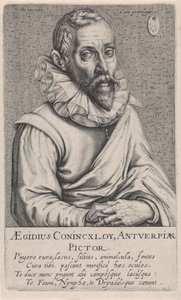
1544–1607, Бельгія
Гілліс Ван Конінцлоо
Майстер зелененого царства Гілліс Ван Конінцлоо є ключовою постаттю в еволюції північного пейзажного мистецтва, виступаючи життєво важливим сполучною ланкою між складними маньєристськими традиціями та розквітом атмосферної глибини раннього бароко. Народившись в Антверпені, Бельгія, він був глибоко пов'язаний із багатим мистецьким лігцем Низьких Країн. Будучи сином художника, він виховувався у світі, де майстерність та спостереження за природою мали першочергове значення. Його раннє навчання під керівництвом таких майстрів, як Пітер Кокеке ван Аельст-молодший та Ленаерт Крес, заклало міцний фундамент, проте саме робота в майстерні Гілліса Мостарта дозволила його таланту по-справжньому розквітнути, давши можливість брати участь у професійних роботах і водночас відточувати власне унікальне бачення.
Також за участю Гілліс Ван Конінцлоо
 Jonah Preaching to the Ninevites1583
 Woodland with Saint Jerome1583
 Landscape with the judgment of Midas1598
 Landscape with the Judgement of Paris1610
Есе до твору Forest Landscape
 French Barbizon paintersMasterpieces by Théodore Rousseau and Daubigny define the Barbizon School. Explore the full collection online at OriginalUniqueArt.com.
 Enchanted Woodlands: 10 Masterpieces That Capture the Magic of the ForestExplore iconic forest art by Shishkin, Klimt, and Van Gogh. Discover museum-quality masterpieces on OriginalUniqueArt.com.
 Mastering the Horizon: An Art Historian’s Guide to the World's Most Iconic Landscape PaintingsExplore the profound history of landscape painting with our expert guide. From Impressionist light to Chinese traditions, discover the tech…