

 Переглянути в інтер'єрі
 Надіслати
 Поділитися
 Деталі
 Посібник

 Завантажити
 Схожі предмети колекціонування
 Рентгенівське дослідження
 Слайд-шоу
 Статистика переглядів
Meadowland


 Читати далі
Мистецький твір, представлений на цій сторінці, захищений законом про авторське право, що унеможливлює легальне створення або продаж його ідентичної репродукції. Цей захист забезпечується відповідно до міжнародних угод, таких як Бернська конвенція та національним законодавством, зокрема положеннями, що викладені в Законодавство США про авторське право — Розділ 17. Всі права захищені. Будь-яке використання без дозволу заборонено.
Цей метод повністю відповідає нормам авторського права, оскільки він не передбачає копіювання чи дублювання захищеного твору мистецтва. Натомість це творче переосмислення — створення нового малюнка під впливом оригіналу, який не є його точним відтворенням.
Гікле / Художній принт
Музейна якість друку جيкле або на полотні з оперативним виготовленням та різноманітними варіантами фінішної обробки. ( Купити картину ручної роботи Перейти до цифрових зображень)




P118B ₴10

P118H ₴10

P118W ₴10

P438Z ₴10

P508JH ₴12

P508YH ₴12

P805H ₴10

P805Z ₴10

P919BZ ₴10

P919G ₴10

P919XJ ₴10

P959ZH ₴10

P968JZ ₴12

W106C ₴8

W218G ₴10

W218JH ₴8

W218Y ₴10

W307PJ ₴10

W316G ₴10

W316PJ ₴8

W316Y ₴10

W398PJ ₴8

W4111J ₴10

W500HY ₴15

W500JH ₴15

W692G ₴12

W849H ₴8

W940BG ₴15

W953PJ ₴8




Обирайте з наших стандартних розмірів, що відповідають оригінальним пропорціям твору мистецтва.

Введіть необхідну ширину та висоту, щоб принт ідеально підійшов до вашої рами або стіни. Принт можна лише обрізати, але не можна зробити більшим за оригінал, тому при зміні пропорцій частина зображення буде втрачена. Перед друком ми надсилаємо вам цифровий макет для затвердження. Зображення на цій сторінці не відображає реальну обрізку — її можна побачити лише на макеті.
Доставка по всьому світу () за 2 тижні замість стандартних 4/5 тижнів. (21 Жовтень)

Безкоштовна експрес-доставка по всьому світу

Високоякісне лляне полотно

Повне страхове покриття доставки

Гарантія повернення митних зборів

Гарантія точного відтворення кольорів

Політика повернення протягом 100 днів (лише у разі виявлення дефектів)

Гарантія повернення 100% коштів

Знижка на оптові замовлення
 Скляний варіант доступний лише для розмірів до 110 см

Meadowland
Гікле / Художній принт
Розмір репродукції
-


Загальна вартість
₴ 3577
A Glimpse into Tranquility: Exploring Gerhard Richter’s *Meadowland*
Gerhard Richter's 1985 painting, *Meadowland*, is more than just a landscape; it’s an evocation of memory, a study in perception, and a testament to the artist’s unique approach to representation. The scene unfolds with a gentle serenity – a grassy field stretches before us, dotted with trees that recede into the distance, hinting at a rural idyll. Subtle suggestions of houses nestled amongst the foliage add a human element without disrupting the overall sense of peaceful isolation. What immediately strikes the viewer is not simply *what* is depicted, but *how*. Richter doesn’t present a crisp, photographic reality; instead, he employs a blurring technique that softens edges and imbues the scene with an ethereal quality. This isn't a precise rendering of a specific place, but rather a distillation of the feeling of being within a meadow, bathed in soft light.
The Master of Ambiguity: Richter’s Artistic Journey
Born in Dresden, Germany, in 1932, Gerhard Richter has become one of the most significant and influential artists of our time. His life story is deeply intertwined with the tumultuous history of post-war Germany, a context that profoundly shaped his artistic vision. Initially trained as a sign painter and stage designer, Richter’s early work reflected the prevailing abstract styles of the mid-20th century. However, he quickly began to forge his own path, experimenting with diverse techniques and challenging conventional notions of painting. His move from East to West Germany in 1961 proved pivotal, allowing him greater artistic freedom and exposure to new ideas. Richter’s oeuvre is remarkably varied, encompassing abstract compositions, photorealistic paintings, color charts, and glass constructions. This constant exploration and refusal to be pigeonholed are hallmarks of his practice.
Blurring the Lines: Technique and Interpretation
The technique employed in *Meadowland* is central to its impact. Richter famously utilizes a squeegee to drag paint across the canvas, creating layers of color and texture that obscure detail. This process isn’t about concealing information; it's about questioning the very nature of representation. By blurring the image, he forces us to actively participate in constructing meaning. The painting appears simultaneously familiar and distant, inviting contemplation on themes of memory, perception, and the subjective experience of reality. Is this a remembered landscape, filtered through the haze of time? Or is it an attempt to capture the fleeting quality of light and atmosphere? The ambiguity is deliberate, prompting viewers to project their own emotions and interpretations onto the canvas. The painting’s size – 35 5/8 x 37 1/2 inches (90.5 x 94.9 cm) – further enhances this intimacy, drawing the viewer into a contemplative space.
A Legacy of Influence
*Meadowland*, created during Richter’s “New European Painting” period, exemplifies his ability to synthesize diverse influences while remaining utterly unique. The painting's quiet beauty and intellectual depth have resonated with audiences worldwide, solidifying Richter’s position as a leading figure in contemporary art. His work continues to inspire artists and challenge viewers to reconsider their assumptions about the role of painting in the 21st century. Owning a reproduction of *Meadowland* is not merely acquiring an image; it's inviting a moment of tranquility, a space for reflection, and a connection to one of art history’s most innovative minds into your home.
Запитання та відповіді
У якому віці Герхард Ріхтер створив(ла) "Meadowland"?
Коли у 1985 році було створено «Meadowland», художнику Герхард Ріхтер (народився/лася у 1932) було 53 років.
Як я можу переглянути репродукцію твору «Meadowland» Герхард Ріхтер?
Попередній перегляд «Meadowland» Герхард Ріхтер доступний на сторінці Попередній перегляд твору.
Чи відомий Герхард Ріхтер, автор твору "Meadowland", під іншими іменами?
Герхард Ріхтер також відомий/відома як Гельдер Ріхтер, Gerhard Richter.
Біографія митця
A Life Shaped by Division: The Early Years and Artistic Formation of Gerhard Richter
Gerhard Richter’s story is inextricably linked to the fractured history of 20th-century Germany. Born in Dresden in 1932, his childhood unfolded under the shadow of a rising National Socialist regime. This formative period, marked by displacement – his family moved several times during the war years – instilled within him a profound sense of uncertainty and a questioning spirit that would permeate his artistic practice for decades to come. The idyllic landscapes of his early upbringing in Reichenau and Waltersdorf were soon disrupted by conflict, leaving an indelible mark on his psyche. His father, though not a fervent supporter of the Nazi party, navigated the complexities of life under authoritarian rule as a schoolteacher, while his mother fostered a love for literature and music within the family. This duality – a pragmatic acceptance of circumstance alongside a yearning for cultural expression – became a defining characteristic of Richter’s own artistic approach. He began formal training at the Dresden Academy of Fine Arts in 1951, initially immersed in the tradition of socialist realism demanded by the East German state. However, even within this constrained environment, a desire for artistic freedom simmered beneath the surface, fueled by a growing dissatisfaction with ideological constraints and a longing to explore more expansive creative possibilities.Escaping Constraints: Düsseldorf and the Exploration of Style
The year 1961 proved pivotal. Richter, along with his wife Marianne Eufinger, made the daring decision to flee East Germany, seeking refuge in the burgeoning art scene of Düsseldorf. This move marked a radical shift in his artistic trajectory. The West German landscape offered a liberating environment where experimentation and innovation were not only permitted but actively encouraged. In Düsseldorf, he encountered a vibrant community of artists grappling with questions of identity, representation, and the legacy of history. He quickly began to dismantle the rigid stylistic conventions of socialist realism, embarking on a period of intense exploration that would define his early mature work. This era saw him oscillate between seemingly disparate approaches – from photorealism, meticulously recreating photographic images with astonishing precision, to abstract compositions characterized by bold colors and dynamic brushstrokes. His collaboration with Sigmar Polke led to the coining of the term ‘Capitalist Realism,’ a deliberately ambiguous label that reflected their shared skepticism towards established artistic norms and their appropriation of imagery from advertising and mass media. This period wasn’t about finding *a* style, but rather questioning the very notion of stylistic coherence, embracing contradiction as a fundamental principle.Blurring Boundaries: Photorealism, Abstraction, and the Power of Chance
Richter's artistic vocabulary expanded throughout the 1960s and beyond, encompassing a remarkable range of techniques and themes. His photorealistic paintings, often based on family photographs or newspaper images, are not merely copies of reality but rather investigations into the nature of perception and representation. By meticulously rendering these images with an almost clinical detachment, he forces viewers to confront the inherent ambiguity of photographic truth. Simultaneously, Richter delved deeper into abstraction, creating canvases layered with vibrant colors and gestural marks. These abstract works are often created using a unique technique involving squeegees – tools typically used for cleaning windows – which he drags across the surface of the canvas, manipulating the paint in unpredictable ways. This embrace of chance and spontaneity is central to his artistic philosophy, allowing him to relinquish control and invite unexpected outcomes. His ‘Color Charts,’ systematic arrangements of colored squares, further challenge traditional notions of artistic expression, questioning the very definition of painting itself. These works are not about individual aesthetic preferences but rather about exploring the inherent properties of color and its organizational possibilities.The Weight of History: From Dresden to Berlin
Richter’s early life was profoundly shaped by the tumultuous events of mid-20th century Germany. Growing up in Dresden, a city repeatedly devastated during World War II, instilled within him a deep awareness of loss and destruction. The constant rebuilding efforts, the displacement of families, and the pervasive atmosphere of uncertainty left an enduring mark on his psyche. His father’s experience as a teacher under the Nazi regime – navigating a complex and often oppressive system – further contributed to Richter's critical perspective on authority and ideology. This historical context is subtly woven into many of his works, particularly those exploring themes of memory, identity, and the relationship between art and history. The destruction of Dresden in 1945 served as a powerful catalyst for artistic exploration, prompting Richter to grapple with questions about representation, truth, and the impossibility of fully capturing reality on canvas. Later, after moving to West Germany, he continued to confront these themes through his engagement with photographic imagery, often juxtaposing images of destruction with scenes of everyday life.A Legacy of Innovation: Influence and Recognition
Gerhard Richter’s impact on contemporary art is undeniable. His willingness to challenge conventions, his relentless experimentation with technique, and his profound engagement with historical and political themes have established him as one of the most important artists of our time. He has consistently resisted easy categorization, defying attempts to pigeonhole his work into a single stylistic framework. This refusal to be defined, coupled with his technical virtuosity and intellectual rigor, has earned him widespread critical acclaim and commercial success – his paintings regularly fetch record prices at auction. Beyond the market value, however, lies a deeper significance. Richter’s art speaks to the complexities of modern existence, grappling with issues of memory, identity, and the search for meaning in a fragmented world. He doesn't offer answers but rather poses questions, prompting viewers to confront their own preconceptions and engage in critical dialogue. His influence can be seen in the work of countless artists who have followed in his footsteps, drawn to his innovative techniques and his unwavering commitment to artistic exploration. Richter’s legacy is not simply about creating beautiful objects; it's about expanding the possibilities of painting itself. He remains a vital force in contemporary art, continuing to inspire and provoke audiences with his challenging and deeply resonant work.
Герхард Ріхтер
1932 - , Німеччина
Довідкова інформація
- Artistic Movement Or Style:
- Фотореалізм
- Абстракція
- Капіталіст реалізм
- Artists Or Movements Influenced By This Artist: ['Сучасні художники']
- Artists Who Influenced This Artist:
- Пабло Пікассо
- Сіґмар Полке
- Date Of Birth: 9 лютого 1932
- Full Name: Gerhard Richter
- Nationality: Німецький
- Notable Artworks:
- Абстрактне зображення 610-1
- Gilbert
- S. з дитиною
- Жовтень 18, 1977
- Place Of Birth: Дрезден, Німеччина
Схожі статті
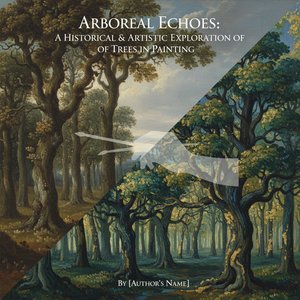
Arboreal Echoes: A Historical & Artistic Exploration of Trees in Painting
Explore the rich history of trees in painting! Discover symbolism, Romantic masterpieces by Caspar David Friedrich & beyond. A curated journey for art enthusiasts.

Топ-25 шедеврів Джона Констебла: пейзажі Англії для вашого дому | OriginalUniqueArt
Відкрийте для себе 25 найкращих шедеврів Джона Констебла! Англійські пейзажі, романтизм та емоційне світло в живописі. Репродукції картин високої якості для вашого дому від OriginalUniqueArt.com. Дослідіть повну колекцію онлайн!

Топ-10 шедеврів романтичного пейзажу: мистецтво, що захоплює дух | OriginalUniqueArt
Відкрийте для себе 10 шедеврів романтичного пейзажу! Каспар Давид Фрідріх, Тернер та інші майстри. Історія мистецтва, емоційні кольори природи та ідеї декору з OriginalUniqueArt.com. Дослідіть колекцію онлайн!

Evocations of Place: A Historical Journey Through Landscape Art
Explore the rich history of landscape art with OriginalUniqueArt. Discover renowned artists, movements like Impressionism & Romanticism, and expert guidance for collecting timeless pieces. Find your perfect serene escape today!

Arboreal Echoes: A Historical & Artistic Exploration of Trees in Painting
Explore the rich history of trees in painting! Discover symbolism, Romantic masterpieces by Caspar David Friedrich & beyond. A curated journey for art enthusiasts.


