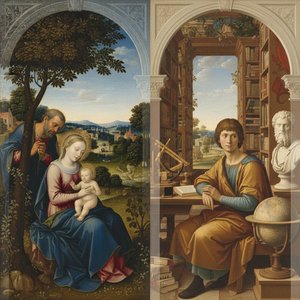
Triptych with the Nativity
Oil On Panel
Northern Renaissance
1505
Renaissance
90.0 x 71.0 cm
Музей Метрополітен
Олійная репродукція ручної роботи
Написана вручну олією на полотні у вашому розмірі та рамі, виготовлена на замовлення нашими художниками. ( Перейти до друку
Перейти до зображення)
P118B $10
P118H $10
P118W $10
P438Z $10
P508JH $12
P508YH $12
P805H $10
P805Z $10
P919BZ $10
P919G $10
P919XJ $10
P959ZH $10
P968JZ $12
W106C $8
W218G $10
W218JH $8
W218Y $10
W307PJ $10
W316G $10
W316PJ $8
W316Y $10
W398PJ $8
W4111J $10
W500HY $15
W500JH $15
W692G $12
W849H $8
W940BG $15
W953PJ $8
Обирайте з наших стандартних розмірів, що відповідають оригінальним пропорціям твору мистецтва.
Ви можете вказати власні розміри, щоб репродукція ідеально підійшла до конкретної рами або інтер'єру. Якщо вибраний вами розмір не відповідає пропорціям оригіналу, ми або обріжемо полотно, або доповнимо картину додатковими елементами, промальованими вручну. Цифровий макет буде надіслано вам на затвердження перед початком виробництва.
Зверніть увагу, що попередній перегляд на екрані не відображає фактичне обрізання або розширення зображення. Тільки макет точно покаже остаточну композицію.
Хоча ми можемо виготовити виріб у нестандартному розмірі, для збереження оригінальних пропорцій рекомендуємо обирати варіанти зі встановленого списку.
Після оформлення замовлення команда OriginalUniqueArt.com зв'яжеться з клієнтом електронною поштою для отримання інструкцій та надасть попередній макет
Доставка по всьому світу () за 3–4 тижні замість стандартних 5 тижнів. (2 Серпень). Без жодних компромісів у якості.
Безкоштовна експрес-доставка по всьому світу
Високоякісне лляне полотно
Повне страхове покриття доставки
Гарантія відшкодування митних зборів
Гарантія точного відтворення кольорів
Політика повернення протягом 60 днів (лише у разі виявлення дефектів)
Гарантія повернення 100% коштів
Знижка на оптові замовлення
Triptych with the Nativity
Техніка репродукції
Розмір репродукції
-
Загальна вартість
$ 300
Опис твору
A Vision of Sacred Light: Gerard David's Triptych with the Nativity
To stand before this magnificent Triptych with the Nativity is to step directly into the luminous heart of the early Netherlandish Renaissance. Dating from 1505, this work by Gerard David captures not merely an event, but a profound moment of divine revelation. The composition itself, divided into three distinct yet interconnected panels, guides the viewer through the narrative arc of the Holy Family's arrival in Bethlehem. One senses immediately the meticulous craftsmanship characteristic of Flemish masters—a dedication to detail that elevates religious storytelling into breathtaking visual poetry.
Mastery of Light and Form
Gerard David was renowned for his ability to manipulate light, a quality evident throughout this piece. The technique employed showcases the rich oil painting tradition of the period, allowing the soft glow emanating from the manger scene to contrast beautifully with the deeper shadows in the surrounding architecture and figures. Observe how the light seems to illuminate Mary and Joseph, bestowing upon them an ethereal grace. In the central panel, the depiction of the angel holding the lamb over the newborn Jesus is particularly arresting; here, David uses subtle gradations of tone to suggest both the fragility of new life and the overwhelming presence of the divine. The inclusion of surrounding figures, each rendered with distinct individuality, populates the scene with human drama against a backdrop that feels both monumental and intimate.
Symbolism Woven into the Scene
The symbolism within this triptych is rich and multilayered, inviting contemplation from every corner. Beyond the central Nativity grouping, the flanking panels expand the narrative scope. The presence of angels in various poses—one bearing a bowl and spoon, perhaps alluding to the gifts of the Magi or ritual offerings—adds layers of theological meaning. Each figure seems imbued with purpose; they are not mere bystanders but participants in an eternal moment. The very structure of the triptych suggests revelation unfolding sequentially, guiding the viewer from one aspect of the mystery to the next.
A Timeless Presence for Modern Spaces
For the collector or designer seeking a piece that speaks of enduring artistry and deep history, this reproduction offers an unparalleled connection to the Northern Renaissance. While its original context was devotional, its sheer aesthetic power allows it to anchor any grand hall, library, or sacred space with unmatched gravitas. The combination of meticulous detail, masterful handling of light, and profound narrative depth ensures that this artwork does more than decorate; it elevates the spirit. Owning a reproduction of Gerard David’s work is to possess a tangible piece of artistic history, allowing the serene beauty of 1505 to resonate softly into the modern day.
Біографія митця
A Master of Flemish Light: The Enigmatic World of Gerard David
Gerard David, a name that echoes through the halls of art history, remains an artist shrouded in captivating mystery and profound beauty. Born around 1460 in Oudewater, a small town near Gouda in the Netherlands, his life story is pieced together from fragments – archival records, the eloquent whispers of his paintings, and the legacy he left behind. Unlike many of his contemporaries whose lives are meticulously documented, David’s personal narrative remains tantalizingly sparse, allowing his art to speak volumes about a man who lived within a transformative era. What we *do* know suggests a remarkably successful career, likely managing workshops in both Antwerp and Bruges – vibrant centers of artistic innovation during the Renaissance—and a deep understanding of the traditions he inherited while forging his own distinctive path. His reputation experienced a period of relative obscurity in the 17th century, only to be rediscovered and profoundly appreciated by 19th-century art historians who recognized his unique contributions to the Northern Renaissance. He was inducted as a free master into the Corporation of Imagemakers and Saddlers in Bruges in 1484, marking a pivotal moment in his ascent – a testament to his skill and standing within the artistic community. His later involvement with the Antwerp guild in 1515 further solidified his position as a leading figure.Formative Influences and Artistic Development
David’s artistic journey began under the influence of masters who shaped the very foundation of his style. Early works reveal a clear debt to painters like Jacob Janszoon, Dieric Bouts, and Geertgen tot Sint Jans – artists who instilled in him a meticulous attention to detail and a sensitivity to religious narrative. It is believed he spent time in Haarlem absorbing these lessons before relocating to Bruges, a bustling hub of artistic exchange attracting talent from across Europe. Here, David encountered the masterpieces of Jan van Eyck, Rogier van der Weyden, and Hans Memling, absorbing their techniques while simultaneously forging his own distinct path. He didn’t merely imitate; he synthesized these influences into something uniquely his own – a style characterized by luminous color, serene compositions, and an increasingly sophisticated understanding of landscape. His early paintings demonstrate this evolution, moving from the doll-like figures reminiscent of Haarlem traditions towards more sculptural forms grounded in their environment. Consider *Christ Nailed to the Cross*—a work that showcases this transition; the influence of Bouts’ spatial construction blends seamlessly with David's emerging coloristic sensibility, creating a powerful and emotionally resonant image. The meticulous detail, combined with the dramatic lighting, speaks volumes about his dedication to realism and his ability to capture the essence of human suffering.Innovation in Landscape and Religious Narrative
Gerard David’s artistic signature lies in his innovative approach to both landscape and religious subject matter. He wasn't simply depicting backgrounds; he was creating immersive environments that enhanced the emotional resonance of his scenes. His landscapes are not merely decorative, but integral components of the narrative, often imbued with symbolic meaning—a reflection of the Renaissance fascination with nature’s harmony and its connection to the divine. This fascination with natural settings – dense forests, rolling hills, expansive skies – set him apart from many of his contemporaries and foreshadowed the development of landscape painting as an independent genre. Within his religious works, David demonstrated a remarkable ability to convey both profound spirituality and human emotion. Paintings like *The Marriage of St. Catherine* exemplify this skill. The scene is rendered with exquisite detail—the rich fabrics, the intricate architecture, the expressions on the figures’ faces—yet it's the subtle nuances of their emotions – piety, contemplation, gentle joy – that truly captivate the viewer. He possessed a gift for imbuing his sacred subjects with a sense of quiet dignity and relatable humanity. The *Triptych of the Madonna Enthroned and Saints*, housed in the Groeninge Museum in Bruges, is another testament to this mastery—a complex and richly layered composition that showcases his technical skill and artistic vision. His *Virgin Among the Virgins*, donated to the Carmelite nuns of Sion at Bruges, is particularly noteworthy; it’s a self-portrait within the painting itself – a rare and intimate gesture from an artist of his time, revealing a personal connection to the subject matter.Major Achievements and Artistic Style
David's artistic style evolved significantly throughout his career, reflecting both his influences and his own creative vision. Initially influenced by Haarlem painters like Jacob Janszoon, he developed a distinctive approach characterized by:- Luminous Color: David was renowned for his masterful use of color—rich, vibrant hues that created a sense of depth and atmosphere.
- Sculptural Figures: His figures possessed a remarkable three-dimensionality, conveying a sense of solidity and presence.
- Innovative Landscape: He pioneered the integration of landscape into religious scenes, creating immersive environments that enhanced the narrative’s emotional impact.
Legacy and Enduring Influence
Though his fame waned somewhat after his death in 1523, Gerard David's influence on subsequent generations of artists is undeniable. His innovative use of color, his masterful handling of light and shadow, and his pioneering approach to landscape all left an indelible mark on the development of Flemish painting. He paved the way for artists who would further explore the expressive potential of natural settings, such as Jacob Patinir and Jacob van Ruisdael. His work served as a bridge between the late medieval tradition and the emerging Renaissance style, demonstrating a remarkable ability to synthesize diverse influences into a cohesive and compelling artistic vision. Today, David’s works are celebrated in museums and collections around the world—a testament to his enduring legacy as one of the greatest masters of the Northern Renaissance. Exploring his oeuvre is not merely studying art history; it's entering a world of luminous beauty, profound contemplation, and enduring human emotion – a true reflection of the genius of Gerard David.Гердар Давід
1450 - 1523 , Нідерланди
Досьє митця
- Artistic Movement Or Style: Ранньонідерландське живопис
- Artists Or Movements Influenced By This Artist:
- Ян ван Ейк
- Рогоєр ван дер Віден
- Ханс Мемлінг
- Artists Who Influenced This Artist:
- Якоб Янссон
- Дієрик Боутас
- Гертген донт Сінтанс
- Date Of Birth: c. 1460
- Date Of Death: 1523
- Full Name: Gerard David
- Nationality: Нідерландський
- Notable Artworks:
- Малюнок Святої Катерини
- Тріптих Богоматері на троні
- Пресвітер серед лісу
- Place Of Birth: Oudewater, Нідерланди

Скляний варіант доступний лише для розмірів до 110 см