

 Переглянути в інтер'єрі
 Надіслати як листівку
 Поділитися
 Детальніше

 Завантажити
 Схожі експонати
 Рентгенівське дослідження
 Слайд-шоу
The Bridge
 Expressionism
 1945
1945 64.0 x 55.0 cm
 Читати далі
Олійная репродукція ручної роботи
Написана вручну олією на полотні у вашому розмірі та рамі, виготовлена на замовлення нашими художниками. ( Замовити принт Купити цифрове зображення)




































Обирайте з наших стандартних розмірів, що відповідають оригінальним пропорціям твору мистецтва.

Ви можете вказати власні розміри, щоб репродукція ідеально підійшла до конкретної рами або інтер'єру. Якщо вибраний вами розмір не відповідає пропорціям оригіналу, ми або обріжемо полотно, або доповнимо картину додатковими елементами, промальованими вручну. Цифровий макет буде надіслано вам на затвердження перед початком виробництва.
Зверніть увагу, що попередній перегляд на екрані не відображає фактичне обрізання або розширення зображення. Тільки макет точно покаже остаточну композицію.
Хоча ми можемо виготовити виріб у нестандартному розмірі, для збереження оригінальних пропорцій рекомендуємо обирати варіанти зі встановленого списку.
Після оформлення замовлення команда OriginalUniqueArt.com зв'яжеться з клієнтом електронною поштою для отримання інструкцій та надасть попередній макет
Доставка по всьому світу () за 3–4 тижні замість стандартних 5 тижнів. (30 Серпень). Без жодних компромісів у якості.

Безкоштовна експрес-доставка по всьому світу

Високоякісне лляне полотно

Повне страхове покриття доставки

Гарантія відшкодування митних зборів

Гарантія точного відтворення кольорів

Політика повернення протягом 60 днів (лише у разі виявлення дефектів)

Гарантія повернення 100% коштів

Пропозиція на оптові замовлення
 Скляний варіант доступний лише для розмірів до 110 см

The Bridge
Матеріал репродукції
Розмір репродукції
-


Підсумкова вартість
$ 300
Біографія митця
The Architect of Fragments: The Life and Legacy of George Hannah
Born in 1904 amidst the intellectual ferment of Berlin, Germany, George Hannah entered a world where the boundaries of reality were being aggressively redrawn. As the son of Wilhelm Hannah, a renowned architect, the young artist was raised in an environment that prioritized spatial design and the structural integrity of visual representation. This early exposure to the precision of architecture would later serve as a profound, albeit subversive, foundation for his work. While his father built permanent structures of stone and steel, George sought to deconstruct the very fabric of modern perception, eventually establishing himself as a pivotal figure within the radical movements of the Weimar Republic.
Hannah’s artistic journey was deeply intertwined with the turbulent socio-political landscape of early 20th-century Germany. His formal training at the Kunstgewerbeschule Berlin (School of Applied Arts) provided him with a rigorous command of painting and printmaking, yet his spirit gravitated toward the avant-garde rebellions of his era. By 1920, he had joined the legendary Berlin Dada group, finding common cause with visionaries such as Otto Dix, Kurt Schwitters, and Hannah Höch. Within this collective, Hannah embraced the concept of absurdity as a potent political weapon, utilizing the chaotic energy of the era to challenge bourgeois stability and the rising tide of nationalism.
The Revolution of the Cut: Technique and Symbolism
It was through the medium of photomontage that Hannah truly found his voice, transforming the artist's role from a creator of images to an editor of reality. By meticulously sourcing photographic prints from newspapers and magazines, he practiced a form of visual alchemy—fragmenting the polished propaganda of the day to reveal the underlying anxieties of a fractured society. His technique relied on the jarring juxtaposition of disparate elements, where a single composition could simultaneously evoke the mechanical coldness of industrialization and the visceral human struggle for identity.
< p>His work often functioned as a profound feminist critique and a commentary on gender roles, mirroring the explorations of his contemporary, Hannah Höch. Through the strategic layering of textures and perspectives, Hannah explored how societal structures imposed rigid identities upon the individual. His compositions were never merely aesthetic exercises; they were complex dialogues between the seen and the unseen, utilizing the following elements to convey meaning:- Fragmented Perspectives: The use of broken imagery to mirror the psychological fragmentation of post-war Europe.
- Juxtaposed Textures: Blending the smooth surfaces of mass-media photography with the raw, tactile qualities of printmaking.
- Symbolic Depth: Integrating architectural motifs and industrial shapes to represent the encroaching weight of modern civilization.
A Lasting Impression on Modernity
As the decades progressed and the political climate of Europe shifted, Hannah’s work continued to evolve, moving between the radical deconstruction of Dadaism and more expressive, singular explorations of form. His later works, such as the dramatic 1945 oil painting The Bridge, demonstrate a transition toward an expressionist depth, where heavy textures and stark contrasts evoke a sense of mystery and existential weight. This ability to pivot from the satirical sharpness of collage to the atmospheric intensity of oil painting highlights his versatility as a master of visual narrative.
Though he passed away in 1978, George Hannah’s contribution to the history of modern art remains indelible. He did not merely document his era; he dismantled it, piece by piece, and reassembled it into a mirror that forced viewers to confront the complexities of gender, politics, and the human condition. Today, his legacy lives on in the lineage of contemporary collage and political art, serving as a reminder that even in a world of fragments, there is profound truth to be found in the way we piece our reality together.

george hannah
1904 - 1978
Короткі факти
- Artistic Movement Or Style: Photomontage Art
- Artists Or Movements Influenced By This Artist: ['Dada']
- Artists Who Influenced This Artist: ['Hannah Höch']
- Date Of Death: 1978
- Full Name: George Hannah
- Nationality: German
- Notable Artworks:
- The Bridge
- Figure in an Interior (recto)
- Two Girls Sitting at the Foot of a Flight of Stairs
- Place Of Birth: Germany
Пов'язані статті

Топ-25 шедеврів Жоржа Брака: мистецтво кубізму для вашого дому | OriginalUniqueArt
Відкрийте для себе 25 найвідоміших шедеврів Жоржа Брака! Пориньте у світ кубізму, аналізуйте кольори та техніку легендарного французького художника. Репродукції картин Брак для вашого дому – на OriginalUniqueArt.com

25 шедеврів Жоржа Сера: Відкрийте світ точкового малярства | OriginalUniqueArt
Відкрийте світ Жоржа Сера! 25 культових картин імпресіонізму та пуантилізму. Історія мистецтва, унікальні техніки живопису та натхнення для декору вашого дому. Купуйте репродукції картин Сера високої якості на OriginalUniqueArt.com!

The Timeless Charm of Oil on Board: Reimagining Texture and Light through the Impressionist Lens
Discover the profound intimacy of oil on panel. Explore how Impressionist masters used rigid supports to capture light, texture, and impasto depth through exquisite, handmade oil reproductions for discerning collectors.
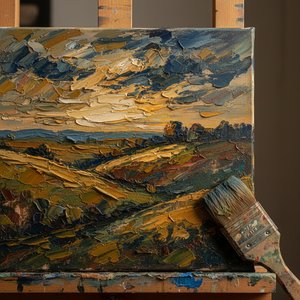
The Timeless Beauty of Oil on Canvas: A Masterclass in Texture, Impasto, and Artistic Mastery
Discover the profound allure of oil on canvas. Explore the mastery of impasto textures, the science of pigment longevity, and expert guides to selecting museum-quality reproductions that elevate your collection with timeless elegance and tactile depth.
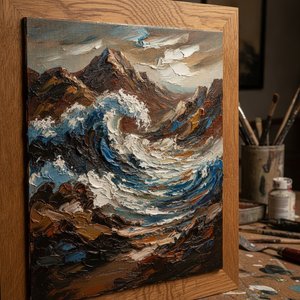
Oil on Panel: The Ultimate Guide to Bold, High-Impact Texture & Depth
Master the art of impact with our expert guide to oil on panel. Discover how impasto textures and heavy-body pigments create 3D depth and bold visual energy for modern interiors. Elevate your space with high-impact, hand-painted masterpieces designed for maximum aesthetic punch.

