

 Переглянути в інтер'єрі
 Надіслати
 Поділитися
 Деталі
 Посібник

 Завантажити
 Схожі предмети колекціонування
 Рентгенівське дослідження
 Слайд-шоу
 Статистика переглядів
Houqua
 Oil On Canvas
- WallArt
- British Romantic Painting
 1843
1843- 19th Century
 64.0 x 46.0 cm
 Музей Метрополітен
 Читати далі
Олійная репродукція ручної роботи
Написана вручну олією на полотні у вашому розмірі та рамі, виготовлена на замовлення нашими художниками. ( Перейти до друку Перейти до цифрових зображень)




P118B $10

P118H $10

P118W $10

P438Z $10

P508JH $12

P508YH $12

P805H $10

P805Z $10

P919BZ $10

P919G $10

P919XJ $10

P959ZH $10

P968JZ $12

W106C $8

W218G $10

W218JH $8

W218Y $10

W307PJ $10

W316G $10

W316PJ $8

W316Y $10

W398PJ $8

W4111J $10

W500HY $15

W500JH $15

W692G $12

W849H $8

W940BG $15

W953PJ $8




Обирайте з наших стандартних розмірів, що відповідають оригінальним пропорціям твору мистецтва.

Ви можете вказати власні розміри, щоб репродукція ідеально підійшла до конкретної рами або інтер'єру. Якщо вибраний вами розмір не відповідає пропорціям оригіналу, ми або обріжемо полотно, або доповнимо картину додатковими елементами, промальованими вручну. Цифровий макет буде надіслано вам на затвердження перед початком виробництва.
Зверніть увагу, що попередній перегляд на екрані не відображає фактичне обрізання або розширення зображення. Тільки макет точно покаже остаточну композицію.
Хоча ми можемо виготовити виріб у нестандартному розмірі, для збереження оригінальних пропорцій рекомендуємо обирати варіанти зі встановленого списку.
Після оформлення замовлення команда OriginalUniqueArt.com зв'яжеться з клієнтом електронною поштою для отримання інструкцій та надасть попередній макет
Доставка по всьому світу () за 3–4 тижні замість стандартних 5 тижнів. (26 Вересень). Без жодних компромісів у якості.

Безкоштовна експрес-доставка по всьому світу

Високоякісне лляне полотно

Повне страхове покриття доставки

Гарантія повернення митних зборів

Гарантія точного відтворення кольорів

Політика повернення протягом 100 днів (лише у разі виявлення дефектів)

Гарантія повернення 100% коштів

Знижка на оптові замовлення
 Скляний варіант доступний лише для розмірів до 110 см

Houqua
Техніка репродукції
Розмір репродукції
-


Загальна вартість
$ 300
A Glimpse into Mid-19th Century Opulence
In the quiet, dignified presence of George Chinnery’s “Houqua,” we are transported back to the year 1843, a pivotal era of cultural intersection in Southeast Asia. This masterful portrait is far more than a mere likeness of a prominent figure; it is a window into a world where British colonial influence and Chinese mercantile prestige met in a delicate dance of diplomacy and trade. The subject, Houqua, sits with an air of profound composure upon a vibrant crimson couch, his posture radiating the quiet confidence of a man accustomed to both respect and immense responsibility. As one gaz and observes the meticulously arranged interior, there is an immediate sense of being invited into a private moment of aristocratic repose, making this piece an extraordinary centerpiece for any collection that values historical depth and narrative richness.
The artistry of Chinnery shines through his sophisticated use of chiaroscuro, where the dramatic interplay of light and shadow breathes life into the textures of the scene. The artist’s training at the Royal Academy Schools in London is evident in the way he sculpts form through oil on canvas, capturing the heavy, luxurious folds of traditional Chinese attire with breathtaking precision. Every brushstroke serves to highlight the contrast between the soft glow illuminating the subject's face and the deep, velvety shadows that anchor him within his opulent surroundings. For the discerning collector or interior designer, this technique offers a visual depth that commands attention, providing a focal point that changes character depending on the lighting of the room.
Symbolism and the Art of Cultural Exchange
Beyond the technical brilliance, “Houqua” is steeped in symbolic meaning, acting as a visual record of the burgeoning British East India Company’s presence in Asia. The choice of a vibrant red couch is not merely aesthetic; it serves as a powerful anchor for the composition, symbolizing wealth, status, and the vitality of the era's trade routes. Scattered throughout the scene are subtle yet significant nods to Chinese artistic conventions—a vase brimming with delicate blossoms and strategically placed bowls that suggest a refined, cosmopolitan lifestyle. These elements weave a story of cultural exchange, where European oil painting techniques were used to document and romanticize the splendor of the Orient.
The emotional impact of the work lies in its ability to evoke a sense of nostalgia and reverence for a lost age of elegance. There is a palpable stillness in Houqua’s gaze, a meditative quality that invites the viewer to contemplate the complexities of history and the individual lives shaped by global shifts. Whether placed in a grand library, a sophisticated study, or a curated gallery space, a high-quality reproduction of this painting brings with it an atmosphere of intellectual curiosity and timeless grace. It is an investment not just in art, but in a piece of history that continues to resonate with the themes of identity, prestige, and the enduring beauty of human connection.
Біографія митця
Early Life and Training (1774-1801)
George Chinnery, a name synonymous with the vibrant landscapes and captivating portraits of 19th-century India and China, was born in London on January 5, 1774. His lineage held a fascinating connection to the world of communication – his father, a skilled practitioner of the Gurney system of shorthand, instilled in young George a keen eye for detail and an appreciation for capturing fleeting moments with precision. This early exposure to rapid note-taking would later prove invaluable in his artistic practice, allowing him to meticulously record observations and nuances during his extensive travels.
Chinnery’s formal artistic education unfolded at the Royal Academy Schools in London. Here, he immersed himself in the classical techniques and principles that formed the bedrock of Western art. He diligently studied anatomy, perspective, and composition, laying a solid foundation for his future endeavors. However, it was not solely through structured instruction that Chinnery honed his skills; his father’s profession fostered an innate ability to observe and record information with remarkable accuracy – a trait that would become central to his artistic vision.
Before embarking on his extraordinary journey eastward, Chinnery gained some recognition as an artist in Ireland. This initial experience provided him with valuable exposure to the local art scene and further refined his skills. It was this early success that ultimately paved the way for his move to Madras (present-day Chennai) in 1802, marking the beginning of a truly remarkable chapter in his life and career.
Life in Asia: India and China (1802-1852)
The year 1802 marked a pivotal moment for George Chinnery – his arrival in Madras, now Chennai, South India. This relocation was not merely a geographical shift; it represented the launch of a career that would profoundly shape the visual record of British colonial life and the cultural exchange between East and West. Chinnery quickly established himself as a prominent artist within the British community residing in Madras, becoming a sought-after portraitist for officials, merchants, and members of the local elite.
His time in Calcutta (Kolkata) proved to be his most prolific and influential period. Serving as the leading artist for the British residency, Chinnery produced an astonishing volume of work – portraits, landscapes, and detailed studies of daily life. These paintings offer invaluable insights into colonial society, capturing the nuances of relationships between Europeans and Indians, and documenting the evolving landscape of the region. Notable among his subjects were Colonel James Achilles Kirkpatrick and his family, whose portraits provide a poignant glimpse into the social dynamics of the era.
However, Chinnery’s career was not without its challenges. Mounting debts eventually prompted him to relocate to Macau in 1825. This move marked a shift in focus, as he continued to paint portraits – primarily of European merchants and Chinese residents – while also documenting the bustling port city's vibrant atmosphere. Interestingly, his style during this period was closely imitated by the Cantonese artist Lam Qua, highlighting Chinnery’s considerable influence on the local artistic community.
In 1846, Chinnery undertook a six-month visit to Hong Kong, a newly established colony undergoing rapid transformation. During this time, he meticulously documented the city's development through detailed sketches and paintings, capturing its architecture, people, and burgeoning commercial activity. This period provided him with a unique opportunity to witness firsthand the birth of a new British outpost in Asia.
Artistic Style and Techniques
George Chinnery’s artistic style is characterized by a remarkable blend of realism, orientalism, and an empathetic approach to his subjects. He is best known for his portraits, which are distinguished by their sensitivity, detail, and ability to capture the essence of his sitters. While firmly rooted in Western artistic traditions, Chinnery's work reflects elements of Orientalism – a fascination with Eastern cultures that was prevalent during the 19th century. However, unlike some of his contemporaries, he avoided simplistic exoticization, instead portraying Asian subjects with a degree of understanding and respect.
Chinnery primarily worked in oil paint and watercolor, utilizing these mediums to create both intimate portraits and expansive landscapes. He was also a prolific pencil sketcher, producing numerous preparatory drawings that offer valuable insights into his artistic process. A particularly noteworthy aspect of his technique was his use of the Gurney shorthand system – a modified version of the Gurney system developed by his father. This allowed him to quickly jot down notes on his sketches, capturing details and observations with remarkable speed and accuracy.
Furthermore, Chinnery’s artistic development was undoubtedly influenced by the local artists he encountered in Asia. He absorbed elements of Chinese landscape painting, incorporating techniques such as brushwork and color palettes into his own work, creating a distinctive fusion of Western and Eastern styles.
Major Achievements and Historical Significance
George Chinnery’s legacy extends far beyond his individual artistic achievements. He stands as a unique chronicler of 19th-century India and China, serving as one of the few Western artists to establish a sustained presence in southern China during that period. His paintings provide invaluable historical documentation of British colonial life, offering a nuanced perspective on the interactions between Europeans and Asians.
His portraits are not merely representations of individuals; they are windows into the social dynamics of their time, revealing the complexities of relationships within the colonial hierarchy. The works depicting Colonel Kirkpatrick’s family, for example, offer poignant insights into familial bonds amidst a changing political landscape.
Chinnery's influence extended beyond his immediate circle, inspiring local artists like Lam Qua to adopt his portrait style. His work also played a role in shaping the visual culture of Hong Kong and Macau, contributing to their unique artistic identities.
Perhaps most significantly, Chinnery’s paintings offer a rare glimpse into the everyday lives of ordinary people – merchants, laborers, artisans, and families – providing a rich tapestry of human experience during a period of profound transformation. His art serves as a powerful reminder of the diverse cultures that converged in Asia during the 19th century.
Death and Legacy (1852 - Present)
George Chinnery’s life came to an end on May 30, 1852, in Macau. He was buried in the Old Protestant Cemetery, a testament to his long-standing connection to the city.
Today, substantial collections of his drawings reside in prestigious museums around the world – including the Victoria and Albert Museum, the British Museum, the Peabody Essex Museum, Birmingham Museum & Art Gallery, Hong Kong Museum of Art, Macau Museum, and Macau Museum of Art. These collections ensure that Chinnery’s artistic legacy will continue to be appreciated for generations to come.
Exhibitions featuring his work have been held internationally, demonstrating sustained interest in his art and its historical significance. Furthermore, the character Aristotle Quance in James Clavell's novel Tai-pan was inspired by Chinnery’s life and experiences, solidifying his place in popular culture.
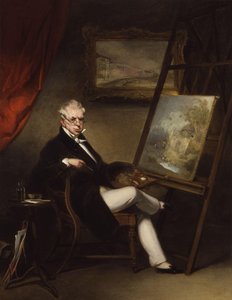
Чіннірі
1774 - 1852 , Великобританія
Довідкова інформація
- Artistic Movement Or Style: Орієнталізм, Портрети
- Artists Or Movements Influenced By This Artist: ['Лам Куа']
- Date Of Birth: 5 січня 1774
- Date Of Death: 30 травня 1852
- Full Name: George Chinnery
- Nationality: Англійський
- Notable Artworks:
- Портрет Кіркпатріка
- Портрети в Макао
- Place Of Birth: Лондон, Великобританія
Схожі статті

Raja Ravi Varma: Bridging Tradition & Modernity in 19th-Century Indian Art
Explore the life & art of Raja Ravi Varma, a pioneer who fused European techniques with Indian iconography. Discover his iconic paintings, lasting legacy, and influence on modern Indian art at OriginalUniqueArt.

Sir George Clausen: Capturing Edwardian Life & British Impressionism's Nuances
Explore the luminous world of Sir George Clausen, a leading British Impressionist painter. Discover his captivating scenes of Edwardian life, rural England & poignant war art. Learn about his legacy and find high-quality reproductions at OriginalUniqueArt.
George Hayter: Portraiture, Power & Victorian Society's Canvas
Explore the life & work of George Hayter, Queen Victoria’s Principal Painter. Discover his iconic Victorian portraits, historical masterpieces, and lasting impact on British art history. Learn more at OriginalUniqueArt.

Топ-25 шедеврів Жоржа Брака: мистецтво кубізму для вашого дому | OriginalUniqueArt
Відкрийте для себе 25 найвідоміших шедеврів Жоржа Брака! Пориньте у світ кубізму, аналізуйте кольори та техніку легендарного французького художника. Репродукції картин Брак для вашого дому – на OriginalUniqueArt.com

25 шедеврів Жоржа Сера: Відкрийте світ точкового малярства | OriginalUniqueArt
Відкрийте світ Жоржа Сера! 25 культових картин імпресіонізму та пуантилізму. Історія мистецтва, унікальні техніки живопису та натхнення для декору вашого дому. Купуйте репродукції картин Сера високої якості на OriginalUniqueArt.com!
