

 Переглянути в інтер'єрі
 Надіслати як листівку
 Поділитися
 Детальніше

 Завантажити
 Схожі експонати
 Рентгенівське дослідження
 Слайд-шоу
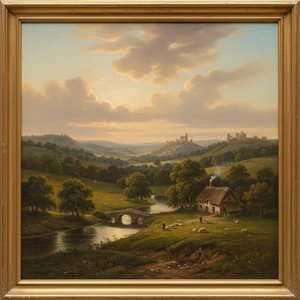
Landscape with a Ruined Tower
 Oil On Canvas
- WallArt
- Romantic Pastoral
 100.0 x 125.0 cm
 Національна Trust
 Читати далі
Гікле / Художній принт
Музейна якість друку جيкле або на полотні з оперативним виготовленням та різноманітними варіантами фінішної обробки. ( Замовити репродукцію ручної роботи Купити цифрове зображення)




P118B $10

P118H $10

P118W $10

P438Z $10

P508JH $12

P508YH $12

P805H $10

P805Z $10

P919BZ $10

P919G $10

P919XJ $10

P959ZH $10

P968JZ $12

W106C $8

W218G $10

W218JH $8

W218Y $10

W307PJ $10

W316G $10

W316PJ $8

W316Y $10

W398PJ $8

W4111J $10

W500HY $15

W500JH $15

W692G $12

W849H $8

W940BG $15

W953PJ $8




Обирайте з наших стандартних розмірів, що відповідають оригінальним пропорціям твору мистецтва.

Ви можете вказати власні розміри, щоб репродукція ідеально підійшла до конкретної рами або інтер'єру. Якщо обраний вами розмір не відповідає пропорціям оригіналу, ми або обріжемо полотно, або розширимо зображення за допомогою дзеркального відображення чи суцільної заливки країв. Перед початком виробництва вам буде надіслано цифровий макет для затвердження.
Будь ласка, зверніть увагу, що попередній перегляд на екрані не відображає фактичне обрізання або розширення. Тільки макет точно покаже фінальну композицію.
Хоча можливість замовлення індивідуальних розмірів доступна, ми рекомендуємо обирати формат із попередньо визначеного списку, щоб зберегти оригінальні пропорції.
Доставка по всьому світу () за 2 тижні замість стандартних 4/5 тижнів. (21 Серпень)

Безкоштовна експрес-доставка по всьому світу

Високоякісне лляне полотно

Повне страхове покриття доставки

Гарантія відшкодування митних зборів

Гарантія точного відтворення кольорів

Політика повернення протягом 60 днів (лише у разі виявлення дефектів)

Гарантія повернення 100% коштів

Пропозиція на оптові замовлення
 Скляний варіант доступний лише для розмірів до 110 см

Landscape with a Ruined Tower
Гікле / Художній принт
Розмір репродукції
-


Підсумкова вартість
$ 80
Опис експоната
George Barret the Elder’s “Landscape with a Ruined Tower”: A Vision of English Pastoral
“Landscape with a Ruined Tower,” painted circa 1762-1784 by George Barret the Elder, is more than just a depiction of a rural scene; it's a carefully constructed meditation on time, memory, and the fading grandeur of the English countryside. Barret, an Irish artist who established himself as a leading figure in London’s art world, masterfully captures a moment suspended between decay and enduring beauty, reflecting the philosophical currents of his era – particularly the influence of Edmund Burke's exploration of the sublime.
The painting immediately draws the eye to the imposing ruin itself: a weathered tower rising from a gently sloping hillside, partially obscured by a dense copse of trees. Its stones, rendered in muted ochres and browns, speak of centuries spent exposed to the elements, hinting at forgotten histories and lost power. The tower isn’t merely a structural element; it's a potent symbol – a visual representation of decline, yet simultaneously imbued with an undeniable sense of solemn dignity. This deliberate juxtaposition is central to Barret’s artistic vision.
A Painterly Echo of Burke’s Sublime
Barret’s approach to landscape painting was profoundly shaped by Edmund Burke's philosophical treatise, *A Philosophical Enquiry into the Origin of Our Ideas of the Sublime and Beautiful*. Burke argued that experiences of awe and terror – what he termed the “sublime” – could be found not just in dramatic events but also in the contemplation of vastness, decay, and solitude. Barret translates this philosophical concept onto canvas with remarkable skill.
Notice how the artist employs atmospheric perspective—the subtle blurring of distant elements to create a sense of depth and recession. The hazy blue sky, punctuated by wisps of cloud, contributes to the painting’s overall mood of melancholy and contemplation. The careful use of light and shadow further emphasizes the tower's weathered state, highlighting its vulnerability against the backdrop of the seemingly eternal landscape. This isn’t a vibrant celebration of nature; it’s an exploration of its quieter, more profound aspects.
Details of Technique and Composition
Barret was initially influenced by engravings of classical Italianate scenes, reworking them with his own distinctive style. The composition is carefully balanced, drawing the eye towards the tower while simultaneously establishing a sense of spaciousness. The placement of the trees, the gentle curve of the hillside, and the distant body of water all contribute to this harmonious arrangement.
The artist’s brushwork is remarkably controlled, particularly in rendering the textures of stone and foliage. He employs a delicate layering technique—thin glazes of paint applied over dry underlayers—to achieve a luminous quality that captures the subtle nuances of light and shadow. The details are meticulously observed, from the individual stones of the tower to the leaves rustling in the breeze. This attention to detail elevates the painting beyond mere representation, transforming it into a carefully considered work of art.
Symbolism and Emotional Resonance
Beyond its technical merits, “Landscape with a Ruined Tower” resonates deeply on an emotional level. The ruined tower evokes a sense of loss—the passing of time, the decline of empires, and the inevitable decay of all things. Yet, it also possesses a certain beauty in its weathered state, suggesting that even in ruin, there is still value to be found.
The painting invites us to contemplate our own mortality and the fleeting nature of existence. It’s a poignant reminder that beauty can be discovered not only in moments of triumph but also in the quiet contemplation of decay. It's a timeless image, speaking to universal themes of memory, loss, and the enduring power of the natural world – making it a compelling subject for collectors and interior designers seeking pieces with depth and emotional resonance.
Біографія митця
George Barret Sr.: Life & Legacy
George Barret Sr., born between 1728 and 1732 in Libertyville, Ireland – the son of a cloth merchant – stands as a pivotal figure in the history of British landscape painting. His artistic journey began humbly, apprenticed initially as a staymaker before an unexpected discovery ignited his passion for drawing, ultimately shaping him into one of the foremost artists of his era and a founding member of the Royal Academy.Early Life and Training
His formative years were marked by disciplined training at Robert West’s Academy in Dublin around 1747, generously supported by the Royal Dublin Society. This institution fostered his burgeoning talent and established him as a skilled draughtsman. Notably, he forged an enduring friendship with Edmund Burke during Burke's time at Trinity College, Dublin – a relationship that would profoundly influence Barret’s artistic sensibilities and later provide crucial assistance. Burke’s philosophical explorations, particularly *A Philosophical Enquiry into the Origin of Our Ideas of the Sublime and Beautiful*, instilled in Barret a deep appreciation for capturing the grandeur and emotional resonance of nature.Early Artistic Development & Influences
Barret's early canvases often mirrored the aesthetic ideals prevalent in classical art – idealized Italianate landscapes populated by mythological figures. He skillfully adapted established styles, primarily reworking engravings of Italian scenes created by artists like Claude Lorrain. Despite his fascination with portraying Italian vistas, there’s no documented evidence that Barret ever undertook a personal voyage to Italy itself. However, he absorbed the spirit of Romanticism through Burke's intellectual pursuits.Move to London and Rise to Prominence
Driven by ambition and seeking greater artistic opportunities, Barret relocated to London in 1762. Almost immediately, he garnered acclaim as a leading landscape artist, attracting considerable patronage from wealthy collectors and securing membership into the Society of Artists of Great Britain. A momentous decision followed in 1768: Barret spearheaded the breakaway movement that established the Royal Academy – an event that irrevocably altered the trajectory of British art history and cemented his legacy as a visionary reformer.Artistic Style and Themes
Barret’s artistic style underwent significant evolution, transitioning from meticulously crafted Italianate landscapes to more expressive depictions of English and Irish scenery. He undertook extensive expeditions across Britain, Wales, Scotland, and Ireland, diligently documenting the breathtaking beauty of diverse terrains. His paintings explored themes of idyllic vistas, picturesque countryside, and dramatic waterfalls – most notably *The Powerscourt Waterfall*, which became an iconic symbol of his artistic prowess. Recurring motifs included figures integrated seamlessly into the landscape, conveying a sense of scale and narrative depth.Later Life & Patronage
Throughout his life, Barret wrestled with health challenges—specifically asthma—which prompted him to relocate to Westbourne Green in 1772 for respite. Despite achieving considerable financial success, he was described as “feckless” with money and occasionally faced difficulties securing funds. Fortunately, Edmund Burke remained a steadfast ally, providing invaluable support both personally and professionally. In 1782, Burke championed Barret’s candidacy for the Master Painter position at Chelsea Hospital – an honor that affirmed his artistic reputation and ensured him a modest pension until his untimely death in 1784. His contribution to British art is undeniable; Barret's paintings continue to inspire admiration and offer invaluable insights into the aesthetic sensibilities of the eighteenth century, residing prominently within collections like the National Gallery of Ireland and Yale Center for British Art.
Джордж Баррет Старший
1732 - 1784 , Ірландія
Короткі факти
- Artistic Movement Or Style: Романтизм
- Artists Or Movements Influenced By This Artist: Клод Лоран
- Artists Who Influenced This Artist: Едмунд Берк
- Date Of Birth: 1732
- Date Of Death: 1784
- Full Name: George Barret Sr.
- Nationality: Ірландія
- Notable Artworks:
- The Powerscourt Waterfall
- A Prospect of Southwick Park
- Llyn Nantlle
- Place Of Birth: Libertyville, Ireland
Пов'язані статті

Топ-25 шедеврів Жоржа Брака: мистецтво кубізму для вашого дому | OriginalUniqueArt
Відкрийте для себе 25 найвідоміших шедеврів Жоржа Брака! Пориньте у світ кубізму, аналізуйте кольори та техніку легендарного французького художника. Репродукції картин Брак для вашого дому – на OriginalUniqueArt.com
George Barret the Elder: Pioneering British Pastoral Painting & Landscape's Rise
Explore the life & art of George Barret Sr., a pioneer of British pastoral painting. Discover his influence on Romantic landscape art, patronage, and collecting tips from OriginalUniqueArt.

25 шедеврів Жоржа Сера: Відкрийте світ точкового малярства | OriginalUniqueArt
Відкрийте світ Жоржа Сера! 25 культових картин імпресіонізму та пуантилізму. Історія мистецтва, унікальні техніки живопису та натхнення для декору вашого дому. Купуйте репродукції картин Сера високої якості на OriginalUniqueArt.com!
Топ-10 шедеврів пейзажу: мистецтво природи в інтер'єрі від OriginalUniqueArt
Відкрийте для себе 10 найвідоміших пейзажів в історії мистецтва! Ван Гог, Моне та інші майстри. Репродукції картин високої якості від OriginalUniqueArt – натхнення для вашого дому. Дослідіть колекцію онлайн!

Idyllic Visions: Exploring the Pastoral Scene in Art History – From Arcadia to Modern Interpretations
Explore the captivating history of pastoral art from classical Arcadia to modern masterpieces. Discover key artists like Millet & Cole at OriginalUniqueArt. Find serene landscape paintings for your home.



