Перейти до друку
 Розгорнути текст







































 Для творів мистецтва або репродукцій, розмір яких перевищує 105 см (приблизно 41 дюйм) з будь-якого боку, рама доставляється у вигляді розібраного комплекту. Такий метод гарантує безпечну доставку та запобігає пошкодженням під час транспортування.


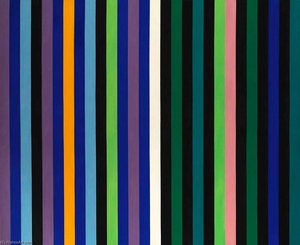
The Red Baron is a striking painting created by Gene Bernard Davis in 1966. This acrylic on canvas piece measures 200 x 103 cm and is a prime example of the artist's unique style, which blends bold colors and geometric shapes to create a visually stunning effect.
The Red Baron is a testament to the enduring power of Color Field art, and its influence can still be seen in contemporary art today. As a masterpiece of American art, it continues to inspire and delight audiences around the world.
Artist Background
Gene Bernard Davis was an American artist known for his contributions to the Color Field movement. His work often featured vertical stripes of color, which gave his paintings a sense of rhythm and energy. The Red Baron is a quintessential example of this style, with its bold red and orange hues evoking a sense of dynamism and movement.Painting Description
The Red Baron features two distinct sections: one predominantly red and the other mostly orange. The red section appears as a solid color, while the orange section has some texture and detail. This contrast between smooth and textured surfaces adds depth to the painting, making it more engaging for the viewer.Museum Collections
The Red Baron is part of the collection at the Smithsonian American Art Museum. You can find more information about this painting and other works by Gene Bernard Davis on the OriginalUniqueArt.com website.- The Red Baron is a significant work in the Gene Bernard Davis oeuvre, showcasing his unique style and contribution to the Color Field movement.
- The painting's bold colors and geometric shapes make it a visually striking piece that continues to captivate audiences today.
- As a leading figure in the Washington Color School, Gene Bernard Davis played an important role in shaping the development of American art in the mid-20th century.
The Red Baron is a testament to the enduring power of Color Field art, and its influence can still be seen in contemporary art today. As a masterpiece of American art, it continues to inspire and delight audiences around the world.
Питання та відповіді
Кольори «Red Baron» роботи Gene Bernard Davis яскраві чи приглушені?
Насиченість кольору у творі "Red Baron" становить Яскравий колір, а його інтенсивність — Яскраві.
«Red Baron» роботи Gene Bernard Davis — це портретна, пейзажна чи квадратна композиція?
«Red Baron» роботи Gene Bernard Davis — це композиція у форматі Панорамний. Перед вибором розміру друку варто перевірити пропорції.
Як у творі «Red Baron» збалансовано світло та тінь?
Зафіксовані значення для «Red Baron» роботи Gene Bernard Davis: яскравість — блискучий, світловий потік — М'яке сяйво.
 Переглянути в інтер'єрі
 Надіслати як листівку
 Поділитися
 Деталі витвору
 Посібник

 Завантажити
 Схожі екземпляри
 Рентгенівське дослідження
 Слайд-шоу
 Питання та відповіді
 Статистика