() ·

A painting made for you, by hand

LA PELEUSE DE POMME

Олійная репродукція ручної роботи

Написана вручну олією на полотні у вашому розмірі та рамі, виготовлена на замовлення нашими художниками. ( Перейти до друку Перейти до цифрових зображень)

Опис експоната

Біографія митця

Відкрийте для себе творчість Габрієля Метсу (1629-1667), нідерландського майстра золотого віку, який славиться своїми жанровими картинами та портретами. Під впливом Рембрандта та Вермеера Метсу закарбовував повсякденне життя з винятковою деталізацією та символізмом.

from ·

Chapter 1

How large should it be?

Slide to change the size; the picture on the left shows the frame at its real width. The proportions of the original are kept.

Стандартний розмір
індивідуальний розмір
CM
INCH

Обирайте з наших стандартних розмірів, що відповідають оригінальним пропорціям твору мистецтва.

ширина
висота

Введіть необхідну ширину та висоту, щоб картина підійшла до вашої рами або стіни. Оскільки це ручний розпис, для зміни пропорцій художник може дописати трохи більше по краях або дещо обрізати композицію — вибір за вами. Перед початком роботи ми надішлемо вам цифровий макет для затвердження. Зображення, показане на цій сторінці, не є реальним результатом — лише макет відображає майбутній вигляд.

Chapter 2

How should it arrive?

Choose the edges of the stretched canvas

Choose your frame

Corner sample of the WhiteWrap canvas edge finish, stretched on масив дерева bars
White ₴1
Corner sample of the BlurSideWrap canvas edge finish, stretched on масив дерева bars
Blurside ₴1
Corner sample of the ExtendedWrap canvas edge finish, stretched on масив дерева bars
Extended ₴1
Corner sample of the P118B picture frame: формований полістирол, 5 cm wide and 3 cm thick
P118B ₴10
Corner sample of the P118H picture frame: формований полістирол, 5 cm wide and 3 cm thick
P118H ₴10
Corner sample of the P118W picture frame: формований полістирол, 5 cm wide and 3 cm thick
P118W ₴10
Corner sample of the P438Z picture frame: формований полістирол, 5.5 cm wide and 3.5 cm thick
P438Z ₴10
Corner sample of the P508JH picture frame: формований полістирол, 7 cm wide and 3.5 cm thick
P508JH ₴12
Corner sample of the P508YH picture frame: формований полістирол, 7 cm wide and 3.5 cm thick
P508YH ₴12
Corner sample of the P805H picture frame: формований полістирол, 5 cm wide and 3.5 cm thick
P805H ₴10
Corner sample of the P805Z picture frame: формований полістирол, 5 cm wide and 3.5 cm thick
P805Z ₴10
Corner sample of the P919BZ picture frame: формований полістирол, 7 cm wide and 3.5 cm thick
P919BZ ₴10
Corner sample of the P919G picture frame: формований полістирол, 7 cm wide and 3.5 cm thick
P919G ₴10
Corner sample of the P919XJ picture frame: формований полістирол, 7 cm wide and 3.5 cm thick
P919XJ ₴10
Corner sample of the P959ZH picture frame: формований полістирол, 5 cm wide and 3 cm thick
P959ZH ₴10
Corner sample of the P968JZ picture frame: формований полістирол, 6 cm wide and 4 cm thick
P968JZ ₴12
Corner sample of the W106C picture frame: масив дерева, 5 cm wide and 3 cm thick
W106C ₴8
Corner sample of the W218G picture frame: масив дерева, 5 cm wide and 3 cm thick
W218G ₴10
Corner sample of the W218JH picture frame: масив дерева, 5 cm wide and 3 cm thick
W218JH ₴8
Corner sample of the W218Y picture frame: масив дерева, 5 cm wide and 3 cm thick
W218Y ₴10
Corner sample of the W307PJ picture frame: масив дерева, 6 cm wide and 3 cm thick
W307PJ ₴10
Corner sample of the W316G picture frame: масив дерева, 6 cm wide and 3 cm thick
W316G ₴10
Corner sample of the W316PJ picture frame: масив дерева, 6 cm wide and 3 cm thick
W316PJ ₴8
Corner sample of the W316Y picture frame: масив дерева, 6 cm wide and 3 cm thick
W316Y ₴10
Corner sample of the W398PJ picture frame: масив дерева, 5 cm wide and 3 cm thick
W398PJ ₴8
Corner sample of the W4111J picture frame: масив дерева, 6.5 cm wide and 3.5 cm thick
W4111J ₴10
Corner sample of the W500HY picture frame: масив дерева, 7 cm wide and 5 cm thick
W500HY ₴15
Corner sample of the W500JH picture frame: масив дерева, 7 cm wide and 5 cm thick
W500JH ₴15
Corner sample of the W692G picture frame: масив дерева, 8 cm wide and 4 cm thick
W692G ₴12
Corner sample of the W849H picture frame: масив дерева, 5 cm wide and 3 cm thick
W849H ₴8
Corner sample of the W940BG picture frame: масив дерева, 7.5 cm wide and 4.5 cm thick
W940BG ₴15
Corner sample of the W953PJ picture frame: масив дерева, 6 cm wide and 3.5 cm thick
W953PJ ₴8
Corner sample of the H24-GOLD picture frame: різьблене дерево з левкасом, 10 cm wide and 6 cm thick
H24-GOLD ₴30
Corner sample of the H24-SILVER picture frame: різьблене дерево з левкасом, 10 cm wide and 6 cm thick
H24-SILVER ₴30
Corner sample of the H36-GOLD picture frame: різьблене дерево з левкасом, 15 cm wide and 6.5 cm thick
H36-GOLD ₴45
Corner sample of the H36-SILVER picture frame: різьблене дерево з левкасом, 15 cm wide and 6.5 cm thick
H36-SILVER ₴45

Moulding: . Overall size with the frame: .

Chapter 3

Who paints it, and should anything change?

Examples of what can be changed: Replace face with customer photo; Add pet (e.g., replace cat with dog); Include hidden message in background; Change background landscape or elements.
After order, OriginalUniqueArt.com team will email client for instructions and provide a mockup preview

Доставка по всьому світу () за 3–4 тижні замість стандартних 5 тижнів. (1 Листопад). Без жодних компромісів у якості.

Chapter 4

The finishing touches

A nameplate, as in a museum?

Деталі гравірування на бронзовій табличці

This elegant plaque features the artist's name and the title of the artwork, finely engraved for a timeless presentation.

It is made from bronze with a refined, elegant finish. The text is precisely laser-engraved for a sharp and permanent result. Measuring 9x2 cm, the plaque is compact yet easy to read. It's built to be durable and scratch-resistant, offering a professional, museum-quality look. Mounting is simple thanks to the included adhesive backing.

Деталі прозорої акрилової таблички

The plaque includes essential engraved details such as the artist's name, the title of the artwork, the date it was created, the type of media used-like oil on canvas or watercolor-a brief description of the piece, and a QR code that links to the complete artwork information.

It is crafted from clear acrylic, offering a sleek, modern appearance. The text is UV-engraved in black to ensure strong visual contrast. With a size of 10x15 cm, it ensures optimal readability. It comes equipped with two metal hooks for secure wall mounting. The plaque is designed to be weather-resistant, making it suitable for various environments, and it includes interactive features that work seamlessly with smartphone scanning.

Деталі чорної акрилової таблички

This elegant plaque includes engraved information such as the artist's name, the title of the artwork, the date it was created, the type of media used (like oil on canvas or watercolor), a short description of the artwork, and a QR code for quick access to more information.

The plaque itself is made from refined black acrylic with a premium finish. The text is laser-engraved in white for high contrast and readability. Its size is 10x15 cm, designed to be easy to read. It comes with two metal hooks for professional mounting. The design is sleek and fits any interior style. It is also weather-resistant and durable, with built-in digital integration for mobile compatibility.

A protective varnish?

When do you need it?

Chapter 5

Your painting, as you ordered it

LA PELEUSE DE POMME

Матеріал репродукції

Розмір репродукції

-

Видатний майстер-художник

Більше деталізації, витонченості та додаткового часу на створення твору

-

Рама для репродукції

-

-

Для творів мистецтва або репродукцій, розмір яких перевищує 105 см (приблизно 41 дюйм) з будь-якого боку, рама доставляється у вигляді розібраного комплекту. Такий метод гарантує безпечну доставку та запобігає пошкодженням під час транспортування.

Потребує професійного збирання — це не продукт для самостійного виготовлення (DIY).
Комплект має бути зібраний, а полотно натягнуте досвідченим майстром багетних робіт із використанням клейового дерева (не входить у комплект), щипців для натягування полотна та затискачів, щоб підрамник залишався рівним під час висихання клею. Неправильне збирання або нерівномірне натягування полотна може призвести до незворотного пошкодження твору мистецтва, що не підпадає під дію нашої гарантії.

  • У комплект входять усі бруски з цільного дерева, точно вирізані за розміром.

  • Збирається за допомогою гвинтів, що входять до комплекту, а також клейового розчину для кутових з'єднань, який не входить до комплекту і має бути підготовлений вашим майстром.

  • Потрібні професійні інструменти, які не входять до комплекту: щипці для натягування полотна (натягувач) та затискачі, щоб утримувати рейки рівно під час висихання клею.

Важливо:
Для з'єднання кутів потрібен клей для дерева, перекладини необхідно затиснути струбцинами до повного висихання клею, а для натягування полотна на зібрану раму знадобляться щипці для натягування полотна. Жоден із цих інструментів не входить до комплекту. Будь ласка, проконсультуйтеся з досвідченим майстром багетного оформлення перед замовленням рами такого розміру.

Етикетка експоната

-

-

Захисний лак

Глянцевий лак (підсилює яскравість кольорів, захищає від світла та вологи)

-

Персоналізувати мій витвір

Приклади можливих змін: заміна обличчя на фото клієнта; додавання домашньої тварини (наприклад, заміна кота на собаку); додавання прихованого повідомлення на фоні; зміна пейзажу або елементів фону.

-

Прискорено

Доставка по всьому світу () за 3–4 тижні замість стандартних 5 тижнів. (1 Листопад). Без компромісів у якості.

-

Експрес-доставка

Доставка по всьому світу () протягом 5 тижнів. (8 Листопад).

Включено в ціну

Підсумкова вартість

₴ 13486

Загальна вартість ₴ 13486

Скляний варіант доступний лише для розмірів до 110 см

Included with every order

  • Безкоштовна експрес-доставка по всьому світу
  • Високоякісне лляне полотно
  • Повне страхове покриття доставки
  • Гарантія повернення митних зборів
  • Гарантія точного відтворення кольорів
  • Політика повернення протягом 100 днів (лише у разі виявлення дефектів)
  • Гарантія повернення 100% коштів
  • Пропозиція на оптові замовлення

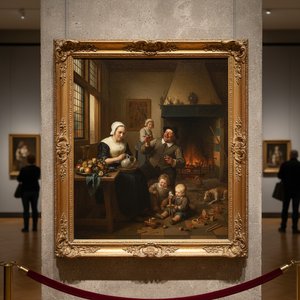
LA PELEUSE DE POMME: A Snapshot of Dutch Domestic Tranquility

Gabriel Metsu’s “La Peleuse de Pomme,” painted circa 1660, stands as a quintessential example of Dutch Golden Age genre painting—a movement dedicated to portraying scenes from everyday life with remarkable accuracy and subtle psychological depth. More than just a depiction of an apple peeling ritual, this artwork encapsulates the values of industriousness, domestic harmony, and quiet contemplation that defined the era’s artistic sensibilities.

  • Composition & Perspective: The painting's central focus—a woman meticulously removing the skin from an apple—is framed within a deliberately flattened perspective. This stylistic choice eschews dramatic spatial illusion, prioritizing clarity of form and conveying a sense of immediacy, mirroring how artists aimed to capture reality as it unfolded.
  • Color Palette & Light: Metsu employs a restrained color palette dominated by earthy hues – reds reflecting the apple’s flesh, greens hinting at foliage, browns grounding the scene in natural materials, and creams illuminating the woman's complexion. Soft, diffused light emanating from an unseen window casts gentle shadows, enhancing the realism of the composition and fostering an atmosphere of serene stillness.
  • Technique & Texture: Metsu’s masterful brushwork contributes significantly to the artwork’s textural richness. Delicate strokes define the contours of the woman's clothing and face, while thicker impasto creates a palpable surface quality for the basket weave and apple skin—a testament to his meticulous attention to detail.

Historical Context & Artistic Influences

Painted during the height of the Dutch Golden Age (approximately 1640-1700), “La Peleuse de Pomme” reflects a broader artistic preoccupation with capturing the nuances of human experience within familiar surroundings. Metsu’s work draws inspiration from Nicolaes Maes, a fellow painter known for his similarly realistic depictions of domestic interiors and portraits. This stylistic convergence underscores the prevailing artistic conventions of the period—a commitment to portraying believable figures and environments against muted backgrounds.

Symbolism & Emotional Resonance

Beyond its visual realism, “La Peleuse de Pomme” carries symbolic weight. The apple itself represents abundance and nourishment – a tangible reminder of the fruits of labor and the comforts of home. Simultaneously, the woman’s focused activity embodies industriousness and self-sufficiency—values highly esteemed in Dutch society during this era. Ultimately, Metsu's painting evokes a feeling of quiet contentment and contemplative observation, inviting viewers to appreciate the beauty found within the commonplace.

Gabriel Metsu: A Master of Genre Painting

Gabriel Metsu (1629-1667) remains an enigmatic figure in Dutch art history. Despite producing relatively few paintings—only 14 survive—Metsu’s oeuvre demonstrates unparalleled skill in capturing psychological realism and conveying subtle emotional nuances. His dedication to meticulous observation and masterful technique cemented his place as one of the most influential artists of his time, ensuring “La Peleuse de Pomme” continues to resonate with audiences today.

Питання та відповіді

Яка частина дому найкраще підійде для репродукції «LA PELEUSE DE POMME»?

Репродукція «LA PELEUSE DE POMME» чудово підійде для Living Room.

Яка насиченість кольорів у творі «LA PELEUSE DE POMME» роботи Габріель Метсу?

Насиченість кольорів у творі «LA PELEUSE DE POMME» — Balanced. Насиченість описує, наскільки яскравими та виразними є кольори.

Що зображено на творі «LA PELEUSE DE POMME» роботи Габріель Метсу?

«LA PELEUSE DE POMME» роботи Габріель Метсу зображує: domestic scene, apple peeling, genre painting, still life composition, dutch art, quiet observation, fruit basket.

More about this painting

Переглянути в інтер'єрі Перегляд в AR Перейти до друку Перейти до цифрових зображень Надіслати як листівку
Деталі витвору Посібник Додати до улюблених Завантажити Схожі екземпляри Рентгенівське дослідження Слайд-шоу Q&A Статистика

In numbers

  • 29frames to choose from
  • standard sizes, in its own proportions
  • 5weeks to paint and deliver it
Габріель Метсу

Габріель Метсу

1629 - 1667, Нідерланди

Quick facts about Габріель Метсу

  • Artistic Movement Or Style: Голландська золота доба
  • Artists Or Movements Influenced By This Artist: ['Геррит Доу']
  • Artists Who Influenced This Artist:
    • Рембрандт ван Рійн
    • Йоганнес Вермер
  • Date Of Birth: 1629
  • Date Of Death: 1667
  • Full Name: Gabriel Metsu
  • Nationality: Нідерландський
  • Notable Artworks:
    • Художник відвідує дім
    • Ярмарок птиць
    • Портрет сім'ї Хінлопен
  • Place Of Birth: Leiden, Netherlands

Біографія митця

Gabriel Metsu – A Life of Artistic Exploration

Gabriel Metsu (1629–1667) stands as a singular figure within the Dutch Golden Age, celebrated for his masterful depictions of domestic interiors and genre scenes imbued with subtle symbolism. His oeuvre—a mere handful of paintings compared to contemporaries like Rembrandt and Vermeer—holds an extraordinary power due to its meticulous observation of everyday life and its profound engagement with humanist ideals. This biography delves into Metsu’s formative years, artistic influences, prolific career, and enduring legacy, illuminating the complexities of a creative spirit that defied easy categorization.

Early Life and Influences

Born in Leiden around November 27 or mid-December 1629, Gabriel Metsu descended from a lineage steeped in artistic tradition. His father, Jacques Metsu (c. 1588–1629), was a tapestry weaver and painter originally hailing from Hainault—a region renowned for its textile craftsmanship and artistic patronage. While Jacques’s output remains elusive to scholars, his involvement in the visual arts undoubtedly instilled in Gabriel an early appreciation for diverse techniques and aesthetic sensibilities. The Metsu family's relocation to Leiden exposed young Gabriel to a vibrant cultural milieu characterized by burgeoning intellectual discourse and artistic experimentation. Notably, his stepfather, Cornelis Bontecraey (d. 1649), was a skipper—a profession that afforded him considerable financial stability and facilitated access to broader horizons beyond Leiden’s confines. Jacquemijntje Garniers, Gabriel's mother, was a midwife—a role reflecting the social realities of the time and hinting at an upbringing marked by practicality alongside artistic awareness.

Artistic Training and Style

Metsu’s artistic training remains shrouded in mystery, hampered by the scarcity of biographical information and the deliberate omission of dates from his paintings. Despite speculation regarding potential connections with Gerrit Dou—a fellow Leiden painter—evidence supporting this claim is scant. However, prevailing scholarly consensus points to Claes Pietersz. de Grebber (1590–1650), a Haarlem silversmith and prominent artist, as Metsu’s primary instructor. De Grebber's influence on Metsu’s early style—particularly his penchant for luminous chiaroscuro—is undeniable, mirroring the stylistic innovations championed by Rembrandt van Rijn during his formative years. Furthermore, Metsu’s apprenticeship with Antonie Claesz de Grebber—Gerrit’s son—reinforced this connection to Haarlem’s artistic elite and solidified Metsu's commitment to mastering foundational drawing skills. The Guild of Saint Luke in Leiden recognized Metsu’s talent early on, registering him as a member in 1648—a pivotal moment signifying his acceptance into the established artistic community and affirming his dedication to upholding professional standards.

Notable Works and Artistic Innovations

Metsu's distinctive style—characterized by its understated elegance and meticulous attention to detail—established him as one of the foremost practitioners of genre painting during the Dutch Golden Age. Unlike Rembrandt’s dramatic theatricality or Vermeer’s serene idealism, Metsu eschewed grand narratives in favor of intimate portrayals of domestic life, capturing fleeting moments of human emotion with remarkable sensitivity. His canvases frequently depict young women engaged in commonplace activities—such as sewing or reading—often framed within windows that serve as symbolic portals to the outside world. Recurring motifs—including poultry sellers and market scenes—reflect Metsu’s fascination with emblems—visual symbols conveying moral lessons and philosophical concepts—a hallmark of humanist thought prevalent during his era. Among Metsu's most celebrated achievements are *The Sick Child* (c. 1664–66), a poignant depiction of maternal tenderness that draws inspiration from Vermeer’s masterful use of light and color; *Portrait of the Hinlopen Family*, a masterpiece blending genre conventions with portraiture—demonstrating Metsu's ability to synthesize diverse artistic influences into a cohesive visual idiom; and *A Visit to the Nursery*, which exemplifies his meticulous observation of domestic interiors and his skillful rendering of naturalistic textures.

Legacy and Influence

Gabriel Metsu’s oeuvre—though comparatively modest in size—commands considerable admiration among art historians and collectors alike. His unwavering dedication to capturing the subtleties of human experience—coupled with his masterful command of technique—solidified his reputation as a visionary artist who transcended stylistic boundaries. Metsu's influence extended beyond his immediate contemporaries, inspiring subsequent generations of painters—including Pieter de Hooch—who embraced similar aesthetic principles and compositional strategies. Today, Metsu’s paintings reside in prestigious museums across Europe—most notably the Rijksmuseum in Amsterdam—where they continue to captivate audiences with their timeless beauty and profound psychological insight. His legacy serves as a reminder that artistic excellence can flourish even amidst stylistic diversity—and that true artistry resides not merely in grand gestures but in the quiet contemplation of everyday life.

Основна інформація

  • Medium: Oil on canvas
  • Year: circa 1660
  • Title: La Peleuse de pommes
  • Artist: Gabriel Metsu
  • Notable elements or techniques: Layered brushwork; Soft lighting; Realistic depiction

Квіз про мистецтво

У кожному запитанні лише одна правильна відповідь.

Запитання 1:
What artistic movement is LA PELEUSE DE POMME primarily associated with?
Запитання 2:
The painting depicts a woman engaged in what activity?
Запитання 3:
What is the dominant color palette of LA PELEUSE DE POMME?
Запитання 4:
How does Metsu utilize lighting in the artwork to create depth?
Запитання 5:
What stylistic characteristic is evident in Metsu's depiction of the woman’s clothing?