Меню
БЕЗКОШТОВНА КОНСУЛЬТАЦІЯ З МИСТЕЦТВА
Переглянути в інтер'єріПереглянути в інтер'єрі Примірка в ARПримірка в AR Перейти до друку Перейти до друкуПерейти до зображення Перейти до зображення НадіслатиНадіслати
ДеталіДеталі Додати до улюблених Додати до улюблених ЗавантажитиЗавантажити Схожі експонатиСхожі експонати Рентгенівське дослідженняРентгенівське дослідження Слайд-шоуСлайд-шоу

Salome

Franz Ritter von Stuck's "Salome" (1906) depicts a captivating dance of desire and tragedy, blending Symbolism with biblical drama. Explore the haunting beauty & dark narrative of this iconic masterpiece.

Франц Шток – німецький символістський живописець та скульптор, відомий своїми ефектними міфологічними сценами, вражаючими скульптурами та ключовою роллю в Мульницькому сецесії. Його творчість поєднує класичну точність з мрійливою образністю та досліджує теми гріха, краси та підсвідомого.

Олійная репродукція ручної роботи

Написана вручну олією на полотні у вашому розмірі та рамі, виготовлена на замовлення нашими художниками. (Перейти до друку Перейти до друкуПерейти до зображення Перейти до зображення)

P118B $10
P118H $10
P118W $10
P438Z $10
P508JH $12
P508YH $12
P805H $10
P805Z $10
P919BZ $10
P919G $10
P919XJ $10
P959ZH $10
P968JZ $12
W106C $8
W218G $10
W218JH $8
W218Y $10
W307PJ $10
W316G $10
W316PJ $8
W316Y $10
W398PJ $8
W4111J $10
W500HY $15
W500JH $15
W692G $12
W849H $8
W940BG $15
W953PJ $8

Standard
custom
CM
INCH

Обирайте з наших стандартних розмірів, що відповідають оригінальним пропорціям твору мистецтва.

ширина
висота

Ви можете вказати власні розміри, щоб репродукція ідеально підійшла до конкретної рами або інтер'єру. Якщо вибраний вами розмір не відповідає пропорціям оригіналу, ми або обріжемо полотно, або доповнимо картину додатковими елементами, промальованими вручну. Цифровий макет буде надіслано вам на затвердження перед початком виробництва.
Зверніть увагу, що попередній перегляд на екрані не відображає фактичне обрізання або розширення зображення. Тільки макет точно покаже остаточну композицію.
Хоча ми можемо виготовити виріб у нестандартному розмірі, для збереження оригінальних пропорцій рекомендуємо обирати варіанти зі встановленого списку.

Приклади можливих змін: замінити обличчя на фото клієнта; додати домашню тварину (наприклад, замінити кота на собаку); додати приховане повідомлення на фоні; змінити ландшафт або елементи фону.
Після оформлення замовлення команда OriginalUniqueArt.com зв'яжеться з клієнтом електронною поштою для отримання інструкцій та надасть попередній макет

Доставка по всьому світу () за 3–4 тижні замість стандартних 5 тижнів. (11 Серпень). Без жодних компромісів у якості.

why_choose_icon
Безкоштовна експрес-доставка по всьому світу
why_choose_icon
Високоякісне лляне полотно
why_choose_icon
Повне страхове покриття доставки
why_choose_icon
Гарантія відшкодування митних зборів
why_choose_icon
Гарантія точного відтворення кольорів
why_choose_icon
Політика повернення протягом 60 днів (лише у разі виявлення дефектів)
why_choose_icon
Гарантія повернення 100% коштів
why_choose_icon
Знижка на оптові замовлення

Загальна вартість

$ 300

reproduction

Salome

Техніка репродукції

Розмір репродукції

-

Загальна вартість

$ 300

Короткі факти

  • Title: Salome
  • Movement: Symbolism
  • Influences: Arnold Böcklin
  • Dimensions: 92 x 114 cm
  • Notable elements: Dancer, severed head
  • Artistic style: Mythological, Dramatic
  • Year: 1906

Тест зі знань мистецтва

У кожному запитанні лише одна правильна відповідь.

Запитання 1:
What biblical event is depicted in Franz Ritter von Stuck’s ‘Salome’?
Запитання 2:
Which artistic movement is most closely associated with Franz Ritter von Stuck’s style?
Запитання 3:
What is the primary symbolic element present in the painting’s composition?
Запитання 4:
In what year was Franz Ritter von Stuck’s ‘Salome’ painted?
Запитання 5:
What is the significance of the platter presented by the servant in the painting?

Опис твору

The Enigmatic Dance: Unveiling Franz Ritter von Stuck’s “Salome”

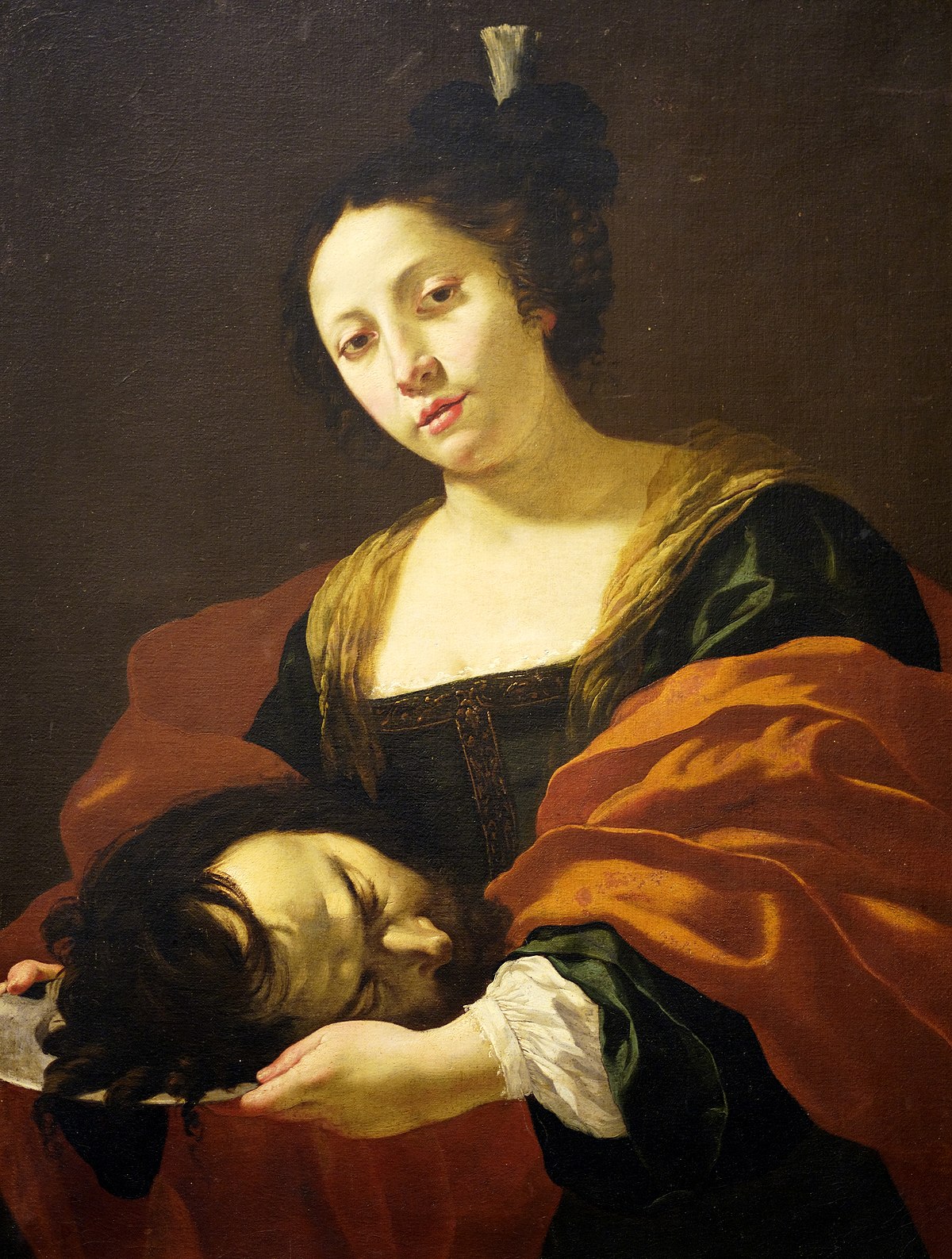
Franz Ritter von Stuck's 1906 painting, "Salome," is not merely a depiction of a biblical episode; it’s a profoundly unsettling and intensely symbolic exploration of desire, power, and the dark undercurrents of human nature. Emerging from the fertile ground of German Symbolism, Stuck masterfully blends classical precision with the dreamlike logic of the subconscious, creating an image that continues to captivate and disturb over a century later. The painting’s immediate impact lies in its dramatic composition – a carefully orchestrated tableau of figures poised on the precipice of violence and obsession. The scene unfolds within a shadowy, almost claustrophobic space, dominated by a towering, ornate architecture suggesting both opulence and impending doom. This isn't a straightforward narrative; it’s an atmosphere saturated with tension, inviting viewers to contemplate the motivations and fates of those involved.
Salome by Franz Ritter von Stuck

A Symphony of Contrasts: Style, Technique, and Materiality

Stuck’s artistic style is immediately recognizable as a potent blend of Symbolism and Art Nouveau influences. The painting showcases his signature use of rich, jewel-toned colors – deep reds, emerald greens, and shimmering golds – applied with meticulous detail to create an opulent yet unsettling effect. His brushwork is deliberately expressive, employing visible strokes that contribute to the overall sense of drama and movement. Notice particularly the way he renders the textures: the velvet drapery, the polished surfaces of the architecture, and even the glistening skin of Salome herself – all are rendered with a tactile quality that draws the viewer into the scene. The painting was executed in oil on canvas, a medium that allowed Stuck to achieve both luminous color saturation and remarkable textural detail. The use of chiaroscuro—the dramatic contrast between light and shadow—further intensifies the emotional impact, highlighting key figures and obscuring others in an atmosphere of mystery and foreboding.

The Narrative Unfolds: Biblical Context and Symbolism

At its core, “Salome” depicts a pivotal moment from the New Testament – the fulfillment of Herodias’s vengeful plot against John the Baptist. However, Stuck doesn't offer a simple retelling of the story; instead, he delves into the psychological complexities of the characters and imbues the scene with layers of symbolic meaning. Salome herself is not portrayed as a seductive temptress but rather as a figure caught in a web of manipulation and driven by a primal desire for power. The presence of the dark servant, clutching John’s severed head on a platter, introduces an element of grotesque horror – a stark reminder of the brutal consequences of unchecked ambition. The architecture—a blend of Romanesque and Byzantine styles—suggests both grandeur and decay, mirroring the moral corruption at the heart of the narrative. The star-studded night sky serves as a backdrop to this drama, hinting at a realm beyond earthly concerns and perhaps suggesting a connection between life and death.

A “Prince of Art”: Stuck’s Legacy and Artistic Significance

Franz Ritter von Stuck was more than just an artist; he was a cultural phenomenon. Nicknamed the "Prince of Art" during his lifetime, he bridged the gap between academic tradition and the burgeoning currents of modernism. His work explored themes of sin, beauty, and the subconscious with a boldness and emotional intensity that resonated deeply with audiences at the turn of the 20th century. Villa Stuck, his own architectural masterpiece in Munich, stands as a testament to his artistic vision—a lavishly decorated space filled with sculptures, paintings, and intricate details reflecting his fascination with mythology, symbolism, and the darker aspects of human experience. “Salome” is arguably one of his most enduring works, demonstrating his mastery of dramatic composition, evocative color palettes, and profound psychological insight. It remains a powerful and unsettling image that continues to provoke discussion and inspire interpretation.


Біографія митця

A Life Steeped in Myth and Symbol

Franz Ritter von Stuck, a name that echoes through the halls of German art history, was more than just an artist; he was a cultural phenomenon, a “Prince of Art” as he was affectionately known during his lifetime. Born in 1863 in the tranquil Bavarian village of Tettenweis, nestled amidst rolling hills and ancient forests, Stuck’s journey began far from the bustling studios of Munich, yet it would ultimately lead him to become one of the most influential figures of the Symbolist movement. Initially destined for a life following his father as a forester – a path of quiet rural existence – young Franz possessed an undeniable artistic spark that refused to be contained within the boundaries of tradition. This innate inclination manifested early on, with a fascination for drawing and caricature, capturing the quirks and personalities of his local community. It was this nascent talent that ultimately steered him towards Munich, where he first enrolled at the School of Applied Arts in 1878 and later, from 1882 to 1884, at the prestigious Academy of Fine Arts, profoundly influenced by the hauntingly beautiful mythological scenes created by Arnold Böcklin – a formative encounter that would shape his artistic vision for years to come. Stuck’s story is not simply one of an artist's development; it’s a testament to the transformative power of pursuing one’s passion and defying expectations.

The Rise of a Symbolist Master

Stuck’s ascent to prominence was remarkably swift, almost startling in its speed. His breakthrough arrived in 1889 with *The Guardian of Paradise*, an arresting painting exhibited at the Munich Glass Palace. The work immediately captivated critics and audiences alike, earning him a gold medal and establishing him as a rising star within the art world. *The Guardian of Paradise* wasn’t merely a technically proficient artwork; it was a declaration – a bold announcement of a new artistic voice, one that seamlessly blended the precision and formality of classical tradition with the evocative mystery and emotional depth characteristic of Symbolism. He quickly became a central figure in challenging the established norms of the art establishment, co-founding the Munich Secession in 1892 alongside like-minded artists who sought to break free from the constraints of academic conservatism and champion the possibilities of modern art. This act of artistic rebellion coincided with his exploration into sculpture, culminating in *Athlete* (1892), a striking bronze figure that demonstrated his remarkable versatility as an artist. However, it was *The Sin* (1893) – a dramatic portrayal of temptation and desire – that truly cemented his reputation as a master of Symbolist painting, captivating audiences with its intense emotionality and psychological complexity. This period marked the full flowering of Stuck’s unique style—a potent combination of sensuality, classical form, and symbolic resonance, a visual language that would define his artistic legacy.

Themes and Influences: A World of Desire and Myth

The artistic universe of Franz von Stuck is profoundly shaped by recurring motifs and themes, revealing his deep engagement with timeless concepts and narratives. Mythology served as an enduring source of inspiration, drawing upon the rich tapestry of Greek, Roman, and biblical stories – tales that he reimagined with a distinctly personal flair and imbued with a sense of potent symbolism. These weren’t mere retellings; they were explorations of the human condition filtered through the lens of ancient myths, offering profound insights into our desires, fears, and moral dilemmas. Equally prominent was his fascination with sensuality and the *femme fatale* – the alluring yet dangerous woman—powerfully embodied in his numerous depictions of Salome. These paintings weren’t simply about physical beauty; they delved into the psychological complexities of female power, its potential for both allure and destruction, and the inherent ambiguity of desire itself. Underlying all these elements was a deep reverence for classical art, evident in his meticulous technique, anatomical accuracy, and compositional rigor—a testament to his formal training and his commitment to mastering the traditions of the past. Beyond Arnold Böcklin, Stuck acknowledged influences from the Pre-Raphaelites and Gustave Moreau, artists who similarly explored themes of mythology, symbolism, and emotional intensity. However, he wasn’t merely an imitator; he synthesized these diverse influences into something uniquely his own, forging a distinctive artistic style that resonated with a generation seeking to break free from the confines of academic tradition.

Major Works and Enduring Significance

Throughout his prolific career, Franz von Stuck produced a remarkable body of work—a testament to his versatility and creative vision. Some of his most celebrated pieces include:
  • The Spring (1886): A vibrant depiction showcasing his early mastery of color and composition, capturing the exuberance of nature and the promise of renewal.
  • Dissonance (1893): An unsettling portrayal embodying emotional turmoil through a woman playing the violin—a poignant exploration of inner conflict and artistic expression.
  • Salome (various versions): Perhaps his most iconic work, depicting the biblical story with striking sensuality and psychological depth, capturing the allure and danger inherent in forbidden desire.
  • Athlete (1892): A powerful sculpture demonstrating his skill in three-dimensional form—a dynamic representation of human strength and athleticism.
Beyond these individual masterpieces, Stuck’s influence extended to numerous other works, including decorative panels, illustrations, and architectural designs for the Villa Stuck – a stunning example of Art Nouveau architecture that further showcased his artistic versatility. His legacy is not confined to his paintings and sculptures; it lives on through the countless artists he inspired—a testament to his profound impact on the development of modern art.

A Knight of Bavaria

In 1905, Franz Ritter von Stuck received a significant honor – being ennobled by the Bavarian Crown, becoming “Ritter von Stuck” (Knight of Stuck). This recognition reflected not only his artistic achievements but also his contributions to German culture and society. He continued to teach at the Munich Academy, guiding the next generation of artists—including Paul Klee, Wassily Kandinsky, and Josef Albers—and remained a prominent figure in the art world until his death in 1928. His funeral address described him as “the last prince of art of Munich’s great days,” encapsulating his enduring legacy as a visionary artist who shaped the course of German art history. Franz von Stuck's work continues to be exhibited and studied today, reminding us of the power of art to evoke emotion, explore complex themes, and transcend time.
Франц Рітер фон Шток

Франц Рітер фон Шток

1863 - 1928 , Німеччина

Досьє митця

  • Artistic Movement Or Style: Символізм, Ар-нуво
  • Artists Or Movements Influenced By This Artist:
    • Пауль Клі
    • Ван Гог
  • Artists Who Influenced This Artist:
    • Арнольд Бёклін
    • Прерафаеліти
    • Жуль Гумінтер
  • Date Of Birth: 23 лютий 1863
  • Date Of Death: 30 серпень 1928
  • Full Name: Franz Ritter von Stuck
  • Nationality: Німецький
  • Notable Artworks:
    • «Охоронник раю»
    • «Саломея»
    • Грішниця»
  • Place Of Birth: Теттенвей, Німеччина