
 Переглянути в інтер'єрі
 Надіслати як листівку
 Поділитися
 Деталі витвору
 Посібник

 Завантажити
 Схожі екземпляри
 Рентгенівське дослідження
 Слайд-шоу
 Питання та відповіді
 Статистика
Fighting Centaurs


 Розгорнути текст
Гікле / Художній принт
Друк جيкле або на полотні музейної якості з оперативним виготовленням та різноманітними варіантами фінішної обробки. ( Замовити картину ручної роботи Перейти до цифрових зображень)




































Обирайте з наших стандартних розмірів, що відповідають оригінальним пропорціям твору мистецтва.

Введіть необхідну ширину та висоту, щоб принт ідеально підійшов до вашої рами або стіни. Принт можна лише обрізати, але не можна зробити більшим за оригінал, тому при зміні пропорцій частина зображення буде втрачена. Перед друком ми надсилаємо вам цифровий макет для затвердження. Зображення на цій сторінці не відображає реальну обрізку — її можна побачити лише на макеті.
Доставка по всьому світу () за 2 тижні замість стандартних 4/5 тижнів. (11 Листопад)

Безкоштовна експрес-доставка по всьому світу

Високоякісне лляне полотно

Повне страхове покриття доставки

Гарантія повернення митних зборів

Гарантія точного відтворення кольорів

Політика повернення протягом 100 днів (лише у разі виявлення дефектів)

Гарантія повернення 100% коштів

Пропозиція на оптові замовлення
 Скляний варіант доступний лише для розмірів до 110 см

Fighting Centaurs
Гікле / Художній принт
Розмір репродукції
-


Підсумкова вартість
₴ 3653
Fighting Centaurs: A Symbolist Masterpiece by Franz von Stuck
Franz Von Stuck's "Fighting Centaurs," created in 1894, stands as a powerful example of Symbolism and Mythology within the late 19th-century art world. Housed at the Stadelsches Kunstinstitut in Frankfurt, Germany, this oil on canvas artwork depicts a fierce battle between two centaurs, showcasing Stuck's exceptional ability to convey intense emotion and dramatic tension through his artistic skill.
Composition and Artistic Technique
The painting’s composition is dynamic and deliberately unbalanced, immediately drawing the viewer into the heart of the conflict. The centaurs are positioned in a circular motion, creating a palpable sense of energy and struggle. Stuck masterfully employs chiaroscuro – the dramatic use of light and shadow – to accentuate the musculature of the figures and heighten the overall emotional impact. His technique blends elements of Realism with fantastical imagery, grounding the mythological subject matter in a tangible physicality. The brushstrokes are loose yet deliberate, contributing to the raw energy and visceral nature of the scene. The use of oil paints on canvas allows for rich textures and subtle gradations of color, further enhancing the painting's depth and complexity.
Symbolism and Interpretation
Beyond its immediate depiction of a battle, "Fighting Centaurs" is laden with symbolic meaning. The centaur itself – a creature embodying both human intellect (the torso) and animal instinct (the horse body) – represents the eternal struggle between reason and primal urges. The violent clash between these two figures can be interpreted as an allegory for internal conflicts, societal tensions, or even the broader battle between opposing forces in the universe. The dark, earthy tones used throughout the painting contribute to a brooding atmosphere, suggesting themes of chaos, power, and perhaps the darker aspects of human nature. Key Features contributing to this symbolism include:
- The dynamic composition emphasizing conflict
- The use of chiaroscuro for dramatic effect
- Intricate textures highlighting physicality
Historical Context and Artistic Influences
Created during the Symbolist movement, "Fighting Centaurs" reflects a broader artistic trend away from purely representational art towards exploring subjective emotions, spiritual themes, and mythological narratives. Stuck was significantly influenced by classical sculpture and Renaissance masters, evident in his attention to anatomical detail and dramatic poses. His work also aligns with the fin de siècle aesthetic—a period characterized by decadence, introspection, and a fascination with the darker aspects of human experience. Stuck's co-founding of the Munich Secession further demonstrates his commitment to artistic innovation and challenging conventional norms.
Emotional Impact and Legacy
"Fighting Centaurs" evokes a powerful emotional response in viewers. The raw energy, intense struggle, and underlying symbolism create a sense of unease and fascination. The painting’s enduring appeal lies in its ability to tap into universal themes of conflict, power, and the human condition. It remains a significant work within Franz von Stuck's oeuvre and a compelling example of Symbolist art, continuing to inspire artists and captivate audiences today.
Питання та відповіді
Де я можу знайти твори мистецтва, схожі на «Fighting Centaurs» роботи Франц Рітер фон Шток?
Схожі роботи до «Fighting Centaurs» можна знайти на сторінці Схожі твори цього твору.
Чи є "Fighting Centaurs" гарною ідеєю для подарунка?
«Fighting Centaurs» роботи Франц Рітер фон Шток рекомендується як подарунок для Річниця. Як презент можна обрати репродукцію цього витвору мистецтва.
До якого художнього напряму належить «Fighting Centaurs» роботи Франц Рітер фон Шток?
Мистецький напрям, до якого належить «Fighting Centaurs» роботи Франц Рітер фон Шток, — це Symbolism. Така класифікація дозволяє розмістити цей твір у контексті суміжних митців та творів мистецтва.
Біографія митця
A Life Steeped in Myth and Symbol
Franz Ritter von Stuck, a name that echoes through the halls of German art history, was more than just an artist; he was a cultural phenomenon, a “Prince of Art” as he was affectionately known during his lifetime. Born in 1863 in the tranquil Bavarian village of Tettenweis, nestled amidst rolling hills and ancient forests, Stuck’s journey began far from the bustling studios of Munich, yet it would ultimately lead him to become one of the most influential figures of the Symbolist movement. Initially destined for a life following his father as a forester – a path of quiet rural existence – young Franz possessed an undeniable artistic spark that refused to be contained within the boundaries of tradition. This innate inclination manifested early on, with a fascination for drawing and caricature, capturing the quirks and personalities of his local community. It was this nascent talent that ultimately steered him towards Munich, where he first enrolled at the School of Applied Arts in 1878 and later, from 1882 to 1884, at the prestigious Academy of Fine Arts, profoundly influenced by the hauntingly beautiful mythological scenes created by Arnold Böcklin – a formative encounter that would shape his artistic vision for years to come. Stuck’s story is not simply one of an artist's development; it’s a testament to the transformative power of pursuing one’s passion and defying expectations.The Rise of a Symbolist Master
Stuck’s ascent to prominence was remarkably swift, almost startling in its speed. His breakthrough arrived in 1889 with *The Guardian of Paradise*, an arresting painting exhibited at the Munich Glass Palace. The work immediately captivated critics and audiences alike, earning him a gold medal and establishing him as a rising star within the art world. *The Guardian of Paradise* wasn’t merely a technically proficient artwork; it was a declaration – a bold announcement of a new artistic voice, one that seamlessly blended the precision and formality of classical tradition with the evocative mystery and emotional depth characteristic of Symbolism. He quickly became a central figure in challenging the established norms of the art establishment, co-founding the Munich Secession in 1892 alongside like-minded artists who sought to break free from the constraints of academic conservatism and champion the possibilities of modern art. This act of artistic rebellion coincided with his exploration into sculpture, culminating in *Athlete* (1892), a striking bronze figure that demonstrated his remarkable versatility as an artist. However, it was *The Sin* (1893) – a dramatic portrayal of temptation and desire – that truly cemented his reputation as a master of Symbolist painting, captivating audiences with its intense emotionality and psychological complexity. This period marked the full flowering of Stuck’s unique style—a potent combination of sensuality, classical form, and symbolic resonance, a visual language that would define his artistic legacy.Themes and Influences: A World of Desire and Myth
The artistic universe of Franz von Stuck is profoundly shaped by recurring motifs and themes, revealing his deep engagement with timeless concepts and narratives. Mythology served as an enduring source of inspiration, drawing upon the rich tapestry of Greek, Roman, and biblical stories – tales that he reimagined with a distinctly personal flair and imbued with a sense of potent symbolism. These weren’t mere retellings; they were explorations of the human condition filtered through the lens of ancient myths, offering profound insights into our desires, fears, and moral dilemmas. Equally prominent was his fascination with sensuality and the *femme fatale* – the alluring yet dangerous woman—powerfully embodied in his numerous depictions of Salome. These paintings weren’t simply about physical beauty; they delved into the psychological complexities of female power, its potential for both allure and destruction, and the inherent ambiguity of desire itself. Underlying all these elements was a deep reverence for classical art, evident in his meticulous technique, anatomical accuracy, and compositional rigor—a testament to his formal training and his commitment to mastering the traditions of the past. Beyond Arnold Böcklin, Stuck acknowledged influences from the Pre-Raphaelites and Gustave Moreau, artists who similarly explored themes of mythology, symbolism, and emotional intensity. However, he wasn’t merely an imitator; he synthesized these diverse influences into something uniquely his own, forging a distinctive artistic style that resonated with a generation seeking to break free from the confines of academic tradition.Major Works and Enduring Significance
Throughout his prolific career, Franz von Stuck produced a remarkable body of work—a testament to his versatility and creative vision. Some of his most celebrated pieces include:- The Spring (1886): A vibrant depiction showcasing his early mastery of color and composition, capturing the exuberance of nature and the promise of renewal.
- Dissonance (1893): An unsettling portrayal embodying emotional turmoil through a woman playing the violin—a poignant exploration of inner conflict and artistic expression.
- Salome (various versions): Perhaps his most iconic work, depicting the biblical story with striking sensuality and psychological depth, capturing the allure and danger inherent in forbidden desire.
- Athlete (1892): A powerful sculpture demonstrating his skill in three-dimensional form—a dynamic representation of human strength and athleticism.
A Knight of Bavaria
In 1905, Franz Ritter von Stuck received a significant honor – being ennobled by the Bavarian Crown, becoming “Ritter von Stuck” (Knight of Stuck). This recognition reflected not only his artistic achievements but also his contributions to German culture and society. He continued to teach at the Munich Academy, guiding the next generation of artists—including Paul Klee, Wassily Kandinsky, and Josef Albers—and remained a prominent figure in the art world until his death in 1928. His funeral address described him as “the last prince of art of Munich’s great days,” encapsulating his enduring legacy as a visionary artist who shaped the course of German art history. Franz von Stuck's work continues to be exhibited and studied today, reminding us of the power of art to evoke emotion, explore complex themes, and transcend time.
Франц Рітер фон Шток
1863 - 1928 , Німеччина
Короткі факти
- Artistic Movement Or Style: Символізм, Ар-нуво
- Artists Or Movements Influenced By This Artist:
- Пауль Клі
- Ван Гог
- Artists Who Influenced This Artist:
- Арнольд Бёклін
- Прерафаеліти
- Жуль Гумінтер
- Date Of Birth: 23 лютий 1863
- Date Of Death: 30 серпень 1928
- Full Name: Franz Ritter von Stuck
- Nationality: Німецький
- Notable Artworks:
- «Охоронник раю»
- «Саломея»
- Грішниця»
- Place Of Birth: Теттенвей, Німеччина
Пов'язані статті

Unveiling the Raw Emotion: The Top 25 Masterpieces by Francis Bacon
Immerse yourself in the visceral world of Francis Bacon. Explore our curated list of 25 iconic masterpieces, from distorted figures to haunting portraits. Find inspiration and museum-quality art reproductions for your collection. Discover all masterpieces on OriginalUniqueArt.com.

Majestic Motion: A Definitive Guide to the World's Most Iconic Horse Paintings and Their Art History
Explore the profound history of iconic horse paintings. From prehistoric cave art to Impressionist masterpieces, discover how artists captured equine grace. Learn about museum-quality hand-painted oil reproductions and custom commissions for the discerning collector.
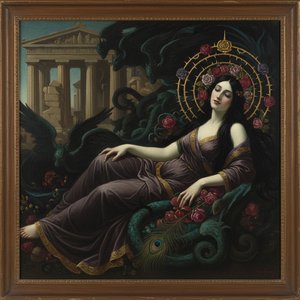
Franz von Stuck: Symbolism, Decadence & the Pursuit of Ideal Beauty
Explore the captivating world of Franz von Stuck, a leading Symbolist painter. Discover his mythological masterpieces, decadent themes, & investment potential. Expert analysis for discerning collectors.

The Language of Brushstrokes: How Artistic Technique Expresses Emotion and Era
Explore the profound connection between artistic technique and emotion. From the heavy impasto of Van Gogh to classical mastery, learn how brushstrokes define art history and discover museum-quality hand-painted reproductions for your collection.
The Eloquent Body: Anatomy's Enduring Legacy in Art from Renaissance Dissection to Modern Representation
Explore the fascinating history of anatomy in art! From Renaissance dissections to modern masterpieces, discover how artists & scientists collaborated to depict the human form with unprecedented realism. Learn more at OriginalUniqueArt.