

 Переглянути в інтер'єрі
 Надіслати
 Поділитися
 Деталі
 Посібник

 Завантажити
 Схожі предмети колекціонування
 Рентгенівське дослідження
 Слайд-шоу
 Статистика переглядів
Crucifixion
 Oil On Canvas
- WallArt
- Symbolism
 1913
1913- 19th Century
 190.0 x 165.0 cm
 Museum der bildenden Künste
 Читати далі
Олійная репродукція ручної роботи
Написана вручну олією на полотні у вашому розмірі та рамі, виготовлена на замовлення нашими художниками. ( Перейти до друку Перейти до цифрових зображень)




P118B $10

P118H $10

P118W $10

P438Z $10

P508JH $12

P508YH $12

P805H $10

P805Z $10

P919BZ $10

P919G $10

P919XJ $10

P959ZH $10

P968JZ $12

W106C $8

W218G $10

W218JH $8

W218Y $10

W307PJ $10

W316G $10

W316PJ $8

W316Y $10

W398PJ $8

W4111J $10

W500HY $15

W500JH $15

W692G $12

W849H $8

W940BG $15

W953PJ $8




Обирайте з наших стандартних розмірів, що відповідають оригінальним пропорціям твору мистецтва.

Ви можете вказати власні розміри, щоб репродукція ідеально підійшла до конкретної рами або інтер'єру. Якщо вибраний вами розмір не відповідає пропорціям оригіналу, ми або обріжемо полотно, або доповнимо картину додатковими елементами, промальованими вручну. Цифровий макет буде надіслано вам на затвердження перед початком виробництва.
Зверніть увагу, що попередній перегляд на екрані не відображає фактичне обрізання або розширення зображення. Тільки макет точно покаже остаточну композицію.
Хоча ми можемо виготовити виріб у нестандартному розмірі, для збереження оригінальних пропорцій рекомендуємо обирати варіанти зі встановленого списку.
Після оформлення замовлення команда OriginalUniqueArt.com зв'яжеться з клієнтом електронною поштою для отримання інструкцій та надасть попередній макет
Доставка по всьому світу () за 3–4 тижні замість стандартних 5 тижнів. (25 Вересень). Без жодних компромісів у якості.

Безкоштовна експрес-доставка по всьому світу

Високоякісне лляне полотно

Повне страхове покриття доставки

Гарантія повернення митних зборів

Гарантія точного відтворення кольорів

Політика повернення протягом 100 днів (лише у разі виявлення дефектів)

Гарантія повернення 100% коштів

Знижка на оптові замовлення
 Скляний варіант доступний лише для розмірів до 110 см

Crucifixion
Техніка репродукції
Розмір репродукції
-


Загальна вартість
$ 300
Franz Ritter von Stuck’s Crucifixion: A Symphony of Myth and Emotion
Franz Ritter von Stuck (1863 – 1928), a titan of German Symbolism, didn't merely depict religious iconography; he wrestled with its profound psychological implications. His monumental painting “Crucifixion,” completed in 1913, stands as a testament to his artistic vision and an enduring emblem of the era’s preoccupation with spiritual yearning amidst encroaching modernity. Stuck’s oeuvre was marked by a fascination for ancient mythology—particularly Greek myths—and he sought to convey not just visual spectacle but also visceral emotion through meticulously crafted technique. This artwork isn't simply a representation of Christ’s suffering; it’s an exploration of the human condition itself, rendered with breathtaking detail and imbued with symbolic resonance.The Mythological Roots: Echoes of Olympus
Stuck’s artistic journey began under the influence of Arnold Böcklin’s haunting landscapes—particularly “Island of Dreams”—which instilled in him a deep appreciation for sublime beauty intertwined with melancholy. He channeled this aesthetic sensibility into his depiction of the crucifixion, drawing inspiration from classical narratives concerning Prometheus and Zeus. The composition deliberately evokes images of Olympus, mirroring the grandeur and drama of Greek mythology. Stuck’s meticulous attention to detail—the textures of drapery, the musculature of Christ’s body, the expressions on the faces of onlookers—reflects a desire to capture not just physical reality but also the psychological depth of the scene. The artist skillfully uses chiaroscuro – dramatic contrasts between light and dark – to heighten emotional impact and emphasize the central figure's vulnerability against the backdrop of divine judgment.Technique and Material: A Masterful Blend
“Crucifixion” is executed in tempera on canvas, a medium favored by Stuck for its luminosity and ability to achieve remarkable tonal gradations. The artist employed layering techniques—applying thin glazes over underlayers—to build up rich color palettes and create an illusion of depth that transcends the limitations of conventional painting. Stuck’s masterful handling of pigment demonstrates his profound understanding of artistic principles, mirroring the stylistic innovations of Art Nouveau. Furthermore, he meticulously crafted a frame for the artwork, incorporating gilded carving and decorative elements that complemented the painting's aesthetic qualities—a deliberate choice reflecting the Gesamtkunstwerk tradition prevalent during his time.Symbolism: Beyond Suffering – The Triumph of Spirit
The painting’s symbolism extends far beyond its depiction of Christ’s agony. Stuck deliberately incorporates visual motifs associated with classical mythology to convey a broader spiritual message. The inclusion of a clock—a recurring element in Stuck's work—represents the passage of time and underscores the inevitability of mortality, prompting contemplation on the eternal significance of faith. Similarly, the book symbolizes knowledge and divine revelation, suggesting that true understanding transcends earthly concerns. Most powerfully, however, is the depiction of Christ’s crucifixion itself: it embodies not merely physical pain but also spiritual sacrifice—a cornerstone of Christian theology. Stuck's aim was to elicit an emotional response from the viewer, prompting reflection on themes of redemption and transcendence.Legacy and Emotional Impact
“Crucifixion” remains a captivating artwork due to its masterful blend of artistic technique and symbolic depth. It exemplifies the Symbolist movement’s preoccupation with psychological exploration and its rejection of academic conventions—a bold assertion of artistic freedom in an era marked by social upheaval. Stuck's painting continues to resonate with audiences today, offering a timeless meditation on faith, suffering, and the enduring quest for spiritual meaning. Its evocative imagery and masterful execution solidify its place as one of the most significant achievements of German Symbolism and a poignant reminder of the power of art to communicate profound emotional truths.Біографія митця
A Life Steeped in Myth and Symbol
Franz Ritter von Stuck, a name that echoes through the halls of German art history, was more than just an artist; he was a cultural phenomenon, a “Prince of Art” as he was affectionately known during his lifetime. Born in 1863 in the tranquil Bavarian village of Tettenweis, nestled amidst rolling hills and ancient forests, Stuck’s journey began far from the bustling studios of Munich, yet it would ultimately lead him to become one of the most influential figures of the Symbolist movement. Initially destined for a life following his father as a forester – a path of quiet rural existence – young Franz possessed an undeniable artistic spark that refused to be contained within the boundaries of tradition. This innate inclination manifested early on, with a fascination for drawing and caricature, capturing the quirks and personalities of his local community. It was this nascent talent that ultimately steered him towards Munich, where he first enrolled at the School of Applied Arts in 1878 and later, from 1882 to 1884, at the prestigious Academy of Fine Arts, profoundly influenced by the hauntingly beautiful mythological scenes created by Arnold Böcklin – a formative encounter that would shape his artistic vision for years to come. Stuck’s story is not simply one of an artist's development; it’s a testament to the transformative power of pursuing one’s passion and defying expectations.The Rise of a Symbolist Master
Stuck’s ascent to prominence was remarkably swift, almost startling in its speed. His breakthrough arrived in 1889 with *The Guardian of Paradise*, an arresting painting exhibited at the Munich Glass Palace. The work immediately captivated critics and audiences alike, earning him a gold medal and establishing him as a rising star within the art world. *The Guardian of Paradise* wasn’t merely a technically proficient artwork; it was a declaration – a bold announcement of a new artistic voice, one that seamlessly blended the precision and formality of classical tradition with the evocative mystery and emotional depth characteristic of Symbolism. He quickly became a central figure in challenging the established norms of the art establishment, co-founding the Munich Secession in 1892 alongside like-minded artists who sought to break free from the constraints of academic conservatism and champion the possibilities of modern art. This act of artistic rebellion coincided with his exploration into sculpture, culminating in *Athlete* (1892), a striking bronze figure that demonstrated his remarkable versatility as an artist. However, it was *The Sin* (1893) – a dramatic portrayal of temptation and desire – that truly cemented his reputation as a master of Symbolist painting, captivating audiences with its intense emotionality and psychological complexity. This period marked the full flowering of Stuck’s unique style—a potent combination of sensuality, classical form, and symbolic resonance, a visual language that would define his artistic legacy.Themes and Influences: A World of Desire and Myth
The artistic universe of Franz von Stuck is profoundly shaped by recurring motifs and themes, revealing his deep engagement with timeless concepts and narratives. Mythology served as an enduring source of inspiration, drawing upon the rich tapestry of Greek, Roman, and biblical stories – tales that he reimagined with a distinctly personal flair and imbued with a sense of potent symbolism. These weren’t mere retellings; they were explorations of the human condition filtered through the lens of ancient myths, offering profound insights into our desires, fears, and moral dilemmas. Equally prominent was his fascination with sensuality and the *femme fatale* – the alluring yet dangerous woman—powerfully embodied in his numerous depictions of Salome. These paintings weren’t simply about physical beauty; they delved into the psychological complexities of female power, its potential for both allure and destruction, and the inherent ambiguity of desire itself. Underlying all these elements was a deep reverence for classical art, evident in his meticulous technique, anatomical accuracy, and compositional rigor—a testament to his formal training and his commitment to mastering the traditions of the past. Beyond Arnold Böcklin, Stuck acknowledged influences from the Pre-Raphaelites and Gustave Moreau, artists who similarly explored themes of mythology, symbolism, and emotional intensity. However, he wasn’t merely an imitator; he synthesized these diverse influences into something uniquely his own, forging a distinctive artistic style that resonated with a generation seeking to break free from the confines of academic tradition.Major Works and Enduring Significance
Throughout his prolific career, Franz von Stuck produced a remarkable body of work—a testament to his versatility and creative vision. Some of his most celebrated pieces include:- The Spring (1886): A vibrant depiction showcasing his early mastery of color and composition, capturing the exuberance of nature and the promise of renewal.
- Dissonance (1893): An unsettling portrayal embodying emotional turmoil through a woman playing the violin—a poignant exploration of inner conflict and artistic expression.
- Salome (various versions): Perhaps his most iconic work, depicting the biblical story with striking sensuality and psychological depth, capturing the allure and danger inherent in forbidden desire.
- Athlete (1892): A powerful sculpture demonstrating his skill in three-dimensional form—a dynamic representation of human strength and athleticism.
A Knight of Bavaria
In 1905, Franz Ritter von Stuck received a significant honor – being ennobled by the Bavarian Crown, becoming “Ritter von Stuck” (Knight of Stuck). This recognition reflected not only his artistic achievements but also his contributions to German culture and society. He continued to teach at the Munich Academy, guiding the next generation of artists—including Paul Klee, Wassily Kandinsky, and Josef Albers—and remained a prominent figure in the art world until his death in 1928. His funeral address described him as “the last prince of art of Munich’s great days,” encapsulating his enduring legacy as a visionary artist who shaped the course of German art history. Franz von Stuck's work continues to be exhibited and studied today, reminding us of the power of art to evoke emotion, explore complex themes, and transcend time.
Франц Рітер фон Шток
1863 - 1928 , Німеччина
Довідкова інформація
- Artistic Movement Or Style: Символізм, Ар-нуво
- Artists Or Movements Influenced By This Artist:
- Пауль Клі
- Ван Гог
- Artists Who Influenced This Artist:
- Арнольд Бёклін
- Прерафаеліти
- Жуль Гумінтер
- Date Of Birth: 23 лютий 1863
- Date Of Death: 30 серпень 1928
- Full Name: Franz Ritter von Stuck
- Nationality: Німецький
- Notable Artworks:
- «Охоронник раю»
- «Саломея»
- Грішниця»
- Place Of Birth: Теттенвей, Німеччина
Схожі статті

10 шедеврів німецького експресіонізму, що змінили мистецтво | OriginalUniqueArt
Пориньте у світ німецького експресіонізму! 10 шедеврів від Кандинського, Кірхнера та інших – історія творчості, емоцій та кольорів. Купуйте репродукції картин на OriginalUniqueArt.com та створіть неповторний інтер'єр.
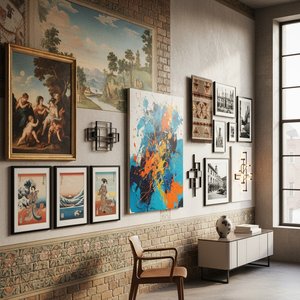
Transforming Spaces: A Comprehensive Exploration of Wall Decor Through Art History & Contemporary Practice
Explore the art of transforming spaces with our comprehensive guide to wall decor. From historical movements to contemporary trends, discover how to curate impactful interiors and commission bespoke artwork for a truly personalized aesthetic.
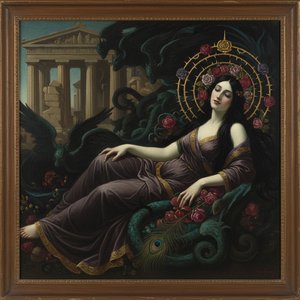
Franz von Stuck: Symbolism, Decadence & the Pursuit of Ideal Beauty
Explore the captivating world of Franz von Stuck, a leading Symbolist painter. Discover his mythological masterpieces, decadent themes, & investment potential. Expert analysis for discerning collectors.
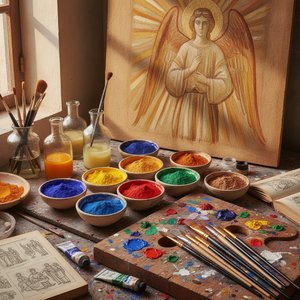
Tempera Art Guide: The Bold, Fast-Drying Secret to High-Impact Color
Unlock the secret to high-impact color with our expert guide to tempera art. Discover how this fast-drying, luminous medium delivers unmatched vibrancy and depth for bold, modern interiors. Master the alchemy of pigments and elevate your collection with professional insights.

Повернення фрески: Чому настінні мурали стають новим символом розкоші для готелів
Дізнайтеся, як настінні мурали перетворюють готелі на витвори мистецтва! Ексклюзивний дизайн, професійні художники та інвестиції в незабутню атмосферу. Поради експертів.