

 Переглянути в інтер'єрі
 Надіслати
 Поділитися
 Деталі
 Посібник

 Завантажити
 Схожі предмети колекціонування
 Рентгенівське дослідження
 Слайд-шоу
 Статистика переглядів
Water. The Bather.
 Олія на полотні
- Настінний декор
- Symbolist Movement
 1907
1907- — XIX століття
 63.0 x 80.0 cm
 Читати далі
Мистецький твір, представлений на цій сторінці, захищений законом про авторське право, що унеможливлює легальне створення або продаж його ідентичної репродукції. Цей захист забезпечується відповідно до міжнародних угод, таких як Бернська конвенція та національним законодавством, зокрема положеннями, що викладені в Законодавство США про авторське право — Розділ 17. Всі права захищені. Будь-яке використання без дозволу заборонено.
Як шанобливу та законну альтернативу, ми пропонуємо унікальні картини ручної роботи, створені натхненням від оригіналу. Наші досвідчені професійні художники ретельно вивчають стиль, настрій та художню сутність оригіналу, щоб створити новий, неповторний твір, який викликає ті ж почуття, — залишаючись при цьому самобутнім творінням.
Цей метод повністю відповідає нормам авторського права, оскільки він не передбачає копіювання чи дублювання захищеного твору мистецтва. Натомість це творче переосмислення — створення нового малюнка під впливом оригіналу, який не є його точним відтворенням.
Олійная репродукція ручної роботи
Написана вручну олією на полотні у вашому розмірі та рамі, виготовлена на замовлення нашими художниками. ( Перейти до друку Перейти до цифрових зображень)




P118B ₴10

P118H ₴10

P118W ₴10

P438Z ₴10

P508JH ₴12

P508YH ₴12

P805H ₴10

P805Z ₴10

P919BZ ₴10

P919G ₴10

P919XJ ₴10

P959ZH ₴10

P968JZ ₴12

W106C ₴8

W218G ₴10

W218JH ₴8

W218Y ₴10

W307PJ ₴10

W316G ₴10

W316PJ ₴8

W316Y ₴10

W398PJ ₴8

W4111J ₴10

W500HY ₴15

W500JH ₴15

W692G ₴12

W849H ₴8

W940BG ₴15

W953PJ ₴8




Обирайте з наших стандартних розмірів, що відповідають оригінальним пропорціям твору мистецтва.

Ви можете вказати власні розміри, щоб репродукція ідеально підійшла до конкретної рами або інтер'єру. Якщо вибраний вами розмір не відповідає пропорціям оригіналу, ми або обріжемо полотно, або доповнимо картину додатковими елементами, промальованими вручну. Цифровий макет буде надіслано вам на затвердження перед початком виробництва.
Зверніть увагу, що попередній перегляд на екрані не відображає фактичне обрізання або розширення зображення. Тільки макет точно покаже остаточну композицію.
Хоча ми можемо виготовити виріб у нестандартному розмірі, для збереження оригінальних пропорцій рекомендуємо обирати варіанти зі встановленого списку.
Після оформлення замовлення команда OriginalUniqueArt.com зв'яжеться з клієнтом електронною поштою для отримання інструкцій та надасть попередній макет
Доставка по всьому світу () за 3–4 тижні замість стандартних 5 тижнів. (11 Жовтень). Без жодних компромісів у якості.

Безкоштовна експрес-доставка по всьому світу

Високоякісне лляне полотно

Повне страхове покриття доставки

Гарантія повернення митних зборів

Гарантія точного відтворення кольорів

Політика повернення протягом 100 днів (лише у разі виявлення дефектів)

Гарантія повернення 100% коштів

Знижка на оптові замовлення
 Скляний варіант доступний лише для розмірів до 110 см

Water. The Bather.
Техніка репродукції
Розмір репродукції
-


Загальна вартість
₴ 13374
The Artistic Vision
In Water. The Bather., a serene woman is depicted floating on her back in the water, surrounded by rocks that add depth to the scene. Her arms are outstretched, conveying a sense of relaxation and harmony with nature. The woman's body occupies most of the canvas, creating a focal point that draws the viewer into the tranquil environment. The painting's symbolism can be interpreted in various ways. The woman may represent a mermaid or a nymph, symbolizing the connection between humans and the natural world. The water, which is often associated with emotions and the subconscious, serves as a backdrop for her peaceful state.Artistic Influences
Frantisek Kupka was a pioneer of abstract art and Orphic Cubism (Orphism). His work evolved from realism to pure abstraction, reflecting his innovative approach to art. Kupka's style is characterized by the use of vibrant colors and geometric shapes, which are evident in Water. The Bather..Relevance in Modern Art
The Symbolism movement, which emerged in the late 19th century, emphasized the emotional and psychological aspects of art. Kupka's work, including Water. The Bather., contributed significantly to this movement. His use of symbolism and abstract elements influenced many artists who followed.Discovering More Artworks
For those interested in exploring more Symbolist paintings, the following artworks are worth noting:- The Mystery of a Summer Night by Edvard Munch
- Canto Silvestre by Ferdinand Hodler
- Pastorales Tahitiennes by Paul Gauguin
Conclusion
Frantisek Kupka's Water. The Bather. is a masterpiece that encapsulates the essence of Symbolism. Its serene and symbolic elements make it a captivating piece for art enthusiasts. For those interested in exploring more artworks by Kupka and other Symbolist artists, visit OriginalUniqueArt, where you can find high-quality reproductions of these paintings. To learn more about Frantisek Kupka and his contributions to abstract art, refer to the detailed information on Wikipedia.Запитання та відповіді
Хто створив "Water. The Bather."?
«Water. The Bather.» було створено Франтішек Купка. Інформація на цій сторінці описує оригінальний твір Франтішек Купка.
Яка дата створення «Water. The Bather.» Франтішек Купка?
«Water. The Bather.» Франтішек Купка було створено у 1907 році.
Скільки років було Франтішек Купка, коли було створено «Water. The Bather.»?
Франтішек Купка було 36 років, коли він створив «Water. The Bather.» у 1907 році. Вік обчислено на основі року народження митця, 1871.
Для якого інтер'єру рекомендується «Water. The Bather.» Франтішек Купка?
«Water. The Bather.» Франтішек Купка рекомендується для Вітальня. Ця пропозиція ґрунтується на сюжеті, кольоровій гамі та настрої твору.
Як побудована колірна композиція «Water. The Bather.» Франтішек Купка?
Колірний аналіз «Water. The Bather.» Франтішек Купка фіксує Заява контраст та Диссонансна палітра гармонію.
Чим пояснюється статус авторського права на «Water. The Bather.» Франтішек Купка?
«Water. The Bather.» за авторством Франтішек Купка перебуває у все ще захищено авторським правом. Термін дії авторського права розраховується з року смерті митця; Франтішек Купка помер(ла) у 1957.
Чи є у «Water. The Bather.» можливість попереднього перегляду в доповненій реальності?
Ви можете приміряти «Water. The Bather.» Франтішек Купка на власну стіну за допомогою сторінки AR-перегляд з використанням технології доповненої реальності на сумісному пристрої.
Біографія митця
František Kupka: A Pioneer of Abstract Vision
František Kupka, a name now inextricably linked to the dawn of abstract art, was born in 1871 in Opočno, Bohemia – a landscape that would subtly shape his lifelong exploration of form and color. His artistic journey wasn’t a swift transformation but rather a gradual unfolding, deeply rooted in spiritual inquiry and an unwavering pursuit of visual truth. Initially immersed in the traditions of historical and patriotic painting during his studies at the Academy of Fine Arts in Prague and later Vienna, Kupka's early work possessed technical skill, yet lacked the distinctive voice that would soon define him. It was his relocation to Paris in 1894, however, that proved a pivotal catalyst, immersing him within a vibrant artistic milieu – an environment brimming with symbolism, Neo-Impressionism, and the burgeoning excitement of Fauvism – igniting within him a revolutionary creative spirit. This Parisian atmosphere wasn’t merely about formal training; it was a collision of intellectual currents, exposing Kupka to radical ideas that would fundamentally alter his approach to art.The Seeds of Abstraction: Influences and Spiritual Awakening
Kupka's artistic trajectory wasn’t solely driven by aesthetic considerations; it was profoundly shaped by philosophical and spiritual explorations. A significant turning point in his life occurred with his engagement with Theosophy, a mystical system that sought to synthesize Eastern religions and Western esotericism. This belief system posited an underlying unity to all existence – a concept of interconnectedness and hidden realities beyond the realm of ordinary perception. Kupka found resonance within this philosophy, believing it offered a pathway to accessing deeper truths through artistic expression. He began to perceive art not simply as a representation of the visible world but as a means of unlocking these concealed dimensions. This conviction led him away from depicting recognizable objects and towards a more subjective, internal exploration of visual experience – a deliberate rejection of conventional realism in favor of conveying inner states and spiritual concepts. Early experiments involved blurring the boundaries between figuration and abstraction, creating works like *The Beginning of Life*, where symbolic imagery intertwined with nascent geometric forms, hinting at the birth of new ideas and possibilities. Crucially, Kupka wasn’t operating in isolation; he was influenced by contemporary scientific theories concerning color and light, seeking to understand their psychological effects on the viewer – a fusion of spiritual inquiry and empirical observation that would become a defining characteristic of his work. He believed that color possessed an inherent power to evoke emotion and communicate meaning directly, bypassing the need for literal representation.The Emergence of Orphic Cubism: A New Visual Language
By the early 1910s, Kupka had embarked on a path that would ultimately lead him to become one of the pioneers of abstract art. His paintings from this period – works such as *Amorpha: Fugue in Two Colors* (1912) and *Around a Point* (1911-12) – stand as groundbreaking examples of non-representational art, challenging established notions of artistic representation and paving the way for future generations. He wasn’t simply dismantling form; rather, he was constructing a completely new visual language based on pure abstraction. This led to his association with Orphic Cubism (also known as Orphism), a movement spearheaded by Robert Delaunay that emphasized the dynamic interplay of color and light. However, Kupka's approach within this movement differed significantly from Delaunay’s; while both explored abstract forms, Kupka retained a discernible sense of underlying structure and rhythm – evoking musical compositions in his paintings – as evidenced by titles like “fugue” and “disks.” *Disks of Newton*, for instance, depicts circular forms that seem to vibrate with energy, suggesting the fundamental forces governing the universe. He wasn’t merely creating aesthetically pleasing arrangements; he was attempting to visualize underlying cosmic principles. This period also saw him experimenting with techniques inspired by pointillism, further refining his understanding of color and its expressive potential.Key Works and Lasting Contributions
Throughout his career, Kupka produced a remarkable body of work that continues to fascinate and inspire. *The Colored One* (1910) is a prime example of his early explorations into symbolic abstraction, while *Around a Point* (1911-12) showcases his growing mastery of pure geometric forms. His series of “Disks” – *Disks of Newton*, *Disks of Light*, and *Disks of the Sun* – represent a culmination of his research into color theory and its relationship to perception, demonstrating his belief that colors could be arranged to evoke specific emotional responses. Notably, Kupka’s work was recognized internationally during the 1936 “Cubism and Abstract Art” exhibition at the Museum of Modern Art in New York, solidifying his place as a key figure in the development of modern art. He played a vital role in establishing Abstraction-Création in 1931, an international group dedicated to promoting abstract art and fostering dialogue among artists exploring new forms of expression. Despite often being overshadowed by more prominent figures like Kandinsky or Mondrian, František Kupka’s pioneering spirit and unique visual language have secured his legacy as a crucial innovator – a visionary who dared to question the very nature of representation and unlock entirely new possibilities for artistic creation.Museum Collections Featuring Kupka's Art
Several museums around the world house significant collections of František Kupka’s work, offering visitors the opportunity to experience his art firsthand:- Solomon R. Guggenheim Museum (New York, United States)
- The Paris Museum of Modern Art (Paris, France)
- Galerie Manés (Prague, Czech Republic)

Франтішек Купка
1871 - 1957 , Чеська Республіка
Довідкова інформація
- Artistic Movement Or Style: Абстрактне мистецтво, Орфічний кубізм
- Artists Or Movements Influenced By This Artist: ['Теософія']
- Date Of Birth: 23 вересня 1871
- Date Of Death: 24 червня 1957
- Full Name: František Kupka
- Nationality: Чех
- Notable Artworks:
- Диски Ньютона
- Людина-круг
- Place Of Birth: Опочно, Чехія
Схожі статті

Топ-10 шедеврів геометричної абстракції: мистецтво для вашого інтер'єру від OriginalUniqueArt.com
Відкрийте для себе 10 шедеврів геометричної абстракції від Кандинського, Малевича та Мондріана! Історія мистецтва, кольори та форми. Репродукції картин преміум-класу на OriginalUniqueArt.com – ідеальний декор для вашого дому.

Топ-10 шедеврів абстрактного експресіонізму: мистецтво, яке змінила епоху | OriginalUniqueArt.com
Відкрийте для себе 10 шедеврів абстрактного експресіонізму! Дізнайтесь історію Поллока, Ротко та інших геніїв. Репродукції картин преміум-якості для вашого дому від OriginalUniqueArt.com. Дослідіть колекцію онлайн!

Giclée Prints: Archival Quality & Aesthetic Nuances for the Discerning Collector
Explore the world of giclée prints with OriginalUniqueArt. Learn about archival quality, aesthetic nuances & investment potential. Expert guidance for discerning art collectors seeking museum-quality reproductions and lasting value.
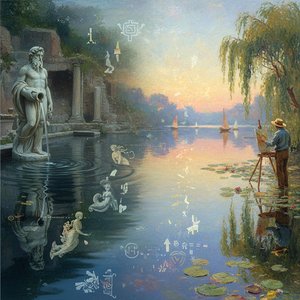
Fluid Reflections: Exploring Water's Symbolism in Art History – From Myth to Impressionism
Explore the rich symbolism of water in art history – from ancient myths to Impressionism's fleeting beauty. Discover masterpieces & find your perfect serene artwork with OriginalUniqueArt.com.

Топ-25 шедеврів Василя Кандинського: подорож у світ абстрактного мистецтва | OriginalUniqueArt.com
Відкрийте для себе 25 найвідоміших шедеврів Василя Кандинського! Пориньте у світ абстрактного мистецтва, експресіонізму та кольорових композицій. Репродукції картин Кандинського преміум-якості на OriginalUniqueArt.com – для вашого інтер'єру з душею. Дослідіть повну колекцію онлайн!