
 Переглянути в інтер'єрі
 Надіслати
 Поділитися
 Деталі
 Посібник

 Завантажити
 Схожі предмети колекціонування
 Рентгенівське дослідження
 Слайд-шоу
 Статистика переглядів
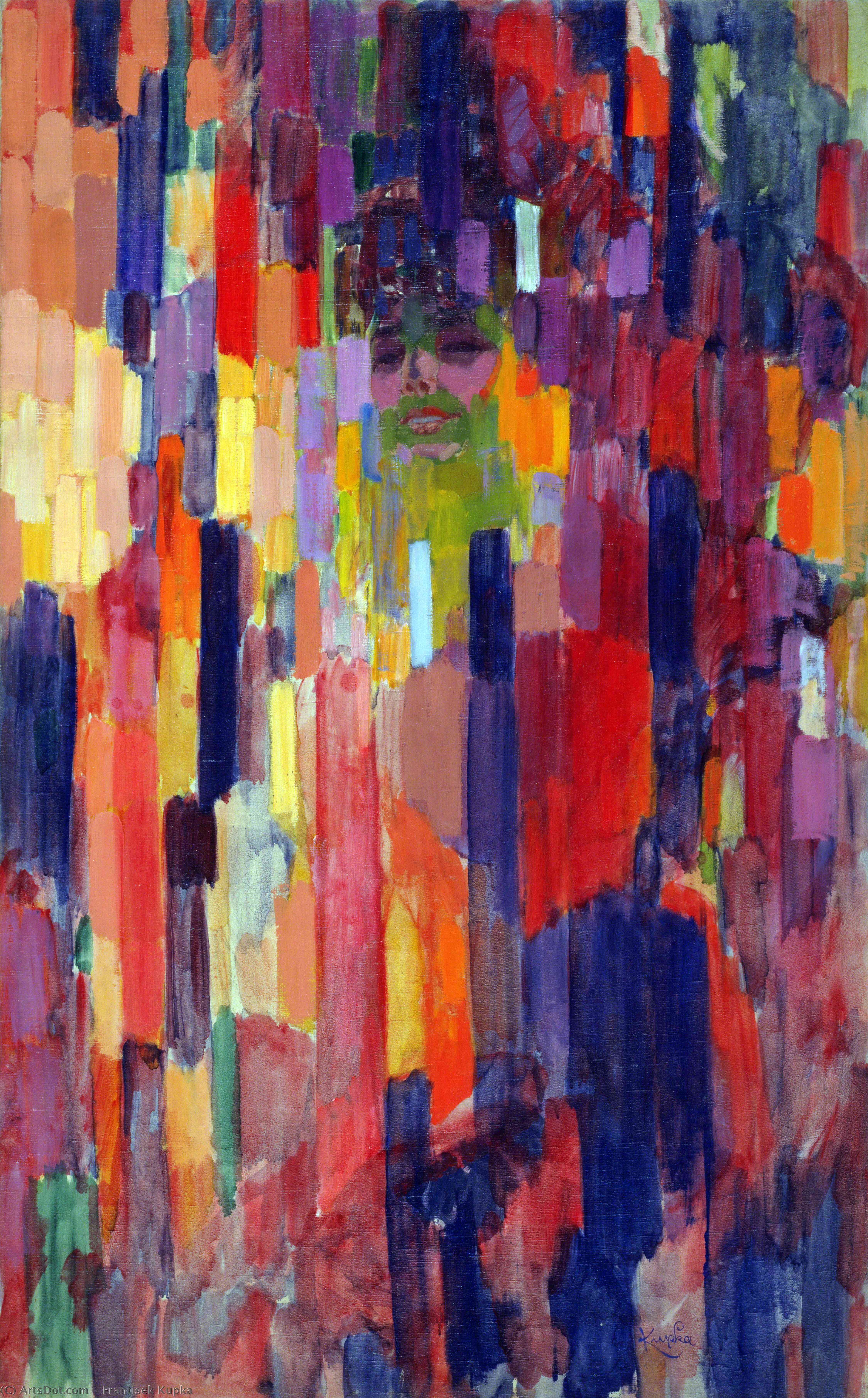
Ms. Kupka between vertical


 Читати далі
Мистецький твір, представлений на цій сторінці, захищений законом про авторське право, що унеможливлює легальне створення або продаж його ідентичної репродукції. Цей захист забезпечується відповідно до міжнародних угод, таких як Бернська конвенція та національним законодавством, зокрема положеннями, що викладені в Законодавство США про авторське право — Розділ 17. Всі права захищені. Будь-яке використання без дозволу заборонено.
Цей метод повністю відповідає нормам авторського права, оскільки він не передбачає копіювання чи дублювання захищеного твору мистецтва. Натомість це творче переосмислення — створення нового малюнка під впливом оригіналу, який не є його точним відтворенням.
Гікле / Художній принт
Музейна якість друку جيкле або на полотні з оперативним виготовленням та різноманітними варіантами фінішної обробки. ( Купити картину ручної роботи Перейти до цифрових зображень)




P118B ₴10

P118H ₴10

P118W ₴10

P438Z ₴10

P508JH ₴12

P508YH ₴12

P805H ₴10

P805Z ₴10

P919BZ ₴10

P919G ₴10

P919XJ ₴10

P959ZH ₴10

P968JZ ₴12

W106C ₴8

W218G ₴10

W218JH ₴8

W218Y ₴10

W307PJ ₴10

W316G ₴10

W316PJ ₴8

W316Y ₴10

W398PJ ₴8

W4111J ₴10

W500HY ₴15

W500JH ₴15

W692G ₴12

W849H ₴8

W940BG ₴15

W953PJ ₴8




Обирайте з наших стандартних розмірів, що відповідають оригінальним пропорціям твору мистецтва.

Введіть необхідну ширину та висоту, щоб принт ідеально підійшов до вашої рами або стіни. Принт можна лише обрізати, але не можна зробити більшим за оригінал, тому при зміні пропорцій частина зображення буде втрачена. Перед друком ми надсилаємо вам цифровий макет для затвердження. Зображення на цій сторінці не відображає реальну обрізку — її можна побачити лише на макеті.
Доставка по всьому світу () за 2 тижні замість стандартних 4/5 тижнів. (23 Жовтень)

Безкоштовна експрес-доставка по всьому світу

Високоякісне лляне полотно

Повне страхове покриття доставки

Гарантія повернення митних зборів

Гарантія точного відтворення кольорів

Політика повернення протягом 100 днів (лише у разі виявлення дефектів)

Гарантія повернення 100% коштів

Знижка на оптові замовлення
 Скляний варіант доступний лише для розмірів до 110 см

Ms. Kupka between vertical
Гікле / Художній принт
Розмір репродукції
-


Загальна вартість
₴ 3596
A Symphony of Color and Form: The Essence of Ms. Kupka Between Vertical
In the vast landscape of early twentieth-century modernism, few works capture the electric transition from representation to pure abstraction as poignantly as František Kupka’s “Ms. Kupka Between Vertical.” This masterpiece serves not merely as a portrait, but as a profound manifesto of the Orphic Cubist movement—a style that sought to infuse the structural rigor of Cubism with the lyrical, light-filled energy of Orphism. At first glance, the viewer is met with a striking central figure, likely a depiction of Kupka herself, draped in a vibrant red dress and anchored by a cool blue headband. Yet, this recognizable human element is quickly swept into a cosmic dance of geometric shapes and swirling hues. The painting acts as a window into a world where the boundaries between the physical subject and the spiritual atmosphere dissolve, inviting the observer to experience art as a pure, sensory phenomenon.
The technique employed by Kupka is nothing short of revolutionary for its era. Moving away from the heavy, earth-toned palettes of traditional Cubism, he utilizes a masterful manipulation of color temperature to create depth and movement. The juxtaposition of warm reds against deep, rhythmic blues creates a visual tension that mimics the pulse of life itself. His brushstrokes are expressive and spontaneous, eschewing meticulous detail in favor of capturing an underlying energy. This approach allows the background—a kaleidoscope of abstract, interlocking forms—to breathe alongside the subject, creating a sense of dynamism that was heavily influenced by the Futurist fascination with speed and motion. For the discerning collector or interior designer, this piece offers a sophisticated focal point that brings both intellectual depth and a vibrant, modern vitality to any curated space.
The Spiritual Resonance of Abstraction
To truly appreciate “Ms. Kupka Between Vertical,” one must understand the philosophical currents that flowed through Kupka’s studio. Deeply influenced by Theosophy and the search for universal truths, the artist viewed color and line as tools to access a higher, primordial reality. The verticality suggested in the title and the composition serves as a symbolic bridge between the terrestrial and the divine. The swirling geometric patterns are not merely decorative; they represent the unseen forces of nature—the vibrations and rhythms that connect all living things. This spiritual dimension imbues the artwork with an emotional weight that transcends its abstract form, offering a sense of transcendence and peace to those who linger before it.
For those seeking to integrate fine art into contemporary interiors, this work provides an unparalleled opportunity to introduce a sense of historical significance and avant-garde elegance. A high-quality reproduction of this piece does more than decorate a wall; it establishes a dialogue between the history of the Czech avant-garde and the modern aesthetic. The painting’s ability to balance bold, energetic movement with a structured, rhythmic composition makes it an ideal centerpiece for spaces that value both drama and harmony. It remains a timeless testament to the moment when art broke free from the constraints of reality to explore the infinite possibilities of the human imagination.
Запитання та відповіді
Яку емоцію передає «Ms. Kupka between vertical» Франтішек Купка?
«Ms. Kupka between vertical» Франтішек Купка передає Спокій емоційний тон.
Кольори «Ms. Kupka between vertical» Франтішек Купка яскраві чи приглушені?
«Ms. Kupka between vertical» Франтішек Купка зафіксовано з Чітка насиченість кольорів насиченістю та Насичені інтенсивністю.
Наскільки насиченою є палітра твору "Ms. Kupka between vertical"?
Палітра твору "Ms. Kupka between vertical" має Чітка насиченість кольорів насиченості.
Біографія митця
František Kupka: A Pioneer of Abstract Vision
František Kupka, a name now inextricably linked to the dawn of abstract art, was born in 1871 in Opočno, Bohemia – a landscape that would subtly shape his lifelong exploration of form and color. His artistic journey wasn’t a swift transformation but rather a gradual unfolding, deeply rooted in spiritual inquiry and an unwavering pursuit of visual truth. Initially immersed in the traditions of historical and patriotic painting during his studies at the Academy of Fine Arts in Prague and later Vienna, Kupka's early work possessed technical skill, yet lacked the distinctive voice that would soon define him. It was his relocation to Paris in 1894, however, that proved a pivotal catalyst, immersing him within a vibrant artistic milieu – an environment brimming with symbolism, Neo-Impressionism, and the burgeoning excitement of Fauvism – igniting within him a revolutionary creative spirit. This Parisian atmosphere wasn’t merely about formal training; it was a collision of intellectual currents, exposing Kupka to radical ideas that would fundamentally alter his approach to art.The Seeds of Abstraction: Influences and Spiritual Awakening
Kupka's artistic trajectory wasn’t solely driven by aesthetic considerations; it was profoundly shaped by philosophical and spiritual explorations. A significant turning point in his life occurred with his engagement with Theosophy, a mystical system that sought to synthesize Eastern religions and Western esotericism. This belief system posited an underlying unity to all existence – a concept of interconnectedness and hidden realities beyond the realm of ordinary perception. Kupka found resonance within this philosophy, believing it offered a pathway to accessing deeper truths through artistic expression. He began to perceive art not simply as a representation of the visible world but as a means of unlocking these concealed dimensions. This conviction led him away from depicting recognizable objects and towards a more subjective, internal exploration of visual experience – a deliberate rejection of conventional realism in favor of conveying inner states and spiritual concepts. Early experiments involved blurring the boundaries between figuration and abstraction, creating works like *The Beginning of Life*, where symbolic imagery intertwined with nascent geometric forms, hinting at the birth of new ideas and possibilities. Crucially, Kupka wasn’t operating in isolation; he was influenced by contemporary scientific theories concerning color and light, seeking to understand their psychological effects on the viewer – a fusion of spiritual inquiry and empirical observation that would become a defining characteristic of his work. He believed that color possessed an inherent power to evoke emotion and communicate meaning directly, bypassing the need for literal representation.The Emergence of Orphic Cubism: A New Visual Language
By the early 1910s, Kupka had embarked on a path that would ultimately lead him to become one of the pioneers of abstract art. His paintings from this period – works such as *Amorpha: Fugue in Two Colors* (1912) and *Around a Point* (1911-12) – stand as groundbreaking examples of non-representational art, challenging established notions of artistic representation and paving the way for future generations. He wasn’t simply dismantling form; rather, he was constructing a completely new visual language based on pure abstraction. This led to his association with Orphic Cubism (also known as Orphism), a movement spearheaded by Robert Delaunay that emphasized the dynamic interplay of color and light. However, Kupka's approach within this movement differed significantly from Delaunay’s; while both explored abstract forms, Kupka retained a discernible sense of underlying structure and rhythm – evoking musical compositions in his paintings – as evidenced by titles like “fugue” and “disks.” *Disks of Newton*, for instance, depicts circular forms that seem to vibrate with energy, suggesting the fundamental forces governing the universe. He wasn’t merely creating aesthetically pleasing arrangements; he was attempting to visualize underlying cosmic principles. This period also saw him experimenting with techniques inspired by pointillism, further refining his understanding of color and its expressive potential.Key Works and Lasting Contributions
Throughout his career, Kupka produced a remarkable body of work that continues to fascinate and inspire. *The Colored One* (1910) is a prime example of his early explorations into symbolic abstraction, while *Around a Point* (1911-12) showcases his growing mastery of pure geometric forms. His series of “Disks” – *Disks of Newton*, *Disks of Light*, and *Disks of the Sun* – represent a culmination of his research into color theory and its relationship to perception, demonstrating his belief that colors could be arranged to evoke specific emotional responses. Notably, Kupka’s work was recognized internationally during the 1936 “Cubism and Abstract Art” exhibition at the Museum of Modern Art in New York, solidifying his place as a key figure in the development of modern art. He played a vital role in establishing Abstraction-Création in 1931, an international group dedicated to promoting abstract art and fostering dialogue among artists exploring new forms of expression. Despite often being overshadowed by more prominent figures like Kandinsky or Mondrian, František Kupka’s pioneering spirit and unique visual language have secured his legacy as a crucial innovator – a visionary who dared to question the very nature of representation and unlock entirely new possibilities for artistic creation.Museum Collections Featuring Kupka's Art
Several museums around the world house significant collections of František Kupka’s work, offering visitors the opportunity to experience his art firsthand:- Solomon R. Guggenheim Museum (New York, United States)
- The Paris Museum of Modern Art (Paris, France)
- Galerie Manés (Prague, Czech Republic)

Франтішек Купка
1871 - 1957 , Чеська Республіка
Довідкова інформація
- Artistic Movement Or Style: Абстрактне мистецтво, Орфічний кубізм
- Artists Or Movements Influenced By This Artist: ['Теософія']
- Date Of Birth: 23 вересня 1871
- Date Of Death: 24 червня 1957
- Full Name: František Kupka
- Nationality: Чех
- Notable Artworks:
- Диски Ньютона
- Людина-круг
- Place Of Birth: Опочно, Чехія
Схожі статті
Топ-25 шедеврів Фернана Леже: мистецтво машинного віку для вашого дому | OriginalUniqueArt
Відкрийте для себе 25 шедеврів Фернана Леже – піонера кубізму та тубізму! Історія мистецтва, кольори та форми машинного віку. Репродукції картин високої якості від OriginalUniqueArt.com. Дослідіть повну колекцію онлайн!

Топ-10 шедеврів абстрактного експресіонізму: мистецтво, яке змінила епоху | OriginalUniqueArt.com
Відкрийте для себе 10 шедеврів абстрактного експресіонізму! Дізнайтесь історію Поллока, Ротко та інших геніїв. Репродукції картин преміум-якості для вашого дому від OriginalUniqueArt.com. Дослідіть колекцію онлайн!

Топ-25 шедеврів Василя Кандинського: подорож у світ абстрактного мистецтва | OriginalUniqueArt.com
Відкрийте для себе 25 найвідоміших шедеврів Василя Кандинського! Пориньте у світ абстрактного мистецтва, експресіонізму та кольорових композицій. Репродукції картин Кандинського преміум-якості на OriginalUniqueArt.com – для вашого інтер'єру з душею. Дослідіть повну колекцію онлайн!

Топ-10 шедеврів геометричної абстракції: мистецтво для вашого інтер'єру від OriginalUniqueArt.com
Відкрийте для себе 10 шедеврів геометричної абстракції від Кандинського, Малевича та Мондріана! Історія мистецтва, кольори та форми. Репродукції картин преміум-класу на OriginalUniqueArt.com – ідеальний декор для вашого дому.
Топ-25 шедеврів Пауля Клее: подорож у світ кольору та абстракції | OriginalUniqueArt
Відкрийте для себе 25 шедеврів Пауля Клее – від ранніх робіт до пізнього модернізму. Пориньте у світ абстракції, експресіонізму та унікального стилю художника. Репродукції картин високої якості на OriginalUniqueArt.com! Дослідіть повну колекцію онлайн.