

 Переглянути в інтер'єрі
 Надіслати
 Поділитися
 Деталі
 Посібник

 Завантажити
 Схожі предмети колекціонування
 Рентгенівське дослідження
 Слайд-шоу
 Статистика переглядів
Three Monkeys Stealing Fruit
 Oil On Canvas
- WallArt
- Baroque
 1640
1640 98.0 x 147.0 cm
 Лувр
Лувр
 Читати далі
Гікле / Художній принт
Музейна якість друку جيкле або на полотні з оперативним виготовленням та різноманітними варіантами фінішної обробки. ( Купити картину ручної роботи Перейти до цифрових зображень)




P118B ₴10

P118H ₴10

P118W ₴10

P438Z ₴10

P508JH ₴12

P508YH ₴12

P805H ₴10

P805Z ₴10

P919BZ ₴10

P919G ₴10

P919XJ ₴10

P959ZH ₴10

P968JZ ₴12

W106C ₴8

W218G ₴10

W218JH ₴8

W218Y ₴10

W307PJ ₴10

W316G ₴10

W316PJ ₴8

W316Y ₴10

W398PJ ₴8

W4111J ₴10

W500HY ₴15

W500JH ₴15

W692G ₴12

W849H ₴8

W940BG ₴15

W953PJ ₴8




Обирайте з наших стандартних розмірів, що відповідають оригінальним пропорціям твору мистецтва.

Ви можете вказати власні розміри, щоб репродукція ідеально підійшла до конкретної рами або інтер'єру. Якщо обраний вами розмір не відповідає пропорціям оригіналу, ми або обріжемо полотно, або розширимо зображення за допомогою дзеркального відображення чи суцільної заливки країв. Перед початком виробництва вам буде надіслано цифровий макет для затвердження.
Будь ласка, зверніть увагу, що попередній перегляд на екрані не відображає фактичне обрізання або розширення. Тільки макет точно покаже фінальну композицію.
Хоча можливість замовлення індивідуальних розмірів доступна, ми рекомендуємо обирати формат із попередньо визначеного списку, щоб зберегти оригінальні пропорції.
Доставка по всьому світу () за 2 тижні замість стандартних 4/5 тижнів. (10 Жовтень)

Безкоштовна експрес-доставка по всьому світу

Високоякісне лляне полотно

Повне страхове покриття доставки

Гарантія повернення митних зборів

Гарантія точного відтворення кольорів

Політика повернення протягом 100 днів (лише у разі виявлення дефектів)

Гарантія повернення 100% коштів

Знижка на оптові замовлення
 Скляний варіант доступний лише для розмірів до 110 см

Three Monkeys Stealing Fruit
Гікле / Художній принт
Розмір репродукції
-


Загальна вартість
₴ 3566
A Symphony of Abundance: Frans Snyders’ “Three Monkeys Stealing Fruit”
Frans Snyders' "Three Monkeys Stealing Fruit," painted around 1640-1649, isn’t merely a depiction of mischievous primates; it’s a vibrant microcosm of Renaissance abundance and the intoxicating allure of earthly delights. Born in Antwerp during a period of artistic ferment, Snyders emerged as a master of still life, animal painting, and dynamic market scenes – genres he elevated with an unparalleled sense of theatricality and sensory detail. This particular work, housed within the Louvre’s collection, exemplifies his signature style: a riotous celebration of textures, colors, and movement that draws the viewer into a world brimming with sensual pleasure.
The painting immediately assaults the senses. A table laden with an astonishing array of fruit – plump apples, glistening grapes, and vibrant pears – dominates the composition. These aren’t simply objects; they are symbols of prosperity, fertility, and the fleeting nature of earthly pleasures. Snyders meticulously renders each piece, capturing the subtle variations in color, texture, and sheen with a remarkable level of realism. The artist's masterful use of chiaroscuro – the dramatic interplay of light and shadow – further enhances the sense of depth and volume, making the fruit appear almost tangible to the viewer.
The Theater of Animal Life
At the heart of this opulent tableau stand three monkeys, engaged in a brazen act of theft. These aren’t caricatures; they are portrayed with an intelligence that hints at cunning and mischief. Their postures are dynamic, their eyes gleaming with anticipation, and their movements suggest a carefully orchestrated plan. Snyders wasn't simply depicting animals; he was exploring the primal instincts – greed, curiosity, and playful rebellion – that reside within them. The monkeys’ actions serve as a subtle commentary on human desires and the temptation to indulge in worldly pleasures.
Snyders’ skill extends beyond mere representation. He imbues the scene with a palpable sense of drama and movement. The composition is carefully balanced, drawing the eye from one element to another. The monkeys' gestures, the scattering of fruit, and even the subtle shadows create an illusion of continuous action – as if the viewer has stumbled upon a secret moment in a bustling marketplace.
A Master of His Time
Snyders’ work is deeply rooted in the artistic traditions of Antwerp during the 17th century. He was influenced by artists like Pieter Brueghel the Younger, whose depictions of peasant life and market scenes provided a foundation for Snyders' own explorations of everyday subjects. However, Snyders pushed beyond mere imitation, developing his own distinctive style characterized by an exuberant energy and a profound appreciation for the beauty of the natural world. His collaboration with Peter Paul Rubens, particularly during the lavish decorations for the Spanish court, further cemented his reputation as one of the most important artists of his generation.
Symbolism and Emotional Resonance
Beyond its visual appeal, “Three Monkeys Stealing Fruit” is rich in symbolic meaning. The act of theft represents a challenge to established order – a reminder that even in the midst of abundance, there will always be those who seek to acquire more. The monkeys themselves can be interpreted as symbols of temptation and folly, urging viewers to consider the consequences of their desires. Yet, despite its cautionary message, the painting ultimately evokes a sense of joy and delight. The sheer profusion of fruit, combined with the monkeys’ playful antics, creates an atmosphere of lightheartedness and exuberance – a celebration of life's simple pleasures.
Reproductions of this captivating artwork offer a remarkable opportunity to bring Snyders’ vibrant vision into your home or office. A hand-painted reproduction captures not only the visual details but also the artist’s masterful use of light, shadow, and color, creating an immersive experience that transports you back to 17th-century Antwerp.
Запитання та відповіді
У якому році було створено "Three Monkeys Stealing Fruit"?
Створення «Three Monkeys Stealing Fruit» Франс Снайдер датоване 1640 роком.
Які сюжет та атмосферу поєднує в собі «Three Monkeys Stealing Fruit» Франс Снайдер?
«Three Monkeys Stealing Fruit» Франс Снайдер зображує monkeys, fruit, theft, baroque, animals, snyders, antwerp у Dramatic настрої. Поєднання сюжету та атмосфери повністю розкриває цей твір.
Чи доступна робота "Three Monkeys Stealing Fruit" у вигляді художнього принта?
Принт роботи «Three Monkeys Stealing Fruit» Франс Снайдер можна замовити безпосередньо на сторінці ця сторінка: художній принт на бавовняному полотні або архівному канвас-папері.
Яке місце посідає «Three Monkeys Stealing Fruit» у творчій спадщині Франс Снайдер?
У творчості Франс Снайдер твір "Three Monkeys Stealing Fruit" витриманий у стилі Baroque, що перегукується з темами baroque exuberance, flemish tradition, abundance, market scenes, life, animal studies, hunting motifs, rubens’ collaboration.
Яка техніка була використана для «Three Monkeys Stealing Fruit» Франс Снайдер?
Для створення «Three Monkeys Stealing Fruit» Франс Снайдер використав(ла) техніку Oil On Canvas. Саме ця техніка визначає матеріальну природу оригінального твору.
У якому віці Франс Снайдер створив(ла) "Three Monkeys Stealing Fruit"?
Коли у 1640 році було створено «Three Monkeys Stealing Fruit», художнику Франс Снайдер (народився/лася у 1579) було 61 років.
Хто створив "Three Monkeys Stealing Fruit"?
«Three Monkeys Stealing Fruit» було створено Франс Снайдер. Інформація на цій сторінці описує оригінальний твір Франс Снайдер.
Біографія митця
A Master of Abundance: The Life and Art of Frans Snyders
Frans Snyders, born in Antwerp in 1579, stands as a remarkably vibrant and influential figure within the tapestry of Flemish Baroque painting. While names like Rubens and Van Dyck often dominate narratives of this era, Snyders’ unique specialization—a dazzling mastery of still life, animal painting, and bustling market scenes—contributed significantly to the artistic landscape. He wasn't merely depicting objects; he was celebrating abundance, reveling in texture, and capturing a fleeting moment of earthly delight, imbuing his works with an almost palpable sense of vitality. His father, Jan Snijders, ran a popular wine inn – a lively hub frequented by artists – providing the young Frans with an environment steeped in creative energy from his earliest years. This formative setting undoubtedly nurtured his artistic inclinations, and local legend even suggests that the renowned painter Frans Floris once indulged in excessive revelry within those very walls—a colorful anecdote hinting at the spirited atmosphere surrounding Snyders’ upbringing. Initially apprenticed to Pieter Brueghel the Younger, absorbing lessons in composition and detail, Snyders honed his skills further under Hendrick van Balen, who also mentored Anthony van Dyck. This solid foundation allowed him to achieve master status within the Antwerp Guild of Saint Luke by 1602, marking the formal beginning of his prolific career.Collaboration and Innovation: Shaping an Artistic Voice
Snyders’ artistic journey wasn't a solitary endeavor; collaboration was a cornerstone of his practice. He quickly established himself as a highly sought-after partner for leading artists of the time, most notably Peter Paul Rubens. Their relationship proved exceptionally fruitful, with Snyders frequently tasked with painting the animals and still life elements within Rubens’ grand compositions. The Torre de la Parada hunting pavilion in Spain stands as a testament to their combined genius—Snyders executing over sixty animal paintings based on designs by Rubens. This partnership wasn't simply about fulfilling commissions; it was a dynamic exchange of ideas, pushing both artists toward new levels of technical and expressive achievement. Snyders’ influence extended beyond Rubens, encompassing collaborations with Anthony van Dyck, Jacob Jordaens, and Abraham Janssens, demonstrating his versatility and adaptability. However, he didn’t merely serve as an accessory to these masters; he pioneered a distinct style characterized by dynamic compositions, masterful rendering of textures—from the sheen of fruit to the rough hide of game—and a vibrant sense of realism that breathed life into his subjects. Snyders essentially invented the independent animal still life genre, moving beyond traditional depictions of hunting trophies to explore the inherent beauty and vitality of the natural world. This innovative approach set him apart and established him as a leading figure in the Antwerp art scene.A Feast for the Eyes: Themes and Techniques
The core themes that permeate Snyders’ work revolve around earthly pleasures—the bounty of the market, the thrill of the hunt, and the simple elegance of a well-stocked pantry. His market scenes are particularly captivating, teeming with figures, overflowing baskets, and an almost palpable sense of energy. He doesn't shy away from depicting the realities of food production; alongside pristine fruits and vegetables, one might find plucked fowl or freshly caught fish, reminding viewers of the cycle of life and sustenance. His still lifes aren’t static arrangements but rather dynamic displays that seem to invite interaction. Snyders possessed an extraordinary ability to capture light and shadow, creating a sense of depth and volume that makes his subjects appear almost tangible. He employed a loose, painterly brushstroke, particularly in rendering fur and feathers, achieving a remarkable level of realism without sacrificing artistic expression. *The Pantry*, for example, is a stunning showcase of this technique—a chaotic yet harmonious arrangement of foodstuffs and kitchen utensils bathed in dramatic light. The artist’s attention to detail is meticulous, but it never feels overly fussy; instead, it contributes to the overall sense of abundance and vitality. He skillfully balanced realism with an expressive quality, creating works that are both meticulously observed and emotionally resonant.Influences and Legacy
Frans Snyders' impact on the development of still life and animal painting extends far beyond his own lifetime. He established a new standard for realism and dynamism in these genres, influencing generations of artists who followed. His work paved the way for later masters like Jean-Baptiste Oudry and François Desportes, who further refined the art of animal portraiture. Snyders’ influence can also be seen in the Dutch Golden Age still life tradition, where artists like Willem Claeszoon Heda and Pieter Claesz embraced a similar focus on texture, light, and composition. He was not only a skilled technician but also an astute observer of the natural world, capturing its beauty and complexity with remarkable sensitivity. His paintings continue to captivate audiences today, offering a glimpse into the vibrant artistic landscape of 17th-century Antwerp and reminding us of the enduring power of art to celebrate life’s simple pleasures. His extensive collection, acquired by Matthijs Musson after his death in 1657, ensured that his legacy would continue to inspire artists for centuries to come.Notable Works
Among Snyders' most celebrated works are:- *The Pantry* (c. 1630-40) – A monumental still life depicting a lavish assortment of food and kitchenware, showcasing his mastery of texture and light.
- *Hunting Scene with the Torre de la Parada* (1615) – A collaborative masterpiece with Peter Paul Rubens, demonstrating their combined artistic vision.
- *Still Life with Game Birds and Fruit* (c. 1620) – An example of his ability to capture the delicate beauty of nature.
- *Market Scene with Animals* (c. 1635) – A vibrant depiction of a bustling marketplace, filled with activity and color.
Further Resources
Online Resources:- Britannica: https://www.britannica.com/biography/Frans-Snyders
- Getty Museum: https://www.getty.edu/art/collection/person/103JST
- NCMALearn (North Carolina Museum of Art): https://learn.ncartmuseum.org/artists/frans-snyders/
- Harris, James C. *The Head of Medusa: Peter Paul Rubens and Frans Snyders.*
- Walter S. Gibson. “Painting and the Market in Early Modern Antwerp.”

Франс Снайдер
1579 - 1657 , Бельгія
Довідкова інформація
- Artistic Movement Or Style: Барокко
- Artists Or Movements Influenced By This Artist:
- Жан-Батьйольд Одре
- Франсуа Деспор
- Artists Who Influenced This Artist:
- П’єтер Брюггель II
- Гендрік ван Бален
- Date Of Birth: 1579
- Date Of Death: 1657
- Full Name: Frans Snyders
- Nationality: Фламандський
- Notable Artworks:
- Стеля з фруктами
- Ринок
- Полювання
- Place Of Birth: Антверпен, Бельгія
Схожі статті
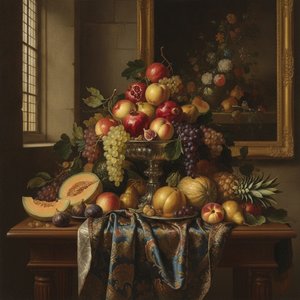
Nature's Bounty: The Art History of Fruit Arrangement Masterpieces and the Baroque Still Life Tradition
Explore the profound beauty of fruit arrangement masterpieces. From Dutch Golden Age opulence to Baroque chiaroscuro, discover the art history, symbolism, and timeless elegance of classical still life paintings for the discerning collector.

The Bountiful Still Life: Symbolism & Artistic Representation of Fruit Across Art History
Explore the rich history of still life painting & the symbolism of fruit across art movements. Discover masterpieces from Caravaggio to Cézanne with OriginalUniqueArt – expert guidance & museum-quality reproductions.
Тварини у мистецтві: оживляючи простір та символізм української культури
Дослідіть символізм тварин в українському мистецтві! Від народних оберегів до сучасних інтерпретацій – розкрийте глибину культурної спадщини та вплив образів на простір.

Silent Narratives: Exploring the Enduring Appeal of Still Life Painting Across Centuries
Explore the rich history of still life painting with OriginalUniqueArt. Discover Dutch Masters, decode vanitas symbolism & learn about collecting timeless art. Expert insights and museum-quality reproductions.
Beastly Brushstrokes: A Historical Journey Through Animal Painting & Aesthetic Movements
Explore the rich history of animal painting across cultures & movements. Discover iconic artists, symbolism, collecting trends & expert art consultation at OriginalUniqueArt.com.
