() ·

A painting made for you, by hand

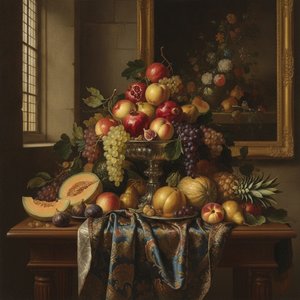
Fruit Stall

Олійная репродукція ручної роботи

Написана вручну олією на полотні у вашому розмірі та рамі, виготовлена на замовлення нашими художниками. ( Перейти до друку Перейти до цифрових зображень)

Опис експоната

Experience the vibrant abundance of Frans Snyders' 'Fruit Stall' (1618). A dynamic Baroque masterpiece showcasing a bustling marketplace filled with fresh produce and captivating figures.

Біографія митця

Франс Снайдер – видатний фламандський художник бароко, відомий своїми динамічними сценами ринків, полювання та пишними композиціями з їжі та тварин. Його роботи тісно пов'язані з творчістю Рубенса!

from ·

Chapter 1

How large should it be?

Slide to change the size; the picture on the left shows the frame at its real width. The proportions of the original are kept.

Стандартний розмір
індивідуальний розмір
CM
INCH

Обирайте з наших стандартних розмірів, що відповідають оригінальним пропорціям твору мистецтва.

ширина
висота

Введіть необхідну ширину та висоту, щоб картина підійшла до вашої рами або стіни. Оскільки це ручний розпис, для зміни пропорцій художник може дописати трохи більше по краях або дещо обрізати композицію — вибір за вами. Перед початком роботи ми надішлемо вам цифровий макет для затвердження. Зображення, показане на цій сторінці, не є реальним результатом — лише макет відображає майбутній вигляд.

Chapter 2

How should it arrive?

Choose the edges of the stretched canvas

Choose your frame

Corner sample of the WhiteWrap canvas edge finish, stretched on масив дерева bars
White ₴1
Corner sample of the BlurSideWrap canvas edge finish, stretched on масив дерева bars
Blurside ₴1
Corner sample of the ExtendedWrap canvas edge finish, stretched on масив дерева bars
Extended ₴1
Corner sample of the P118B picture frame: формований полістирол, 5 cm wide and 3 cm thick
P118B ₴10
Corner sample of the P118H picture frame: формований полістирол, 5 cm wide and 3 cm thick
P118H ₴10
Corner sample of the P118W picture frame: формований полістирол, 5 cm wide and 3 cm thick
P118W ₴10
Corner sample of the P438Z picture frame: формований полістирол, 5.5 cm wide and 3.5 cm thick
P438Z ₴10
Corner sample of the P508JH picture frame: формований полістирол, 7 cm wide and 3.5 cm thick
P508JH ₴12
Corner sample of the P508YH picture frame: формований полістирол, 7 cm wide and 3.5 cm thick
P508YH ₴12
Corner sample of the P805H picture frame: формований полістирол, 5 cm wide and 3.5 cm thick
P805H ₴10
Corner sample of the P805Z picture frame: формований полістирол, 5 cm wide and 3.5 cm thick
P805Z ₴10
Corner sample of the P919BZ picture frame: формований полістирол, 7 cm wide and 3.5 cm thick
P919BZ ₴10
Corner sample of the P919G picture frame: формований полістирол, 7 cm wide and 3.5 cm thick
P919G ₴10
Corner sample of the P919XJ picture frame: формований полістирол, 7 cm wide and 3.5 cm thick
P919XJ ₴10
Corner sample of the P959ZH picture frame: формований полістирол, 5 cm wide and 3 cm thick
P959ZH ₴10
Corner sample of the P968JZ picture frame: формований полістирол, 6 cm wide and 4 cm thick
P968JZ ₴12
Corner sample of the W106C picture frame: масив дерева, 5 cm wide and 3 cm thick
W106C ₴8
Corner sample of the W218G picture frame: масив дерева, 5 cm wide and 3 cm thick
W218G ₴10
Corner sample of the W218JH picture frame: масив дерева, 5 cm wide and 3 cm thick
W218JH ₴8
Corner sample of the W218Y picture frame: масив дерева, 5 cm wide and 3 cm thick
W218Y ₴10
Corner sample of the W307PJ picture frame: масив дерева, 6 cm wide and 3 cm thick
W307PJ ₴10
Corner sample of the W316G picture frame: масив дерева, 6 cm wide and 3 cm thick
W316G ₴10
Corner sample of the W316PJ picture frame: масив дерева, 6 cm wide and 3 cm thick
W316PJ ₴8
Corner sample of the W316Y picture frame: масив дерева, 6 cm wide and 3 cm thick
W316Y ₴10
Corner sample of the W398PJ picture frame: масив дерева, 5 cm wide and 3 cm thick
W398PJ ₴8
Corner sample of the W4111J picture frame: масив дерева, 6.5 cm wide and 3.5 cm thick
W4111J ₴10
Corner sample of the W500HY picture frame: масив дерева, 7 cm wide and 5 cm thick
W500HY ₴15
Corner sample of the W500JH picture frame: масив дерева, 7 cm wide and 5 cm thick
W500JH ₴15
Corner sample of the W692G picture frame: масив дерева, 8 cm wide and 4 cm thick
W692G ₴12
Corner sample of the W849H picture frame: масив дерева, 5 cm wide and 3 cm thick
W849H ₴8
Corner sample of the W940BG picture frame: масив дерева, 7.5 cm wide and 4.5 cm thick
W940BG ₴15
Corner sample of the W953PJ picture frame: масив дерева, 6 cm wide and 3.5 cm thick
W953PJ ₴8
Corner sample of the H24-GOLD picture frame: різьблене дерево з левкасом, 10 cm wide and 6 cm thick
H24-GOLD ₴30
Corner sample of the H24-SILVER picture frame: різьблене дерево з левкасом, 10 cm wide and 6 cm thick
H24-SILVER ₴30
Corner sample of the H36-GOLD picture frame: різьблене дерево з левкасом, 15 cm wide and 6.5 cm thick
H36-GOLD ₴45
Corner sample of the H36-SILVER picture frame: різьблене дерево з левкасом, 15 cm wide and 6.5 cm thick
H36-SILVER ₴45

Moulding: . Overall size with the frame: .

Chapter 3

Who paints it, and should anything change?

Examples of what can be changed: Replace face with customer photo; Add pet (e.g., replace cat with dog); Include hidden message in background; Change background landscape or elements.
After order, OriginalUniqueArt.com team will email client for instructions and provide a mockup preview

Доставка по всьому світу () за 3–4 тижні замість стандартних 5 тижнів. (31 Жовтень). Без жодних компромісів у якості.

Chapter 4

The finishing touches

A nameplate, as in a museum?

Деталі гравірування на бронзовій табличці

This elegant plaque features the artist's name and the title of the artwork, finely engraved for a timeless presentation.

It is made from bronze with a refined, elegant finish. The text is precisely laser-engraved for a sharp and permanent result. Measuring 9x2 cm, the plaque is compact yet easy to read. It's built to be durable and scratch-resistant, offering a professional, museum-quality look. Mounting is simple thanks to the included adhesive backing.

Деталі прозорої акрилової таблички

The plaque includes essential engraved details such as the artist's name, the title of the artwork, the date it was created, the type of media used-like oil on canvas or watercolor-a brief description of the piece, and a QR code that links to the complete artwork information.

It is crafted from clear acrylic, offering a sleek, modern appearance. The text is UV-engraved in black to ensure strong visual contrast. With a size of 10x15 cm, it ensures optimal readability. It comes equipped with two metal hooks for secure wall mounting. The plaque is designed to be weather-resistant, making it suitable for various environments, and it includes interactive features that work seamlessly with smartphone scanning.

Деталі чорної акрилової таблички

This elegant plaque includes engraved information such as the artist's name, the title of the artwork, the date it was created, the type of media used (like oil on canvas or watercolor), a short description of the artwork, and a QR code for quick access to more information.

The plaque itself is made from refined black acrylic with a premium finish. The text is laser-engraved in white for high contrast and readability. Its size is 10x15 cm, designed to be easy to read. It comes with two metal hooks for professional mounting. The design is sleek and fits any interior style. It is also weather-resistant and durable, with built-in digital integration for mobile compatibility.

A protective varnish?

When do you need it?

Chapter 5

Your painting, as you ordered it

Fruit Stall

Матеріал репродукції

Розмір репродукції

-

Видатний майстер-художник

Більше деталізації, витонченості та додаткового часу на створення твору

-

Рама для репродукції

-

-

Для творів мистецтва або репродукцій, розмір яких перевищує 105 см (приблизно 41 дюйм) з будь-якого боку, рама доставляється у вигляді розібраного комплекту. Такий метод гарантує безпечну доставку та запобігає пошкодженням під час транспортування.

Потребує професійного збирання — це не продукт для самостійного виготовлення (DIY).
Комплект має бути зібраний, а полотно натягнуте досвідченим майстром багетних робіт із використанням клейового дерева (не входить у комплект), щипців для натягування полотна та затискачів, щоб підрамник залишався рівним під час висихання клею. Неправильне збирання або нерівномірне натягування полотна може призвести до незворотного пошкодження твору мистецтва, що не підпадає під дію нашої гарантії.

  • У комплект входять усі бруски з цільного дерева, точно вирізані за розміром.

  • Збирається за допомогою гвинтів, що входять до комплекту, а також клейового розчину для кутових з'єднань, який не входить до комплекту і має бути підготовлений вашим майстром.

  • Потрібні професійні інструменти, які не входять до комплекту: щипці для натягування полотна (натягувач) та затискачі, щоб утримувати рейки рівно під час висихання клею.

Важливо:
Для з'єднання кутів потрібен клей для дерева, перекладини необхідно затиснути струбцинами до повного висихання клею, а для натягування полотна на зібрану раму знадобляться щипці для натягування полотна. Жоден із цих інструментів не входить до комплекту. Будь ласка, проконсультуйтеся з досвідченим майстром багетного оформлення перед замовленням рами такого розміру.

Етикетка експоната

-

-

Захисний лак

Глянцевий лак (підсилює яскравість кольорів, захищає від світла та вологи)

-

Персоналізувати мій витвір

Приклади можливих змін: заміна обличчя на фото клієнта; додавання домашньої тварини (наприклад, заміна кота на собаку); додавання прихованого повідомлення на фоні; зміна пейзажу або елементів фону.

-

Прискорено

Доставка по всьому світу () за 3–4 тижні замість стандартних 5 тижнів. (31 Жовтень). Без компромісів у якості.

-

Експрес-доставка

Доставка по всьому світу () протягом 5 тижнів. (7 Листопад).

Включено в ціну

Підсумкова вартість

₴ 13486

Загальна вартість ₴ 13486

Скляний варіант доступний лише для розмірів до 110 см

Included with every order

  • Безкоштовна експрес-доставка по всьому світу
  • Високоякісне лляне полотно
  • Повне страхове покриття доставки
  • Гарантія повернення митних зборів
  • Гарантія точного відтворення кольорів
  • Політика повернення протягом 100 днів (лише у разі виявлення дефектів)
  • Гарантія повернення 100% коштів
  • Пропозиція на оптові замовлення

Frans Snyders’ “Fruit Stall”: A Baroque Symphony of Abundance

Frans Snyders' "Fruit Stall," painted in 1618, isn’t merely a depiction of a marketplace scene; it’s a vibrant, teeming microcosm of the world as perceived through the lens of the Dutch Golden Age. This monumental oil on canvas, now residing within the esteemed Hermitage Museum in St. Petersburg, is a testament to Snyders' mastery of capturing dynamic movement and overwhelming abundance – hallmarks of his unique artistic vision. The painting immediately assaults the senses with its sheer density: overflowing baskets brimming with an astonishing variety of produce—apples gleaming ruby red, plump bananas, vibrant carrots, and even broccoli—all vying for attention amidst a bustling crowd.

Snyders’ style firmly anchors this work within the Baroque period. Rejecting the cool rationality of Mannerism, he embraced dramatic lighting, intense color palettes, and an almost theatrical approach to composition. Notice how light dramatically illuminates specific elements – a particularly luscious apple or a merchant's outstretched hand – while plunging other areas into shadow, creating a powerful sense of depth and volume. The figures themselves are not idealized; they’re rendered with a remarkable realism that captures the weariness of labor, the shrewdness of commerce, and the casual interactions of everyday life. The painting is less about presenting a perfect scene than it is about conveying the raw energy and sensory overload of a busy marketplace.

A Masterclass in Composition and Detail

Snyders’ genius lies not just in his ability to paint realistically, but in his masterful orchestration of elements. The composition is deliberately chaotic yet meticulously balanced. The eye is drawn from the foreground figures – a man and woman engaged in what appears to be a transaction – through a complex network of baskets, tables, and bodies, ultimately leading to a distant, hazy background. This layering creates an incredible sense of spatial depth, pulling the viewer directly into the heart of the scene. Every detail, from the individual wrinkles on the merchants’ faces to the texture of the fruit skins, is rendered with painstaking accuracy – a testament to Snyders' meticulous observation and technical skill.

The inclusion of seemingly mundane objects—a wheelbarrow laden with goods, a simple wooden table, a collection of earthenware jugs—adds layers of symbolic meaning. These elements represent not just the practicalities of trade but also the fundamental values of prosperity, community, and sustenance. The abundance depicted is a deliberate celebration of life’s earthly pleasures, reflecting the optimism and material wealth that characterized the Dutch Republic during this period.

Symbolism and the Renaissance Spirit

Beyond its immediate visual impact, “Fruit Stall” resonates with deeper symbolic themes rooted in Renaissance thought. The profusion of goods can be interpreted as a metaphor for earthly riches and the fleeting nature of material possessions – a common preoccupation of artists during this era. The presence of both merchants and customers highlights the interconnectedness of society and the importance of trade in fostering economic growth. Furthermore, Snyders’ depiction of everyday life reflects the Renaissance humanist interest in portraying humanity in all its complexity and imperfection.

Interestingly, the painting's composition echoes earlier works like Johann Zoffany’s “A Florentine Fruit Stall,” demonstrating a shared fascination with capturing the dynamism of market scenes. However, Snyders injects his own distinctive Baroque flair, imbuing the scene with an unparalleled sense of drama and vitality. The inclusion of elements such as the passion fruit (a symbol of fertility and resurrection) subtly elevates the painting beyond a simple depiction of commerce, hinting at deeper spiritual and philosophical themes.

Bringing “Fruit Stall” into Your Space

Reproductions of Snyders’ "Fruit Stall" offer a remarkable opportunity to bring this captivating scene into your home or office. Whether you opt for a high-quality print on canvas, aluminum, or even watercolor paper, you'll experience the painting's vibrant colors and dynamic composition in stunning detail. Consider framing it within a classic Baroque style frame to further enhance its historical context. “Fruit Stall” is more than just a beautiful image; it’s a window into a bygone era—a celebration of abundance, commerce, and the enduring spirit of human creativity.

Питання та відповіді

Які матеріали та який стиль використані у творі "Fruit Stall"?

У творі "Fruit Stall" техніка Oil On Canvas поєднується з напрямом Baroque.

Наскільки насиченими є кольори у «Fruit Stall» роботи Франс Снайдер?

Насиченість кольорів у творі «Fruit Stall» — Balanced. Насиченість описує, наскільки яскравими та виразними є кольори.

Де я можу переглянути попередній перегляд "Fruit Stall"?

Сторінка попереднього перегляду «Fruit Stall» (Перегляд у інтер'єрі) дозволяє ознайомитися з твором перед замовленням.

More about this painting

Переглянути в інтер'єрі Перегляд в AR Перейти до друку Перейти до цифрових зображень Надіслати як листівку
Деталі витвору Посібник Додати до улюблених Завантажити Схожі екземпляри Рентгенівське дослідження Слайд-шоу Q&A Статистика

In numbers

  • 1618the year it was painted
  • 29frames to choose from
  • standard sizes, in its own proportions
  • 5weeks to paint and deliver it
Франс Снайдер

Франс Снайдер

1579 - 1657, Бельгія

Quick facts about Франс Снайдер

  • Artistic Movement Or Style: Барокко
  • Artists Or Movements Influenced By This Artist:
    • Жан-Батьйольд Одре
    • Франсуа Деспор
  • Artists Who Influenced This Artist:
    • П’єтер Брюггель II
    • Гендрік ван Бален
  • Date Of Birth: 1579
  • Date Of Death: 1657
  • Full Name: Frans Snyders
  • Nationality: Фламандський
  • Notable Artworks:
    • Стеля з фруктами
    • Ринок
    • Полювання
  • Place Of Birth: Антверпен, Бельгія

Біографія митця

A Master of Abundance: The Life and Art of Frans Snyders

Frans Snyders, born in Antwerp in 1579, stands as a remarkably vibrant and influential figure within the tapestry of Flemish Baroque painting. While names like Rubens and Van Dyck often dominate narratives of this era, Snyders’ unique specialization—a dazzling mastery of still life, animal painting, and bustling market scenes—contributed significantly to the artistic landscape. He wasn't merely depicting objects; he was celebrating abundance, reveling in texture, and capturing a fleeting moment of earthly delight, imbuing his works with an almost palpable sense of vitality. His father, Jan Snijders, ran a popular wine inn – a lively hub frequented by artists – providing the young Frans with an environment steeped in creative energy from his earliest years. This formative setting undoubtedly nurtured his artistic inclinations, and local legend even suggests that the renowned painter Frans Floris once indulged in excessive revelry within those very walls—a colorful anecdote hinting at the spirited atmosphere surrounding Snyders’ upbringing. Initially apprenticed to Pieter Brueghel the Younger, absorbing lessons in composition and detail, Snyders honed his skills further under Hendrick van Balen, who also mentored Anthony van Dyck. This solid foundation allowed him to achieve master status within the Antwerp Guild of Saint Luke by 1602, marking the formal beginning of his prolific career.

Collaboration and Innovation: Shaping an Artistic Voice

Snyders’ artistic journey wasn't a solitary endeavor; collaboration was a cornerstone of his practice. He quickly established himself as a highly sought-after partner for leading artists of the time, most notably Peter Paul Rubens. Their relationship proved exceptionally fruitful, with Snyders frequently tasked with painting the animals and still life elements within Rubens’ grand compositions. The Torre de la Parada hunting pavilion in Spain stands as a testament to their combined genius—Snyders executing over sixty animal paintings based on designs by Rubens. This partnership wasn't simply about fulfilling commissions; it was a dynamic exchange of ideas, pushing both artists toward new levels of technical and expressive achievement. Snyders’ influence extended beyond Rubens, encompassing collaborations with Anthony van Dyck, Jacob Jordaens, and Abraham Janssens, demonstrating his versatility and adaptability. However, he didn’t merely serve as an accessory to these masters; he pioneered a distinct style characterized by dynamic compositions, masterful rendering of textures—from the sheen of fruit to the rough hide of game—and a vibrant sense of realism that breathed life into his subjects. Snyders essentially invented the independent animal still life genre, moving beyond traditional depictions of hunting trophies to explore the inherent beauty and vitality of the natural world. This innovative approach set him apart and established him as a leading figure in the Antwerp art scene.

A Feast for the Eyes: Themes and Techniques

The core themes that permeate Snyders’ work revolve around earthly pleasures—the bounty of the market, the thrill of the hunt, and the simple elegance of a well-stocked pantry. His market scenes are particularly captivating, teeming with figures, overflowing baskets, and an almost palpable sense of energy. He doesn't shy away from depicting the realities of food production; alongside pristine fruits and vegetables, one might find plucked fowl or freshly caught fish, reminding viewers of the cycle of life and sustenance. His still lifes aren’t static arrangements but rather dynamic displays that seem to invite interaction. Snyders possessed an extraordinary ability to capture light and shadow, creating a sense of depth and volume that makes his subjects appear almost tangible. He employed a loose, painterly brushstroke, particularly in rendering fur and feathers, achieving a remarkable level of realism without sacrificing artistic expression. *The Pantry*, for example, is a stunning showcase of this technique—a chaotic yet harmonious arrangement of foodstuffs and kitchen utensils bathed in dramatic light. The artist’s attention to detail is meticulous, but it never feels overly fussy; instead, it contributes to the overall sense of abundance and vitality. He skillfully balanced realism with an expressive quality, creating works that are both meticulously observed and emotionally resonant.

Influences and Legacy

Frans Snyders' impact on the development of still life and animal painting extends far beyond his own lifetime. He established a new standard for realism and dynamism in these genres, influencing generations of artists who followed. His work paved the way for later masters like Jean-Baptiste Oudry and François Desportes, who further refined the art of animal portraiture. Snyders’ influence can also be seen in the Dutch Golden Age still life tradition, where artists like Willem Claeszoon Heda and Pieter Claesz embraced a similar focus on texture, light, and composition. He was not only a skilled technician but also an astute observer of the natural world, capturing its beauty and complexity with remarkable sensitivity. His paintings continue to captivate audiences today, offering a glimpse into the vibrant artistic landscape of 17th-century Antwerp and reminding us of the enduring power of art to celebrate life’s simple pleasures. His extensive collection, acquired by Matthijs Musson after his death in 1657, ensured that his legacy would continue to inspire artists for centuries to come.

Notable Works

Among Snyders' most celebrated works are:
  • *The Pantry* (c. 1630-40) – A monumental still life depicting a lavish assortment of food and kitchenware, showcasing his mastery of texture and light.
  • *Hunting Scene with the Torre de la Parada* (1615) – A collaborative masterpiece with Peter Paul Rubens, demonstrating their combined artistic vision.
  • *Still Life with Game Birds and Fruit* (c. 1620) – An example of his ability to capture the delicate beauty of nature.
  • *Market Scene with Animals* (c. 1635) – A vibrant depiction of a bustling marketplace, filled with activity and color.

Further Resources

Online Resources: Books:
  • Harris, James C. *The Head of Medusa: Peter Paul Rubens and Frans Snyders.*
  • Walter S. Gibson. “Painting and the Market in Early Modern Antwerp.”

Основна інформація

  • Movement: Baroque
  • Title: Fruit Stall
  • Year: 1618
  • Location: Hermitage, St. Petersburg
  • Subject or theme: Market scene
  • Artistic style: Still life

Квіз про мистецтво

У кожному запитанні лише одна правильна відповідь.

Запитання 1:
What is the primary subject matter of Frans Snyders’ ‘Fruit Stall’?
Запитання 2:
In what year was ‘Fruit Stall’ painted?
Запитання 3:
Frans Snyders was known for his specialization in which of the following art forms?
Запитання 4:
The image description mentions a ‘wheelbarrow’ in the scene. What does this likely symbolize?
Запитання 5:
Frans Snyders’ artistic style is most closely associated with which period?
Досліджуйте твори мистецтва, впорядковані за темами, стилями та характеристиками.