 Переглянути в інтер'єрі
 Надіслати як листівку
 Поділитися
 Детальніше

 Завантажити
 Схожі експонати
 Рентгенівське дослідження
 Слайд-шоу
Jean de la Chambre
 Oil On Canvas
- WallArt
- Dutch Golden Age Portraiture
 1638
1638 20.0 x 16.0 cm
 Національна галерея
 Читати далі
Гікле / Художній принт
Музейна якість друку جيкле або на полотні з оперативним виготовленням та різноманітними варіантами фінішної обробки. ( Замовити репродукцію ручної роботи Купити цифрове зображення)




P118B $10

P118H $10

P118W $10

P438Z $10

P508JH $12

P508YH $12

P805H $10

P805Z $10

P919BZ $10

P919G $10

P919XJ $10

P959ZH $10

P968JZ $12

W106C $8

W218G $10

W218JH $8

W218Y $10

W307PJ $10

W316G $10

W316PJ $8

W316Y $10

W398PJ $8

W4111J $10

W500HY $15

W500JH $15

W692G $12

W849H $8

W940BG $15

W953PJ $8




Обирайте з наших стандартних розмірів, що відповідають оригінальним пропорціям твору мистецтва.

Ви можете вказати власні розміри, щоб репродукція ідеально підійшла до конкретної рами або інтер'єру. Якщо обраний вами розмір не відповідає пропорціям оригіналу, ми або обріжемо полотно, або розширимо зображення за допомогою дзеркального відображення чи суцільної заливки країв. Перед початком виробництва вам буде надіслано цифровий макет для затвердження.
Будь ласка, зверніть увагу, що попередній перегляд на екрані не відображає фактичне обрізання або розширення. Тільки макет точно покаже фінальну композицію.
Хоча можливість замовлення індивідуальних розмірів доступна, ми рекомендуємо обирати формат із попередньо визначеного списку, щоб зберегти оригінальні пропорції.
Доставка по всьому світу () за 2 тижні замість стандартних 4/5 тижнів. (21 Серпень)

Безкоштовна експрес-доставка по всьому світу

Високоякісне лляне полотно

Повне страхове покриття доставки

Гарантія відшкодування митних зборів

Гарантія точного відтворення кольорів

Політика повернення протягом 60 днів (лише у разі виявлення дефектів)

Гарантія повернення 100% коштів

Пропозиція на оптові замовлення
 Скляний варіант доступний лише для розмірів до 110 см

Jean de la Chambre
Гікле / Художній принт
Розмір репродукції
-


Підсумкова вартість
$ 80
Опис експоната
A Moment Frozen in Time: Jean de la Chambre by Frans Hals
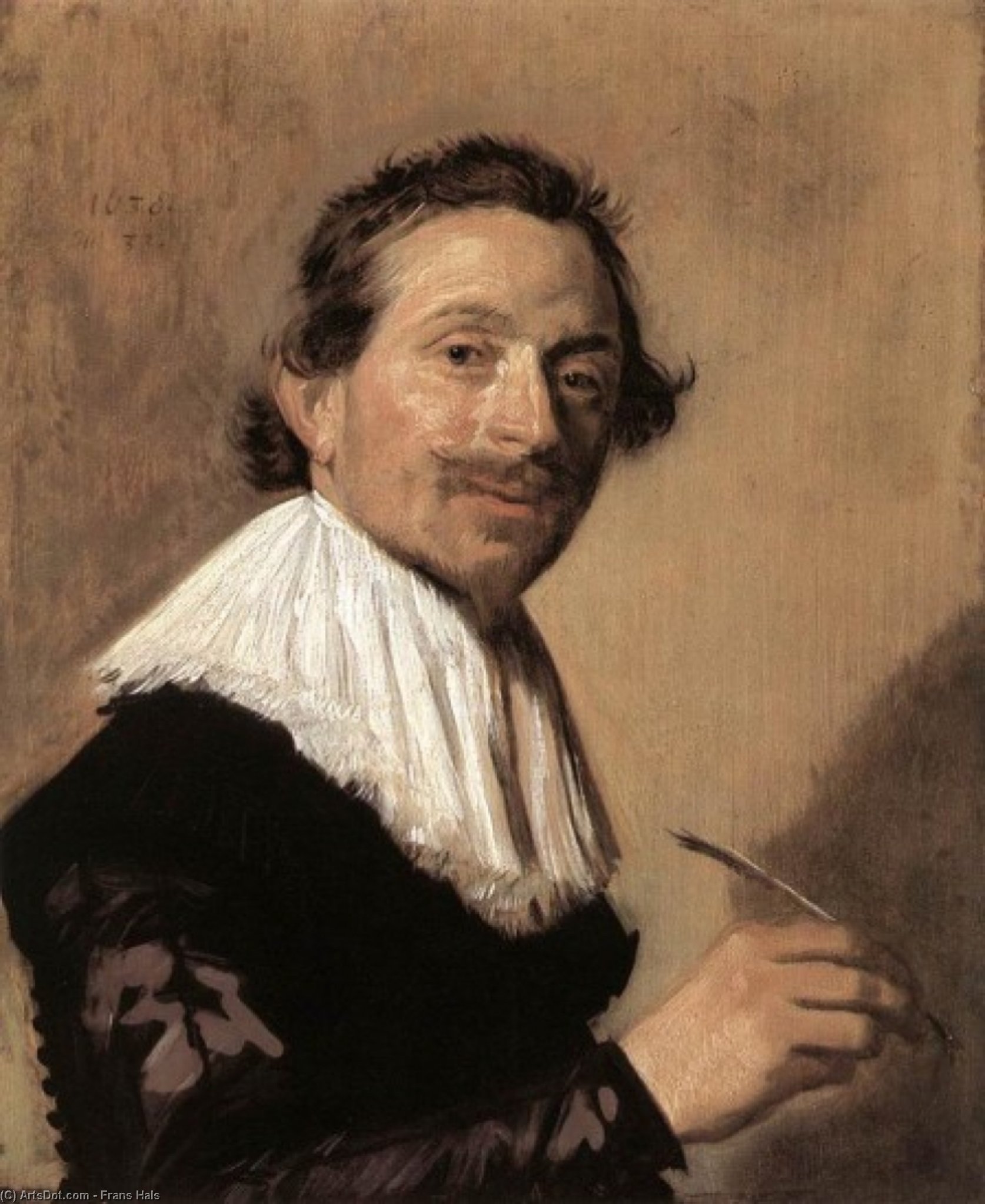
Frans Hals’s “Jean de la Chambre,” painted in 1638, isn't merely a portrait; it’s a carefully constructed tableau of quiet dignity and understated wealth. This intimate depiction of a Haarlem merchant offers a rare glimpse into the life of a man defined by his profession and social standing – a testament to Hals’s remarkable ability to capture not just likeness but also character and mood. The painting, measuring a modest 20 x 16 cm, belies the depth of emotion and observation contained within its frame.
The subject himself is presented with an almost unnerving directness. Jean de la Chambre sits squarely before us, his gaze unwavering and serious. His hands, clasped together in a gesture of composure and perhaps contemplation, draw the eye immediately. Hals masterfully employs a loose, expressive brushstroke – a hallmark of his style – to render the textures of the man’s clothing: the dark velvet jacket, the crisp white collar, and the subtle sheen of the leather gloves. This technique imbues the portrait with a remarkable sense of immediacy, as if we've stumbled upon a private moment frozen in time.
The Language of Detail – Symbolism and Context
Beyond the straightforward portrayal of the sitter, “Jean de la Chambre” is rich in subtle symbolism. The background wall, adorned with a clock, immediately anchors the scene within its historical context—the 17th century, an era defined by burgeoning commerce and meticulous timekeeping. Clocks were not just instruments for measuring hours; they represented order, control, and the relentless pursuit of wealth – values deeply intertwined with the merchant class. The two books visible in the lower right corner further reinforce this association, suggesting a man of learning and intellectual pursuits alongside his mercantile endeavors.
The inclusion of these details speaks to Hals’s keen eye for composition and his ability to weave narrative into a single image. It's not simply a likeness; it’s a carefully considered statement about the subject’s identity and place within society. The muted palette – dominated by browns, blacks, and creams – contributes to the painting’s overall sense of seriousness and gravitas, reflecting the solemnity of the man depicted.
Hals' Revolutionary Technique
Frans Hals was a revolutionary figure in 17th-century portraiture. Unlike many of his contemporaries who favored painstaking detail and smooth surfaces, Hals deliberately embraced an unfinished quality – a technique he called “black velvet.” He layered paint thinly, allowing the wood grain to peek through, creating a vibrant, almost shimmering effect. This approach wasn’t about sloppiness; it was a conscious decision to capture the fleeting nature of expression and the dynamism of life.
In "Jean de la Chambre," this technique is particularly evident in the handling of the sitter's face – the subtle shifts in tone, the delicate modeling of the features. Hals doesn’t attempt to render every wrinkle or pore with photographic precision; instead, he focuses on conveying the essence of Jean de la Chambre’s personality—his intelligence, his self-assurance, and perhaps even a hint of melancholy. The painting is a powerful demonstration of Hals's ability to imbue a portrait with life and emotion through masterful brushwork.
A Timeless Portrait – Reproduction Possibilities
OriginalUniqueArt offers meticulously crafted hand-painted reproductions of “Jean de la Chambre,” allowing you to experience the artistry and emotional depth of this iconic work in your own home or office. Our skilled artists replicate Hals’s unique technique with exceptional accuracy, capturing the nuances of color, texture, and brushstroke that make this portrait so compelling. Whether you're an art collector, a design enthusiast, or simply someone who appreciates beauty, a OriginalUniqueArt reproduction provides a stunning and authentic representation of this remarkable masterpiece.
Біографія митця
Frans Hals I: Dutch Golden Age Master of Portraiture & Genre Scenes
Frans Hals I was a Dutch painter born in Antwerp, Belgium, around 1580. Though his early life remains somewhat shrouded in mystery, he rose to become one of the most important figures of the Dutch Golden Age, celebrated for his innovative portraiture and genre scenes—a period marked by unprecedented artistic creativity and cultural flourishing.Early Life and Training
Information about Hals’s formative years is scarce; however, it's believed he received initial artistic training in Antwerp, a vibrant hub for painting during his time. The city was experiencing significant religious upheaval following the Eighty Years’ War, impacting daily life and shaping artistic sensibilities. Despite these challenges, Hals’s family relocated to Haarlem in the Netherlands shortly after 1585—a move that would prove pivotal to his career trajectory. He joined the Haarlem Guild of St. Luke in 1610, formally establishing himself as a professional artist and immersing himself within the established artistic community.Artistic Style and Development
Hals distinguished himself through an astonishingly fresh and spontaneous style—a radical departure from many of his contemporaries who prioritized meticulous detail. Instead, he embraced a loose and expressive brushstroke, injecting his paintings with palpable energy and capturing the essence of his subjects’ personalities in ways that were revolutionary for the era. This technique wasn't merely about accuracy; it was about conveying emotion and immediacy—a hallmark of Hals’s artistic vision.- He skillfully rendered figures as they appeared in fleeting moments – bursts of laughter, animated conversation, or contemplative contemplation.
- Hals’ masterful manipulation of light and shadow created dramatic depth and heightened the emotional impact of his compositions.
Notable Works
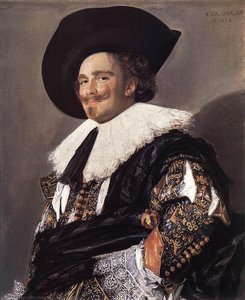
Hals produced an impressive repertoire of paintings spanning portraiture and genre scenes alike. Among his most iconic creations are:- The Laughing Cavalier (1624): This masterpiece exemplifies Hals’s ability to convey character and movement with breathtaking realism. The subject's joyous expression—captured with remarkable vibrancy—is a testament to Hals’s unparalleled skill in portraying human emotion.
- Malle Babbe (c. 1633-1635): This striking portrait depicts an elderly woman with profound dignity and vulnerability. Hals’s meticulous attention to detail—particularly the depiction of wrinkles and skin texture—reveals his mastery of capturing age and conveying psychological complexity.
- Portraits of the Regents of the Old Men's Home in Haarlem (1664): This monumental group portrait showcases Hals’s exceptional talent for portraying multiple figures simultaneously while maintaining a sense of unity and atmosphere. The painting captures the quiet contemplation of its subjects—a poignant reflection on human experience.
Influences and Legacy
Determining Hals’s precise influences is difficult due to the artist's distinctive style; however, he undoubtedly absorbed elements from earlier Flemish painters like Pieter Bruegel the Elder, whose depictions of rural life resonated deeply within Hals’ artistic sensibilities. His groundbreaking technique—characterized by its loose brushwork and focus on capturing psychological nuance—influenced subsequent generations of artists.- Artists such as Adriaen Brouwer and Johannes Vermeer admired Hals's approach to portraying human emotion and capturing the atmosphere of everyday life.
- Hals’s legacy extends beyond individual paintings; he fundamentally reshaped Dutch artistic conventions, paving the way for a more expressive and psychologically informed style that would endure throughout the Baroque period.

Франс Гальс І
1580 - 1585 , Бельгия
Короткі факти
- Artistic Movement Or Style: Золотий вік Нідерландів
- Artists Or Movements Influenced By This Artist:
- Адріан Брювер
- Йоганнес Вермер
- Artists Who Influenced This Artist: ['Пітер Брюгель Старший']
- Date Of Birth: Прибл. 1580 р.
- Date Of Death: 26 серпня 1666 р.
- Full Name: Франс Гальс І
- Nationality: Нідерландський
- Notable Artworks:
- Сміючий лицар
- Малле Баббе
- Place Of Birth: Антверпен, Бельгія
Пов'язані статті

Frans Hals I: Innovation, Intimacy & the Dutch Golden Age Portrait
Explore the revolutionary portraiture of Frans Hals I, a master of the Dutch Golden Age. Discover his innovative techniques, captivating character studies & lasting impact on art history. Learn more at OriginalUniqueArt.

Топ-10 шедеврів Золотої доби нідерландського мистецтва | OriginalUniqueArt.com
Відкрийте для себе 10 шедеврів Золотої доби нідерландського мистецтва! Рембрандт, Вермеєр та інші майстри. Історія створення, унікальні техніки та натхнення для вашого інтер'єру. Репродукції картин високої якості – OriginalUniqueArt.com

Golden Light & Dutch Skies: The Timeless Magic of Dutch Golden Age Landscapes
Discover the breathtaking beauty of Dutch Golden Age landscapes. Explore the mastery of light, chiaroscuro, and 17th-century realism through an expert art history lens, celebrating the enduring legacy of the Dutch Masters for discerning collectors and art lovers.

Illuminating Innovation: Exploring the Dutch Golden Age of Painting
Explore the Dutch Golden Age of painting with OriginalUniqueArt. Discover Rembrandt, Vermeer & other Masters. Learn about key characteristics, iconic artworks, and lasting influence. Expert insights for collectors & enthusiasts.

Golden Age Reflections: Dutch Baroque Painting & Cultural Innovation
Explore the Dutch Golden Age of painting! Discover key artists like Vermeer & ter Borch, their innovative techniques, and the rich cultural context behind these Baroque masterpieces. Learn about collecting & appreciating this iconic art period.