

 Переглянути в інтер'єрі
 Надіслати як листівку
 Поділитися
 Деталі витвору
 Посібник

 Завантажити
 Схожі екземпляри
 Рентгенівське дослідження
 Слайд-шоу
 Статистика
Gran Cairo


 Розгорнути текст
Мистецький твір, представлений на цій сторінці, захищений законом про авторське право, що унеможливлює легальне створення або продаж його ідентичної репродукції. Цей захист забезпечується відповідно до міжнародних угод, таких як Бернська конвенція та національним законодавством, зокрема положеннями, що викладені в Законодавство США про авторське право — Розділ 17. Всі права захищені. Будь-яке використання без дозволу заборонено.
Цей метод повністю відповідає нормам авторського права, оскільки він не передбачає копіювання чи дублювання захищеного твору мистецтва. Натомість це творче переосмислення — створення нового малюнка під впливом оригіналу, який не є його точним відтворенням.
Гікле / Художній принт
Друк جيкле або на полотні музейної якості з оперативним виготовленням та різноманітними варіантами фінішної обробки. ( Замовити картину ручної роботи Перейти до цифрових зображень)




P118B ₴10

P118H ₴10

P118W ₴10

P438Z ₴10

P508JH ₴12

P508YH ₴12

P805H ₴10

P805Z ₴10

P919BZ ₴10

P919G ₴10

P919XJ ₴10

P959ZH ₴10

P968JZ ₴12

W106C ₴8

W218G ₴10

W218JH ₴8

W218Y ₴10

W307PJ ₴10

W316G ₴10

W316PJ ₴8

W316Y ₴10

W398PJ ₴8

W4111J ₴10

W500HY ₴15

W500JH ₴15

W692G ₴12

W849H ₴8

W940BG ₴15

W953PJ ₴8




Обирайте з наших стандартних розмірів, що відповідають оригінальним пропорціям твору мистецтва.

Введіть необхідну ширину та висоту, щоб принт ідеально підійшов до вашої рами або стіни. Принт можна лише обрізати, але не можна зробити більшим за оригінал, тому при зміні пропорцій частина зображення буде втрачена. Перед друком ми надсилаємо вам цифровий макет для затвердження. Зображення на цій сторінці не відображає реальну обрізку — її можна побачити лише на макеті.
Доставка по всьому світу () за 2 тижні замість стандартних 4/5 тижнів. (27 Жовтень)

Безкоштовна експрес-доставка по всьому світу

Високоякісне лляне полотно

Повне страхове покриття доставки

Гарантія повернення митних зборів

Гарантія точного відтворення кольорів

Політика повернення протягом 100 днів (лише у разі виявлення дефектів)

Гарантія повернення 100% коштів

Пропозиція на оптові замовлення
 Скляний варіант доступний лише для розмірів до 110 см

Gran Cairo
Гікле / Художній принт
Розмір репродукції
-


Підсумкова вартість
₴ 3586
A Symphony of Geometric Precision
In the vast landscape of twentieth-century abstraction, few works capture the hypnotic allure of pure form as effectively as Frank Stella’s Gran Cairo. Created in 1962, this masterpiece serves as a profound exploration of visual perception, where the boundaries between color and shape begin to dissolve into a mesmerizing dance. At first glance, the viewer is met with a striking interplay of concentric squares, each layer pulsating with a spectrum of hues that range from deep, resonant reds to luminous, sun-drenched yellows. It is an artwork that does not merely sit upon a wall; it commands the space around it, inviting the eye into a rhythmic journey through a meticulously constructed labyrinth of light and pigment.
The brilliance of Gran Cairo lies in its ability to achieve a sense of profound depth while maintaining a resolute flatness. Through the masterful application of oil paint on canvas, Stella achieves flawlessly smooth transitions that suggest a continuous, breathing surface. This technique draws heavily from the principles of Op Art, utilizing optical illusions to create a sensation of movement within a static medium. For the discerning collector or interior designer, this piece offers a unique architectural quality; its structured, grid-like arrangement provides a sense of order and stability, yet its vibrant palette injects an undeniable energy into any sophisticated environment.
The Legacy of Color and Form
To understand the intellectual weight behind Gran Cairo, one must look toward the pedagogical foundations that shaped Stella’s vision. The artwork is a brilliant manifestation of the theories of Josef Albers, particularly the concept of simultaneous contrast, where colors are seen to change based on their neighbors. Stella’s meticulous understanding of how a warm yellow might ignite when placed against a deep crimson allows the painting to function as a living experiment in color theory. This scientific precision is balanced by the expressive influence of Hans Hofmann, whose teachings encouraged an appreciation for the emotional resonance found within abstract structures.
This period of Stella's career marked a revolutionary departure from the turbulent, gestural emotions of Abstract Expressionism. Rather than seeking to express the artist's inner psyche through chaotic brushstrokes, Stella sought a purity of objecthood. In Gran Cairo, we see the seeds of Minimalism—a movement that prioritized the painting as a physical object rather than a window into another world. The work embodies a sense of contained energy, where the repetition of geometric forms creates a feeling of eternal balance and harmony. It is a sophisticated choice for those seeking to decorate a space with art that is both intellectually stimulating and aesthetically transcendent, offering a timeless elegance that resonates far beyond its mid-century origins.
Питання та відповіді
Кольори у творі "Gran Cairo" виглядають насиченими чи ніжними?
Кольори в «Gran Cairo» роботи Франк Стела мають Vivid насиченість.
Чи доступний попередній перегляд «Gran Cairo» у доповненій реальності?
Для твору "Gran Cairo" доступна функція попереднього перегляду в доповненій реальності: на сторінці Перегляд в AR ви можете побачити його у власному інтер'єрі за допомогою сумісного пристрою.
«Gran Cairo» роботи Франк Стела — це світлий чи темний твір мистецтва?
Загальна яскравість твору "Gran Cairo" становить balanced, а його світловий показник — Gentle Luminance.
Біографія митця
Frank Stella
Frank Stella, who passed away on May 4, 2024, at the age of 87, was a towering figure in American art, a relentless innovator whose career spanned seven decades and challenged conventional notions of painting, sculpture, and architectural design. Born in Malden, Massachusetts, in 1936 to first-generation Italian-American parents, Stella’s artistic journey began with an early exposure to the visual world through his mother's landscape paintings and a formative education at Phillips Academy Andover, where he encountered the rigorous color theories of Josef Albers and the expressive power of Hans Hofmann. These influences, coupled with studies in history at Princeton University and frequent trips to New York City galleries, laid the groundwork for a radical departure from the prevailing Abstract Expressionism of the time. Stella wasn’t interested in the emotional turmoil or subjective gesture that defined artists like Pollock and Kline; he sought something purer, more objective—a distillation of painting down to its most fundamental elements.Rejecting Illusion: The Rise of Minimalism
Stella's emergence onto the art scene in the late 1950s was nothing short of revolutionary. He famously declared that “a painting should be a flat surface with paint on it—nothing more,” a statement that became a manifesto for the burgeoning Minimalist movement. This philosophy materialized most strikingly in his *Black Paintings* (1958-1960), a series of canvases defined by precisely spaced, symmetrical black stripes separated by bands of exposed canvas. Works like Die Fahne Hoch! (1959) – a title deliberately provocative, referencing the Nazi anthem – weren’t intended as expressions of political sentiment but rather as explorations of form and surface, challenging viewers to confront the painting as an object in itself. The deliberate coolness and rejection of emotional content were jarring at the time, signaling a decisive break from Abstract Expressionism's emphasis on subjective experience. He wasn’t aiming to depict something *about* the world; he was presenting the world—or rather, the painting—as it *is*. This focus on materiality and geometric precision extended into his shaped canvases of the 1960s, where Stella abandoned the traditional rectangular format in favor of complex polygons, often crafted from aluminum and copper paint. These weren’t merely paintings; they were sculptural objects that blurred the boundaries between two and three dimensions, further emphasizing the artwork's physical presence.Expanding Boundaries: From Protractor Series to Maximalism
The 1970s witnessed a dramatic shift in Stella’s artistic trajectory. Influenced by Caravaggio and Rubens, he embarked on a quest for baroque painting’s expressive potential—a journey that resulted in the *Protractor Series* (1967–71), characterized by sweeping arcs and vibrant colors arranged within square borders. Simultaneously, Stella explored printmaking with fervor, mastering techniques like lithography, screenprinting, and etching to produce abstract prints mirroring his painting's geometric vocabulary. His engagement transcended artistic mediums; he collaborated on Merce Cunningham’s dance piece *Scramble* in 1967, demonstrating a willingness to integrate disciplines. A retrospective at the Museum of Modern Art in 1970 solidified Stella’s position as a leading voice within contemporary art. During this decade, he experimented with relief constructions—the *Polish Village* series (1970–73) and *Exotic Bird Paintings* (1976–80)—incorporating collage elements and aluminum supports. Departing from his earlier hard-edged style, Stella embraced a baroque aesthetic marked by gestural brushstrokes and architectural references.A Legacy of Innovation
Stella’s later career continued to push artistic boundaries—particularly with the *Moby Dick* series (1985–97), consisting of 260 prints, sculptures, and reliefs that investigated abstraction's illustrative capacity. He received numerous accolades, including the National Medal of Arts in 2009 and the Lifetime Achievement Award in Contemporary Sculpture from the International Sculpture Center in 2011. Frank Stella’s enduring influence on art history is undeniable; he redefined painting as an object—a singular surface adorned with pigment—challenging conventional artistic conventions and inspiring generations of artists to pursue formal exploration and innovation. His work remains a testament to his unwavering dedication to artistic rigor and courage, securing his place among the most significant figures in 20th-century art.
Франк Стела
1936 - , США
Короткі факти
- Artistic Movement Or Style: Мінімалізм та Постпінктовий абстракціонізм
- Artists Or Movements Influenced By This Artist: ['Мінімалізм']
- Artists Who Influenced This Artist:
- Джозеф Альберс
- Ганс Хоффман
- Джексон Поллок
- Франц Клайн
- Date Of Birth: 12 травня 1936 р.
- Date Of Death: 4 травня 2024 р.
- Full Name: Frank Philip Stella
- Nationality: Американський
- Notable Artworks:
- Die Fahne Hoch!
- Луїзіана Лоттерій Ко.
- Вольєборово IV
- Place Of Birth: Мален, США
Пов'язані статті

Neo-Abstract Art: The High-Impact Evolution of Modern Visual Energy and Geometric Sophistication
Discover the power of Neo-Abstract art. Explore how bold geometric forms and high-impact visual energy are redefining modern design. Learn to curate sophisticated, high-energy spaces with the latest trends in contemporary abstraction and structural color.

Топ-10 шедеврів геометричної абстракції: мистецтво для вашого інтер'єру від OriginalUniqueArt.com
Відкрийте для себе 10 шедеврів геометричної абстракції від Кандинського, Малевича та Мондріана! Історія мистецтва, кольори та форми. Репродукції картин преміум-класу на OriginalUniqueArt.com – ідеальний декор для вашого дому.

Beyond Form & Color: Geometric Abstraction's Evolution in 20th/21st Century Art
Explore the evolution of geometric abstraction from Cubism to contemporary art. Discover key artists like Malevich & Mondrian, investment insights, and expert collecting advice at OriginalUniqueArt.
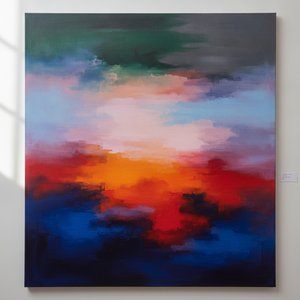
Color Field Painting: The Emotional Power of Pure Abstraction and Chromatic Depth
Explore the profound emotional depth of Color Field painting. Discover the history of mid-century abstraction, from Rothko to Newman, and learn how pure color transforms the viewer's experience through our expert art history guide.

Топ-25 шедеврів Василя Кандинського: подорож у світ абстрактного мистецтва | OriginalUniqueArt.com
Відкрийте для себе 25 найвідоміших шедеврів Василя Кандинського! Пориньте у світ абстрактного мистецтва, експресіонізму та кольорових композицій. Репродукції картин Кандинського преміум-якості на OriginalUniqueArt.com – для вашого інтер'єру з душею. Дослідіть повну колекцію онлайн!
