
 Переглянути в інтер'єрі
 Надіслати як листівку
 Поділитися
 Деталі витвору
 Посібник

 Завантажити
 Схожі екземпляри
 Рентгенівське дослідження
 Слайд-шоу
 Питання та відповіді
 Статистика
Sketch for 'The Prodigal Son'

- 34.0 x 43.0 cm


 Розгорнути текст
Гікле / Художній принт
Друк جيкле або на полотні музейної якості з оперативним виготовленням та різноманітними варіантами фінішної обробки. ( Замовити картину ручної роботи Перейти до цифрових зображень)




P118B ₴10

P118H ₴10

P118W ₴10

P438Z ₴10

P508JH ₴12

P508YH ₴12

P805H ₴10

P805Z ₴10

P919BZ ₴10

P919G ₴10

P919XJ ₴10

P959ZH ₴10

P968JZ ₴12

W106C ₴8

W218G ₴10

W218JH ₴8

W218Y ₴10

W307PJ ₴10

W316G ₴10

W316PJ ₴8

W316Y ₴10

W398PJ ₴8

W4111J ₴10

W500HY ₴15

W500JH ₴15

W692G ₴12

W849H ₴8

W940BG ₴15

W953PJ ₴8




Обирайте з наших стандартних розмірів, що відповідають оригінальним пропорціям твору мистецтва.

Введіть необхідну ширину та висоту, щоб принт ідеально підійшов до вашої рами або стіни. Принт можна лише обрізати, але не можна зробити більшим за оригінал, тому при зміні пропорцій частина зображення буде втрачена. Перед друком ми надсилаємо вам цифровий макет для затвердження. Зображення на цій сторінці не відображає реальну обрізку — її можна побачити лише на макеті.
Доставка по всьому світу () за 2 тижні замість стандартних 4/5 тижнів. (5 Листопад)

Безкоштовна експрес-доставка по всьому світу

Високоякісне лляне полотно

Повне страхове покриття доставки

Гарантія повернення митних зборів

Гарантія точного відтворення кольорів

Політика повернення протягом 100 днів (лише у разі виявлення дефектів)

Гарантія повернення 100% коштів

Пропозиція на оптові замовлення
 Скляний варіант доступний лише для розмірів до 110 см

Sketch for 'The Prodigal Son'
Гікле / Художній принт
Розмір репродукції
-


Підсумкова вартість
₴ 3638
Frank Brangwyn: A Painter of Epic Visions
Sir Frank William Brangwyn (1867–1956) was a Welsh artist, painter, watercolourist, printmaker, and designer who achieved international renown for his monumental murals and captivating landscapes imbued with dramatic light and vibrant colour. Born Guillaume François Brangwyn in Bruges, Belgium, he possessed an innate fascination for the grandeur of nature and human endeavour—a passion that would fuel his prolific artistic output throughout a lifetime dedicated to capturing moments of sublime beauty and conveying powerful narratives. His father, William Curtis Brangwyn, was a successful designer who had won a competition to design a parish church in Belgium, instilling in him an early appreciation for craftsmanship and visual form. The family’s return to England in 1875 exposed young Frank to the burgeoning artistic landscape of London, fostering an independent spirit that would define his career trajectory. Early apprenticeships with Arthur Heygate Mackmurdo and William Morris honed Brangwyn's technical skills—particularly glazing, embroidery, and wallpap—providing him with a foundational understanding of traditional art practices. However, it was his self-directed exploration of museums like South Kensington, where he encountered the Impressionists and Post-Impressionists, that truly ignited his artistic vision. This formative experience cemented his belief in capturing fleeting impressions of light and atmosphere rather than striving for photographic realism—a stylistic choice that would become synonymous with his distinctive oeuvre.- Early Influences: Brangwyn’s artistic sensibilities were profoundly shaped by the Victorian Aesthetic Movement, championed by figures like Walter Pater and John Ruskin, who advocated for art as a conduit of emotion and spiritual contemplation.
- Orientalism Revisited: Returning to Spain in 1893 after his voyage to Istanbul, Brangwyn embraced Orientalist themes—a trend popular among artists of the era—drawing inspiration from exotic landscapes and cultures.
- The British Empire Panels: His most ambitious project was the creation of sixteen monumental murals commissioned by the House of Lords commemorating the First World War. These canvases exemplify Brangwyn’s masterful technique, utilizing thick impasto application of paint to convey a sense of dynamism and grandeur.
Technique & Style: Impasto and Dramatic Light
Brangwyn's artistic method—characterized by bold impasto—involved applying pigment thickly onto canvas, creating textured surfaces that captured the essence of light and movement. This technique was particularly evident in his monumental murals, where he sought to evoke a visceral response from viewers through tactile richness and luminous colour palettes. He meticulously studied the effects of sunlight on landscapes and architectural structures, translating these observations into expressive brushstrokes—a hallmark of Post-Impressionism and aligning him with the Barbizon School’s emphasis on plein air painting. His palette favoured warm hues—yellows, oranges, and pinks—balanced by cooler tones in figures' clothing and shadows, contributing to the overall mood and atmosphere of his paintings.Symbolic Resonance: Landscapes as Narratives
Brangwyn’s landscapes weren’t merely depictions of natural beauty; they functioned as narratives conveying themes of heroism, resilience, and spiritual aspiration. Recurring motifs—such as soaring mountains, turbulent seascapes, and expansive plains—served as metaphors for overcoming adversity and embracing the sublime—concepts central to Romanticism and influencing Brangwyn's artistic vision. The artist’s meticulous attention to detail—particularly in capturing the interplay of light and shadow—reinforced this symbolic dimension, inviting viewers to contemplate profound questions about humanity’s relationship with nature and its capacity for transcendence.Legacy & Influence: A Master of Colour and Texture
Frank Brangwyn's legacy extends beyond his celebrated artworks; he profoundly impacted subsequent generations of artists who embraced his bold stylistic choices and unwavering commitment to capturing the grandeur of the natural world. His influence can be discerned in the works of artists such as Stanley Spencer and Paul Cezanne, demonstrating the enduring power of Brangwyn’s artistic vision—a testament to his mastery of colour, texture, and narrative storytelling.Питання та відповіді
Який розмір друку «Sketch for 'The Prodigal Son'» роботи Франк Бранґвін найкраще підійде для рекомендованої кімнати?
Для Living Room рекомендується друк «Sketch for 'The Prodigal Son'» у розмірі Large.
Де я можу придбати цифрове зображення «Sketch for 'The Prodigal Son'» роботи Франк Бранґвін?
Щоб отримати цифровий файл твору «Sketch for 'The Prodigal Son'» роботи Франк Бранґвін, замовте завантаження цифрового зображення високої роздільної здатності на його сторінці Цифрове зображення високої якості.
Яку емоцію передає «Sketch for 'The Prodigal Son'» роботи Франк Бранґвін?
Емоційний тон, зафіксований для «Sketch for 'The Prodigal Son'» роботи Франк Бранґвін, — Reflective. Він узагальнює почуття, які виражає цей твір.
Біографія митця
A Life Forged in Light and Labor: The World of Frank Brangwyn
Sir Frank William Brangwyn, a name synonymous with vibrant color, dramatic landscapes, and the spirit of exploration, was born in Bruges, Belgium, on May 13th, 1867. His early life, steeped in artistic tradition through his father’s work as an ecclesiastical architect, laid the foundation for a career that would span decades and leave an indelible mark on British art and decorative design. His family's relocation to England in 1875 exposed young Frank to the burgeoning artistic scene of London, fostering within him a self-directed approach to learning – skipping classes at Westminster City School to immerse himself in the treasures of the South Kensington Museum and observing the techniques of master artists like Arthur Heygate Mackmurdo. This unconventional education nurtured an independent spirit that would define his unique artistic vision. Early apprenticeships with William Morris, initially focused on practical skills such as glazing and embroidery, introduced him to the core principles of the Arts and Crafts movement – a commitment to integrating art into everyday life and celebrating craftsmanship. However, it was Brangwyn’s own passion for painting that truly ignited his creative fire, culminating in a prestigious medal at the 1891 Paris Salon for his evocative “Funeral at Sea,” a pivotal moment that solidified his dedication to artistic expression.From Maritime Scenes to Orientalist Visions
Brangwyn's initial artistic focus was firmly rooted in the world of the sea – a subject he approached with meticulous detail and an acute understanding of atmospheric effects. His early works, such as “Shipping in Open Seas” (1889), captured the drama and toil of maritime life, reflecting both his personal fascination and the prevailing tastes of the era. However, it was during extensive travels throughout the 1890s – to Istanbul, Spain, Egypt, Turkey, and Morocco – that Brangwyn’s artistic horizons dramatically expanded. These journeys proved transformative, imbuing his work with a newfound vibrancy, exotic motifs, and an appreciation for the interplay of light and color. The influence of Orientalism is powerfully evident in paintings like “The Golden Horn, Constantinople,” showcasing a shift towards bolder palettes and a more expressive approach to composition. This wasn’t merely a stylistic change; it represented a conscious effort by Brangwyn to break free from conventional artistic constraints and embrace the richness and complexity of the cultures he encountered. He became an exceptionally versatile artist, seamlessly transitioning between various mediums – painting, drawing, engraving, illustration, stained glass design, furniture design, and ceramics – demonstrating a remarkable adaptability and a deep engagement with diverse artistic traditions. His collaborations with Japanese artist Urushibara Mokuchu on woodblock prints further exemplify this willingness to experiment and fuse different cultural influences.A Prolific Output and Monumental Commissions
The sheer volume of Brangwyn’s creative output is truly astonishing – estimated at over 12,000 works encompassing a vast range of media. This prolific productivity was fueled by an unwavering dedication to his craft and an insatiable curiosity about the world around him. He became renowned for his large-scale mural commissions, characterized by their breathtaking scale, vibrant colors, intricate detail, and often monumental presence. A particularly significant moment arrived in 1895 when Siegfried Bing, a prominent art dealer, commissioned Brangwyn to decorate the exterior of Galerie l’Art Nouveau in Paris – an opportunity that opened doors to a wider international audience and further solidified his reputation as a leading figure in decorative arts. Beyond murals, Brangwyn produced numerous illustrations for publications, including a six-volume reprint of Edward William Lane’s “One Thousand and One Nights,” showcasing his talent for narrative detail and capturing the exotic allure of distant lands. His work spanned diverse projects – from designing stained glass panels to creating furniture and ceramics – reflecting his multifaceted artistic vision. However, perhaps the most ambitious and ultimately controversial undertaking was his commission in 1924 to create a series of murals depicting scenes from the British Empire for the House of Lords. While initially embraced, these monumental works were eventually rejected by Parliament due to their perceived suitability for the setting, finding a new home instead in Swansea’s Guildhall as the centerpiece of the Brangwyn Hall – a lasting testament to his artistic legacy.Key Achievements and Recognition
Throughout his illustrious career, Frank Brangwyn received numerous accolades recognizing his exceptional talent and contributions to the art world. He was knighted in 1941, a testament to his distinguished service to the nation. He became an Associate of the Royal Academy in 1904 and a full Royal Academician in 1919, further cementing his position as one of Britain’s leading artists. In 1925-26, he served as President of the Society of Graphic Art, demonstrating his commitment to fostering artistic innovation. His work was exhibited internationally, garnering critical acclaim and establishing him as a respected figure on the European art scene. Notably, in 1936, Brangwyn presented Bruges with over 400 works – a generous gift that now resides in the Arents House Museum in Belgium, symbolizing his enduring connection to his birthplace. His legacy extends beyond individual artworks; he played a significant role in shaping the aesthetic landscape of Britain and Europe during a period of profound artistic and cultural change.A Lasting Influence
Frank Brangwyn’s life was a testament to the power of dedication, innovation, and an unwavering commitment to artistic expression. His journey from a young apprentice to a celebrated artist reflects his remarkable adaptability and his ability to transcend stylistic boundaries. His murals, in particular, transformed public spaces into vibrant showcases of color and imagination, leaving a lasting impact on British art history. Brangwyn’s prolific output and versatility established him as a significant figure in late 19th and early 20th-century art, demonstrating a remarkable ability to adapt and innovate throughout his long and distinguished career. He was not merely an artist; he was a designer, a craftsman, and a visionary who sought to enrich the world around him with beauty and artistry. His influence continues to be felt today, inspiring artists and designers alike to embrace experimentation, celebrate diversity, and strive for excellence in all their endeavors.
Франк Бранґвін
1867 - 1956 , Бельгія
Короткі факти
- Artistic Movement Or Style: Мистецтво та ремесла, Орієнталізм
- Artists Or Movements Influenced By This Artist: ['Британське декоративне мистецтво']
- Artists Who Influenced This Artist: ['Уілліям Морріс']
- Date Of Birth: 1867
- Date Of Death: 1956
- Full Name: Sir Frank William Brangwyn
- Nationality: Британський
- Notable Artworks:
- Похорон на морі
- Золотий шпиль, Стамбул
- Place Of Birth (City And Country): Брюгге, Бельгія
Пов'язані статті

Топ-25 шедеврів Джона Констебла: пейзажі Англії для вашого дому | OriginalUniqueArt
Відкрийте для себе 25 найкращих шедеврів Джона Констебла! Англійські пейзажі, романтизм та емоційне світло в живописі. Репродукції картин високої якості для вашого дому від OriginalUniqueArt.com. Дослідіть повну колекцію онлайн!

Cultivating Visions: A Historical Journey Through Rural Landscapes in Art
Explore the rich history of rural landscape painting with OriginalUniqueArt. Discover Impressionist masterpieces, key artists & movements. Find your perfect serene artwork and bring nature's beauty home.

25 шедеврів Поля Сезанна: подорож у світ імпресіонізму та натюрморту | OriginalUniqueArt
Відкрийте 25 найвідоміших картин Поля Сезанна! Дослідіть імпресіонізм, натюрморти та пейзажі художника. Купіть високоякісні репродукції та знайдіть ідеальний декор для вашого дому на OriginalUniqueArt.com.
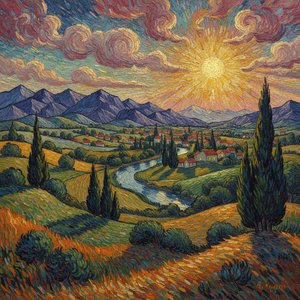
Beyond Impressionism: The Emotional Depth and Vibrant Evolution of Post-Impressionist Landscapes
Explore the profound evolution of Post-Impressionist landscapes. From Van Gogh's emotional brushwork to Cézanne's structural mastery, discover how these visionaries redefined art history through color and form in this expert guide for fine art enthusiasts.
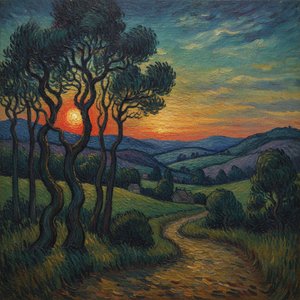
Beyond the Light: Capturing Raw Emotion and Subjective Vision in Post-Impressionist Landscapes
Explore the profound emotional depth of Post-Impressionist landscapes. Discover how masters like Van Gogh moved beyond light to capture raw human feeling through vibrant color and expressive texture in this expert art history retrospective.