
 Переглянути в інтер'єрі
 Надіслати як листівку
 Поділитися
 Деталі витвору
 Посібник

 Завантажити
 Схожі екземпляри
 Рентгенівське дослідження
 Слайд-шоу
 Питання та відповіді
 Статистика
The Love Letter


 Розгорнути текст
Гікле / Художній принт
Друк جيкле або на полотні музейної якості з оперативним виготовленням та різноманітними варіантами фінішної обробки. ( Замовити картину ручної роботи Перейти до цифрових зображень)




P118B ₴10

P118H ₴10

P118W ₴10

P438Z ₴10

P508JH ₴12

P508YH ₴12

P805H ₴10

P805Z ₴10

P919BZ ₴10

P919G ₴10

P919XJ ₴10

P959ZH ₴10

P968JZ ₴12

W106C ₴8

W218G ₴10

W218JH ₴8

W218Y ₴10

W307PJ ₴10

W316G ₴10

W316PJ ₴8

W316Y ₴10

W398PJ ₴8

W4111J ₴10

W500HY ₴15

W500JH ₴15

W692G ₴12

W849H ₴8

W940BG ₴15

W953PJ ₴8




Обирайте з наших стандартних розмірів, що відповідають оригінальним пропорціям твору мистецтва.

Введіть необхідну ширину та висоту, щоб принт ідеально підійшов до вашої рами або стіни. Принт можна лише обрізати, але не можна зробити більшим за оригінал, тому при зміні пропорцій частина зображення буде втрачена. Перед друком ми надсилаємо вам цифровий макет для затвердження. Зображення на цій сторінці не відображає реальну обрізку — її можна побачити лише на макеті.
Доставка по всьому світу () за 2 тижні замість стандартних 4/5 тижнів. (5 Листопад)

Безкоштовна експрес-доставка по всьому світу

Високоякісне лляне полотно

Повне страхове покриття доставки

Гарантія повернення митних зборів

Гарантія точного відтворення кольорів

Політика повернення протягом 100 днів (лише у разі виявлення дефектів)

Гарантія повернення 100% коштів

Пропозиція на оптові замовлення
 Скляний варіант доступний лише для розмірів до 110 см

The Love Letter
Гікле / Художній принт
Розмір репродукції
-


Підсумкова вартість
₴ 3638
A Renaissance Dialogue of Desire and Virtue
In the quiet, shadowed corridors of the French Renaissance, few works capture the delicate tension between public propriety and private longing as poignantly as François Clouet’s "The Love Letter." Executed around 1570, this oil on panel masterpiece serves as a profound window into the psychological complexities of the sixteenth century. The painting does not merely present a scene; it orchestrates a silent drama. At its heart lies a young woman, draped in luxurious, shimmering fabrics that catch the light with a tactile brilliance, embodying a breathtaking synthesis of beauty and vulnerability. She is caught in a pivotal moment of transition, where the written word becomes a bridge between the known world and the hidden depths of the heart.
The composition is masterfully structured in a triangular arrangement, a classical technique that directs the viewer’s gaze upward toward the central figure, ensuring her emotional state remains the focal point. Flanking this ethereal woman are two figures who ground the scene in human experience: an older procuress on the left, whose weathered features suggest a lifetime of shrewd observation and worldly wisdom, and a lover on the right, whose intense, admiring gaze reflects the raw, unbridled passion of youth. This grouping creates a dynamic energy, a triangular dance of characters that explores the intersection of experience, desire, and the societal structures that govern them.
The Artistry of Light and Texture
Clouet’s technical prowess is on full display through his innovative use of chiaroscuro. By employing dramatic light sources that illuminate the central figures while allowing the background to recede into an undefined, dark void, he achieves a palpable sense of three-dimensional volume. This technique, reminiscent of the great masters of the Fontainebleau School, lends the skin tones a luminous quality and gives the heavy folds of the drapery a sculptural weight. For the discerning collector or interior designer, this interplay of light and shadow offers an unparalleled depth that can transform the atmosphere of any room, providing a sophisticated focal point that commands attention through subtlety rather than noise.
Beyond the play of light, the painting is a triumph of meticulous detail. Clouet’s ability to render diverse textures—the crispness of the parchment, the soft sheen of silk, and the intricate patterns of the man's doublet—demonstrates the Flemish naturalism he inherited from his lineage. Every brushstroke serves to heighten the sensory experience of the viewer, making the tactile reality of the scene almost palpable. This level of detail ensures that a high-quality reproduction remains a captivating subject for close study, revealing new nuances of craftsmanship with every glance.
Symbolism and Emotional Resonance
Every element within "The Love Letter" is imbued with symbolic weight. The letter itself, held aloft by the procuress, acts as more than just a prop; it is a conduit for unspoken anxieties and secret hopes. It represents the power of communication to both reveal truth and create tension within the confines of societal expectations. The contrast between the older man’s experience and the younger man’s ardent admiration invites the viewer to contemplate the cyclical nature of human emotion—the movement from the heat of passion to the calculated wisdom of age.
For those seeking to adorn a space with art that speaks to the soul, this work offers an enduring emotional impact. It is a painting of intimacy and intrigue, perfect for creating a sophisticated, contemplative environment. Whether placed in a grand library or a contemporary living space, Clouet’s masterpiece brings with it a sense of historical gravity and a timeless exploration of the human condition, making it an exquisite choice for anyone looking to invest in art that transcends mere decoration to become a true narrative centerpiece.
Питання та відповіді
Скільки людей переглядають "The Love Letter"?
Сторінка Статистика переглядів для роботи «The Love Letter» роботи Франсуа Клюэ містить статистику публічних переглядів: кількість щомісячних відвідувань цього твору, порівняння з найбільш популярними роботами митця та географію відвідувачів.
Яка яскравість у «The Love Letter» роботи Франсуа Клюэ?
Кольори твору "The Love Letter" мають рівень яскравості М'яке сяйво.
Яка насиченість та інтенсивність кольорів у «The Love Letter» роботи Франсуа Клюэ?
Кольори твору «The Love Letter» роботи Франсуа Клюэ вирізняються Стриманість кольорів насиченістю та Збалансований інтенсивністю.
Біографія митця
A Legacy of Likeness: The World of François Clouet
François Clouet, a name synonymous with the refined portraiture of the French Renaissance, emerged from a lineage steeped in artistic skill and courtly favor. Born around 1510 in Tours, France, his life unfolded against a backdrop of evolving artistic sensibilities and the opulent world of the Valois monarchy. He wasn’t merely a painter; he was a chronicler of an era, capturing the essence of kings, queens, and courtiers with a meticulousness that continues to captivate viewers today. The shadow of his father, Jean Clouet, loomed large – both artists shared not only a profession but also the familiar nickname ‘Janet,’ leading to occasional confusion in attributing their works across generations. Yet, François carved his own distinct path, blending Flemish naturalism with an emerging Italianate grace, and establishing himself as one of France’s most celebrated portraitists.Inheriting a Tradition: Early Life and Artistic Formation
The early years of François Clouet remain somewhat veiled in historical obscurity, but his artistic trajectory was undeniably shaped by the legacy of his father. Jean Clouet, originating from the Southern Netherlands, brought with him to the French court the meticulous detail and realistic approach characteristic of Flemish painting. This foundation formed the bedrock of François’s training. A pivotal moment arrived in 1541 when François inherited his father's estate, formally stepping into his artistic inheritance and assuming the responsibilities that came with it. This wasn’t simply a transfer of property; it was an assumption of a role within the very fabric of the French court. The Clouet family also enjoyed a unique connection to the Italian Renaissance through Jean’s time in Amboise, exposing François to the burgeoning ideals and innovative techniques emanating from Italy – a subtle but significant influence that would later manifest in his work. He absorbed not just technique, but an understanding of how art could serve as both documentation and celebration of power and status. He mastered the Flemish style's ability to render textures and forms with astonishing accuracy, mirroring Jean Clouet’s dedication to realism.The Art of Revelation: Style and Major Works
François Clouet’s oeuvre is defined by a remarkable precision and elegance. His portraits weren’t merely likenesses; they were insightful studies of character, capturing not only physical features but also the personality and social standing of his subjects. He possessed an extraordinary ability to convey royal authority and sophistication, as evidenced in several notable depictions of Francis I – masterpieces housed in institutions like the Uffizi Gallery and the Louvre Museum. These portraits exemplify Clouet’s masterful command of *chiaroscuro*, skillfully manipulating light and shadow to sculpt form and imbue his subjects with a palpable sense of presence. Beyond Francis I, Clouet’s brush immortalized other key figures of the era. He likely painted portraits of Catherine de' Medici at Versailles, contributing to a visual record of her influential reign – a testament to his ability to portray aristocratic grandeur. Perhaps one of his most celebrated achievements is the chalk drawing of Mary, Queen of Scots, held in the Bibliothèque nationale – a work that showcases his mastery of capturing delicate features and conveying emotional depth with astonishing subtlety. Other notable works include portraits of Elizabeth of Austria (Louvre), Marguerite of France (Chantilly), and Charles IX (Château de Chantilly).A Defining Aesthetic: Characteristics of Clouet’s Art
Several hallmarks define François Clouet's distinctive style.- Elaborate Detail: A meticulous attention to detail permeates his work, evident in the intricate rendering of clothing, jewelry, and facial features – every element contributing to a sense of realism and opulence.
- Accurate Drawing: Clouet’s portraits are grounded in precise anatomical rendering and skillful use of line, demonstrating a mastery of draftsmanship that underpinned his artistic vision.
- Exquisite Completeness: His compositions convey a sense of wholeness and personality, going beyond mere physical representation to capture the inner life of his subjects. He didn’t just paint faces; he painted individuals.
A Lasting Impression: Historical Significance and Legacy
François Clouet’s contributions to French Renaissance art are profound. He played a crucial role in establishing portraiture as a prominent genre in France, elevating the status of the artist and providing invaluable visual records of the royal court. He bridged the gap between medieval artistic traditions and the emerging Renaissance ideals, incorporating humanistic principles into his work. As a court painter for multiple French monarchs – Francis I, Henry II, Francis II, and Charles IX – he documented the lives and appearances of key figures in French history, creating a visual archive that continues to inform our understanding of this period. His meticulous style and attention to detail profoundly influenced subsequent generations of French portraitists, solidifying his place as a pivotal figure in the development of French art. As a symbol of artistic excellence and royal patronage, François Clouet’s legacy endures—a testament to his unwavering dedication to capturing beauty and truth within the confines of his canvases. He died on December 22, 1572, shortly after the tumultuous St. Bartholomew's Day Massacre – a poignant end for an artist who had dedicated his life to immortalizing the world around him.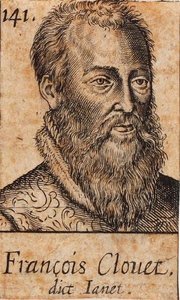
Франсуа Клюэ
1510 - 1572 , Франція
Короткі факти
- Artistic Movement Or Style: Ренесанс портретна живописня
- Artists Or Movements Influenced By This Artist: ['Французькі портретисти']
- Artists Who Influenced This Artist:
- Жан Клюе
- Леонардо да Вінчі
- Date Of Birth: c. 1510
- Date Of Death: 1572
- Full Name: François Clouet
- Nationality: Франція
- Notable Artworks:
- Портрет Генріха II
- Франциск І, Король Франції
- Марія Сьюарда
- Place Of Birth: Tours, France
Пов'язані статті

Charles-André van Loo: A Study in Rococo Portraiture & the French Court's Artistic Dynamics
Explore the elegant world of Charles-André van Loo, a master of Rococo portraiture at the French court. Discover his life, techniques, and enduring influence on 18th-century art. Hand-painted reproductions available.
François Boucher: Rococo Master of Myth, Sensuality, and the French Court
Explore the captivating world of François Boucher, master of Rococo painting! Discover his iconic works, aristocratic patronage, and lasting influence on French art history. Learn more at OriginalUniqueArt.
The Enduring Motif of Love in Art History: A Cross-Cultural Exploration of Representation and Emotion
Explore the rich history of love in art! Discover iconic masterpieces, artistic techniques & cultural symbolism from antiquity to modern times. Expert analysis for collectors.

The Enduring Legacy of Formal Portraiture: Power, Identity & Artistic Exploration
Explore the rich history of formal portraiture & its enduring power to capture identity and shape perception. Discover investment-worthy artworks, expert appraisals, and custom reproduction services at OriginalUniqueArt.

François Flameng: Bridging Academic Tradition & Impressionistic Sensibility
Explore the captivating works of François Flameng, a celebrated French painter bridging academic tradition & Impressionistic sensibilities. Discover his portraits, landscapes, and poignant WWI art with insights from OriginalUniqueArt.

