Переглянути в інтер'єрі
 Надіслати як листівку
 Поділитися
 Детальніше

 Завантажити
 Схожі експонати
 Рентгенівське дослідження
 Слайд-шоу
 Статистика
Duro es el paso!

 Читати далі
Гікле / Художній принт
Музейна якість друку جيкле або на полотні з оперативним виготовленням та різноманітними варіантами фінішної обробки. ( Замовити репродукцію ручної роботи Перейти до цифрових зображень)




































Обирайте з наших стандартних розмірів, що відповідають оригінальним пропорціям твору мистецтва.

Ви можете вказати власні розміри, щоб репродукція ідеально підійшла до конкретної рами або інтер'єру. Якщо обраний вами розмір не відповідає пропорціям оригіналу, ми або обріжемо полотно, або розширимо зображення за допомогою дзеркального відображення чи суцільної заливки країв. Перед початком виробництва вам буде надіслано цифровий макет для затвердження.
Будь ласка, зверніть увагу, що попередній перегляд на екрані не відображає фактичне обрізання або розширення. Тільки макет точно покаже фінальну композицію.
Хоча можливість замовлення індивідуальних розмірів доступна, ми рекомендуємо обирати формат із попередньо визначеного списку, щоб зберегти оригінальні пропорції.
Доставка по всьому світу () за 2 тижні замість стандартних 4/5 тижнів. (18 Вересень)

Безкоштовна експрес-доставка по всьому світу

Високоякісне лляне полотно

Повне страхове покриття доставки

Гарантія відшкодування митних зборів

Гарантія точного відтворення кольорів

Політика повернення протягом 100 днів (тільки у разі виявлення дефектів)

Гарантія повернення 100% коштів

Пропозиція на оптові замовлення
 Скляний варіант доступний лише для розмірів до 110 см

Duro es el paso!
Гікле / Художній принт
Розмір репродукції
-


Підсумкова вартість
$ 80
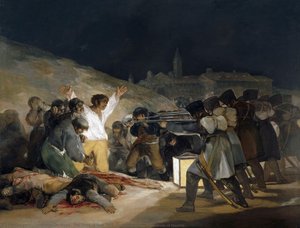
Duro es el paso!: A Chronicle of Struggle and Resilience
Francisco José de Goya y Lucientes’s etching print, “Duro es el paso!” (“The Road Is Hard”), transcends mere visual representation; it embodies a profound statement about human endurance and the burdens of societal obligation. Executed between 1810 and 1814 during his turbulent exile from Spain following Napoleon's invasion, this artwork serves as a poignant reflection of the grim realities faced by ordinary people under oppressive rule—a theme that firmly establishes Goya’s place among the foremost chroniclers of human suffering in European art history.Composition and Technique: A Symphony of Line
The print’s horizontal orientation immediately emphasizes the daunting incline of the hill upon which figures struggle to ascend, mirroring the arduous journey of resistance against tyranny. Goya skillfully employs a triangular compositional arrangement, anchoring the scene with the ladder—a symbol of precarious progress—and populated by individuals striving upwards from both sides. This dynamic structure generates palpable tension and directs the viewer’s gaze toward the central action, capturing the essence of desperation and determination. The etching technique itself is paramount to conveying this emotional intensity. Goya meticulously scratched lines into a copper plate using etching needles, transferring tonal variations onto paper through ink application—a process that demands precision and artistic sensitivity. Thick, bold lines delineate prominent forms like the ladder and figures, while hatching – closely spaced parallel lines – simulates textures such as clothing and skin, creating an illusion of depth and physicality. Cross-hatching further amplifies shadows, deepening the dramatic effect and reinforcing the pervasive atmosphere of hardship.Symbolism: The Ladder of Hope Amidst Adversity
Beyond its masterful execution, “Duro es el paso!” resonates with powerful symbolic significance. The steep slope represents not merely physical difficulty but embodies the broader challenge of confronting injustice and overcoming obstacles—a metaphor for the uphill battle faced by those resisting oppression. The ladder serves as a poignant emblem of aspiration and resilience; it symbolizes the precarious path toward liberation, highlighting the effort required to persevere despite overwhelming odds. Each figure’s strained posture and expression communicates exhaustion, despair, and unwavering resolve – emotions that powerfully convey the psychological toll exacted by oppressive circumstances.Historical Context: Goya's Witness to Napoleon’s Reign
Created during Goya’s exile from Madrid—a period marked by political upheaval and personal tragedy—the etching reflects the anxieties of his time. Following Napoleon’s invasion, Spain endured a brutal occupation, subjecting its populace to hardship and brutality. Goya documented these experiences unflinchingly, transforming artistic convention into a vehicle for social critique. His work stands as a testament to the human spirit's capacity for endurance in the face of adversity—a timeless reminder that even amidst darkness, hope persists.Emotional Impact: A Somber Reflection on Human Condition
“Duro es el paso!” is undeniably unsettling yet profoundly compelling. Goya’s masterful manipulation of tonal contrast and line density evokes a visceral response from the viewer, mirroring the emotional turmoil experienced by those subjected to oppressive forces. The print's somber palette—dominated by shades of gray—underscores the gravity of its subject matter, prompting contemplation on themes of suffering, resilience, and the enduring struggle for dignity. It remains an unforgettable image – a testament to Goya’s unparalleled ability to capture the complexities of human emotion and experience within the confines of artistic form.Біографія митця
The Spanish Soul: A Life Forged in Shadow and Light
Francisco José de Goya y Lucientes, a name that echoes through the corridors of art history, embodies a profound paradox. He was simultaneously a product of his era – deeply rooted in the traditions of Old Masters – and a visionary who anticipated the anxieties and expressive freedom of modern art. Born in 1746 in the unassuming village of Fuendetodos, Spain, Goya’s journey from a provincial artist to court painter, and ultimately, to a chronicler of human suffering and societal decay, stands as a testament to his extraordinary talent and the turbulent times he navigated. His early artistic training began at fourteen under José Luzán y Martinez, laying a foundational understanding of classical techniques before he moved to Madrid and honed his skills with Anton Raphael Mengs, then the dominant artistic force within the Spanish court. This initial period instilled in him a mastery of form and composition, vividly demonstrated in his early commissions – intricate designs for tapestries depicting lively scenes from everyday life, reflecting a Rococo sensibility tempered by a distinctly Spanish realism. His marriage to Josefa Bayeu, sister to another painter within the royal circle, further solidified his position within the artistic establishment. These early works, while charming and skillfully executed, offered little indication of the profound emotional depth and unsettling darkness that would characterize much of his later oeuvre.Ascension and Transformation: From Courtly Grace to Inner Turmoil
Goya’s ascent through the ranks of the Spanish court was steady and marked by consistent success. He secured a position as a painter to the Royal Chamber in 1786, receiving a continuous stream of portrait commissions from the aristocracy and royalty. These portraits are remarkable not merely for their technical brilliance – Goya possessed an uncanny ability to capture likeness with unflinching honesty – but also for their astute psychological insight. He didn’t simply paint what his sitters *looked* like; he revealed something of their character, their vulnerabilities, and even the hidden anxieties that lay beneath their carefully constructed facades. The Countess of Chinchón, for example, is not merely a beautiful woman adorned in elegant attire; she radiates intelligence and perhaps a touch of melancholy – an understanding far beyond a simple depiction of physical beauty. However, beneath this veneer of courtly success, a significant transformation was taking place within Goya. In 1793, he suffered a devastating illness that left him profoundly deaf, an event that irrevocably altered his perception of the world and, consequently, his artistic vision. This affliction plunged him into a period of intense introspection and isolation, severing his connection to the social life he once enjoyed and forcing him inward, towards a darker, more subjective reality. The shift in his artistic style was dramatic – bright colors faded, replaced by somber palettes, loose brushwork, and compositions charged with emotional intensity. He began to explore themes of madness, violence, and the irrational, foreshadowing the anxieties that would grip Europe during the coming decades.The Dark Visions: Caprichos, Disasters, and Black Paintings
This period of artistic ferment culminated in some of Goya’s most iconic and unsettling works. Los Caprichos, a series of eighty etchings published in 1799, served as a scathing satire of Spanish society – its follies, superstitions, and moral corruption laid bare with biting wit and unflinching irony. The images are often grotesque yet captivating, populated by witches, monstrous figures, and caricatures of the aristocracy, all rendered with a masterful command of etching techniques. Yet, it was The Disasters of War, created between 1810 and 1820, that truly cemented Goya’s reputation as a fearless chronicler of human suffering. These harrowing etchings depict the brutal realities of the Peninsular War – the atrocities committed by both sides, the widespread starvation, the despair, and the utter devastation inflicted upon the Spanish people. They are not romanticized accounts of battle; they are unflinching portrayals of its horrors, devoid of any glorification or sentimentality. Perhaps most profoundly disturbing are The Black Paintings, a series of fourteen murals Goya painted directly onto the walls of his house, “Quinta del Sordo” (the Deaf Man’s Villa), between 1819 and 1823. These works – including the terrifying Saturn Devouring His Son and the haunting Asmodea – represent a descent into the darkest recesses of the human psyche, expressing themes of despair, madness, and existential dread with unparalleled intensity. They marked a radical departure from traditional artistic conventions, anticipating the expressive power of abstract art.Themes and Techniques
Throughout his career, several recurring themes consistently emerge in Goya’s work. The exploration of human folly and societal corruption is prominent in Los Caprichos, while the horrors of war are brutally depicted in The Disasters of War. A fascination with darkness, superstition, and the irrational permeates much of his later output, culminating in the unsettling imagery of The Black Paintings. Technically, Goya was a master of various mediums. He excelled in portraiture, demonstrating an uncanny ability to capture not only physical likeness but also psychological depth. His use of color evolved significantly over time, transitioning from the lighter palettes of his early works to the somber tones of his later paintings and etchings. He was particularly innovative in his printmaking techniques, utilizing aquatint to create tonal variations and dramatic effects.- Etching: Goya’s mastery of etching allowed him to achieve intricate details and expressive lines.
- Aquatint: This technique enabled him to create a range of tones and textures, enhancing the emotional impact of his prints.
- Brushwork: His loose and expressive brushwork, particularly in his later paintings, contributed significantly to their sense of immediacy and emotional intensity.
A Legacy of Innovation and Influence
In 1824, disillusioned by the political unrest in Spain, Goya sought exile in Bordeaux, France, where he continued to work until his death in 1828. His final years were marked by a renewed focus on printmaking, culminating in the La Tauromaquia series, which explored the spectacle and brutality of bullfighting. Francisco José de Goya y Lucientes’s legacy is immense and far-reaching. He stands as a pivotal figure in art history, bridging the gap between the Old Masters and the modern movement. His influence can be seen in the works of countless artists who followed – from Édouard Manet and Pablo Picasso to Francis Bacon – all drawn to his expressive brushwork, psychological depth, and willingness to confront uncomfortable truths. He challenged artistic conventions, embraced innovation, and dared to explore the darker aspects of human experience, leaving behind a body of work that continues to resonate with audiences today. Goya wasn’t merely painting pictures; he was holding up a mirror to society, forcing us to confront our own flaws and vulnerabilities, and reminding us of the enduring power – and fragility – of the human spirit.
Франсіско Гоя
1746 - 1828 , Іспанія
Короткі факти
- Artistic Movement Or Style: Романтизм
- Artists Or Movements Influenced By This Artist:
- Едуард Мане
- Пабло Пікассо
- Artists Who Influenced This Artist:
- Антон Рафаель Ментс
- Хосе Лузан
- Date Of Birth: 30 березня 1746
- Date Of Death: 16 квітня 1828
- Full Name: Франсіско Хосе де Гоя і Лусієнтас
- Nationality: Іспанець
- Notable Artworks:
- «Розстріл захисників Мадрида»
- «Капрічіос»
- «Вбивство Сільви»
- Place Of Birth: Фуентедос, Іспанія
Пов'язані статті
Francisco Goya: Darkness & Enlightenment – A Comprehensive Exploration of the Artist's Life, Works, and Enduring Legacy
Explore the life & works of Francisco Goya, Spain's Romantic master. Discover his evolution from court painter to a visionary chronicler of war and social injustice. A comprehensive guide for art enthusiasts.

Etching: A Historical Survey of Technique, Aesthetic Qualities & Enduring Artistic Significance
Explore the rich history of etching, from its origins to Rembrandt's masterful innovations. Discover the technique, aesthetic qualities & enduring legacy of this captivating art form. Expert insights for collectors and enthusiasts.

Топ-25 шедеврів Гойї: історія мистецтва для вашого дому | OriginalUniqueArt
Відкрийте 25 шедеврів Франсіско Гойї! Історія мистецтва, глибокі портрети та темні офорти іспанського романтизму. Купіть репродукції картин Гойї для вашого дому на OriginalUniqueArt.com – музейна якість та бездоганний декор.
Топ-10 легендарних офортів, що змінили мистецтво: від Рембрандта до Гойї | OriginalUniqueArt
Відкрийте для себе 10 легендарних офортів Рембрандта, Гойї та інших майстрів! Історія мистецтва в кожній гравюрі. Купуйте високоякісні репродукції офортів для вашого дому на OriginalUniqueArt.com.
Shadows of the Spanish Soul: An In-Depth Exploration of Francisco Goya’s Iconic Masterpieces
Delve into the transformative genius of Francisco Goya. From royal portraits to the visceral Black Paintings, explore the history behind his most powerful works. Discover museum-grade, hand-painted oil reproductions meticulously crafted by master artists at OriginalUniqueArt.com.