

 Переглянути в інтер'єрі
 Надіслати
 Поділитися
 Деталі
 Посібник

 Завантажити
 Схожі предмети колекціонування
 Рентгенівське дослідження
 Слайд-шоу
 Статистика переглядів
Still Life


 Читати далі
Олійная репродукція ручної роботи
Написана вручну олією на полотні у вашому розмірі та рамі, виготовлена на замовлення нашими художниками. ( Перейти до друку Перейти до цифрових зображень)




P118B ₴10

P118H ₴10

P118W ₴10

P438Z ₴10

P508JH ₴12

P508YH ₴12

P805H ₴10

P805Z ₴10

P919BZ ₴10

P919G ₴10

P919XJ ₴10

P959ZH ₴10

P968JZ ₴12

W106C ₴8

W218G ₴10

W218JH ₴8

W218Y ₴10

W307PJ ₴10

W316G ₴10

W316PJ ₴8

W316Y ₴10

W398PJ ₴8

W4111J ₴10

W500HY ₴15

W500JH ₴15

W692G ₴12

W849H ₴8

W940BG ₴15

W953PJ ₴8




Обирайте з наших стандартних розмірів, що відповідають оригінальним пропорціям твору мистецтва.

Введіть необхідну ширину та висоту, щоб картина підійшла до вашої рами або стіни. Оскільки це ручний розпис, для розміру іншої форми художник може написати трохи більше навколо картини або трохи обрізати її — вибір за вами. Перед початком роботи ми надішлемо вам цифровий макет для затвердження. Зображення, показане на цій сторінці, не є реальним результатом — лише макет відображає майбутній вигляд.
Після оформлення замовлення команда OriginalUniqueArt.com зв'яжеться з клієнтом електронною поштою для отримання інструкцій та надасть попередній макет
Доставка по всьому світу () за 3–4 тижні замість стандартних 5 тижнів. (22 Жовтень). Без жодних компромісів у якості.

Безкоштовна експрес-доставка по всьому світу

Високоякісне лляне полотно

Повне страхове покриття доставки

Гарантія повернення митних зборів

Гарантія точного відтворення кольорів

Політика повернення протягом 100 днів (лише у разі виявлення дефектів)

Гарантія повернення 100% коштів

Знижка на оптові замовлення
 Скляний варіант доступний лише для розмірів до 110 см

Still Life
Техніка репродукції
Розмір репродукції
-


Загальна вартість
₴ 13459
A Moment Frozen in Time: Ferdinand Guillaimin’s “Still Life”
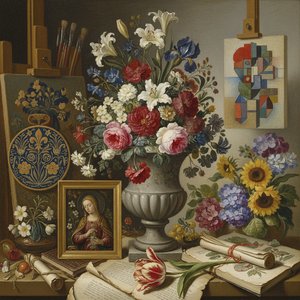
Ferdinand Guillaimin's "Still Life," painted in 1872, isn’t merely a depiction of objects arranged on a table; it’s a carefully constructed tableau brimming with quiet observation and subtle symbolism. This work, rendered in the heart of the Impressionist movement, captures a fleeting moment of domestic tranquility – a scene both familiar and imbued with an understated elegance. The painting immediately draws the eye to the central arrangement: a vase overflowing with vibrant red and yellow flowers, their petals seemingly caught mid-bloom, radiating warmth against the cooler tones that dominate the rest of the composition. Beside them rests a worn book, its pages hinting at untold stories and intellectual pursuits, while a simple bowl holds what appears to be fruit – perhaps apples or pears – adding another layer of earthly abundance.
Guillaimin’s technique is distinctly Impressionistic, prioritizing capturing the *impression* of light and color rather than precise detail. Loose brushstrokes dance across the canvas, creating an atmospheric haze that softens the edges of each object. He masterfully employs broken color – applying small dabs of paint side-by-side to build up hues and create a shimmering effect, particularly noticeable in the reflections on the table’s surface. The dark background serves not as mere backdrop but as a crucial element, intensifying the luminosity of the floral arrangement and lending the scene a sense of intimacy and depth. The artist's focus is less on photographic realism and more on conveying the *feeling* of being present within this quiet space.
The Context of Parisian Impressionism
To fully appreciate “Still Life,” it’s essential to understand the artistic climate in which Guillaimin was working. The 1870s were a period of profound change and experimentation for French art, marked by the rise of Impressionism. Artists like Monet, Renoir, and Pissarro sought to break free from the rigid conventions of academic painting, embracing plein air (outdoor) painting and capturing the ephemeral qualities of light and atmosphere. Guillaimin’s work reflects this spirit of innovation, moving away from traditional subject matter and exploring new ways of representing the world around him.
Guillaimin's connection to Pissarro is particularly noteworthy. The artist spent a significant period painting alongside Pissarro in Pontoise, a suburb of Paris, where he found inspiration in the everyday life of the region. This proximity fostered a collaborative environment, allowing Guillaimin to refine his style and develop his unique approach to capturing light and color. The Impressionists were not simply interested in depicting what they *saw*; they were driven by a desire to express their subjective experience of the world.
Symbolism and the Language of Objects
Beyond its aesthetic qualities, “Still Life” is rich with symbolic meaning. The flowers themselves represent beauty, fragility, and the fleeting nature of life – themes frequently explored in Impressionist art. The book suggests knowledge, contemplation, and a connection to the past. The bowl of fruit symbolizes abundance, nourishment, and the pleasures of earthly existence. Even the dark background can be interpreted as representing mortality or the unknown.
Guillaimin’s use of these objects is deliberate and carefully considered, inviting the viewer to engage in a process of interpretation. He doesn't offer explicit explanations; instead, he presents a series of interconnected symbols that resonate with universal themes of beauty, life, and death. The arrangement feels deliberately balanced, creating a harmonious composition that evokes a sense of peace and serenity.
A Legacy of Delicate Beauty
Ferdinand Guillaimin’s “Still Life” stands as a testament to the power of observation and the enduring appeal of simple subjects rendered with exquisite sensitivity. It's a painting that rewards close attention, revealing layers of meaning and emotional depth with each viewing. Reproductions capture much of the original atmosphere, but nothing quite replicates the subtle nuances of light and color that define Guillaimin’s masterful technique.
Today, this work is celebrated for its evocative beauty and its contribution to the development of Impressionism. It remains a poignant reminder of the quiet moments of everyday life – a timeless meditation on beauty, mortality, and the enduring power of art.
Запитання та відповіді
Яку кольорову палітру використовує "Still Life"?
У творі «Still Life» Фердинанд Гуїйоммін використана Earthy палітра кольорів. Ця палітра узагальнює загальний колірний характер роботи.
Чи є роботи, схожі на "Still Life"?
Сторінка Схожі твори для твору «Still Life» Фердинанд Гуїйоммін містить схожі витвори мистецтва.
Хто створив "Still Life" і коли?
Автором «Still Life» є Фердинанд Гуїйоммін, а дата створення твору — 1872.
Біографія митця
Early Life and Artistic Beginnings
Жан-Батьйо́р Арма́нд Гуїлламе́н, французький імпресіоністський живописець і літографіст, народився 16 лютого 1841 року в Парижі. Його мистецький шлях розпочався у середині 19-го століття, у час, коли імпресіонізм здобував популярність у Франції. Він виріс у робітничій родині, був онуком Жана Жозефа Гуїлламена – нотаріуса, і з дитинства його захоплювали мальовничі краєвиди та гори центральної Франції, зокрема, регіон Молінь, де він вперше познайомився з Ежену Мурером, кондитерським майстром, письменником-самоуком, художником та колекціонером імпресіоністських твор. Цей дружба був нерозривною протягом усього життя Гуїлламена. Він навчався в Парижі, працюючи клерком у лавці з білизною, одночасно вивчаючи мистецтво під керівництвом скульптора Луї Калюета в Академії Suisse. Саме там він познайомився з такими художниками, як Курбе, Моне та Писсо. Він швидко захопився ідеями імпресіонізму, що прагнув зафіксувати миттєві враження від світла та кольору в природі.Development of Style and Association with the Impressionists
Згодом Гуїлламен приєднався до групи художників, які стали відомі як "Анонімна спілка живописців, скульпторів, графіків" (пізніше – Імпресіоністи). Він брав участь у перших спільних виставках імпресіоністів у 1874 році в колишньому майстерні фотографа Надара на бульварі Капюсін. Його роботи, часто з димчастими, м’якими пейзажами, які відображали дух імпресіонізму, привернули увагу критиків та колекціонерів. Гуїлламен був визнаний талановитим draftsman, який створював чудові зрілі композиції. Він тісно співпрацював із такими видатними художниками, як Моне, Курбе та Писсо, обмінювався ідеями та впливом. Його творчість була позначена впливом символізму – напряму, який підкреслював світ снів та містики, що проявляється у використанні насичених кольорів та емоційних тем.Notable Works and Museums
Сьогодні роботи Гуїлламена знаходяться в багатьох музеях і колекціях по всьому світу, зокрема, в Музеї мистецтва Маунт-Голіок Колледж (США) та інших відомих інституціях. Серед його найвідоміших творів – "Сади в Жанвіль" (1878), "Річкова сцена", "Вид на Пуї де Дом". Його картини часто зображують сільські пейзажі, ліси та міські вулиці, виконані яскравими, насиченими кольорами. Він був особливо захоплений запечатлюванням світла та тіней, що змінюються протягом дня.Legacy and Remembrance
Жан-Батьйо́р Арма́нд Гуїлламе́н помер 26 червня 1927 року, але його внесок в імпресіонізм залишається неоціненним. Його творчість продовжує надихати художників і приваблювати глядачів у всьому світі. Він є важливим представником французького імпресіонізму та символізму, а його роботи демонструють унікальний погляд на світ та майстерне володіння технікою живопису. Його мистецтво – це вічне свідчення краси природи та людського сприйняття.
Фердинанд Гуїйоммін
1841 - 1927 , Франція
Довідкова інформація
- Artistic Movement Or Style: імпресіонізм
- Artists Or Movements Influenced By This Artist:
- Вінсент ван Гог
- Поль Сезанн
- Artists Who Influenced This Artist: ['Клод Моне']
- Date Of Birth: 16 лютий 1841
- Date Of Death: 26 черв 1927
- Full Name: Jean Baptiste Armand Guillaumin
- Nationality: Француз
- Notable Artworks:
- Сад у Жанвіль
- Річкова сцена
- Вид на Пуде Дю Ом
- Place Of Birth: Париж, Франція
Схожі статті

Blossoms of Time: A Historical Journey Through Flower Painting
Explore the captivating history of flower painting! Discover Dutch masters, symbolic meanings, & botanical art. Expert insights & high-quality reproductions at OriginalUniqueArt.
Blossoming Symbolism: A Historical Journey Through Flowers in Western Painting
Explore the rich history of flower symbolism in Western painting! Discover how artists from the Renaissance to Modernism used blossoms to convey meaning, emotion & beauty. Learn about iconic artworks and movements.

Топ-10 шедеврів імпресіонізму: мистецтво миттєвості для вашого дому
Пориньте у світ імпресіонізму! Відкрийте 10 культових картин Моне, Ренуара та Дега. Історія мистецтва, кольори та техніка – все для натхнення вашого дому. Репродукції музейної якості на OriginalUniqueArt.com.

Silent Narratives: Exploring the Enduring Appeal of Still Life Painting Across Centuries
Explore the rich history of still life painting with OriginalUniqueArt. Discover Dutch Masters, decode vanitas symbolism & learn about collecting timeless art. Expert insights and museum-quality reproductions.

25 шедеврів Поля Сезанна: подорож у світ імпресіонізму та натюрморту | OriginalUniqueArt
Відкрийте 25 найвідоміших картин Поля Сезанна! Дослідіть імпресіонізм, натюрморти та пейзажі художника. Купіть високоякісні репродукції та знайдіть ідеальний декор для вашого дому на OriginalUniqueArt.com.