

 Переглянути в інтер'єрі
 Надіслати як листівку
 Поділитися
 Детальніше

 Завантажити
 Схожі експонати
 Рентгенівське дослідження
 Слайд-шоу
 Статистика
Cupid with a Tambourine
 Etching
- WallArt
- Symbolist Illustration
 19th Century
 14.0 x 10.0 cm
 Hammer Museum
 Читати далі
Олійная репродукція ручної роботи
Написана вручну олією на полотні у вашому розмірі та рамі, виготовлена на замовлення нашими художниками. ( Перейти до друку Перейти до цифрових зображень)




P118B $10

P118H $10

P118W $10

P438Z $10

P508JH $12

P508YH $12

P805H $10

P805Z $10

P919BZ $10

P919G $10

P919XJ $10

P959ZH $10

P968JZ $12

W106C $8

W218G $10

W218JH $8

W218Y $10

W307PJ $10

W316G $10

W316PJ $8

W316Y $10

W398PJ $8

W4111J $10

W500HY $15

W500JH $15

W692G $12

W849H $8

W940BG $15

W953PJ $8




Обирайте з наших стандартних розмірів, що відповідають оригінальним пропорціям твору мистецтва.

Ви можете вказати власні розміри, щоб репродукція ідеально підійшла до конкретної рами або інтер'єру. Якщо вибраний вами розмір не відповідає пропорціям оригіналу, ми або обріжемо полотно, або доповнимо картину додатковими елементами, промальованими вручну. Цифровий макет буде надіслано вам на затвердження перед початком виробництва.
Зверніть увагу, що попередній перегляд на екрані не відображає фактичне обрізання або розширення зображення. Тільки макет точно покаже остаточну композицію.
Хоча ми можемо виготовити виріб у нестандартному розмірі, для збереження оригінальних пропорцій рекомендуємо обирати варіанти зі встановленого списку.
Після оформлення замовлення команда OriginalUniqueArt.com зв'яжеться з клієнтом електронною поштою для отримання інструкцій та надасть попередній макет
Доставка по всьому світу () за 3–4 тижні замість стандартних 5 тижнів. (18 Вересень). Без жодних компромісів у якості.

Безкоштовна експрес-доставка по всьому світу

Високоякісне лляне полотно

Повне страхове покриття доставки

Гарантія відшкодування митних зборів

Гарантія точного відтворення кольорів

Політика повернення протягом 100 днів (тільки у разі виявлення дефектів)

Гарантія повернення 100% коштів

Пропозиція на оптові замовлення
 Скляний варіант доступний лише для розмірів до 110 см

Cupid with a Tambourine
Матеріал репродукції
Розмір репродукції
-


Підсумкова вартість
$ 300
Felicien Rops’s “Cupid with a Tambourine”: A Study in Melancholic Beauty
Felicien Rops's "Cupid with a Tambourine," an etching from 1875, is not merely a depiction of the Roman god of love; it’s a carefully constructed tableau of wistful contemplation and subtle unease. Rops, a pivotal figure bridging Realism, Symbolism, and the nascent world of illustrated storytelling, masterfully employs line and tone to evoke an atmosphere far deeper than simple romantic imagery. The work, now housed within the UCLA Grunwald Center for the Graphic Arts at the Hammer Museum, offers a glimpse into Rops’s uniquely shadowed vision – one that frequently explored themes of beauty intertwined with melancholy and a fascination with the darker corners of human experience.
A Technical Masterpiece: Line, Tone, and Etching
The etching itself is a testament to Rops's technical skill. The foundation lies in the meticulous process of etching – a technique involving scratching lines into a metal plate (typically copper) before applying ink and then transferring the image onto paper through pressure. Rops’s control over this medium is remarkable, evidenced by the incredibly fine, delicate lines that delineate Cupid’s features, his wings, and even the scattered leaves beneath him. The use of hatching and cross-hatching creates a rich tapestry of tones, lending depth and volume to the composition without resorting to broad, flat areas of color. Notice how the varying density of these lines subtly suggests texture – the rough surface of the ground, the smooth curve of the tambourine, and the delicate folds in Cupid’s clothing.
Symbolism and Emotional Resonance: A Quiet Lament
Beyond its technical brilliance, “Cupid with a Tambourine” is laden with symbolic meaning. The figure of Cupid himself is presented not as an exuberant embodiment of passion, but rather in a posture of quiet introspection. He’s seated cross-legged, holding the tambourine close – an instrument often associated with celebration and joy – yet his gaze is averted, suggesting a detachment from the very emotions he represents. The setting, a simple ground plane strewn with leaves, reinforces this sense of solitude. The choice of a muted color palette—primarily shades of gray, white, and black—contributes to the overall mood of melancholy. It’s as if Rops is inviting us to contemplate not the fleeting pleasures of love, but its deeper, more complex implications – perhaps even hinting at the bittersweet nature of longing and unfulfilled desire.
Contextualizing a Symbolist Vision
To fully appreciate “Cupid with a Tambourine,” it’s crucial to understand Rops's place within the broader context of 19th-century art. He was deeply influenced by Symbolism, an artistic movement that sought to express subjective emotions and ideas rather than objective reality. Rops shared this interest in exploring the darker side of human experience, often depicting scenes of beauty intertwined with decay, death, and psychological distress. His work frequently drew inspiration from mythology, folklore, and literature – particularly works by Edgar Allan Poe and Charles Baudelaire. The etching’s quiet intensity and evocative atmosphere align perfectly with the aesthetic sensibilities of the Symbolist movement, offering a poignant meditation on love, loss, and the human condition.
A Timeless Image for Collectors and Designers
“Cupid with a Tambourine” remains a powerfully resonant image today. Its exquisite craftsmanship, evocative symbolism, and haunting beauty make it an ideal choice for collectors seeking works of art that transcend mere decoration. The piece’s understated elegance also lends itself beautifully to interior design – its muted tones and contemplative mood providing a sophisticated counterpoint to brighter spaces. Reproductions, such as those offered by OriginalUniqueArt.com, allow us to experience the full impact of Rops's vision without the limitations of the original medium, ensuring that this timeless image continues to captivate audiences for generations to come.
Біографія митця
Félicien Rops – A Shadowy Visionary: The Life and Art of Félicien Rops
Félicien Victor Joseph Rops, born in Namur, Belgium (1833), stands as a singular figure bridging the stylistic currents of Realism, Symbolism, and the burgeoning realm of modern graphic storytelling. His life unfolded against a backdrop of considerable social transformation – his father’s textile enterprise representing bourgeois stability juxtaposed with an inner artistic restlessness—a duality that profoundly shaped his creative trajectory. Early training at local academies provided foundational skills, yet it was his relocation to Brussels at twenty that truly ignited the flame of his artistic vocation. Though briefly enrolled at the University of Brussels, Rops swiftly abandoned academic pursuits for the vibrant intellectual atmosphere of Saint-Luc Academy, where he honed his craft not solely in painting and drawing but also in the art of satire through lithography—a skill that would become central to his distinctive style. His debut publications in *Le Crocodile* and *L'Uylenspiegel*, featuring caricatures targeting societal hypocrisy, established him as a gifted satirist with an astute understanding of contemporary anxieties. These formative years weren’t merely about mastering technique; they were about discovering his voice—a voice that would soon become synonymous with challenging conventions and delving into the darker recesses of human psychology.Early Years & Artistic Formation
Rops's childhood in Namur instilled a meticulous observation of detail and an appreciation for naturalistic representation, skills he carried forward into his artistic endeavors. However, it was Brussels—a city undergoing rapid industrialization and grappling with questions of national identity—that truly nurtured his rebellious spirit and propelled him toward innovative artistic experimentation. His enrollment at Saint-Luc Academy wasn’t merely a pursuit of formal training; it was an immersion in the intellectual currents of Symbolism, where he encountered influential figures like Gustave Moreau and Jean Frémiet d'Orléans who championed expressive color palettes and evocative imagery—influences that would permeate his subsequent work. Crucially, Rops recognized the power of lithography as a medium for disseminating social critique and capturing fleeting moments of emotion—a conviction that fueled his prolific output in student magazines and solidified his reputation as a master printmaker. His father’s textile business provided financial stability, allowing him to dedicate himself fully to artistic pursuits without compromising on personal comfort.Parisian Encounters & The Embrace of Symbolism
The year 1862 marked a decisive juncture in Rops's life—his move to Paris, a city pulsating with artistic dynamism and intellectual ferment. Here, he encountered Félix Bracquemond and Jules Ferdinand Jacquemart—etchers who championed the use of aquatint and mezzotint techniques—artists whose mastery inspired him to push the boundaries of printmaking innovation. These encounters profoundly shaped his artistic vision, propelling him toward Symbolism’s exploration of dreamlike landscapes, mythological narratives, and psychological introspection. Perhaps most significantly, Rops forged an enduring connection with Charles Baudelaire—the poet who revolutionized literary aesthetics by embracing decay and confronting taboo subjects—a relationship that fueled his fascination with the darker side of human experience and solidified his position as a champion of Symbolist ideals. Baudelaire’s influence is palpable in Rops's haunting depictions of figures caught between beauty and terror, reflecting the anxieties of the fin de siècle—a period marked by scientific advancements alongside spiritual disillusionment.A Pioneer of Printmaking & Graphic Narrative
Rops distinguished himself as a virtuoso printmaker, mastering techniques rarely employed by his contemporaries—particularly soft-ground etching—which allowed him to achieve unparalleled tonal subtlety and expressive nuance. His prints are characterized by meticulous detail, dramatic chiaroscuro, and an atmosphere imbued with psychological depth—qualities that transcend mere visual representation and convey profound emotional resonance. Beyond his technical prowess, Rops revolutionized graphic storytelling through his contributions to student publications like *Le Crocodile* and *L'Uylenspiegel*, establishing himself as a pioneer of sequential art. His drawings captured the spirit of the era—social satire, political critique, and explorations of human psychology—often employing fantastical imagery and unsettling narratives that challenged conventional artistic norms. He skillfully integrated text and image, creating dynamic compositions that amplified narrative impact—a technique that foreshadowed developments in comic strips decades later.Legacy & Influence
Rops’s oeuvre continues to captivate audiences today for its artistic merit, historical significance, and unwavering commitment to confronting taboo subjects—themes that resonate powerfully across generations of artists. Edvard Munch and Max Klinger recognized Rops's innovative printmaking techniques and his fearless exploration of psychological anxieties—artists whose work bears the indelible stamp of Symbolist aesthetics. His enduring influence extends beyond individual stylistic borrowings; it embodies a broader ethos of artistic experimentation, social critique, and psychological introspection—a legacy that secures his place as one of Belgium’s most visionary artists and a pivotal figure in the history of modern graphic art. He remains an exemplar of artistic integrity and intellectual curiosity—a testament to the transformative power of confronting darkness while striving for beauty.
Феліцієн Ропс
1833 - 1898 , Бельгія
Короткі факти
- Artistic Movement Or Style: Символізм, Декаданс
- Artists Or Movements Influenced By This Artist:
- Едвард Мунк
- Макс Клінгер
- Artists Who Influenced This Artist:
- Фélix Браккмон
- Жюль Фердинанд Якемар
- Шарль Бодерле
- Date Of Birth: 7 липня 1833 р.
- Date Of Death: 23 серпня 1898 р.
- Full Name: Félicien Victor Joseph Rops
- Nationality: Бельгієць
- Notable Artworks:
- «Порнократес»
- «Сатана сіє насіння»
- «Спокуса святого Антонія»
- Place Of Birth: Нямюр, Бельгія
Пов'язані статті

The Intricate World of Etching: A Historical Survey of Technique, Aesthetic Evolution, and Enduring Artistic Impact
Explore the rich history of etching, from its origins to modern practice. Discover techniques, key artists like Rembrandt, and insights for collectors. A comprehensive guide by OriginalUniqueArt.
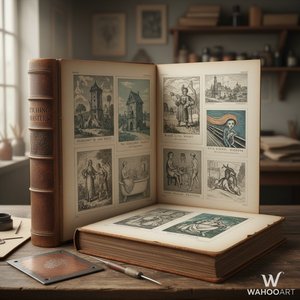
Топ-10 легендарних офортів, що змінили мистецтво: від Рембрандта до Гойї | OriginalUniqueArt
Відкрийте для себе 10 легендарних офортів Рембрандта, Гойї та інших майстрів! Історія мистецтва в кожній гравюрі. Купуйте високоякісні репродукції офортів для вашого дому на OriginalUniqueArt.com.

Etching: A Historical Survey of Technique, Aesthetic Qualities & Enduring Artistic Significance
Explore the rich history of etching, from its origins to Rembrandt's masterful innovations. Discover the technique, aesthetic qualities & enduring legacy of this captivating art form. Expert insights for collectors and enthusiasts.
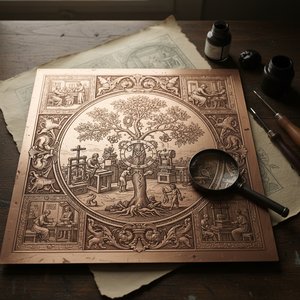
The Art of Etching: Mastering Lines, Texture, and Depth in the Intaglio Tradition
Explore the intricate world of etching and intaglio printmaking. Discover how masters use acid and metal to create profound textures and lines, from Romanticism to modern era, through an expert lens of art history and technical mastery.
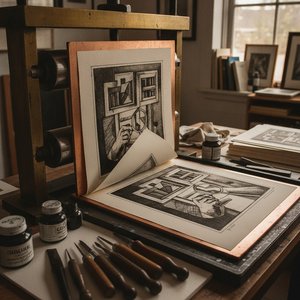
Etching Unlocked: The Sharp, High-Impact Art of Line and Shadow for the Modern Collector
Master the high-impact world of etching. Explore the transformative power of line and shadow through the intaglio tradition, from its armor-making origins to modern collecting strategies for the sophisticated art enthusiast.