

 Переглянути в інтер'єрі
 Надіслати
 Поділитися
 Деталі
 Посібник

 Завантажити
 Схожі предмети колекціонування
 Рентгенівське дослідження
 Слайд-шоу
 Статистика переглядів
[Lady
 Acrylic On Canvas
- WallArt
- Expressionist Nature
 1922
1922 47.0 x 35.0 cm
 MAM Rio
 Читати далі
Гікле / Художній принт
Музейна якість друку جيкле або на полотні з оперативним виготовленням та різноманітними варіантами фінішної обробки. ( Купити картину ручної роботи Перейти до цифрових зображень)




P118B ₴10

P118H ₴10

P118W ₴10

P438Z ₴10

P508JH ₴12

P508YH ₴12

P805H ₴10

P805Z ₴10

P919BZ ₴10

P919G ₴10

P919XJ ₴10

P959ZH ₴10

P968JZ ₴12

W106C ₴8

W218G ₴10

W218JH ₴8

W218Y ₴10

W307PJ ₴10

W316G ₴10

W316PJ ₴8

W316Y ₴10

W398PJ ₴8

W4111J ₴10

W500HY ₴15

W500JH ₴15

W692G ₴12

W849H ₴8

W940BG ₴15

W953PJ ₴8




Обирайте з наших стандартних розмірів, що відповідають оригінальним пропорціям твору мистецтва.

Введіть необхідну ширину та висоту, щоб принт ідеально підійшов до вашої рами або стіни. Принт можна лише обрізати, але не можна зробити більшим за оригінал, тому при зміні пропорцій частина зображення буде втрачена. Перед друком ми надсилаємо вам цифровий макет для затвердження. Зображення на цій сторінці не відображає реальну обрізку — її можна побачити лише на макеті.
Доставка по всьому світу () за 2 тижні замість стандартних 4/5 тижнів. (22 Жовтень)

Безкоштовна експрес-доставка по всьому світу

Високоякісне лляне полотно

Повне страхове покриття доставки

Гарантія повернення митних зборів

Гарантія точного відтворення кольорів

Політика повернення протягом 100 днів (лише у разі виявлення дефектів)

Гарантія повернення 100% коштів

Знижка на оптові замовлення
 Скляний варіант доступний лише для розмірів до 110 см

[Lady
Гікле / Художній принт
Розмір репродукції
-


Загальна вартість
₴ 3585
A Portrait of Quiet Intensity: Emil Nolde’s “Lady”
Emil Nolde's "Lady," painted in 1922, isn’t merely a portrait; it’s a distilled essence of introspection and subtle power. Executed in watercolor on paper, the work immediately possesses a captivating vintage quality – a delicate softness that belies the profound emotional depth contained within its simple composition. The painting depicts a woman, her features rendered with an almost hesitant delicacy, yet imbued with a remarkable stillness. Her gaze, directed slightly off-center, invites the viewer into a private world, fostering a sense of intimate observation rather than straightforward representation.
Nolde’s style at this period – roughly midway through his career – is characterized by an expressive use of color and a willingness to depart from photographic realism. He wasn't interested in capturing a likeness; instead, he sought to convey mood and feeling. The palette here is restrained yet luminous: muted blues and greens dominate, punctuated by the warm blush of her dress and the delicate pink of a flower nestled within her hair. This careful orchestration of color contributes significantly to the painting’s overall atmosphere – one of quiet contemplation and understated elegance.
The Echoes of Expressionism and Folk Art
To understand “Lady,” it's crucial to situate it within the broader context of Nolde’s artistic development. He was a key figure in Die Brücke (The Bridge), an early German Expressionist group that rejected academic traditions in favor of subjective experience and emotional intensity. However, unlike some of his fellow Brücke members, Nolde retained a strong connection to folk art – particularly the expressive power of primitive masks and carvings from his native Schleswig-Holstein. This influence is evident in the painting’s simplified forms and its avoidance of overly detailed rendering.
Furthermore, Nolde's early life profoundly shaped his artistic vision. Born Hans Emil Hansen into a family deeply rooted in rural traditions and religious beliefs, he carried with him a sense of connection to the natural world and a reverence for the spiritual. This is subtly reflected in the painting’s serene atmosphere and its suggestion of timelessness – as if the subject exists outside of conventional time and place.
Symbolism and the Enigma of the Subject
The flower in the woman's hair, a delicate pink bloom, carries significant symbolic weight. It represents beauty, fragility, and perhaps even remembrance. Its placement is deliberate, drawing attention to her face and subtly enhancing the sense of intimacy. The slight tilt of her head, combined with her averted gaze, creates an air of mystery – we are left wondering about her thoughts and feelings. Is she lost in contemplation? Does she hold a secret? Nolde deliberately avoids providing definitive answers, allowing the viewer to project their own interpretations onto the image.
The woman’s posture is remarkably relaxed, yet there's an underlying tension—a quiet strength that suggests resilience. She isn’t passively receiving; she is actively observing, holding herself with a dignified composure. This subtle interplay of vulnerability and fortitude makes “Lady” a compelling study in human character.
A Timeless Masterpiece: Reproduction Possibilities
OriginalUniqueArt offers meticulously crafted hand-painted reproductions of Emil Nolde’s "Lady," ensuring that the painting's delicate beauty and emotional resonance are faithfully preserved. Each reproduction is created by skilled artists using archival-quality materials, guaranteeing its longevity and authenticity. Whether you seek a stunning addition to your art collection or a unique piece for your interior design scheme, our reproductions provide an exceptional opportunity to experience the power and allure of this iconic work. The original’s intimate scale – 47 x 35 cm – is perfectly replicated, allowing you to bring Nolde's evocative portrait into your space with remarkable fidelity.
Запитання та відповіді
Яка сприймається яскравість твору «[Lady» Еміль Нольде?
Відчутна яскравість твору «[Lady» Еміль Нольде становить balanced. Її можна підібрати відповідно до освітлення в запланованому інтер'єрі.
Як поєднуються техніка та стиль у "[Lady"?
«[Lady» Еміль Нольде поєднує в собі техніку Acrylic On Canvas зі стилем Expressionist Nature. Техніка та напрям описують спосіб створення та стилістику твору.
Як стиль твору "[Lady" пов'язаний з епохою його творця?
У «[Lady» Еміль Нольде напрям Expressionist Nature поєднується з епохою — XIX століття.
Біографія митця
Early Life and Artistic Beginnings
Emil Nolde, a name synonymous with vibrant expressionism, was born Hans Emil Hansen on August 7th, 1867, in the small village of Nolde, nestled within the Schleswig-Holstein region of Germany. His origins were deeply rooted in rural life – his family’s livelihood intertwined with the rhythms of farming and a strong connection to their local community. Despite this grounding, young Hans harbored an intense yearning for artistic expression, a passion that initially met resistance from his parents who envisioned a more practical future for him. However, Nolde's determination burned bright, and he relentlessly pursued his artistic dreams, beginning with humble beginnings as a wood carver and furniture decorator – skills that would later inform the tactile quality of his paintings. It was in his late twenties that he truly dedicated himself to painting, embarking on a journey of self-discovery through color and form.Artistic Development and Influences
Nolde’s artistic path wasn't paved with formal training; instead, it unfolded through a process of intense self-education and profound immersion in diverse cultural experiences. He traveled extensively, absorbing the spirit of various landscapes and art movements. Early influences were undeniably shaped by the revolutionary works of Vincent van Gogh – his passionate brushstrokes and emotive color palettes – and Paul Gauguin’s exploration of primitive themes and symbolic imagery. Crucially, Nolde was deeply moved by the expressive power of traditional folk art, particularly the masks and carvings prevalent in rural communities, which instilled within him a fascination with primal emotions and ritualistic symbolism. These encounters ignited a desire to break free from academic constraints and explore a more subjective, emotionally charged approach to painting. Initially experimenting with Realism and Impressionism, Nolde quickly gravitated towards a bolder, more expressive style – one that prioritized conveying inner feelings over strict adherence to representational accuracy.Die Brücke and Expressionist Breakthrough
In 1905, a pivotal moment arrived in Nolde’s artistic life: he co-founded *Die Brücke* (The Bridge), a groundbreaking group of German Expressionist artists based in Dresden. This collective represented a radical departure from the established art world, seeking to dismantle traditional conventions and express profound inner experiences through unrestrained experimentation. *Die Brücke* was driven by a desire to capture the anxieties and uncertainties of modern life, often depicting urban landscapes and figures with distorted forms and jarring colors. Nolde’s contribution to *Die Brücke* was significant; his masterful manipulation of color – particularly his use of intense reds, blues, and yellows – pushed the boundaries of representation and injected a raw emotionality into their work. However, Nolde maintained a somewhat independent trajectory within the group, often diverging in subject matter and stylistic approach, reflecting his deeply personal artistic vision.Key Themes and Artistic Style
Nolde’s oeuvre is characterized by recurring motifs that reveal his profound engagement with spirituality, nature, and the human condition. He frequently depicted religious scenes – from biblical narratives to depictions of saints – imbued with a sense of drama and emotional intensity. Landscapes and seascapes also held a prominent place in his work, often rendered with a brooding atmosphere and a fascination for the power of elemental forces. Portraits, too, were a recurring subject, capturing the essence of individuals through expressive brushwork and symbolic gestures. A defining characteristic of Nolde’s style is his fearless use of color – he employed it not merely to depict reality but to convey emotion, create mood, and evoke psychological states. His paintings are often marked by thick impasto techniques, adding a tactile dimension to the work. Furthermore, Nolde was deeply influenced by primitive art, particularly masks, which he saw as potent symbols of primal emotions and spiritual power.Notable Works and Historical Significance
Throughout his prolific career, Nolde created an extraordinary body of work that continues to captivate audiences today. Some of his most celebrated paintings include *Masks* (1906-1907), a series exploring the symbolic significance of masks; *The Mocking of Christ* (1909), a powerfully emotive depiction of religious suffering; *Autumn Sea* (1908), showcasing his ability to capture the drama and beauty of the natural world; *Flower Garden (Girl and Washing)*, and *Dance around the Golden Calf*. Despite facing criticism and censorship during the rise of Nazism – his work was deemed “degenerate” and removed from museums – Nolde remained steadfast in his artistic convictions. He continued to paint in secret, producing a remarkable collection of watercolor paintings that offer a glimpse into his inner world. Emil Nolde’s legacy extends far beyond his individual achievements; he remains a pivotal figure in the history of German Expressionism, whose innovative use of color and expressive brushwork profoundly influenced generations of artists. His work stands as a testament to the power of art to convey profound emotions and explore the complexities of the human experience.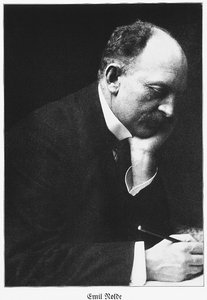
Еміль Нольде
1867 - 1956 , Німеччина
Довідкова інформація
- Artistic Movement Or Style: Виразникизм / Die Brücke
- Artists Or Movements Influenced By This Artist: ['Едуард Мунк']
- Artists Who Influenced This Artist:
- Вінсент ван Гог
- Пабло Пікассо
- Date Of Birth: 7 серпня 1867
- Date Of Death: 15 квітня 1956
- Full Name: Emil Nolde / Hans Emil Hansen
- Nationality: Німєцько-данський
- Notable Artworks:
- Надрукування Христа
- Сад квітів
- Осінній морський пейзаж
- Place Of Birth: Нільд, Шлезвіг-Гольштейн, Німеччина
Схожі статті

Топ-10 легендарних акварелей, що змінили світ мистецтва | OriginalUniqueArt
Відкрийте для себе 10 легендарних акварелей від Turner, Monet та інших майстрів! Історія мистецтва, техніки живопису та натхнення для декору вашого дому. Купуйте репродукції картин аквареллю преміум-якості на OriginalUniqueArt.com.

Акварель: Історія, Техніки та Сучасна Практика
Дізнайтеся все про акварель: історію, техніки живопису, вибір матеріалів та сучасні тенденції. Корисні поради для початківців та професіоналів від експертів.

Ephemeral Visions: Exploring the Artistic Legacy & Nuances of Watercolor Painting
Explore the captivating world of watercolor painting! Discover its rich history, essential techniques, influential artists & collecting tips from art experts. A comprehensive guide for enthusiasts.

Ephemeral Visions: Exploring the Artistic Legacy & Contemporary Practice of Watercolor Painting
Explore the captivating world of watercolor painting! Discover its rich history, essential techniques, influential artists & collecting tips. A comprehensive guide for art enthusiasts from OriginalUniqueArt.

Ephemeral Visions: Exploring the History & Emotional Resonance of Watercolor Painting
Explore the captivating history of watercolor painting, from ancient techniques to modern masters like Kandinsky & Blake. Discover essential artists, collecting tips & the emotional power of this luminous medium. Expert insights for art enthusiasts.

