Переглянути в інтер'єрі
 Надіслати як листівку
 Поділитися
 Детальніше

 Завантажити
 Схожі експонати
 Рентгенівське дослідження
 Слайд-шоу
untitled (3998)

 Читати далі
Олійная репродукція ручної роботи
Написана вручну олією на полотні у вашому розмірі та рамі, виготовлена на замовлення нашими художниками. ( Замовити принт Купити цифрове зображення)




P118B $10

P118H $10

P118W $10

P438Z $10

P508JH $12

P508YH $12

P805H $10

P805Z $10

P919BZ $10

P919G $10

P919XJ $10

P959ZH $10

P968JZ $12

W106C $8

W218G $10

W218JH $8

W218Y $10

W307PJ $10

W316G $10

W316PJ $8

W316Y $10

W398PJ $8

W4111J $10

W500HY $15

W500JH $15

W692G $12

W849H $8

W940BG $15

W953PJ $8




Обирайте з наших стандартних розмірів, що відповідають оригінальним пропорціям твору мистецтва.

Ви можете вказати власні розміри, щоб репродукція ідеально підійшла до конкретної рами або інтер'єру. Якщо вибраний вами розмір не відповідає пропорціям оригіналу, ми або обріжемо полотно, або доповнимо картину додатковими елементами, промальованими вручну. Цифровий макет буде надіслано вам на затвердження перед початком виробництва.
Зверніть увагу, що попередній перегляд на екрані не відображає фактичне обрізання або розширення зображення. Тільки макет точно покаже остаточну композицію.
Хоча ми можемо виготовити виріб у нестандартному розмірі, для збереження оригінальних пропорцій рекомендуємо обирати варіанти зі встановленого списку.
Після оформлення замовлення команда OriginalUniqueArt.com зв'яжеться з клієнтом електронною поштою для отримання інструкцій та надасть попередній макет
Доставка по всьому світу () за 3–4 тижні замість стандартних 5 тижнів. (14 Серпень). Без жодних компромісів у якості.

Безкоштовна експрес-доставка по всьому світу

Високоякісне лляне полотно

Повне страхове покриття доставки

Гарантія відшкодування митних зборів

Гарантія точного відтворення кольорів

Політика повернення протягом 60 днів (лише у разі виявлення дефектів)

Гарантія повернення 100% коштів

Пропозиція на оптові замовлення
 Скляний варіант доступний лише для розмірів до 110 см

untitled (3998)
Матеріал репродукції
Розмір репродукції
-


Підсумкова вартість
$ 300
Опис твору
Egon Schiele’s Haunting Portrait – A Study in Distress
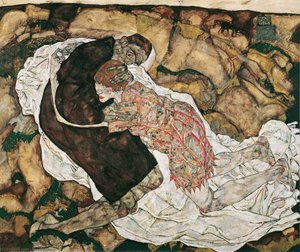
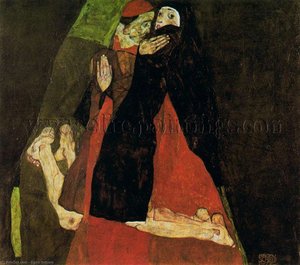
Egon Schiele's "untitled (3998)" is not merely a depiction of two figures; it’s an intensely felt exploration of vulnerability, isolation, and the unsettling undercurrents of human connection. Painted during a period of profound personal turmoil for the artist – a time marked by illness, loss, and the looming shadow of World War I – this work embodies Schiele's signature style: raw emotion rendered with a deliberate, almost violent energy. The painting presents a scene of palpable discomfort, a silent drama unfolding within a darkened space. A man clutches his face in apparent anguish, while a woman lies prone, her averted gaze suggesting both physical and emotional distress. The stark black clothing worn by all figures amplifies the atmosphere of bleakness and intensifies the sense of confinement.
A Portrait of Psychological Turmoil – Schiele’s Expressionist Vision
Schiele was a pivotal figure in the development of Expressionism, an artistic movement characterized by its subjective emotional expression rather than objective representation. He rejected academic conventions, favoring distorted forms, exaggerated lines, and jarring color palettes to convey inner states. In “untitled (3998),” this is immediately evident. The figures are not idealized; they possess a disturbing physicality – elongated limbs, contorted postures—that speaks directly to the psychological strain depicted. Schiele’s use of line is particularly striking: thick, restless strokes that seem to vibrate with anxiety and uncertainty. The background, populated by indistinct figures engaged in anonymous activities, further contributes to the painting's sense of unease and detachment, suggesting a world indifferent to the central characters’ suffering.
Historical Context & Schiele’s Personal Demons
Understanding the context surrounding this work is crucial to appreciating its depth. Egon Schiele’s life was marked by tragedy and hardship from an early age. His father, a railway station master, succumbed to syphilis, a disease that cast a long shadow over the family's history and profoundly influenced Schiele’s artistic vision. The premature death of his sister Elvira also left an indelible mark on him. These personal traumas fueled a preoccupation with mortality, illness, and the fragility of human existence – themes repeatedly explored in his oeuvre. The painting can be interpreted as a reflection of this broader psychological landscape, capturing a moment of intense emotional vulnerability within a world seemingly devoid of solace.
Symbolism & Emotional Resonance
While the precise meaning behind “untitled (3998)” remains open to interpretation, several symbolic elements contribute to its powerful impact. The man’s gesture – covering his face—suggests shame, pain, or perhaps a desperate attempt to shield himself from an unbearable reality. The woman's position, lying prone and turned away, could represent resignation, despair, or a withdrawal from connection. The overall composition creates a claustrophobic atmosphere, emphasizing the characters’ isolation and amplifying their emotional distress. It is this potent combination of visual elements and psychological depth that makes “untitled (3998)” such a compelling and enduring work of art. A reproduction offers a remarkable opportunity to experience Schiele's intensely personal vision, bringing his haunting exploration of human suffering into your space.
- Artist: Egon Schiele
- Date: Unknown
- Medium: Oil on Canvas (reproduction available)
- Size: Unknown (available in various sizes for reproduction)
Explore high-quality reproductions of “untitled (3998)” and other iconic Egon Schiele works at OriginalUniqueArt.com.
Біографія митця
A Life Forged in Expression
Egon Schiele’s life, a turbulent and intensely personal journey, unfolded from his birth in Tulln an der Donau in 1890, a small Austrian town nestled along the Danube. His early years were shadowed by profound loss – first the death of his father, Adolf Schiele, a railway station master consumed by syphilis when Egon was just fourteen, and later the untimely passing of his sister Elvira. This early exposure to mortality and grief became deeply ingrained within his artistic vision, fueling an enduring fascination with the fragility of existence and the inevitability of death. Raised initially by his mother and then under the somewhat controlling guardianship of his uncle Leopold Czihaczek, Schiele’s childhood lacked the stability often associated with conventional upbringing, yet it fostered a remarkable sense of independence and self-reliance—qualities that would profoundly shape his artistic approach. Even as a young boy, he exhibited an intense curiosity about trains – a motif that subtly reappeared throughout his career, symbolizing both movement and the passage of time. Simultaneously, he displayed a burgeoning talent for drawing, though this pursuit was initially met with disapproval from his father, who viewed it as a distraction from more “practical” endeavors. The early loss of his sister Elvira cast a long shadow over the young artist’s psyche, contributing to a pervasive sense of melancholy and vulnerability that permeated much of his work. These formative experiences—illness, loss, and a lack of stability—instilled within him an unparalleled sensitivity and emotional rawness, qualities that would become defining characteristics of his artistic expression, constantly grappling with the fundamental questions of life, death, and the human condition.The Crucible of Vienna: Artistic Development
Schiele’s formal artistic training began at the Kunstgewerbeschule (School of Arts and Crafts) in Vienna, but he quickly found himself stifled by its conservative and rigidly academic approach. Seeking a more liberating environment, he transferred to the Akademie der bildenden Künste (Academy of Fine Arts), only to discover that even this institution failed to satisfy his artistic aspirations. The rigid traditions and emphasis on historical precedent clashed sharply with Schiele’s desire for innovation and personal expression. Dissatisfied with these constraints, he ultimately abandoned formal training altogether, choosing instead to forge his own path—a bold decision that underscored his unwavering commitment to his artistic vision. Crucially, during these formative years, Schiele was profoundly influenced by the work of Gustav Klimt, a leading figure in Viennese Secessionism. He admired Klimt’s distinctive decorative style and his exploration of symbolism, even receiving mentorship from the established artist. However, Schiele soon diverged significantly from Klimt's aesthetic, developing a uniquely personal style characterized by its stark honesty, psychological intensity, and unflinching portrayal of human vulnerability. This divergence was further fueled by his encounters with other progressive artists within Vienna’s avant-garde circles, leading to the formation of the Neues Wiener Kunstgruppe (New Viennese Art Group) in 1909—a collective dedicated to challenging conventional artistic norms and pushing the boundaries of modern art. The group included figures like Anton Faistauer, Rudolf Kalvach, and Hans Ehrlich, all seeking to redefine the role of art in a rapidly changing world.Raw Emotion and Unflinching Truth
Egon Schiele’s art is immediately recognizable for its raw honesty and psychological depth. He fearlessly confronted themes often considered taboo – sexuality, death, anxiety, isolation – with an unflinching gaze. His distinctive style features elongated figures, contorted poses, and expressive lines that convey a sense of unease and emotional intensity. The human form, particularly the nude, became his primary subject, not as an object of idealized beauty but as a vehicle for exploring the complexities of human experience. Self-portraits constitute a significant portion of his oeuvre, offering intimate glimpses into his inner world—a world often marked by loneliness and self-doubt. He didn’t shy away from depicting himself in unflattering or vulnerable poses, revealing a profound level of self-awareness and introspection. Beyond self-portraiture, Schiele created numerous portraits of others, capturing their likenesses with an unsettling realism that seemed to penetrate beneath the surface. His landscapes, while less central to his work than his figurative paintings, demonstrate his mastery of form and color, often reflecting the same emotional intensity as his portraits. Recurring motifs like the *Physalis* plant – symbolizing death and transience with its delicate, papery husk – further underscore this preoccupation with mortality. The use of line is particularly striking in Schiele’s work; it's not merely a tool for defining shape but an expressive force that conveys emotion and psychological tension.A Legacy Cut Short: Achievements & Significance
Despite facing censorship and legal challenges—including a brief imprisonment for allegedly corrupting minors with his art—Schiele gained recognition within Vienna’s avant-garde circles. His work challenged the conventions of the time, provoking both admiration and outrage. By the time of his untimely death during the Spanish flu pandemic in 1918 at the age of twenty-eight, he had established himself as a leading figure in Austrian Expressionism. Significant works such as *Self-Portrait with Physalis*, *Couple Embracing*, and *Field Landscape (Kreuzberg near Krumau)* stand as testaments to his artistic genius. His influence on subsequent generations of artists is undeniable, particularly those interested in exploring psychological themes and challenging conventional artistic norms. Schiele’s bold approach to form and subject matter continues to resonate with audiences today, making him one of the most important and influential figures in early 20th-century art. His paintings are now held in major museum collections worldwide, including the Leopold Museum in Vienna and the Egon Schiele Art Centrum in Český Krumlov, ensuring his artistic legacy endures. He left behind a body of work that is not merely aesthetically compelling but profoundly human—a testament to the power of art to confront the complexities of existence with honesty, courage, and unwavering vision.- Key Themes: Mortality, sexuality, isolation, psychological turmoil.
- Influences: Gustav Klimt, Viennese Secession, personal trauma.
- Style Characteristics: Elongated figures, contorted poses, expressive lines, raw emotion.

Еґон Шілельє
1890 - 1918 , Австрія
Короткі факти
- Artistic Movement Or Style: Експресіонізм
- Artists Or Movements Influenced By This Artist: ['Експресіонізм']
- Artists Who Influenced This Artist: ['Густав Клімт']
- Date Of Birth: 1890
- Full Name: Еґон Шілельє
- Nationality: Австрієць
- Notable Artworks:
- Автопортрет з фізалісом
- Пара обіймається
- Поле краєвид (Креуберг)
- Place Of Birth: Тюльн, Австрія
Пов'язані статті

25 шедеврів Еґона Шіле: глибокі історії та мистецтво для вашого дому | OriginalUniqueArt
Відкрийте 25 найвідоміших картин Еґона Шіле – австрійського експресіоніста, майстра психологічного портрету та виразного живопису. Історія мистецтва, техніки та натхнення для декору вашого дому від OriginalUniqueArt.com.
Egon Schiele: Expressionism, Anxiety & the Modern Condition – A Comprehensive Exploration
Explore the emotionally charged world of Egon Schiele (1890-1918). Discover his Expressionist masterpieces, psychological themes, and lasting impact on modern art. A comprehensive guide for collectors & enthusiasts.

Топ-10 шедеврів живопису в чорних тонах: історія, мистецтво та декор від OriginalUniqueArt
Відкрийте для себе 10 найвідоміших картин у чорних тонах! Історія, техніка та емоції від OriginalUniqueArt. Романтизм, готика, експресіонізм – шедеври живопису онлайн. Купіть репродукцію мрії на OriginalUniqueArt.com!
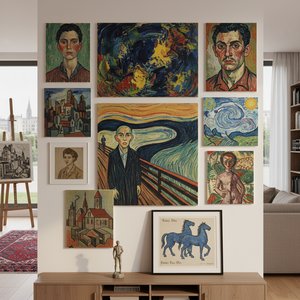
Топ-10 шедеврів експресіонізму: мистецтво емоцій та самовираження від OriginalUniqueArt
Пориньте у світ експресіонізму! Відкрийте 10 шедеврів Мунка, Ван Гога та інших геніїв. Історія мистецтва, емоції та кольори – все це на OriginalUniqueArt.com. Репродукції картин преміум-якості для вашого дому.
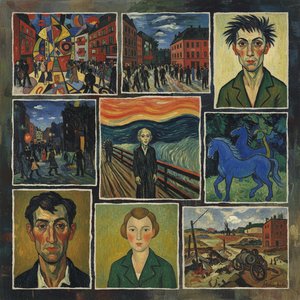
Топ-10 шедеврів експресіонізму: картини, що змінили мистецтво | OriginalUniqueArt.com
Відкрийте для себе 10 шедеврів експресіонізму! Дізнайтесь історії Мунка, Кірхнера та інших геніїв. Купуйте репродукції картин онлайн на OriginalUniqueArt.com – музейна якість для вашого інтер'єру.