

 Переглянути в інтер'єрі
 Надіслати як листівку
 Поділитися
 Детальніше

 Завантажити
 Схожі експонати
 Рентгенівське дослідження
 Слайд-шоу
 Статистика
The Farm Landing
 Oil On Canvas
- WallArt
- Impressionism
 1892
1892- 19th Century
 77.0 x 102.0 cm
 Читати далі
Гікле / Художній принт
Музейна якість друку جيкле або на полотні з оперативним виготовленням та різноманітними варіантами фінішної обробки. ( Замовити репродукцію ручної роботи Перейти до цифрових зображень)




P118B $10

P118H $10

P118W $10

P438Z $10

P508JH $12

P508YH $12

P805H $10

P805Z $10

P919BZ $10

P919G $10

P919XJ $10

P959ZH $10

P968JZ $12

W106C $8

W218G $10

W218JH $8

W218Y $10

W307PJ $10

W316G $10

W316PJ $8

W316Y $10

W398PJ $8

W4111J $10

W500HY $15

W500JH $15

W692G $12

W849H $8

W940BG $15

W953PJ $8




Обирайте з наших стандартних розмірів, що відповідають оригінальним пропорціям твору мистецтва.

Ви можете вказати власні розміри, щоб репродукція ідеально підійшла до конкретної рами або інтер'єру. Якщо обраний вами розмір не відповідає пропорціям оригіналу, ми або обріжемо полотно, або розширимо зображення за допомогою дзеркального відображення чи суцільної заливки країв. Перед початком виробництва вам буде надіслано цифровий макет для затвердження.
Будь ласка, зверніть увагу, що попередній перегляд на екрані не відображає фактичне обрізання або розширення. Тільки макет точно покаже фінальну композицію.
Хоча можливість замовлення індивідуальних розмірів доступна, ми рекомендуємо обирати формат із попередньо визначеного списку, щоб зберегти оригінальні пропорції.
Доставка по всьому світу () за 2 тижні замість стандартних 4/5 тижнів. (16 Вересень)

Безкоштовна експрес-доставка по всьому світу

Високоякісне лляне полотно

Повне страхове покриття доставки

Гарантія відшкодування митних зборів

Гарантія точного відтворення кольорів

Політика повернення протягом 100 днів (тільки у разі виявлення дефектів)

Гарантія повернення 100% коштів

Пропозиція на оптові замовлення
 Скляний варіант доступний лише для розмірів до 110 см

The Farm Landing
Гікле / Художній принт
Розмір репродукції
-


Підсумкова вартість
$ 80
A Symphony of Serenity: Discovering The Farm Landing
In the quiet corners of art history, few works capture the profound stillness of the natural world as tenderly as Edward Mitchell Bannister’s The Farm Landing. Painted in 1892, this exquisite oil on canvas invites the viewer into a pastoral dreamscape where time seems to have slowed to the gentle rhythm of lapping water. The scene unfolds with a breathtaking sense of peace, centered around a tranquil body of water that reflects the soft, diffused light of an overcast afternoon. A small, vibrant red rowboat rests at the water's edge, serving as a poignant focal point that anchors the composition and provides a singular, warm heartbeat against the lush, verdant greens and earthy tones of the landscape. As the eye wanders from the grassy banks, populated by grazing cattle, toward the rolling hills shrouded in a delicate mist, one feels an immediate connection to the rhythmic simplicity of rural life.
The mastery of Bannister’s technique lies in his ability to blend the precision of detail with the atmospheric soul of Impressionism. Rather than relying on harsh outlines, the artist utilizes organic lines and soft, textured brushstrokes to define the contours of the land and the density of the foliage. This approach creates a tactile quality, where the viewer can almost feel the dampness of the morning air and the softness of the meadow. Through the clever use of atmospheric perspective, Bannister achieves an incredible sense of depth; the distant trees and hills become paler and less defined, receding into a hazy blue-grey that suggests an infinite horizon. This technique not only provides structural balance to the 77 x 102 cm canvas but also imbues the work with a dreamlike, ethereal quality that is both captivating and deeply soothing.
The Soul of Tonalism and the Legacy of Resilience
To appreciate The Farm Landing is to understand the profound historical context of its creator. Edward Mitchell Bannister was a pioneer of the Tonalist movement, a style characterized by its focus on mood, atmosphere, and a limited palette of harmonious tones. His work often sought to evoke emotional responses through subtle shifts in light and color rather than dramatic action. For Bannister, capturing such serene landscapes was an act of profound resilience. As an African American artist navigating the societal constraints of the late 19th century, his ability to command such grace and tranquility in his art serves as a testament to his strength and dedication to his craft. The painting becomes more than just a landscape; it is a symbolic sanctuary of peace and connection to the earth.
For the discerning collector or interior designer, this reproduction offers much more than mere decoration. It serves as an emotional anchor for a room, bringing a sense of sophisticated calm and timeless elegance to any space. Whether placed in a sunlit study or a quiet sitting room, the painting’s rich color saturation and masterful light play provide a constant source of inspiration. The artwork embodies a connection to the land and a celebration of life's simpler, more beautiful moments—making it an ideal centerpiece for those looking to curate an environment of reflection, dignity, and enduring beauty.
Біографія митця
Edward Mitchell Bannister: A Life Painted in Resilience
Edward Mitchell Bannister’s story is one of quiet determination, a testament to artistic passion blossoming amidst formidable societal constraints and ultimately, a remarkable rediscovery. Born around 1828 in St. Andrews, New Brunswick, Canada, his early life was deeply marked by the hardships faced by individuals of African descent during the 19th century – an experience that profoundly shaped his perspective and fueled his artistic drive. Orphaned at a young age, Bannister navigated a world demanding resilience, taking on various roles—including working as a cook aboard merchant ships—before finding his way to Boston in the late 1840s. This journey wasn’t merely geographical; it was a deliberate quest for artistic expression, a calling that would define his life despite the significant obstacles he encountered. His heritage itself was complex – a blend of Barbadian ancestry through his father and European roots inherited from his mother – creating a unique tapestry of influences that would later infuse his canvases with both sensitivity and strength.The Seeds of Inspiration: Landscape and the Barbizon School
Bannister’s artistic journey began largely without formal instruction, yet it was marked by an extraordinary dedication to honing his craft. He initially studied sculpture and anatomy under Dr. William Rimmer in Boston – a foundational experience that undoubtedly informed his understanding of form, composition, and human anatomy. However, it was the captivating allure of landscape painting, particularly the principles championed by the French Barbizon school, that truly ignited his artistic imagination. Artists like Jean-François Millet, with their profound focus on depicting rural life and employing naturalistic techniques, resonated deeply with Bannister’s own sensibilities. He meticulously absorbed their emphasis on capturing mood and atmosphere – a characteristic that would become a defining element of his signature style: Tonalism. Bannister's paintings weren’t intended as precise reproductions of nature; rather, they were explorations of feeling, evoking a sense of serenity and quiet contemplation through the subtle interplay of tonal values and soft, muted hues. He sought to distill the essence of a scene, presenting landscapes imbued with poetic grace and emotional depth. This approach distinguished him from many of his contemporaries who prioritized meticulous detail and vibrant color.A Bostonian’s Vision: Early Works and Influences
Bannister's artistic development in Boston during the 1850s and 60s was shaped by a confluence of influences. While he lacked formal training, he diligently educated himself through art books and visits to institutions like the Boston Athenæum, absorbing techniques and styles from various masters. The Barbizon School’s emphasis on capturing light and atmosphere proved particularly influential, as did the work of Robert S. Duncanson, a pioneering Black landscape painter who had achieved considerable success in America. Bannister's early works began to reflect this growing influence, showcasing a sensitivity to color and composition that hinted at his future artistic direction. Paintings from this period, though relatively scarce today, offer glimpses into his evolving style – often depicting scenes of urban life alongside pastoral landscapes. The stark contrast between the realities of his daily existence and the beauty he sought to capture in his art created a powerful tension within his work.A Breakthrough: Recognition at the Philadelphia Centennial Exposition
The turning point in Bannister’s career arrived in 1876, during the United States' Centennial Exposition in Philadelphia. His painting, *Under the Oaks*, a serene depiction of a woodland scene bathed in soft light, was selected for exhibition and ultimately awarded first prize in the category of painting – a remarkable achievement, especially considering his race at that time. However, this success wasn’t without its complications. Upon discovering Bannister's African American heritage, some judges initially questioned the award, leading to controversy and an initial reluctance to formally acknowledge his victory. Despite these challenges, Bannister was ultimately recognized for his artistic merit, solidifying his reputation within the art world. *Under the Oaks* remains a poignant symbol of perseverance and a testament to the power of talent in overcoming prejudice.A Legacy Rediscovered: From Obscurity to Appreciation
Despite achieving recognition during his lifetime, Edward Mitchell Bannister’s work largely faded from public view following his death in 1901. For decades, he remained a relatively forgotten figure within the broader narrative of American art history – a poignant example of how systemic biases can marginalize talented artists. However, beginning in the 1970s, a renewed interest in Bannister’s artistry emerged, fueled by the Civil Rights Movement and a growing awareness of African American contributions to various fields. In 1978, Rhode Island College dedicated its art gallery in his honor – a significant step towards reclaiming his rightful place within the artistic canon. Today, Bannister's paintings are proudly displayed in major museums across America, including the Smithsonian American Art Museum and the Walters Art Museum, ensuring that his unique vision and remarkable story continue to inspire and resonate with audiences. His legacy stands as a powerful reminder of the importance of recognizing talent regardless of background and celebrating the enduring beauty of art born from resilience.Key Characteristics & Influences
- Barbizon School Influence: His work demonstrates a clear connection to the Barbizon school’s emphasis on capturing light, atmosphere, and depicting rural life with a sense of quiet contemplation.
- Tonalism Style: Bannister's paintings are characterized by Tonalism – prioritizing mood and feeling through subtle tonal variations rather than precise detail or vibrant color.
- African American Heritage: His background as an African American artist profoundly shaped his perspective, influencing the themes and emotional depth of his work.
- Early Boston Exposure: His time in Boston exposed him to a diverse range of artistic influences, including sculpture, anatomy, and the works of Robert S. Duncanson.

Едвард Мітчелл Банністер
1828 - 1901 , Канада
Короткі факти
- Artistic Movement Or Style: Тоналізм, Барбізонський стиль
- Artists Or Movements Influenced By This Artist: ['Барбізонський стиль']
- Artists Who Influenced This Artist: ['Жан-Франсуа Мілле']
- Date Of Birth: c. 1828
- Date Of Death: 9 січня 1901
- Full Name: Edward Mitchell Bannister
- Nationality: Канадсько-американський
- Notable Artworks:
- Під дубами
- Сцена Бостона
- Дітей газетний робітник
- Захід сонця
- Place Of Birth: Сент-Ендрюс, Канада
Пов'язані статті

Топ-25 шедеврів Джона Констебла: пейзажі Англії для вашого дому | OriginalUniqueArt
Відкрийте для себе 25 найкращих шедеврів Джона Констебла! Англійські пейзажі, романтизм та емоційне світло в живописі. Репродукції картин високої якості для вашого дому від OriginalUniqueArt.com. Дослідіть повну колекцію онлайн!

Топ-10 шедеврів імпресіонізму: пейзажі, що змінили мистецтво | OriginalUniqueArt
Відкрийте для себе 10 шедеврів імпресіонізму, що змінили пейзажне мистецтво! Дізнайтесь історії Моне, Ренуара та інших майстрів. Купіть репродукції картин імпресіоністів преміум-якості на OriginalUniqueArt.com і додайте елегантності вашому інтер'єру. Дослідіть колекцію онлайн!
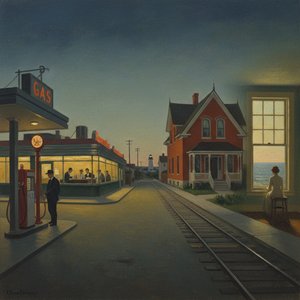
Топ-25 шедеврів Едварда Гоппера: мистецтво самотності та американського реалізму | OriginalUniqueArt
Відкрийте для себе 25 культових картин Едварда Гоппера – символів американського реалізму та самотності. Історія мистецтва, техніки живопису та натхнення для вашого інтер'єру від OriginalUniqueArt.com. Дослідіть всю колекцію онлайн!

Топ-10 шедеврів імпресіонізму: пейзажі, що змінили світ мистецтва | OriginalUniqueArt
Відкрийте для себе 10 шедеврів імпресіонізму, що змінили пейзажне мистецтво! Дізнайтесь історії Моне, Ренуара та інших майстрів. Купіть репродукції картин високої якості на OriginalUniqueArt.com – музейне мистецтво для вашого дому.

Edward Mitchell Bannister: A Pioneer of American Landscape Painting & Artistic Recognition
Discover the remarkable life & art of Edward Mitchell Bannister, a pioneering African American landscape painter. Explore his journey overcoming barriers to achieve recognition and lasting impact on 19th-century American art.